A quotation for a VR arcade machine is a legal description of a delivery, and most buyers read it as a price. The number in the box at the top of the page is the factory gate figure; the number that has to be true for your venue is the delivered, installed, powered, street-legal one. Those two are not close: on the published example a USD 16,800 machine lands at USD 22,400 to USD 25,800. Nor is the gap hidden in a footnote. It sits in nine named groups of lines, and each group either appears on the paper or it does not.
The published cost work on this site already prices the hardware honestly: a venue-grade VR simulator chair sits at USD 6,000 to USD 12,000 and up (how much does a VR chair cost), and the landed-cost walk on a VR fighter jet simulator shows what a USD 16,800 machine looks like once it is actually running in the United States (how much a VR fighter jet simulator costs). What neither article does is tell you how to read the document a salesperson sends back. This guide is that reading exercise: nine groups of line items, who signs for each one, and the questions to write into your next email. In order, the nine are machine specification, quantity and unit price, Incoterms with a named place, packaging and crate data, freight and insurance, duty and clearance, site preparation, installation and training, and commercial terms.
| Line group | What must be printed on the quote | Who carries it |
|---|---|---|
| Machine specification | Model, seats, motion degrees of freedom, cabinet dimensions, rated power draw, controller and PC specification | Seller, until the specification is confirmed against your plan |
| Quantity and unit price | Per-unit price, total, currency, and whether the price is for the machine or the machine plus content | Seller |
| Incoterms and named place | Rule (EXW, FOB, CIF, DAP, DDP) plus the named port or address, and who books the freight | Split at the named point |
| Packaging and crate data | CBM and gross weight per crate, ISPM 15 heat treatment or fumigation with the IPPC mark, stackability | Seller prepares it, buyer pays for the consequences if it is wrong |
| Freight and insurance | Ocean leg, terminal handling, destination charges, insurance, and an expiry date on the rate | Depends on the Incoterm, usually the buyer |
| Duty, tax and clearance | 10 digit HTS or HS code, origin, tariff treatment, import VAT or duty, customs broker | Buyer, unless the term is DDP |
| Site preparation | Clear height, floor loading, three phase supply, dedicated circuits, anchoring, rigging route and access | Buyer, informed by the vendor load and power sheet |
| Installation and training | Technician days, daily rate, travel and accommodation, commissioning, calibration, operator training | Mixed and usually negotiable |
| Commercial terms | Warranty scope and start date, spare parts list, content licence period, payment schedule, quote validity, lead time | Seller drafts, buyer must read |
Read that table as a checklist rather than a description. Two groups are almost always present and correct: the machine specification and the unit price. Two are almost always missing: the site preparation line, because the vendor assumes your building already complies, and the destination charges line, because the vendor assumes you have a broker. The remaining five vary by supplier, and they are exactly where two quotes for the same chair stop being comparable.
The single most consequential sentence on a machine quotation is the four-letter word in it. Incoterms are the published rules that split cost and risk between a seller and a buyer, and the US International Trade Administration groups the current eleven into two families: seven that work for any mode of transport (EXW, FCA, CPT, CIP, DAP, DPU and DDP) and four that are sea and inland waterway only (FAS, FOB, CFR and CIF). A quote that says FOB without a named port, or CIF without saying who insures what, is not a complete quote.
The trap that costs real money is that a rule describes cost and risk separately, and they do not transfer at the same place. Under FOB, the buyer pays the ocean freight and the insurance, and the buyer risk begins once the goods are loaded on board. Under CIF, the seller pays freight and insurance to the destination port, but the risk still transfers at the loading port, which means the buyer owns a damaged machine during a crossing that the seller paid to insure. Under DDP, the seller finally carries both to the destination, including import clearance, and prices that convenience into the unit rate.
| Rule on the quote | Seller pays to | Risk transfers at | What lands on your side |
|---|---|---|---|
| EXW (Ex Works) | Nothing beyond making the goods available at its own premises | Pickup at the factory | Inland pickup, export formalities, freight, insurance, duty, delivery, install |
| FOB (Free on Board) | Factory, inland haul to the port, export clearance, loading | Loading on board at the origin port | Ocean freight, insurance, all destination charges, duty and clearance |
| CIF (Cost, Insurance and Freight) | Origin costs plus freight and insurance to the destination port | Loading on board at the origin port, not arrival | Duty, clearance, unloading and terminal charges beyond freight, onward delivery |
| DDP (Delivered Duty Paid) | Everything to the named destination, including import clearance and duty | Available for unloading at the named place | Unloading at your door, site preparation, rigging and installation |
Two practical readings follow. First, an EXW or FOB price is not a worse price, it is a different instruction set, and with a broker you already trust it can come in below a DDP price that has a brokerage margin built into the unit rate. Second, never compare two vendors on their headline number when the rules differ: normalise both to the same named place, then compare. If you cannot normalise, you are comparing a machine to a machine plus a logistics project.
Scale changes what the term is worth. The VR simulator chair fleet guide (VR simulator chair fleet scaling guide) treats several chairs as one system, and a three-chair FOB order is exactly that: three crates, one consolidation decision and one customs entry, against a DDP order that is a single appointment at your loading dock. Neither is wrong, but only one of them is priced in the number the buyer writes into a budget.
Motion chairs travel as big, heavy, awkward cubes, so the freight line is really two lines: how much air you are shipping, and what a cubic metre costs that month. The published fighter jet cost walk carries the reference figures the cluster uses throughout: a single seat crate moves at about 8.4 CBM and roughly 300 kg gross, less-than-container-load rates on the China to US lane run USD 40 to USD 60 per CBM while the Europe lane runs USD 110 to USD 190, and a 40 foot high cube from China to the US West Coast averaged USD 2,800 to USD 3,600 in late 2025 with spot lows near USD 1,900 to USD 2,600 (how much a VR fighter jet simulator costs).
Put those published inputs next to each other and the shape of the sea leg becomes obvious. On the US lane, one chair at USD 40 to USD 60 per CBM is roughly USD 340 to USD 500, and the cluster quotes USD 400 to USD 500 per machine; on the Europe lane the same arithmetic gives about USD 925 to USD 1,600, quoted as USD 1,000 to USD 1,600. Those are per-chair figures from per-CBM rates, so they are arithmetic on published inputs rather than new statistics, and they move with the rate table, not with the machine.
| Order size | Published sea-leg input | Arithmetic on those inputs | What to ask for on the quote |
|---|---|---|---|
| 1 chair | Less-than-container-load at USD 40-60/CBM, crate about 8.4 CBM | About USD 340-500 to a US port | A per-CBM rate plus terminal charges, not a single freight number |
| 2-4 chairs | Same per-CBM band, 16.8-33.6 CBM total | About USD 670-2,020 to a US port | Whether the forwarder applies per-shipment minimums and consolidation fees |
| 4 chairs, full container | 40 foot high cube at USD 2,800-3,600 | USD 2,800-3,600 for the box, not per chair | Whether an FCL booking is cheaper than four less-than-container-load slots that month |
| 5 chairs or more | Container rate plus inland haul | Freight stops being a per-unit line and becomes a project line | A delivered rate per site with the named place fixed in writing |
Note what that middle comparison says. On the published late-2025 lane rates, four chairs moving as less-than-container-load at USD 40 to USD 60 per CBM come to roughly USD 1,300 to USD 2,000, while a whole 40 foot container at USD 2,800 to USD 3,600 is more expensive, not less. Consolidation is not automatically the cheap answer on a US lane at those rates; it becomes one when the per-CBM band rises, when your crates exceed what a shared slot will absorb, or when destination charges dominate. Ask the vendor to quote both and show the assumption, and treat either answer as a shape rather than a booked price, because the rate behind it has an expiry date.
The wooden crates are their own compliance item. USDA APHIS requires wood packaging material entering the United States - pallets, crates, dunnage - to be heat treated or fumigated and to carry the visible IPPC mark, and the consequence of getting it wrong is not a rejected pallet: non-compliant packaging can cause the whole shipment, including the machines, to be refused or re-exported. So one sentence belongs in your email: confirm that all wood packaging is ISPM 15 treated and marked, and ask for the treatment to be named in the packing list.
Almost no equipment quotation carries your customs bill, because in the common delivery terms it is not the seller cost. This is the group where buyers discover they have bought a compliance project alongside a machine. Two questions unlock it: what is the classification the seller will print on the commercial invoice, and what does your own country charge that classification from that origin.
On the US side, the published cost work is careful about this. Amusement rides classify under HTS heading 9508.24 and video game machines under 9504.50, where the General column rate is free; what is not free is the stack of additional measures applied to Chinese origin goods, which the cluster quotes as an effective band of roughly 7.5 to 35 percent once Section 301 and the newer IEEPA actions are counted (how much a VR fighter jet simulator costs). The instruction that goes with those numbers is not a rate to plan on but a step to take: confirm the 10 digit code and the Chapter 99 additions on the day you order, because that band has moved more than once in the period these guides were written.
On the EU side the same machine is cheaper at the border and dearer in the paperwork: the published comparison puts the most-favoured-nation duty on heading 9508 at 1.7 percent, with no preferential treatment for Chinese origin, plus destination-country import VAT in the 19 to 27 percent range. Import VAT is usually recoverable for a VAT-registered business while duty is not, which is precisely why the two numbers should never be merged into one line on a pro-forma invoice.
| Charge | United States | European Union | Where it shows up |
|---|---|---|---|
| Duty on the machine | General column free on 9508.24 / 9504.50; additional measures push effective cost to about 7.5-35% on Chinese origin | About 1.7% most-favoured-nation on heading 9508 | Your customs entry, not the vendor invoice |
| Consumption tax | State and local sales tax at resale, not at import | Import VAT at 19-27% by member state, often recoverable | Customs declaration |
| Federal entry fees | Merchandise processing fee 0.3464% with a floor near USD 33.58 and a cap near USD 651.50, plus harbour maintenance fee 0.125% | Not applicable | Broker invoice |
| Terminal and inland | Terminal and destination handling about USD 680-780 per 40 foot box, drayage USD 250-500 (USD 600-900 at Los Angeles and Long Beach) | Comparable THC plus inland haul, varies by gateway | Forwarder invoice after arrival |
| Compliance and exams | Container exam such as VACIS about USD 50-200; customs broker USD 100-300 | Broker or clearance agent, plus any inspection | Whatever nobody warned you about |
Those rows are not a seller hiding something; they exist only on the buyer side of the named place. The buying guide for commercial bowling equipment (how to buy commercial bowling equipment) makes the structural point from the other end of a quote: an integrated supplier normally bundles delivery, on-site installation, commissioning and operator training, and its value shows up later as coordination cost and rework you did not have to manage. The VR arena setup cost breakdown (what a 2026 VR arena setup really costs) reaches the same conclusion at fleet level, listing the lines outside the invoice that a hardware-only budget misses.
Here is the published walk from a factory number to a running machine, restated as the six pipeline stages a buyer should be able to point at on paper. The input is the USD 16,800 machine used in the VR fighter jet simulator cost guide, whose conclusion is a US landed total of roughly USD 22,400 to USD 25,800 and a stated premium of 25 to 40 percent over the gate price (how much a VR fighter jet simulator costs). The point of restating it is not the total but the shape: four adders stacked on the gate price, one of them large, and it is the modest ones that never appear on a quote.
| Stage | Published reference value | Which line group carries it | Failure mode if missing |
|---|---|---|---|
| Factory gate | USD 16,800 machine price | Quantity and unit price | Two vendors compared on different scopes |
| Ocean freight | About USD 500 per machine less-than-container-load on the US lane | Packaging plus freight and insurance | A CBM surprise, or a rate that expired before the booking |
| Import duty and fees | USD 2,100-4,200 on the published example | Duty, tax and clearance | A five-figure customs bill arriving after the budget closed |
| Destination charges | USD 1,000-1,300 (terminal, drayage, broker, exams) | Freight and insurance, plus your own broker | Container sitting on demurrage while nobody owns the entry |
| Install and commissioning | USD 2,000-3,000 including electrical work | Site preparation plus installation and training | A machine that arrives before the power does |
| Total at the door | USD 22,400-25,800 on the published example | All nine groups read together | A budget that was always the wrong number |
That gap is the argument for the whole article. Subtract the USD 16,800 gate price from the published USD 22,400 to USD 25,800 total and the difference is USD 5,600 to USD 9,000, roughly a third to a half on top of the machine on this example, which is close to the price of a second chair. The arcade profitability guide is blunt that what separates a working chair from a losing one is utilization and placement (is a VR chair profitable for an arcade); the budget framework guide says the same about planning, in that a hardware-only budget silently drops three of its four layers (how to budget commercial VR equipment).
The site preparation group is where a quote and a building argue. The facility guide for 360 VR chairs is explicit about the measurements and about how they are taken: minimum clear ceiling height of 3.6 metres from finished floor to ducting with 3.8 to 4.2 metres recommended unobstructed, a spectator buffer measured from the motion arc at 1.2 metres minimum and 1.5 to 2.0 metres where a safety fence is installed, and a three phase supply sized from 380V and 15 kW dedicated as the floor to 22 kW with surge protection as the recommended allocation (what ceiling and power do 360 VR chairs need). It also names the discipline that prevents the expensive version of this conversation: a seven point pre-install audit, with an electrical audit in the USD 400 to USD 800 range.
Those are buyer-side numbers with seller-side consequences. A quoted chair that needs a dedicated circuit your panel does not have has not become more expensive; your electrician has. The chair cost guide is direct that venue installation, meaning rigging, dedicated circuits and anchoring, runs at roughly 5 to 15 percent of the machine price, and that the difference between dock delivery and placement in the room is real money (how much does a VR chair cost). Put the two together and the site preparation line is the one to ask about earliest and the one least likely to be answered by the equipment vendor.
| Item on the site list | Usually printed on the vendor quote | Usually your cost and your contractor | The question to ask before you sign |
|---|---|---|---|
| Clear height and door access | Cabinet dimensions only | Mezzanine, ducting or door work; rigging route | What is the tallest crate and the tightest door on the route? |
| Floor loading and anchoring | Machine weight and anchor pattern | Slab assessment, anchors, vibration isolation | Do you supply an anchor drawing a structural engineer can sign? |
| Electrical | Rated draw per unit | Panel capacity, dedicated circuits, three phase run, surge protection | Is the rated draw the same figure as the recommended circuit allocation? |
| Buffer and fencing | Footprint outline only | Barrier, queue lane, sightline and the fenced buffer | Is the clearance you quote measured from the motion arc or from the chair centreline? |
| Climate and noise | Operating temperature range | HVAC duty for a machine room, acoustic separation | What ambient band keeps the GPUs from throttling? |
The technician travel line is negotiated rather than published, so it deserves its own sentence. The vendor terms in the cluster price a technician at roughly USD 100 a day for three to five days with visa, airfare and accommodation carried by the buyer, while operator training is often folded into the purchase package. Ask for the day count, the rate and the travel scope as three separate figures, because a bundled installation line is where an efficient two-day commissioning trip quietly becomes a five-day one.
Then tie the installation to a date, because the calendar is a cost. The 30-day go-live timeline guide publishes what order-to-first-paid-session actually contains: two to three days of on-site installation, about four and a half hours of calibration and one day of training, inside a roughly 30 day path from deposit to opening, with the three named bottlenecks being an unready site, a delayed container and staff who have never run the machine (how fast can a VR arena go live). Every one of those three is a line group in this article, which is why the audit works better before the deposit than after it.
The ninth group is the paragraph most buyers skim, and it decides the year after opening. The vendor terms the cluster carries describe a 12 month hardware warranty as the common commercial baseline, with software updates and technical support sitting alongside it, and a spares budget of about 10 percent of capital expenditure - which in practice means a shelf box, not a promise. The maintenance guide for what breaks on a VR chair splits every unit into three surfaces, the motion base and joints, the headset and hygiene loop, and the control electronics, and prescribes a daily, weekly and monthly cadence across them (VR chair maintenance: what breaks and how to fix it).
Two of those surfaces are consumables and no warranty covers them as if they were capital. The headset replacement guide prices the item per session: a commercial headset is good for roughly 300 to 500 sessions, the replacement cycle lands at 12 to 18 months under venue duty, wear costs run from about USD 0.15 to USD 0.35 a session with the upper end the number to plan on, and the recommendation is a spare pool of 10 to 15 percent of units (how often do commercial VR headsets need replacing). A quote that lists headsets as an accessory rather than as a wearing part with a stated life has quietly moved that cost out of your first year and into your first complaint.
Payment terms are also a schedule question. A deposit-to-shipment balance structure means the machine is paid for before it is inspected, which is why the pre-shipment verification and the commissioning sign-off belong in the same conversation; and it means the container, not the chair, sets your cash flow date. If your opening depends on a season, write the lead time and the named place into the same clause as the payment, and read the delivery terms as a calendar rather than a price (chair roller coaster simulator buying guide).
Send these as a numbered list in the first email and you will get two different kinds of answers: suppliers who already have the data, and suppliers who now have to find out. That second group is useful information too, because a vendor who cannot state a CBM figure, a rated draw and an anchor pattern has not decided who does that work.
Two of those questions have a free answer available from us: the clearance, footprint and format-mix questions can be settled on your own floor plan through the free 3D layout design service, and the density question - how many chairs the room actually holds once aisles, queue lane and buffer are subtracted - is worked in the guide on how many VR chairs fit in 50 square meters for a 50 square metre room.
The questions buyers ask when a quotation is in front of them rather than a budget in the abstract.
A machine specification with cabinet dimensions and rated draw, unit price and quantity, an Incoterm with a named place, packaging data, and the commercial terms: warranty, spares, content licence, payment schedule and lead time. Freight, duty, clearance and site preparation are usually absent unless the term is DDP or the vendor sells a turnkey project. A new machine package from an integrated supplier can bundle delivery, installation, commissioning and operator training, which is the argument for asking rather than assuming.
Neither is cheaper by definition. FOB prints a lower unit price and leaves ocean freight, insurance, destination charges, duty, clearance and delivery to you; DDP prices all of that into the unit rate, including import clearance. Normalise both to the same named place and the same date, because the freight rate inside either quote has an expiry. If you already have a broker you trust, FOB usually wins on transparency; if you do not, a DDP quote that is expensive and complete beats an FOB quote that is cheap and incomplete.
On the published reference inputs, a single-seat crate at about 8.4 CBM moves at USD 40 to USD 60 per cubic metre on the China to US lane, which is the roughly USD 400 to USD 500 the cluster quotes, and USD 110 to USD 190 per cubic metre on the Europe lane, which is USD 1,000 to USD 1,600. Those are the sea leg only: terminal handling, drayage, brokerage and duty sit on top and are quoted per shipment rather than per chair.
Because amusement rides under HTS 9508.24 and video game machines under 9504.50 carry a free General column rate in the United States, while the charge that actually bites is the set of additional measures applied to a specific origin, which the cluster publishes as an effective band of about 7.5 to 35 percent on Chinese origin goods. Those measures have changed inside the period covered by the guides. Confirm the classification and Chapter 99 additions on the order date with your broker rather than planning on a fixed number.
The published bands: rigging, dedicated circuits and anchoring at roughly 5 to 15 percent of the machine price, an electrical audit in the USD 400 to USD 800 range, technician days at about USD 100 a day plus buyer-paid travel, and the consumables that no warranty treats as capital, since a commercial headset wears out on a 300 to 500 session life. Add the destination charges, which the published example puts at USD 1,000 to USD 1,300 for one machine.
Treat the quote as expiring with the freight rate inside it, which in a volatile market means weeks. The published 40 foot container references moved from about USD 2,800 to USD 3,600 on the US West Coast lane in late 2025 with spot lows near USD 1,900, and the China to Northern Europe index moved from USD 4,375 in January 2025 to USD 4,641 by December 2025. Ask for a stated validity date, and if the answer is longer than the lead time, ask what happens to the freight line when it expires.
Five lines to keep beside the next quotation you open.
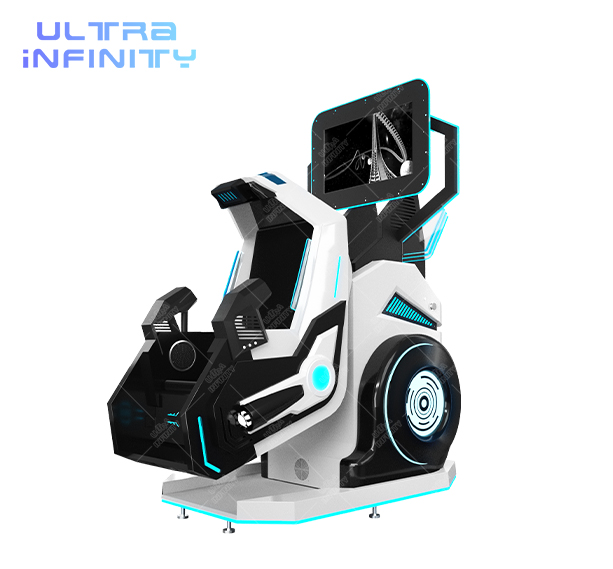
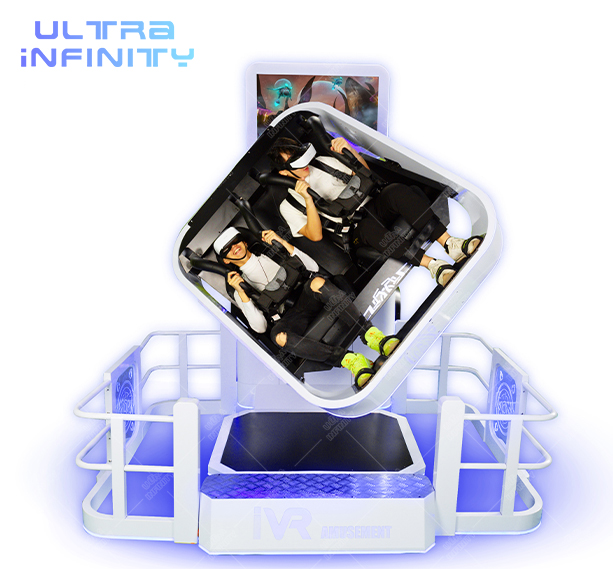
If you want the specification questions answered on paper before the commercial ones, send us your floor plan and target opening date: the free 3D layout design service returns a placement with clearances and power callouts, and the single-seat VR 360 motion chair, the two-seat motion chair and the four-seat cinema chair are the three units a chair-zone quote is normally built around. For the operating model that has to sit behind the invoice, read the VR simulator chair fleet scaling guide.
Send us your floor plan, target opening date and the delivery term you are being quoted. Our team can put the machine specification, crate and CBM data, power and clearance requirements, installation scope and commercial terms on one page - starting from the free 3d layout design - so you can compare two vendors on the same named place instead of on two different prices.