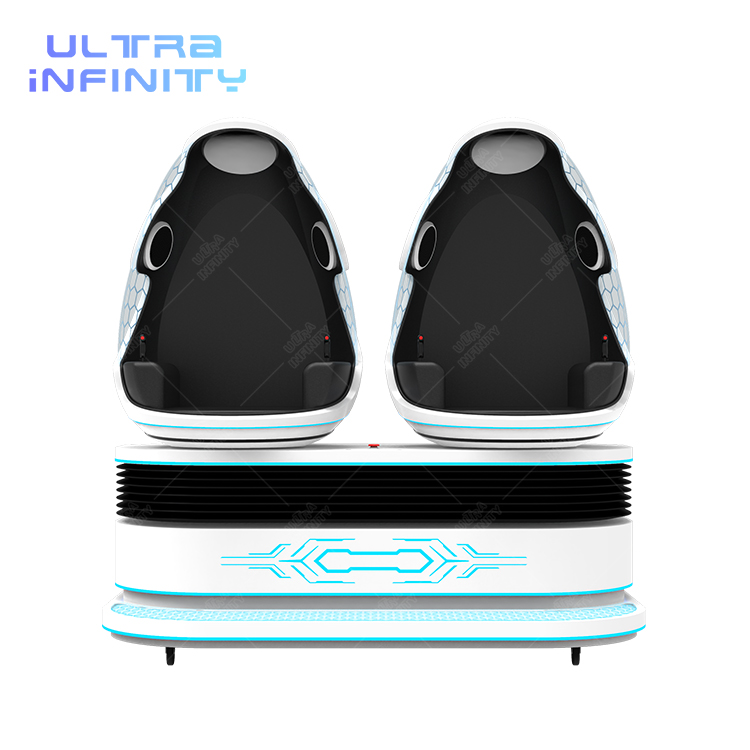
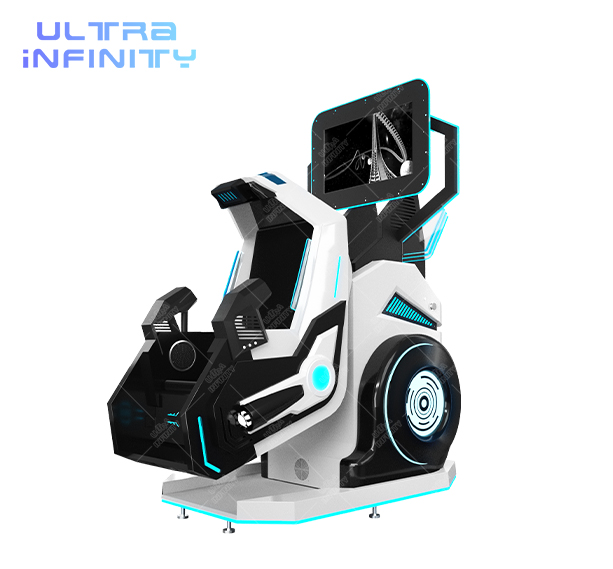
Posted prices for VR chairs cluster into three bands, and the seams are wide enough that knowing your band matters more than comparing models inside it.
| Tier | Price | What is inside |
|---|---|---|
| Home entry | $1,500-$3,000 | Tilt and vibration, a single motion axis, consumer-grade build. Enough to feel the difference. |
| Serious motion | $3,000-$6,000 | Multi-axis travel, 360 rotation on some models, stronger chassis, better dampening. |
| Venue grade | $6,000-$12,000+ | Arcade-duty motion, payment-ready, warranty and support, heavier frame for thousands of rides. |
The band a model falls into explains almost everything about it. A $2,000 chair is not a cheap version of an $8,000 chair. It is a different product with a different job, and the person who confuses those two things is the one who feels ripped off.
Strip two chairs side by side and the price gap resolves into four real differences. If none of them matter to you, buy the cheaper one and stay happy.
The failure buyers make is paying for differences they will never use: a home player buying venue-grade durability, or a venue buying a home unit and discovering one busy weekend what the warranty does not cover. Match the tier to the workload.
The chair is half the number. The other half shows up in the second month, and it is the half that surprises everyone.
Add them up and the working rule is simple: budget 15-20% on top of the posted price, and more if the chair runs 12 hours a day. The chair that looks cheap in the brochure is priced against a workload it was not built for.
The same sticker price means different things at home and in a venue, and the mistake is buying across the line in either direction.
The quick sanity check for either side: divide the price by the rides or sessions it will run in its first year. A $4,000 home chair over two hundred sessions is $20 a session. A $9,000 venue chair over five thousand rides is $1.80 a ride. The venue chair is cheaper in the only math that matters to each buyer.
The products below cover the honest market range, from compact home cinema chairs to two-player venue units. All three are live on this site.
Get the space cost onto paper before the machine cost. The free 3D layout design page maps the chair into the floor plan with clearances and power runs included.
About $1,500-$2,000 gets a real tilt and vibration unit. Below that you are buying a vibrating seat, not a motion chair. Check the actual movement travel before you buy.
The sensible home band is $2,000-$4,000: real multi-axis motion, decent chassis and motion content support. Above that you are paying for venue-grade durability you will not use.
They are built for thousands of rides a year: arcade-duty actuators, payment-ready integration, warranty, spare parts and service support. The build, not the brand, drives the price.
Budget 15-20% on top: content subscriptions, shipping, installation and power work for venues, and roughly 5% a year in parts for commercial units.
Usually not. The venue band buys durability and support designed for daily crowds. At a few sessions a week, a $2,000-$4,000 unit delivers the same experience for a fraction of the cost.
Tell us whether the chair is for home or a venue, and the space you have. Our team quotes the right tier and, for venues, provides a free 3D layout design with clearances and power runs.