A VR simulator chair fleet is not one machine scaled up - it is three systems that have to be sized together: the format mix on the floor, the headset pool inside those machines, and the staff and routine that keep the queue moving. Buy the second VR simulator chair and you have added a seat. Add it without the headsets, the spacing and the shift cover, and you have added a machine that stops at exactly the moments the first one did.
The capital is the easy part. A commercial chair sits at USD 6,000 to USD 12,000 and up (how much a VR chair costs), so five chairs is a line item an operator can write down. What separates a five-chair zone that holds the published 98 percent-plus uptime target (what ceiling and power 360 VR chairs need) from one that looks busy and earns nothing is everything wrapped around the machine: the spare headset pool, the hygiene loop between rides, the boarding lane, the sightline, and the person who resets the chair in the ninety seconds the next rider is already waiting for.
| Chairs on the floor | What it runs as | What breaks at this size |
|---|---|---|
| 1 chair | A catch device for walk-up traffic at a sightline | Any queue longer than one cycle becomes lost revenue |
| 2 chairs | A pair running offset cycles, taking pairs and families | One headset failure now idles half the zone |
| 3-4 chairs | A zone with a visible line and its own staff post | Staffing, spacing and the headset pool become the ceiling |
| 5 chairs | An anchor attraction with a rotation calendar | Power allocation, spares shelf and content freshness decide the year |
Read the middle column as the reason to grow and the right column as the reason growth fails. The escalation and density references later in this guide exist because that right-hand column is a schedule, not a risk: at two chairs you run out of headsets, at three you run out of hands, at five you run out of power allocation and fresh content unless those were bought with the machines.
Operators price a fleet in chairs; the published cluster prices it in ride cycles, and that difference is the argument of this guide. A single-seat rotating chair turns 12 to 16 rides an hour on a two to three minute cycle (VR chair maintenance: what breaks and how to fix it), its library carries 70-plus titles at two to five minutes a ride (how a rotating VR motion chair works), and a zone ticket commonly clears USD 8 to USD 10 across an eight to ten hour day (is a VR chair profitable for an arcade). Multiply those three published lines and the fleet stops being a purchase and becomes a capacity plan.
Run the arithmetic at the published midpoints. Fourteen rides an hour over nine open hours is roughly 126 ride cycles a day for one chair; five chairs on the same cycle discipline is roughly 630 ride cycles a day, about 16,380 a month on the cluster convention of 26 operating days. Those are capacity shapes derived from published inputs, not earnings - the gap between the shape and a real zone is what the rest of the ladder covers.
| Fleet size | Published per-chair input | Zone capacity (arithmetic) | What has to be bought with it |
|---|---|---|---|
| 1 chair | 12-16 rides/hour, 2-3 min cycle | About 126 ride cycles/day at 9 h | One spare headset, a wipe kit, a sightline |
| 2 chairs | Same cycle, offset load rhythm | About 252 ride cycles/day | Spare pool of 2-3 headsets, one trained operator |
| 3-4 chairs | Same cycle plus mixed formats | About 378-504 ride cycles/day | A dedicated zone post, 0.9 m aisles, deep-clean rotation |
| 5 chairs | Same cycle plus group formats | About 630 ride cycles/day | Three-phase allocation, spares shelf, rotation calendar |
The trigger for the next chair is a queue you are already turning away, not a slow period you want to fill. The profitability work in this cluster (is a VR chair profitable for an arcade) is blunt about the direction of that error: a hidden chair at 30 percent utilization loses money while the same chair in a sightline with a visible queue earns. Adding capacity to a zone that is not queueing does not create demand - it splits the demand you had across more idle hardware and doubles the headsets, wipes and resets your staff must cover.
The first real trigger is a queue that outruns the cycle. A single chair loads one rider per cycle, and the throughput guide (can queue management double 9D ride throughput) works why a second ride on an offset rhythm - a 50-second load against an 80-second drift, on a 90-second target cycle - is where the doubling comes from. A second chair without that staging discipline is a second queue, not a doubled capacity.
The fifth chair is a different question, and the honest published answer is that it may not be a chair at all. Beyond three or four hours a day of your own queued traffic, the marginal unit is better spent on a format that captures a demand shape single seats cannot serve - a four-seat cinema chair for parties and school groups, or a different attraction family entirely. The comparison of six VR roller coaster simulator formats (VR roller coaster simulator: which of the six formats fits your venue) makes the same point at category level: seats on a machine are not riders per hour, and riders per hour are not the audience on your floor.
Five identical single-seat chairs is the most common configuration an operator buys and the weakest one to run, because it serves exactly one demand shape. The comparison of a VR egg chair against 9D cinema formats (VR egg chair vs 9D cinema formats: which compact simulator fits) lays out what each capsule is for, and the tested layouts in the density guide are mixes rather than rows of one model. The table below keeps only the lines that change how a fleet is staffed and serviced.
| Format | Riders per cycle | Published size and power reference | Role inside a fleet |
|---|---|---|---|
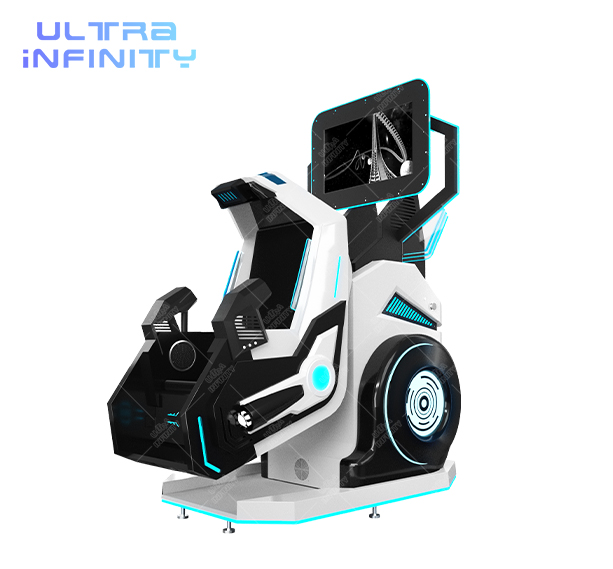
| Single-seat 360 motion chair | 1 | Cabinet about 1.2 x 1.2 m; rated about 1.8 kW | Visible anchor that pulls walk-up traffic |
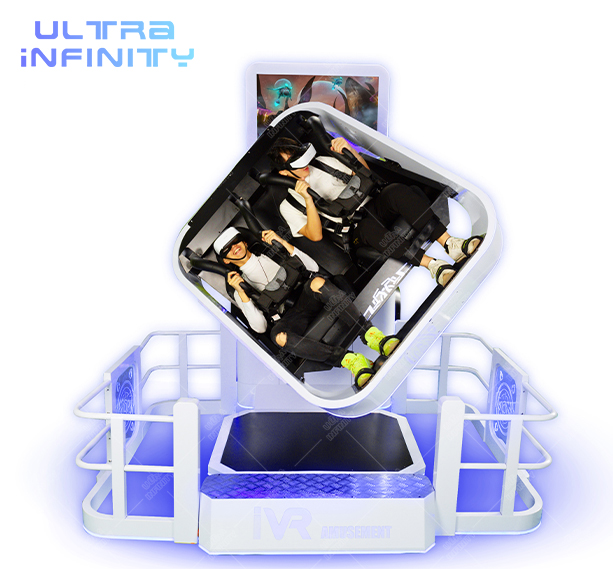
| Two-seat motion chair | 2 | Cabinet about 1.4 x 1.7 m; rated about 3.5 kW (V1 sheet: 2000 W, 300 kg load) | Couples and families; higher yield per cycle |
| Four-seat cinema chair | 4 | Operating cell about 2.5-6 m2 by build (reported) | Parties and groups; most riders per floor at peak |
| Egg chair (sealed capsule) | 1-2 | Cabinet 110-210 cm wide by build (reported) | Fast solo cycles needing almost no queue management |
Two rules fall out of that table. First, mix the boarding models, not just the content: a fleet that can take a solo rider, a pair and a four-person party serves three demand shapes from one staff post, while five single seats serve one shape and idle through the other two. The egg chair versus cinema formats comparison frames this as a growth sequence - start with the smallest machine whose riders per hour match the traffic you already have, and climb to group formats only once that first machine is consistently busy.
Second, remember what a chair is wrapped around: a motion base, a headset and a content library sold as one ride (chair roller coaster simulator buying guide). Open rotating chair versus sealed capsule is a different trade than motion versus stationary - the mechanism guide (how a rotating VR motion chair works) explains that rotation is what makes the picture land on the inner ear, while the VR simulator chair versus stationary VR comparison (VR simulator chair vs stationary VR) is honest that motion costs power, footprint and clearance for that immersion. In a fleet, those costs multiply by the number of units.
Content is the layer that does not scale with the hardware. A fleet ships with a library - the first-party specification carries 70-plus titles at two to five minutes a ride - and the guide on how often 9D game libraries should refresh (how often should 9D game libraries refresh) treats that catalogue as the retention engine: every title has a content half-life, repeat-play decay shows in the numbers before it shows in revenue, and a rotation schedule plus a license budget are what keep a floor from ageing faster than its machines. A single chair can hide a stale library behind walk-up traffic; five cannot, because five times the repeat-visit promise now rides on one catalogue. Carry the licence line in the same budget as the spare headsets - both are consumables of the same ride, and both decide whether the fleet still sells in year two.
Every chair in your fleet is a motion base carrying a consumable. The guide on how often commercial VR headsets need replacing (how often do commercial VR headsets need replacing) publishes the numbers operators miss on the invoice: a commercial headset is good for roughly 300 to 500 sessions, the replacement cycle lands at 12 to 18 months, wear costs about USD 0.35 per session, and the recommended budget line is a 10 to 15 percent spare headset pool. The wear shows up worst at the wrong moment - the weekend peak, when the third headset dies and a session that needs six runs on four.
Put that on the fleet. One chair at the published cycle line burns 126 to 144 sessions a day, so a single headset facing its own machine exhausts a 300 to 500 session life in roughly three to four weeks - which is why the published 12 to 18 month cycle assumes a rotating pool rather than one unit run to death. That rotation is what keeps a five-chair Saturday from becoming a three-chair Saturday.
| Fleet size | Headsets in service | Published spare pool 10-15% | Practical pool bought with the chairs |
|---|---|---|---|
| 1 chair | 1 | 1 | 2 units, so the zone never waits on a repair |
| 2 chairs | 2 | 1 | 3 units |
| 4 chairs | 4 | 1 | 5 units |
| 5 chairs | 5 | 1 | 6 units, plus lens and interpupillary checks on the closing list |
The hygiene loop sits on the same pool. The guide on how often to sanitize VR headsets between sessions (how often should you sanitize VR headsets between sessions) sets a 60-second wipe between sessions, a three-point wipe protocol and two deep cleans a day, and names the failure honestly: a rider who puts on a warm, damp headset reads the experience as a hygiene problem no content can fix, and foam that is never cleaned fails early and bills itself to the replacement budget.
| Consumable reference | Published value | What it prices |
|---|---|---|
| Spare pool to carry | 10-15% of units | Budgeted as a share of the fleet, not per machine |
| Replacement cycle | 12-18 months | When wear parts and headsets rotate out in normal service |
| Wear cost per session | About USD 0.35 | The per-ride upkeep cost that accumulates inside the ticket |
| Service life | 300-500 sessions | The upper window a commercial headset survives before replacement |
A motion chair cannot run unattended. The guide on how many staff you need per arcade shift (how many staff do you need per arcade shift) separates attractions that run themselves - a four-player gun platform on the published one-staff-per-eight-to-ten-cabinets coverage - from those needing dedicated bodies, putting a free-roaming arena at one to two attendants for fitting, briefing and reset. A chair zone sits between the poles: fewer hands than a walking arena, clearly more than a cabinet row, and each chair you add buys reset work rather than self-service revenue.
What the hands are for is the load rhythm, and the throughput guide (can queue management double 9D ride throughput) prices it in seconds: revenue leaks between cycles, and a disciplined 50-second load against an 80-second drift is the difference between the published 12-16 rides an hour and a chair that averages nine. No hardware removes the minimum boarding sequence - rider seats, operator fits and checks the headset, harness and sight line confirmed, session runs, rider cleared out.
Two chairs double the reset work and halve the tolerance for an uncovered shift: with one chair an operator who steps away stops one machine; with five, the zone runs on whoever is left. This is also where the spectator decision belongs, since the profitability guide treats the spectator gap as design - a visible line converts onlookers into the next cycle, and a line stays visible only if somebody is loading it.
The facility guide on what ceiling and power 360 VR chairs need (what ceiling and power do 360 VR chairs need) sets the target most operators under-plan: 98 percent-plus uptime, a minimum 3.8 m clear height, 3.5 m of perimeter safety clearance around a rotating chair, a 15 to 22 kW three-phase allocation for a motion zone, and a 20 to 25 C ambient band so GPUs do not throttle and headsets do not lag. None of those are per-chair properties you can multiply - they are zone properties bought once and shared, which is why the fourth chair is usually where an electrician, not a salesperson, becomes the constraint.
State the power numbers carefully, because two figures circulate for a reason. A machine is rated at about 1.8 kW single-seat and about 3.5 kW two-seat; the installation allocates 9.5 to 15 kW per machine on three-phase and 15 to 22 kW for a full zone. Rated draw and circuit allocation are different measurements, and a quote that conflates them will either strand your panel or leave you paying twice for headroom.
| Fleet size | Published site requirement | What to settle before the order |
|---|---|---|
| 1-2 chairs | 3.8 m clear height, 3.5 m clearance, 9.5-15 kW allocation per machine | Panel capacity and the boarding lane on the real plan |
| 3-4 chairs | Zone allocation 15-22 kW three-phase, 20-25 C ambient | Who runs the opening and closing checklist each shift |
| 5 chairs | Spares shelf plus rotation calendar inside the zone | Deep-clean slots, spare storage and the escalation path |
Uptime is bought with a routine, not a warranty. The maintenance guide covering what breaks on a VR chair (VR chair maintenance: what breaks and how to fix it) splits every unit into three surfaces - motion base and joints, headset and hygiene loop, control electronics - prescribes a daily, weekly and monthly cadence across them, and specifies a shelf box of spares that turns a failure into a same-day fix. It also names the costliest failure: a chair with a scratched, fogged or drifting headset still moves, but it does not sell, because the effect depends on clean lenses and a correct interpupillary setting.
The questions operators ask once they are past the first machine, answered with the published cluster references.
One, placed where traffic can see it. The published profitability work is explicit that a hidden chair at 30 percent utilization loses money while the same chair in a sightline with a visible queue earns, and the compact-format guide recommends starting with the smallest machine whose riders per hour match the foot traffic you already have. Add the second chair when the queue outruns the cycle, not when the month runs soft.
The published band is USD 6,000 to USD 12,000 and up per commercial unit, so five units is USD 30,000 to USD 60,000 as arithmetic on that band, not a quote. Wrapped around it: a six-unit headset pool at the published spare recommendation, a 15-22 kW three-phase zone allocation, 25-35 percent of the floor given back to aisles, queue and the safety ring, and the licence line for the library.
One per chair in service plus the published 10-15 percent spare pool - six units, so a failure is a swap rather than a closure. Headsets are consumables rated at 300-500 sessions on a 12-18 month cycle, and a single unit facing one chair exhausts that session life in roughly three to four weeks of operation.
More than cabinet outlines suggest. The published density method subtracts 25 to 35 percent of the room for aisles, queue lane, boarding path and safety ring before counting chairs, keeps 3.5 m of clearance around a rotating chair, allows about 0.9 m for aisles, and lands four to six chairs in a 50 square meter room depending on the mix.
You need the zone covered whenever it is open, and reset work scales with the fleet. The published staffing model puts a walking arena at one to two dedicated attendants and a cabinet row at one staff per eight to ten cabinets; a chair zone sits between them, cannot run unattended, and is capped by load rhythm rather than headcount alone.
The three published maintenance surfaces are the motion base and joints, the headset and hygiene loop, and the control electronics - and the headset fails hardest in revenue terms, since a scratched or fogged lens still moves but no longer sells. Hold the published site envelope (3.8 m clear height, 3.5 m clearance, 15-22 kW three-phase, 20-25 C) and run the daily-weekly-monthly routine with a shelf box of spares for same-day fixes.
Five lines to carry into the fleet conversation.
Move from the ladder to your own room: the free 3D layout design service places the mix on your plan, and the single-seat VR 360 motion chair, the two-seat motion chair and the four-seat cinema chair are the three tiers a fleet is normally built from.
Tell us your floor area, foot traffic and current chair count: our team can help model the format mix, headset pool, staffing and power allocation your zone needs at one chair and at five, starting from the free 3d layout design - and read the layout guide on how many VR chairs fit in 50 square meters for the spacing math behind the ladder.