Every VR arena operator has the same first experience: the hardware quote looks reasonable, and the final invoice comes in 20 to 40 percent higher. The gap is not the vendor inflating margins. The gap is that a free-roam arena is a system, not a machine, and the system has four cost layers that only appear on the detailed list: the headsets, the backpack PCs, the tracking layer and the room infrastructure.
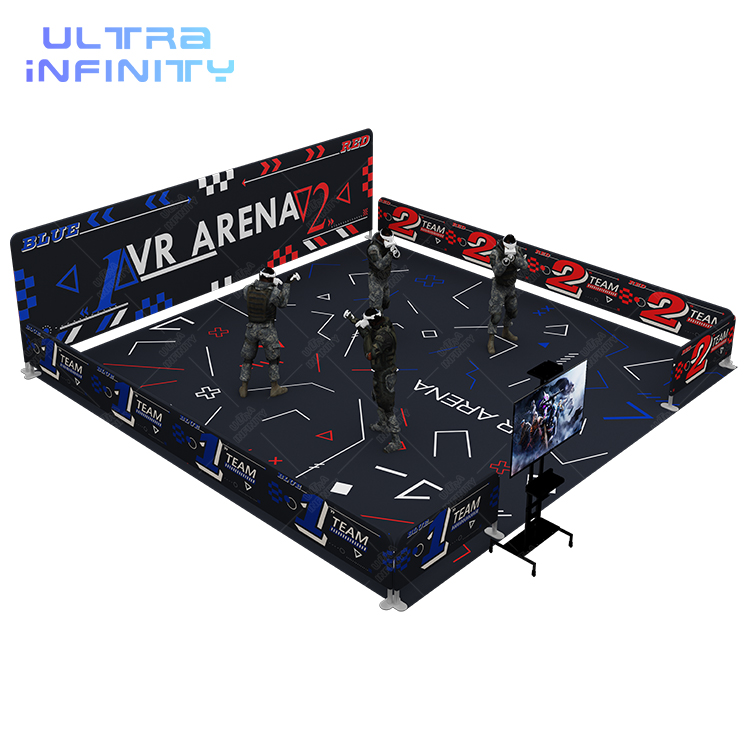
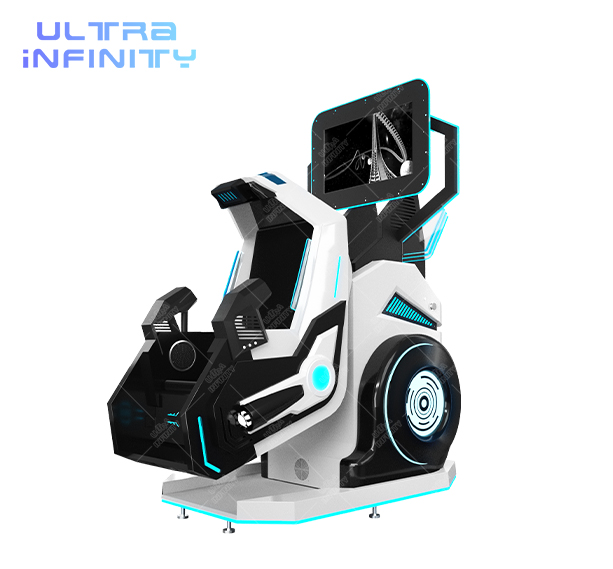
The decision comes down to the hardware on the floor. The VR arena anchors the layout, the free-roaming VR arena drives the repeat visits and the VR multiplayer standing platform adds the premium layer, and each one is matched to the space and the budget this guide covers.
This guide prices each layer for 2026 equipment, then assembles three honest budgets: a 4-player starter, a 6-player standard and an 8-player full build. The numbers are component-level so the operator can verify every line instead of trusting a round-total quote.
| Cost Layer | What It Covers | Share of Total | Pricing Driver |
|---|---|---|---|
| Headsets | Per-player display + audio | 15-20% | Count x unit price |
| Backpack PCs | Per-player compute | 30-40% | Count x unit price |
| Tracking | Base stations / ceiling kit | 10-15% | Floor size + precision |
| Infrastructure | Wifi, floor, power, cage | 25-35% | Shell condition |
The four layers explain the variance between quotes: a vendor who quotes only headsets and software is quoting half the system. A complete 2026 budget covers all four, and the rest of this guide prices each one.
The headset is the visible cost and the one most operators price correctly. In 2026 the commercial standard is a standalone headset with controller tracking and a wired or wireless link to the backpack PC. The key distinction is consumer versus commercial duty: a consumer unit prices well but fails in daily multi-session service.
| Headset Class | Unit Price | Daily Duty | Warranty | Suitability |
|---|---|---|---|---|
| Consumer entry | $400 - $600 | Light | 1 yr | Kiosk demos |
| Mid commercial | $700 - $1,000 | Medium | 1-2 yr | Cabin lines |
| Commercial arena | $1,100 - $1,500 | Heavy, multi-session | 2 yr | Free-roam arena |
| Premium arena | $1,600 - $2,000 | Heaviest + hygiene | 2 yr | Premium venues |
For a 4-player arena, the headset line lands between $4,400 and $6,000. The premium adds hygiene features: replaceable face pads, washable straps and a cleaning cycle between sessions. In a free-roam arena, hygiene is a revenue line, because venues that visibly sanitize gear command repeat bookings at a premium price.
The 2026 buying rule is to buy one spare headset per four in service. Spares are the cheapest insurance in the build: a single headset failure with no spare takes a quarter of the arena offline for the repair window.
The backpack PC is the largest line in the build and the one that surprises every first-time buyer. A free-roam arena does not run the game on the headset; it runs the game on a computer carried on the player''s back, and the headset only displays. Backpack PCs are the compute layer and the biggest cost.
| Backpack PC Class | Unit Price | GPU Tier | Power Draw | Notes |
|---|---|---|---|---|
| Entry backpack | $1,800 - $2,300 | Mid-range | ~150W | 4-player starters |
| Standard backpack | $2,400 - $3,000 | High | ~200W | 6-player builds |
| Pro backpack | $3,100 - $3,800 | High + capacity | ~250W | 8-player + tracking load |
| Spare unit | 1 per 4 | n/a | n/a | Critical insurance |
A 4-player arena therefore lands between $7,200 and $9,200 on backpacks alone, plus one spare. The 8-player build reaches $25,000 to $30,000 on this line. The reason the line is large is that each player carries a full PC, and four players are four simultaneous render loads on the same physical floor.
The budget trap is buying desktop-class PCs mounted on carts to save cost. They render the same game, but the cables and the lack of player mobility kill the free-roam experience that justifies the arena ticket. The backpack is the difference between a VR arena and a row of simulators.
The tracking layer is where free-roam separates from seated VR. Seated VR tracks one headset; free-roam tracks four bodies moving in a shared volume, and the system must resolve them without occlusion when two players cross paths. The tracking hardware scales with floor size and precision needs.
| Tracking Approach | Install Cost | Floor Coverage | Precision | Best For |
|---|---|---|---|---|
| Marker base stations | $1,500 - $3,000 | Up to 40 m2 | Good | 4-player starter |
| Ceiling-mount array | $4,000 - $7,000 | 60 - 80 m2 | Very good | 6-player standard |
| Optical full volume | $7,000 - $12,000 | 80 - 120 m2 | Excellent | 8-player full |
| Hybrid + IMU fusion | +$2,000 | Adds coverage | Excellent | Complex layouts |
The floor size drives the price more than the player count. A 60 m2 floor needs a ceiling array that covers the whole volume, and the array price is mostly fixed whether 4 or 8 players run in it. The operator who sizes the tracking to the actual combat floor avoids paying for coverage the floor never uses.
The 2026 rule is to include a calibration service in the budget. Consumer tracking expects a static room; a free-roam arena shifts floor mats, moves barriers and rotates spectator furniture, and each change needs a recalibration pass that the operator either buys or learns to run.
The infrastructure layer is the hidden cost: the floor surface, the power run, the wifi backhaul and the safety cage. It is the most variable line because it depends entirely on the shell the operator brings. A shell with level concrete and clean power costs far less than a raw space needing floor work and a dedicated electrical run.
| Infrastructure Item | Typical Cost | Driver | Optional? |
|---|---|---|---|
| Anti-fatigue floor | $1,500 - $4,000 | Area + surface | No |
| Power + UPS | $1,200 - $3,500 | Backpack charge load | No |
| Wifi backhaul + router | $800 - $2,500 | Headset link load | No |
| Safety cage / barrier | $2,000 - $6,000 | Perimeter length | No |
| Acoustic + lighting | $1,000 - $4,000 | Venue standard | Yes |
The anti-fatigue floor is the first line most operators try to cut, and it is the one that protects the backpack PCs. A player standing on hard concrete for a 15-minute session is fine; the same floor over a full weekend shifts heat and shock into the packs. The floor price is the difference between a build that survives peak season and one that opens its warranty drawer by month three.
Power is the second surprise. Four backpack PCs charging simultaneously, plus four headsets and the tracking array, can draw 1.5 to 2.5 kW on peak. A venue with a 20-amp circuit will trip on a busy Saturday; the budget includes a dedicated circuit or an upgrade.
With the four layers priced, the operator can assemble a realistic total. The three budgets below are honest 2026 numbers: a 4-player starter, a 6-player standard and an 8-player full build, each including one spare headset and one spare backpack.
| Line Item | 4-Player Starter | 6-Player Standard | 8-Player Full |
|---|---|---|---|
| Headsets (incl. spare) | $5,500 | $8,400 | $12,800 |
| Backpack PCs (incl. spare) | $9,200 | $16,800 | $27,600 |
| Tracking | $2,500 | $5,500 | $9,500 |
| Infrastructure | $6,000 | $9,000 | $14,000 |
| Game software + license | $2,000 | $3,000 | $4,500 |
| Install + calibration | $2,800 | $4,200 | $6,600 |
| Total | ~$28,000 | ~$46,900 | ~$75,000 - 85,000 |
The step between tiers is driven mostly by the backpack line: each added player adds a PC, and the tracking and infrastructure scale more slowly because they cover floor, not seats. The operator who plans the final player count first and buys the tracking and floor for that size avoids a costly rework later.
The spread from $28k to $85k explains why arena quotes vary so widely. Two operators can both say they built an arena and have budgets three times apart, because the smaller build serves 4 players on a compact floor while the larger serves 8 with a full-volume tracking system. The operator should match the build to the real demand, not to a budget round number.
A 4-player starter lands around $28,000, a 6-player standard near $46,900 and an 8-player full build $75,000 to $85,000, each including spare headsets and backpacks, tracking, infrastructure and install.
Each free-roam player carries a full PC, and the arena runs the game on the packs rather than the headsets. Four players are four simultaneous render loads, so the line scales one-for-one with player count.
You can render the same game, but the cables and lost mobility destroy the free-roam experience that justifies the arena ticket. The backpack is the difference between an arena and a row of simulators.
Floor size more than player count. A 60 m2 floor needs a ceiling array covering the whole volume, and the array price is mostly fixed whether 4 or 8 players run in it. Size tracking to the actual combat floor.
The anti-fatigue floor, the power run for simultaneous backpack charging, and the calibration service after floor and barrier changes. Together they often add 20-40% over the hardware-only quote.
Yes, one spare headset and one spare backpack per four in service. A single failure with no spare takes a quarter of the arena offline for the repair window.
A 2026 VR arena budget is four layers, not one line: headsets, backpack PCs, tracking and infrastructure. The honest total ranges from a $28k four-player starter to an $85k eight-player full build, and the spread is explained by player count on the backpack line and floor size on the tracking and infrastructure lines.
The operator who budgets all four layers and buys the tracking and floor for the final player count avoids the 20 to 40 percent overage that surprises most first-time buyers. NextPlay supplies the free-roaming VR arena 2.0 as a packaged quote with each layer priced for your floor. Contact NextPlay for a current 2026 arena budget and a line-by-line quote.
Ask NextPlay for the current arena package quote: headsets, backpack PCs, tracking and infrastructure priced for your player count and floor plan.