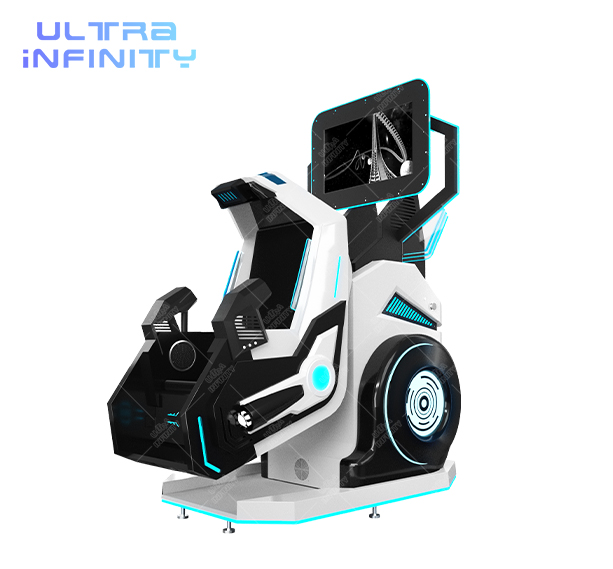
Mall operators measure every square meter twice, and an 80 m² atrium slot has to out-earn whatever filled it before. A seated VR cabin on the same footprint clears a modest per-m2 number; a free-roam arena that runs four players through one host desk clears roughly twice it, because the arena sells four tickets per round instead of one seat.
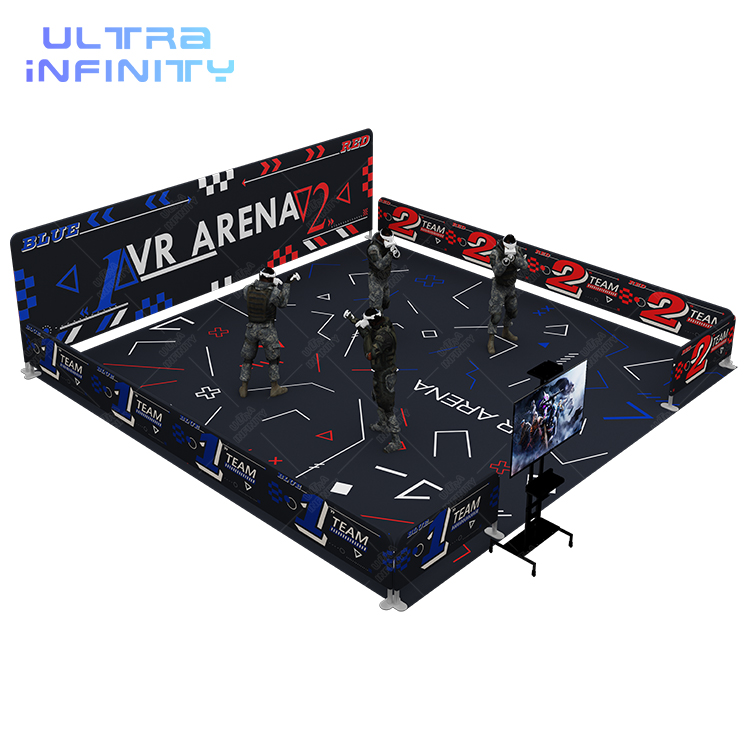
The decision comes down to the hardware on the floor. The free-roaming VR arena anchors the layout, the VR arena drives the repeat visits and the VR multiplayer standing platform adds the premium layer, and each one is matched to the space and the budget this guide covers.
The atrium adds two advantages a back-room venue cannot copy. First, the spectator wall: a combat arena with a big screen and a rail turns every round into a show that passing shoppers stop to watch. Second, the queue: a visible line in an atrium is free advertising that other tenants pay for. The arena turns both into revenue, and this guide shows the math.
| Atrium Slot Use | Per-Hour Revenue | Visitors Touched | Yield Driver |
|---|---|---|---|
| Seated VR cabin | $25 - $35 | 5 - 8 | Single seat |
| VR arena (4 players) | $72 - $144 | 24+ players | Rounds + rematch |
| Arena + spectator wall | $110 - $190 | 50+ viewers | Show + impulse |
| Arena + queue-driven events | $140 - $240 | 100+ walkers | Free marketing |
The yield is not a single attraction number; it is the arena plus the spectacle plus the queue. An operator who installs only the hardware captures the first column. The operator who installs the show captures all four.
The floor plan decides the yield before the first ticket. For 80 m² the plan must fit a 60 to 70 m² combat floor, a 1.5 meter safety ring and a staging area where the next team fits gear while the current team plays. Every square meter outside the combat floor either protects rounds or sells spectators, and the plan below allocates it.
| Zone | Area | Purpose | Revenue Role |
|---|---|---|---|
| Combat floor (10 x 6.5m) | 65 m2 | Four-player rounds | Primary income |
| Safety ring (1.5m) | 10 m2 | Safe rotation | Protects rounds |
| Staging + gear wall | 5 m2 | Next team prep | Protects turnover |
| Spectator wall + rail | 0 (uses mall walkway) | Show + impulse | Second income |
The spectator wall is the genius of the atrium layout: it does not consume the 80 m² because it faces the public walkway. The arena opens onto the walkway instead of hiding behind a wall, the big screen shows the live match, and the rail lets shoppers watch without blocking the floor. The show is the free content; the screen is where the impulse sale happens.
The layout rule is to put the staging lane on the far side from the spectator wall. Teams enter and exit away from the crowd, keeping the walkway side clean for the show and preventing the queue from crossing the combat floor.
The arena doubles yield by selling four tickets per round through one host desk. The engine math runs six rounds an hour at 15 minutes each with a clean rotation, which puts 24 players per hour through a floor that one cabin would serve as six seats.
| Round Metric | Seated Cabin | 4-Player Arena | Gain |
|---|---|---|---|
| Tickets per round | 1 | 4 | 4x |
| Rounds per hour | 6 | 5-6 | Same |
| Players per hour | 6 | 24 | 4x |
| Revenue per hour | $30 | $120+ | 4x |
The rematch is where the atrium arena separates further. A group that just lost a close match on the big screen wants round two, and the queue at the rail is watching. The rematch host sells round two at $18 per two rounds on the same four seats, lifting the per-hour revenue toward $190 before the spectator merchandise line even opens.
The 15-minute round is deliberately long enough to create the memory and the scoreboard rivalry, and short enough to keep the queue moving. Atrium visitors abandon waiting lines in under 10 minutes; a moving queue with a visible round timer keeps the walkers watching instead of walking.
The spectator wall is not decoration; it is the arena''s second business. A big screen, a rail and a counter turn the walkway crowd into buyers, and the atrium foot traffic guarantees an audience that a back-room arena would have to advertise to reach.
| Spectator Revenue Line | Mechanic | Ticket/Price | Monthly Contribution |
|---|---|---|---|
| Merchandise | Team photos, lanyards | $5 - $15 | 8-12% of arena |
| Drink + snack counter | Impulse at the rail | $3 - $6 | 6-10% |
| Spectator entry (shows) | Free view, pay for finals | Event price | Event-only |
| Upgrade to play | Queue converts to ticket | Full round | Fills off-peak |
The wall converts passive viewers through a simple loop: watch a match, see the scoreboard, buy a drink while waiting, book a round when the queue is short. Each conversion is a separate revenue line that the 80 m² floor itself never cost.
The atrium multiplier makes the wall more valuable than in any other location. Atrium foot traffic runs 1,000 to 5,000 walkers a day in a busy mall, and even a 1 to 2 percent viewer-to-buyer conversion adds real dollars without a single extra square meter of rent.
Atrium pricing has one rule the other formats do not: the queue is part of the product. The arena should publish round times so walkers know when the next open round is, and the price menu should give the host tiers that match the queue state.
| Tier | Price | Round | When It Sells |
|---|---|---|---|
| Solo spot | $10.00 | Join a team | Low queue |
| Group / match | $12.00 | Full 4-player round | Always |
| Rematch / double | $18.00 | 2 rounds | Scoreboard rivalry |
| Spectator + play bundle | $15.00 | Show + 1 round | Peak queue |
The bundle is the atrium-specific tier: a walker who stopped to watch gets a spectator seat plus a guaranteed round at a small premium over the solo rate. It converts the queue into bookings rather than letting watchers wander off, and it fills off-peak rounds with people who were already standing at the rail.
The published round clock is the other pricing tool. When the screen shows the next open round starts in 6 minutes, the host has a reason to ask for the booking now, and the walker has a reason to commit instead of drifting. The clock converts time pressure into sales, which is exactly how an atrium operates.
The yield model below assembles the arena revenue into a monthly per-m2 number that mall operators can compare against the atrium benchmark. It assumes a 10-hour day, a realistic weekday-weekend mix and a rematch rate that the host actively sells.
| Revenue Stream | Daily Figure | Monthly (26 days) | Per m2 / Month |
|---|---|---|---|
| Round tickets (peak) | $420 | $10,900 | $136/m2 |
| Rematches (55% rate) | $230 | $6,000 | $75/m2 |
| Spectator wall (impulse) | $95 | $2,500 | $31/m2 |
| Total blended | $745 | ~$19,400 | $242/m2 |
Against a benchmark where seated VR clears roughly $60 to $90 per m2 per month, the arena lands near $242 per m2 with the spectator wall included, roughly 2 to 3 times the seated comparison. The doubling the title promises comes from the four-player round engine and the wall.
The model is sensitive to two levers: the rematch rate and the off-peak fill. An operator who staffs the rematch host and runs the queue-conversion bundle during weekday lulls protects the monthly number even when peak traffic is flat.
Yes. Four-player rounds through one host desk sell four tickets per round instead of one seat, and the spectator wall adds a second revenue line. A typical arena lands near $242 per m2 per month against a $60-90 seated benchmark.
A 65 m² combat floor, a 1.5m safety ring, a 5 m² staging area, and a spectator wall opening onto the walkway so the show draws foot traffic without eating the footprint.
About 24 per hour at six 15-minute rounds, plus rematches that add a second ticket on the same four seats. A cabin on the same floor moves six.
Through impulse sales at the rail, merchandise, and the queue-to-booking bundle. Atrium foot traffic of 1,000-5,000 walkers a day converts even 1-2 percent into buyers without extra rent.
Publish the round clock so walkers see the next open round, run a walk-in to group to rematch tier menu, and add a spectator-plus-play bundle that converts the queue into bookings.
Around $19,400 blended on a 26-day month, about $242 per m2, driven by round tickets, a 55% rematch rate and the spectator wall.
An 80 m² atrium slot doubles its yield when the operator treats it as a show, not a ride. The four-player round engine sells four tickets per round, the spectator wall adds a second income line, and the atrium queue becomes free advertising that fills the off-peak clock.
The layout, the round schedule and the pricing tiers all support one loop: watch, buy, play, rematch. NextPlay supplies the free-roaming VR arena 2.0 with the atrium floor plan and spectator wall kit built around this loop. Contact NextPlay for the 80 m² atrium layout and the yield model for your mall slot.
Ask NextPlay for the atrium arena layout: the 80m² combat floor plan, spectator wall placement and the four-player round schedule that doubles your mall yield.