A commercial VR fighter jet simulator costs roughly $9,700-$17,000 at the factory gate for a single-seat 360-degree rotating fighter machine, but the number that should appear in a venue budget is the landed cost - what it takes to get one machine, running, on your floor. For a buyer in the United States that landed total typically runs $22,400-$25,800 on a $16,800 machine after ocean freight, customs duty, port fees, install and commissioning - roughly 25-40% above the factory price.
"How much does a VR fighter jet simulator cost?" is really a pipeline question. The money moves through six stages: factory gate price, ocean freight, import duty, destination-port charges, install and commissioning, and the spares-and-warranty buffer. This guide walks the "landed cost pipeline" stage by stage with sourced freight and tariff numbers, then ties each stage to the Infinity VR Thunder Fighter F2 and 360 VR Thunder Fighter line so buyers can build a total-for-their-door quote instead of comparing factory-gate prices.
The factory-gate price is the cleanest number in the pipeline because vendors quote it per seat and per motion system. As of September 2026, published vendor ranges for commercial VR flight machines cluster at roughly $7,500-$7,800 for an entry single-seat 360-degree standing flight unit, $9,700 for a single-seat 360-degree flight simulator, and $16,800 for a single-seat 360 rotating fighter chair, according to VR arcade machine vendors that publish tiered pricing. Flagship multi-seat 720-degree machines reach $44,000-$47,000.
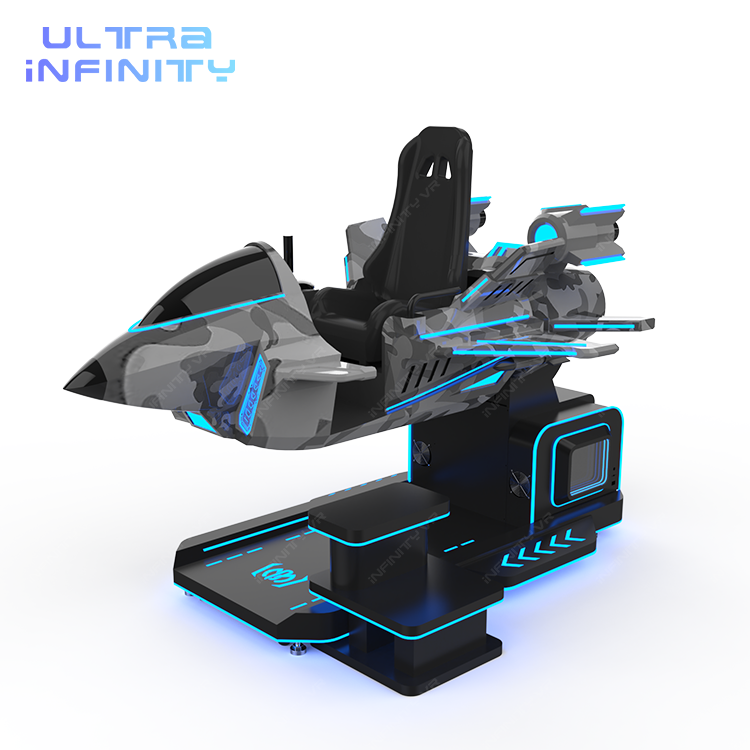
On the first-party side, Based on our VR Thunder Fighter F2 specification, the machine ships as a single rotating fighter seat with hall-effect joystick flight controls, integrated flight-shooting gameplay, a compact steel-and-fiberglass body and an appearance lighting package - a self-contained seat that needs only power, floor fixing and a headset seal to run. That keeps the factory-gate price a per-seat number, which is exactly how the VR flight simulator complete setup guide budgets a multi-machine floor.
| Machine Class | Seats | Factory-Gate Range | Typical Use |
|---|---|---|---|
| Entry 360 flight (standing) | 1 | $7,500 - $7,800 | Compact venues; walk-up bonus attraction |
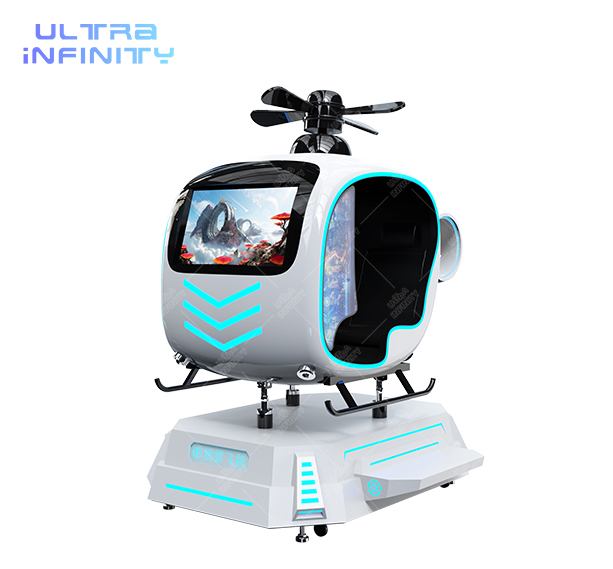
| 9D flight simulated cockpit | 1 | ~$9,700 | Mid-size arcades; strong kid & family draw |
| 360 rotating fighter chair | 1 | $16,800 | Flight zones; the anchor machine |
| 720 flagship multi-seat | 2 | $44,000 - $47,000 | Flagship venues; centerpiece build |
A common buyer mistake is comparing these factory numbers across vendors without asking what is inside: seat type (rotating vs fixed), motion system (2-DOF pitch vs full 360 spin), included games (a 40-plus-game library vs a single title), and whether the quoted price includes the VR headset, spare joysticks and the mounting frame. The VR flight and aerial combat zone guide shows why the machine count - not the vendor price - drives zone economics.
The sea leg is where factory-gate apples stop being comparable. As of late 2025, spot ocean freight for a 40-foot high-cube from China to US West Coast averaged $2,800-$3,600, with spot lows near $1,900-$2,600 in August 2025, and US East Coast runs averaged $3,600-$4,500, according to Xeneta and Drewry freight-index data compiled by shipping logistics teams. China-to-Northern-Europe 40-foot prices tracked $4,375 in January 2025 rising to $4,641 by December 2025, with a 2025 October peak near $5,200-$5,500, per the Drewry/Freightos FBX11 index.
Most single VR fighter seats move as LCL (less-than-container-load) cargo. As of the same period, published LCL rates sit at roughly $40-$60 per cubic meter to the United States and $110-$190 per cubic meter to Europe, and a single rotating fighter seat occupies about 8.4 cubic meters at roughly 300 kg. That puts the sea leg for one machine near $400-$500 to the US and $1,000-$1,600 to Europe, according to small-parcel freight rate guides.
| Lane (40ft FEU) | Average Range | Spot Low (seen 2025) | One Fight-Cube Share (LCL) |
|---|---|---|---|
| China to US West Coast | $2,800 - $3,600 | $1,900 - $2,600 | ~$400 - $500 |
| China to US East Coast | $3,600 - $4,500 | $3,000 - $3,700 | ~$500 - $650 |
| China to Northern Europe | $4,375 - $4,641 | peak $5,200 - $5,500 | ~$1,000 - $1,600 |
The freight slot matters more than many buyers expect, because it moves with the booking week - the "as-spotted" number can swing $1,000 on one 40-foot box between a quiet and a peak window. Buyers who fix a landed-cost budget before quoting freight typically miss by exactly this line. If two or three machines go together, a 20-foot container becomes cheaper per seat than three LCL legs, which is why the how much can a 360 VR Thunder Fighter earn zone math assumes a small multi-machine fleet from the start.
Import duty is the line where two identical factory-gate machines diverge into very different landed costs. For amusement rides and arcade equipment, the United States classifies VR simulators under HTS 9508.24 (rotating amusement rides / motion simulators) or 9504.50 (coin-operated video machines); the statutory "General" duty rate is Free, but machinery of Chinese origin carries cumulative Section 301 (25% or 7.5% depending on the tranche) plus IEEPA surcharges, so the effective US duty commonly lands between roughly 7.5% and 35% depending on the week of entry, according to the USITC HTS publication and current tariff advisories.
Europe is the mirror image. The EU classifies the same machine under HS 9508, where the MFN rate for third countries (including China) is a flat 1.7%, and then layers destination-country VAT of 19-27% on the CIF value (goods plus freight plus duty), according to the EU TARIC schedule. That is why the same fighter jet simulator is cheaper landed in most of Europe than in the United States despite the longer sea leg: the sit-line split makes duty the swing factor, not the ocean.
| Market | HS Code | Statutory Duty | China-Origin Effective | VAT / Other |
|---|---|---|---|---|
| United States | 9508.24 / 9504.50 | Free | ~7.5% - 35% (Sec 301 + IEEPA) | No national VAT |
| European Union | HS 9508 | 1.7% MFN | 1.7% | VAT 19% - 27% on CIF |
Because duty rates move with tranches and exclusions, a landed-cost sheet is only as current as its tariff line. Before signing, have the vendor state the HTS classification in the proforma, and have your forwarder re-check the Chapter 99 general note on the day you book. The tax note in the article applies at planning level: build a 10-15% duty-and-varianceline into any US landed-cost model so a tranche change does not blow the buy.
Destination-port charges quietly add 3-7% to a landed-cost number and are the most commonly dropped line in a factory-gate comparison. On the US side, the statutory fees are the Merchandise Processing Fee (MPF) at 0.3464% of value, capped between $33.58 and $651.50, plus the Harbor Maintenance Fee (HMF) at 0.125% on ocean cargo, per the CBP Federal Register fee schedules. Terminal and documentation charges (THC/DHC) on a 40-foot box run about $680-$780 at destination for 2025, and drayage to a local door runs $250-$500 baseline with $600-$900 at Los Angeles/Long Beach gateways, according to 2026 drayage rate surveys.
Inspection is the wildcard: a VACIS x-ray runs $50-$200, a tail-gate exam $200-$500, and a full container exam $500-$2,000+ when a shipment is pulled, according to customs-broker guides. A freight forwarder or customs broker typically charges $100-$300 per entry on top, which is line-item money that trips buyers who only priced the machine. Europe mirrors this with destination THC and document fees in the $300-$600 range for an LCL shipment, though rates vary by port pair.
| Destination Fee (US) | Typical Amount | Notes |
|---|---|---|
| MPF (Merchandise Processing Fee) | 0.3464% (capped $33.58 - $651.50) | Per Customs entry; statutory |
| HMF (Harbor Maintenance Fee) | 0.125% on ocean cargo | Statutory; ocean import only |
| THC / DHC terminal charges | $680 - $780 per 40ft | 2025 published tariff level |
| Drayage to door | $250 - $500 base ($600 - $900 LA/LB) | Distance and gateway dependent |
| Exam (VACIS / tail-gate / full) | $50 - $2,000+ | Only when pulled; budget the tail |
The practical rule is to add a consolidated "destination" line of roughly $1,000-$1,300 per single-machine LCL entry to the United States, and $600-$900 for Europe, before install. Venues buying a fleet spread a single exam risk across seats, which is one more reason the VR flight zone for malls and family centers model plans machines in batches rather than one at a time.
Install and commissioning is the shortest stage and usually the least-priced. Vendors commonly offer a factory engineer trip at roughly $100 per working day for 3-5 days plus airfare, visa and accommodation on the buyer side, and operator training is frequently bundled into the equipment purchase, according to in-sale terms from VR arcade machine vendors. Many buyers skip the trip and commission remotely, which works for plug-and-play seats.
The electrical reality is the budget item that bites: a commercial VR flight zone typically needs a dedicated 20-amp circuit per machine bay, and electrical buildout at an operating venue runs roughly $3,000-$12,000 depending on panel capacity and runs, according to venue-operations electrical guidance. Add the safety ring - floor fixing bolts, gravity rails around the 360 swing, safety matting and cable management - which installs with the machine rather than after it.
With a $16,800 fighter chair, count roughly $2,000-$3,000 for install, commissioning and the electrical upgrade at a venue that already has usable power nearby, less if it is a bolt-in add-on to an operating floor. The VR flight simulator setup guide itemizes these install-stage lines so the comparison stays apples-to-apples across vendors.
The final pipeline stage is the buffer that keeps a landed cost honest across the first year. Commercial VR arcade vendors commonly warrant hardware for 12 months and provide lifetime software updates with lifetime technical support, and published hidden-cost guides for VR arcade maintenance put a 10-machine floor at roughly $6,000-$18,000 per year in service and spares, with spares budgeted near 10% of CapEx.
Per-seat consumables are the visible band: replacement headsets for commercial duty cycle around 2,500 hours at $600-$2,500 per unit, joystick and headstrap wear parts $50-$200, and seat motors and sensors $300-$1,000 on a replacement cycle, according to commercial VR hardware lifecycle and amusement-park maintenance references. Intended venue uptime - how many sessions per day that $16,800 fighter chair actually runs - decides how fast those lines eat the buffer.
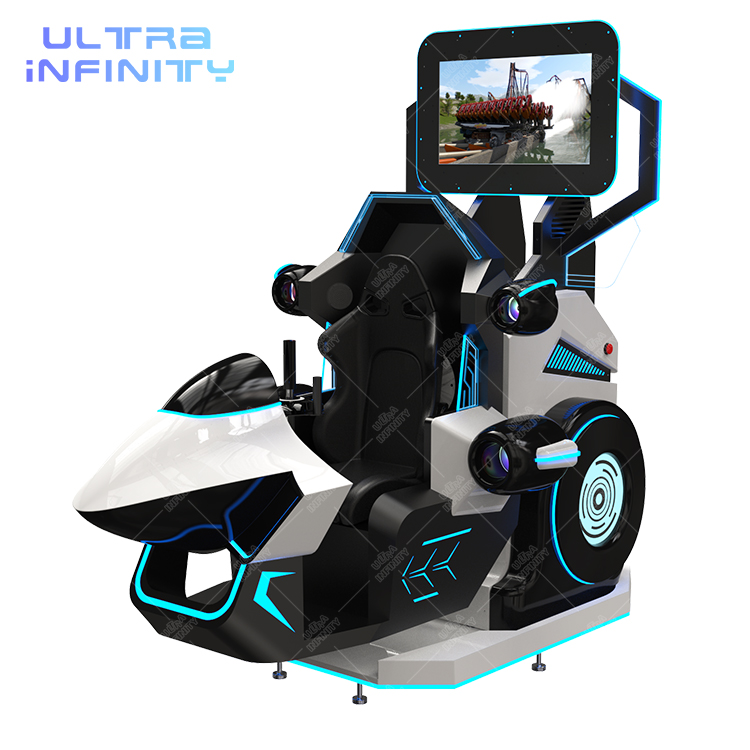
Running the full pipeline on an Infinity cluster: the VR Thunder Fighter F2 is the per-seat fighter anchor, the 360 VR Thunder Fighter adds a rotating flight-and-racing seat to the same zone, and the 9D VR airplane machine gives family-and-kids pricing a lower-intensity slot - three seat classes that stack into the freight and duty base instead of three separate suppliers. Request a line-item landed-cost quote through the free 3D layout service and the pipeline turns into a budget your venue can actually execute.
The landed-cost questions import buyers actually ask when a VR fighter jet simulator enters the purchase plan, answered with the pipeline numbers above.
Compress to two numbers: about $9,700-$17,000 at the factory gate for a single-seat 360 fighter, and roughly $22,400-$25,800 landed and running in the United States once freight, duty, port fees, install and spares are added. Europe lands lower because duty is a flat 1.7% plus VAT.
Vendor packages vary: seat type (rotating vs fixed), motion system, included games (40-plus vs single title), headset, mounting frame and spare joysticks. Always ask what is inside the number - the Infinity F2 quotation includes the rotating fighter seat, joystick flight controls and integrated combat library.
An LCL sea leg for one rotating fighter seat runs about $400-$500 to the United States and $1,000-$1,600 to Europe at current published LCL rates ($40-60/CBM US, $110-190/CBM Europe). A two-or-three-machine order moves to a 20-foot container and cuts the per-seat freight.
United States: statutory Free on HTS 9508.24, but China-origin cargo carries Section 301 plus IEEPA surcharges totaling about 7.5-35% depending on the entry week. European Union: flat 1.7% MFN plus destination VAT of 19-27% on the CIF value.
Plan $1,000-$1,300 for a single-machine LCL entry to the United States (MPF 0.3464%, HMF 0.125%, THC/DHC $680-780, drayage $250-500, broker $100-300, exam risk) and $600-$900 to Europe. These are the most-dropped line in factory-gate comparisons.
Vendor engineers charge roughly $100/day for 3-5 days plus airfare, visa and accommodation, or commission remotely at no trip cost. The electrical line is bigger: a dedicated 20-amp circuit per bay runs $3,000-$12,000 at an operating venue. Budget $2,000-$3,000 total for install and electrical on a bolt-in seat.
Hardware is commonly warrantied 12 months with lifetime software updates and technical support. Published arcade-maintenance guidance budgets $6,000-$18,000 per year for a 10-machine floor, spares near 10% of CapEx, replacement headsets $600-$2,500 at commercial duty cycles.
Usually Europe, because EU duty is a flat 1.7% (plus VAT) while US China-origin duty runs 7.5-35% depending on tranche and week - even though the Europe sea leg costs 2-3x the US leg. Country choice changes landed cost more than machine price.
The zone blueprint prices six rotating fighters plus fit-out at roughly $22,000-$34,000 total; the per-seat landed-cost view here prices the import and install pipeline that gets each machine to that zone. Run both to see total cash out the door.
Yes - the free 3D layout service reconciles your floor plan and door-country, and the sales team issues a line-item landed-cost quote (freight lane, duty application, destination fees) for your specific port pair. Ask for the pipeline breakdown, not a single number.
The free 3D layout service turns your floor plan and port pair into a line-item landed-cost quote - freight lane, duty application and destination fees - so the six-stage pipeline becomes your budget. Request the breakdown, not a single number.