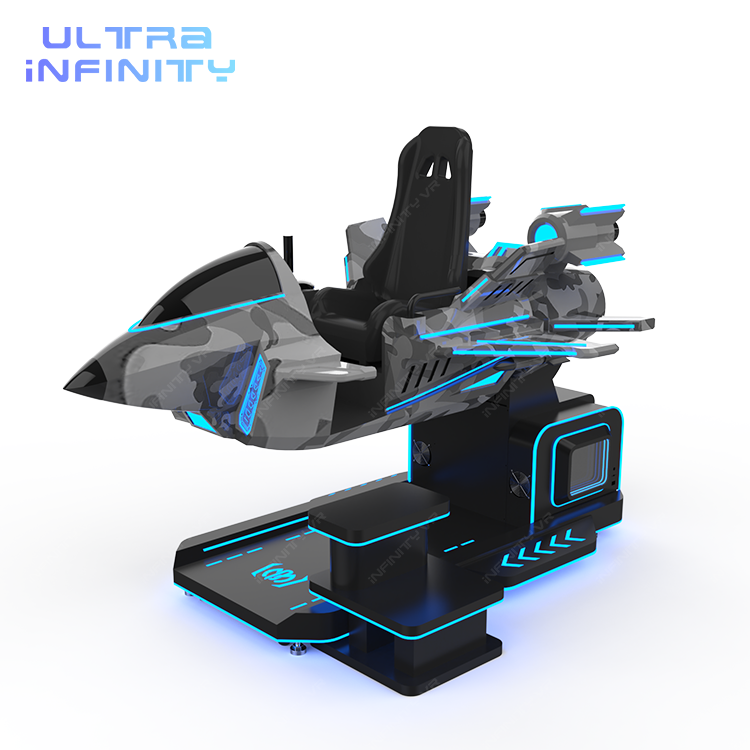
How much can a 360 VR thunder fighter earn? If you are planning a flight attraction for a family entertainment center, the numbers you keep hearing are built around 360 rotating chairs that spin, tilt and pitch through virtual dogfights. In my experience helping operators across 25 countries set up VR flight zones, a 60m2 fighter zone with six rotating chairs opens for far less than people expect: $22,000 to $34,000 including equipment, fit-out, licensing and working capital.
The reason the combat flight format works is that it turns a passive ride into a skill game. Players do not just watch a cockpit view; they steer with a flight joystick, pull triggers to shoot, and feel every bank and dive through the 360 rotating chair. That physical feedback creates a line worth waiting for. The VR Thunder Fighter F2 is the rotating engine behind this format: a single-player 360 degree chair with pilot flight joystick and integrated shooting, so the same machine serves kids, teens and corporate groups.
This guide walks through the full cost structure, the 60m2 layout, the revenue math behind a 6-8 month payback, and the launch sequence we run with operators. Every figure below comes from real projects, not brochure numbers.
Let me break down the real cost of a 360 VR thunder fighter zone the same way I do with every operator before they sign anything. The total depends on three blocks: equipment, fit-out, and working capital. For a 60m2 zone with six rotating fighter chairs, a flight counter and queue rails, the realistic opening budget sits between $22,000 and $34,000.
| Cost Item | Budget Range | Notes |
|---|---|---|
| VR Thunder Fighter F2 (rotating flight chair) | $3,200 - $4,800 | 360 rotation, joystick flight, integrated shooting, one machine per player |
| VR Thunder Fighter 360 (added units) | $3,000 - $4,500 | Roughly the same rotating chair platform with flight and racing game modes |
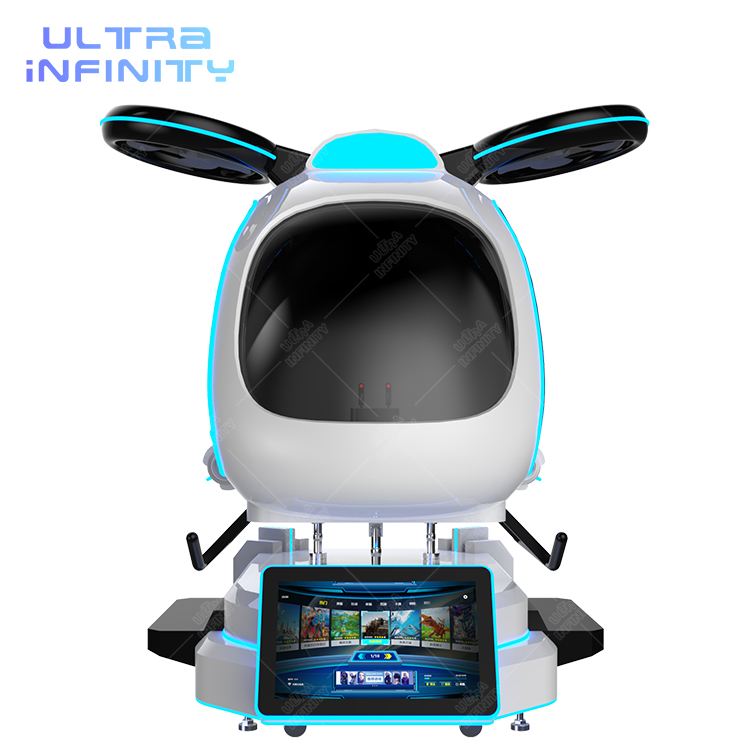
| VR Flight Game Simulator (2-player cockpit) | $5,500 - $7,500 | Two-player 9D airplane machine for family flights and party slots |
| Queue rails, matting and safety trim | $1,200 - $2,000 | Boundary marking, fall protection and cable management |
| Lighting, signage and basic fit-out | $2,500 - $4,500 | Dark-sky theme walls, LED strips and flight zone branding |
| Licenses, insurance and deposits | $1,200 - $2,500 | Standard commercial insurance; no special license required for VR |
| Working capital (first 2 months) | $1,500 - $3,500 | Marketing and staff before cash flow turns |
If you already run an entertainment venue, the fit-out block shrinks to near zero because the flight zone bolts into existing floor space. Adding three F2 fighters and one flight simulator to an operating arcade costs only the equipment block: $15,000 to $22,000.
The layout is where most operators lose money before they even open. A common mistake is spreading six fighter chairs across a huge floor, which doubles fit-out cost and kills the energy of a packed flight zone. The layout that works is a dense 60m2 block: six rotating chairs in two facing rows of three, one 2-player flight cockpit at the back, a ticketing counter at the entrance, and queue rails that funnel waiting players past the action.
Machine spacing matters more than people think. Each rotating chair needs a 1.8m safety radius because the 360 arm swings a full circle, and the cockpit needs a 2.5m clearance in front for the two-player cabinet. With that geometry, a 60m2 zone fits six single fighters plus one cockpit, which is the density that produces the highest revenue per square meter.
| Zone Element | Space | Throughput |
|---|---|---|
| F2 fighter row (3 chairs) | 18 m2 | 3 players per 8-min flight |
| 360 fighter row (3 chairs) | 18 m2 | 3 players per 8-min flight |
| 2-player flight cockpit | 12 m2 | 2 players per 6-min flight |
| Counter and queue rails | 8 m2 | Manages 12 waiting players |
| Blower-free cabinet spacing | 4 m2 | Safety radius for rotating arms |
The total is 60m2 for six fighters plus one cockpit. Compact versions run in as little as 40m2 with four fighters, which is the footprint we use for hotel game rooms and boutique arcades.
The revenue model for a 360 flight zone has four layers, and the top layer is where the money actually lives. The base layer is the single flight: $8 to $12 for one 8-minute combat mission, which anchors the price point and fits impulse purchases. The second layer is the flight pack: three missions for $20 to $26, which lifts average spend per player by 40 percent because the rotating chair experience gets better with practice.
The third layer is the party package: $220 to $380 for a private 2-hour flight session that reserves the zone, includes two coached dogfights per child, and converts weekend capacity into guaranteed revenue. The fourth layer is the corporate event: $600 to $1,200 per session for team flight battles with a leaderboard, which fills weekday mornings that would otherwise sit empty.
| Revenue Layer | Price | Share of Revenue |
|---|---|---|
| Single flight mission | $8 - $12 | 38% of gross |
| 3-flight pack | $20 - $26 | 27% of gross |
| Birthday party package | $220 - $380 | 22% of gross |
| Corporate flight events | $600 - $1,200 | 13% of gross |
A 60m2 zone running these four layers generates $9,000 to $13,000 per month in a mid-size city, and the machine mix pays for itself in 6-8 months. Operators who add a leaderboard screen and monthly flight leagues lift the pack conversion rate by another 15 percent.
Operating a flight zone is simpler than most operators fear because the machines have no consumables and need no special staff certification. The real cost drivers are labor, rent and the occasional rotating-arm service contract. A typical monthly OPEX for a 60m2 zone is $4,500 to $6,500: about 42 percent staffing, 28 percent rent or revenue share, 12 percent electricity, 9 percent insurance and licensing, and 9 percent marketing plus miscellany.
Staffing is one flight attendant per two chairs at peak, one counter clerk and one duty manager, which is five people on a busy Saturday and two on a weekday. Electricity is the surprising item: each rotating chair draws about 0.6kW under load, so six chairs plus the cockpit add roughly $150 to $250 per month to the utility bill. Machine servicing is a half-day quarterly visit from the NextPlay network, covered by the 2-year warranty.
| OPEX Item | Monthly Cost | Share |
|---|---|---|
| Staffing (peak + duty staff) | $1,900 - $2,700 | 42% |
| Rent or revenue share | $1,300 - $1,800 | 28% |
| Electricity (6 chairs + cockpit) | $150 - $250 | 12% |
| Insurance and licensing | $400 - $600 | 9% |
| Marketing and miscellany | $400 - $600 | 9% |
At $4,500 to $6,500 monthly OPEX against $9,000 to $13,000 gross, the flight zone keeps a direct operating margin of 48 to 55 percent before debt service, which is healthy for a compact attraction and leaves room for the machine payment.
Sustaining the payback math depends on a launch sequence that builds the booking calendar before opening day. We run the same 90-day roadmap with every flight zone operator, and the operators who follow it open with 20 percent of capacity already booked. The sequence has three phases: build, soft-launch, and scale.
Every operator we have guided through this sequence opened with a booking calendar that was at least 20 percent full, which is the difference between a nervous first month and a profitable first month.
A 60m2 flight zone with six rotating fighters and one cockpit generates $9,000 to $13,000 per month in a mid-size city, with a direct operating margin of 48 to 55 percent.
The F2 rotating flight chair runs $3,200 to $4,800 per machine depending on configuration and volume. A six-machine zone with one cockpit is $22,000 to $34,000 installed.
Flight zones earn from single missions, 3-flight packs, birthday party packages and corporate flight events. The packs and events are the high-margin layers.
With party and corporate bookings pre-sold before opening, operators reach break-even in 6-8 months on the equipment investment and 9-12 months on a full fit-out.
A complete zone with six fighters and one cockpit fits in 60m2. Compact versions with four fighters run in as little as 40m2.
Yes. The 360 rotating chair is enclosed with a safety radius, and NextPlay machines meet CE and standard arcade safety requirements. Height minimums are set per machine.
Ask NextPlay for a thunder fighter zone proposal: 3D floor CAD drawings, F2 and 360 fighter pricing, and a payback model tailored to your venue size and city.