A 9D VR motion theater works by closing a loop between three systems: a motion platform that moves the seat, a VR headset that paints the world, and an effect rack that pushes wind, vibration and back-push into the body on cue. A rider boards, the operator fits the headset, a two-to-ten-minute film plays, and the platform tilts, drops and vibrates at exactly the moments the film calls for them. When motion, sound and effect land in the same second, the body stops reading the experience as a screen and starts reading it as a ride - that is the whole trick, and this guide opens the machine up step by step so a buyer knows exactly what they are pricing.
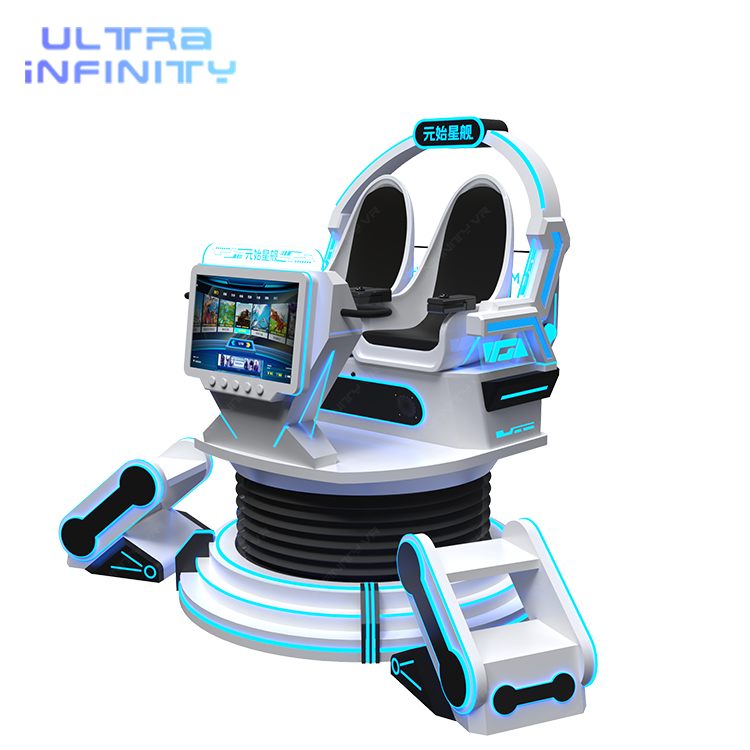
First, the motion platform. The seat sits on an electrically driven base that pitches, rolls and drops in sync with the picture - this is the hardware the published feel-like guide (what does a VR egg chair feel like) describes from the rider side: the platform moves under you for the whole session, and the motion is what turns a video into a ride. Bigger multi-seat formats step up to electro-hydraulic platforms - the VR Starship U2 runs a 5-DOF electro-hydraulic base for heavier motion, while the closed-shell egg chairs run on compact electric bases.
Second, the headset and content. The headset is the picture; the film is the script the platform follows. Every title - coaster, dino, zombie, space, family - carries its own cue track, which is why the same cabinet can run a gentle family film in the morning and an intense coaster in the evening. The published games guide (the best 9D VR egg chair games for families and kids) breaks down which titles fit which audience, and the intensity choice is a programming decision, not a hardware change.
Third, the effect rack. Wind blows toward the face on drops, the seat vibrates on engine and impact cues, back-push fires on acceleration, and leg sweeps land on turns - the published effect walkthrough names each one as it fires. None of the effects carries the ride alone; they exist to agree with the picture at the same instant, and that agreement is what the body reads as real.
The loop runs the same way on every 9D cabinet, from a single egg chair to a five-seat cinema. Boarding: the rider sits in the shell, the operator straps them in, fits the headset and adjusts the lens spacing - a step that takes seconds when staff know the machine, and the most common fix in the whole operation (a blurry image is a lens-spacing fit, not a fault). Ride: the film plays two to ten minutes depending on the title, the platform and effects fire on cue, and the rider steers by looking or with a handle depending on the film. Disembark: the screen goes home, the straps release, the rider steps out, the operator wipes the headset face pad, and the next rider boards.
| Loop stage | What happens | Time (published) | Who does it |
|---|---|---|---|
| Boarding and strap-in | Rider seated, harness set, headset fitted, lens spacing adjusted | 2-3 min with boarding and safety check | Operator |
| Ride film | Platform tilts/drops, wind, vibration, back-push fire on cue | 2-10 min per title | Automatic (film cue track) |
| Disembark and reset | Screen home, straps release, face pad wiped between riders | ~1 min | Operator |
| Full cycle | Boarding + film + reset per occupied seat | 10-15 min | Both |
The loop is deliberately short. The published capacity analysis is explicit: a short cycle keeps the queue moving, keeps walk-aways down, and keeps sensitive riders from staying on long enough for discomfort to build. The loop is also self-contained - one operator can run a bank of seats because the film, not the staff, drives every motion and effect once the rider is strapped in.
The cycle math is the part a buyer prices. The published mall-zone analysis (how many 9D rides a mall zone needs) runs the numbers: a 10-to-15-minute full cycle serves about 4 to 6 riders per hour per seat, a busy mall frontage converts 8 to 15 percent of 500-1,500 passing shoppers per peak hour into roughly 120 peak-hour riders, and each motion seat yields about USD 80 to 120 per month. The formats comparison (VR egg chair vs 9D cinema formats) adds the per-machine view - a manufacturer quotes an average of about eight riders per hour on a 9D egg chair, with a planning rule of thumb of 6-8 real riders per hour per occupied seat.
| Published planning figure | Value | Where it comes from |
|---|---|---|
| Rides per seat per hour | 4-6 | Published mall-zone drain-rate table (10-15 min cycle) |
| Egg-chair average (vendor) | ~8/hr | Manufacturer quote in the published formats comparison |
| Footfall conversion to riders | 8-15% of passers | Published mall-zone capture analysis |
| Peak-hour riders, busy frontage | ~120 | Published mall-zone footfall math (500-1,500 passers/hr) |
| Monthly yield per motion seat | $80-120 | Published mall-zone seat-yield table |
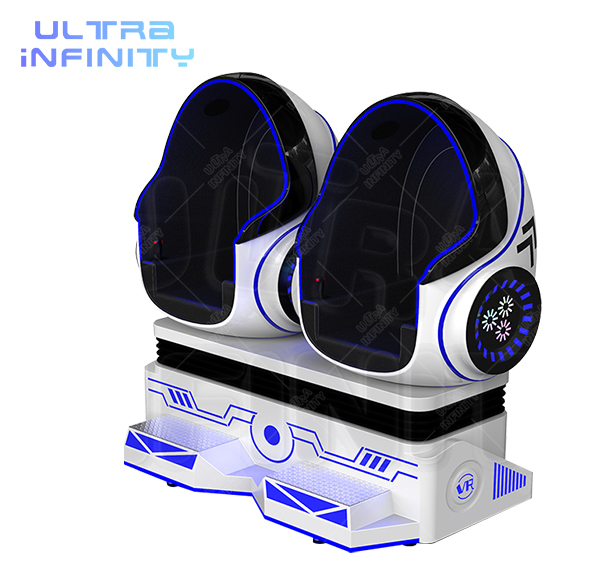
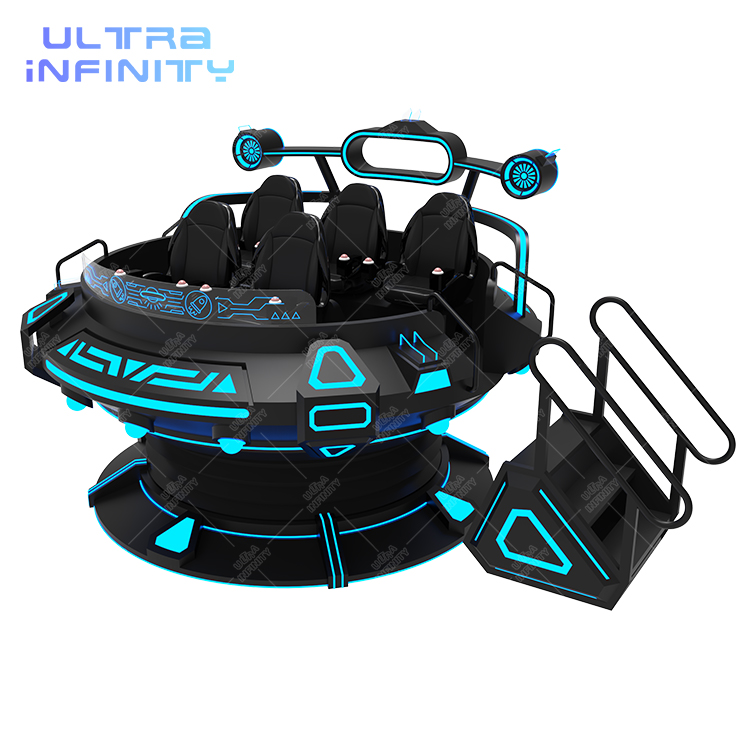
The same loop scales by adding seats, not by changing machines. The published format guide lays out the closed-capsule family: a single egg chair in the smallest operating cell, a dual-seat shell for pairs and families, a six-seat theater row, and the five-seat VR UFO cinema simulator with a 720-degree rotation profile at the spectacle end. Every format runs the identical ride loop - board, film, effects, reset - so the operator skill, the queue design and the film library carry over as the count grows. The published mall-zone count table puts 2-3 seats at a mall entrance for impulse traffic, 3-4 in a food-court dwell zone and 4-6 plus an arena at an anchor zone.
Scaling also changes what the zone earns. The published payback comparison (VR arena vs 9D motion theater - which pays back first) frames the trade: single seats pay back fastest per unit, while the theater and arena formats lift ticket size and group business per session. The loop mechanics do not change across that trade - a five-seat UFO runs the same cue track and the same effect rack per rider as a lone egg chair - but the revenue per cycle multiplies by seats filled, which is why the count decision and the traffic decision are the same decision.
Three practical consequences follow from the loop. One: the boarding step is the bottleneck - the 2-to-3-minute strap-in is the part of the cycle that staffing controls, and the published formats guide prices the single-seat egg as the fastest solo queue for exactly this reason. Two: the effect rack needs clearance - platforms pitch and drop, so the published footprint guidance reserves an operating cell around the cabinet outline beyond the bare 2-9 square meters a vendor quotes. Three: the headset is a consumable - the face pad wipes between every rider and the headset rotates through a hygiene cycle, which is why the loop ends with a reset step and why the maintenance shelf box belongs next to the machine.
The product set maps onto the loop directly. The VR egg chair is the loop in its smallest package - one seat, one operator, fastest reset. The Dino VR egg chair carries the same loop with a themed shell built for family traffic. The VR Starship U2 runs the loop as a two-player capsule with a 5-DOF electro-hydraulic platform. The VR UFO five-player cinema multiplies the loop by five seats under one attendant.
The questions buyers ask about the mechanics, answered with the published references.
A motion platform moves the seat, a VR headset paints the world, and an effect rack fires wind, vibration and back-push on the film cue track - when all three land in the same second, the body reads the screen as a ride.
The published loop walkthrough times it at 2-3 minutes of boarding and safety check plus a 2-to-10-minute film and about a minute of reset - a full cycle of 10-15 minutes per occupied seat.
The published mall-zone table runs 4-6 riders per seat per hour at the 10-15 minute cycle, and the formats comparison quotes a vendor average of about 8 per hour on a 9D egg chair with a 6-8 planning rule of thumb.
The published effect walkthrough names wind on drops, seat vibration on engine and impact cues, back-push on acceleration and leg sweeps on turns - each firing to agree with the picture at the same moment.
Yes - the platform and effect rack are the hardware; the film is the intensity. The published games guide breaks down family and kids titles against coaster and zombie titles on the same cabinet.
No - the published feel-like guide says a blurry image is almost always the headset lens spacing not matching the rider eyes, which staff fix in seconds.
The 9D motion theater in five lines.
See the loop running on the floor: sit the VR egg chair or the Dino VR egg chair as the first seat, scale to the VR Starship U2 capsule or the VR UFO five-player cinema, and read how many 9D rides a mall zone needs plus what a VR egg chair feels like for the full rider-side and capacity picture behind every number above. Plan the seat count against your own footfall with the free 3D layout design.
Send us the floor plan and the footfall you expect: we will return the seat count, the format mix and the layout through the free 3D layout design - anchored with the VR egg chair, the VR Starship U2 capsule or the VR UFO five-player cinema.