Commercial VR equipment is budgeted badly in one specific way: buyers price the machine and forget the floor it stands on, the power it draws, the headsets it consumes and the content that keeps it selling. The published commercial VR equipment guide (the commercial VR equipment guide) lays out the selection logic by format - motion chairs for compact throughput, capsule cinema seats for paired rides, free-roaming arenas for group play - and each format carries a different cost structure. A budget that only counts hardware will miss the lines that decide whether the equipment earns: the install checks, the consumables and the service arrangement.
The right way to build the budget is a stack, and the stack has four layers. The equipment line is the invoice everyone negotiates. The install line is the room readiness the equipment assumes - ceiling height, electrical capacity and floor loading, which the published ceiling-and-power guide (the ceiling and power requirements for 360 VR chairs) prices in clearances and dedicated circuits. The operating line is what the machine consumes - headsets, hygiene supplies, content licenses and the maintenance shelf box the published upkeep guide (the VR chair maintenance guide) turns into a daily-weekly-monthly routine. The revenue line is what the stack has to produce, and the published profitability analysis (whether a VR chair is profitable for an arcade) sets the bar at 12 to 16 rides per hour on a 2-to-3-minute cycle.
| Budget layer | What it covers | Published anchor |
|---|---|---|
| Equipment | The invoice: machine, shipping, commissioning | USD 6,000-12,000+ per commercial 360 chair |
| Install | Circuit capacity, ceiling clearance, floor prep | About 3.8 m clear height for rotating platforms |
| Operating | Headset refresh, hygiene, content licenses, service | Headset as a wearing part priced per session |
| Revenue | The rides per hour the stack must clear | 12-16 rides per hour on a 2-3 minute cycle |
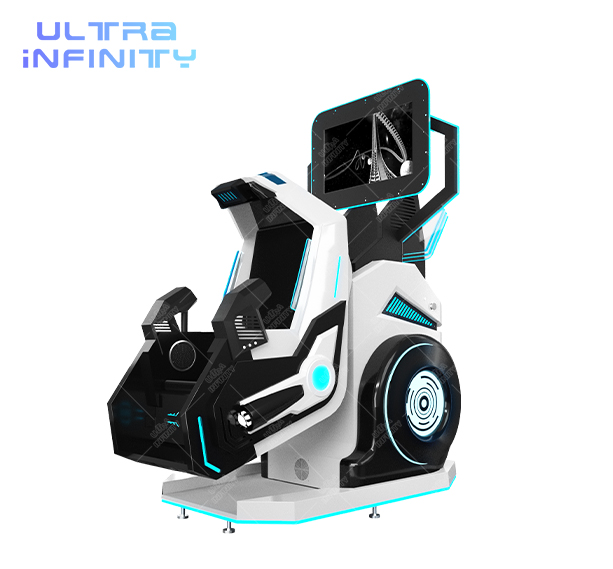
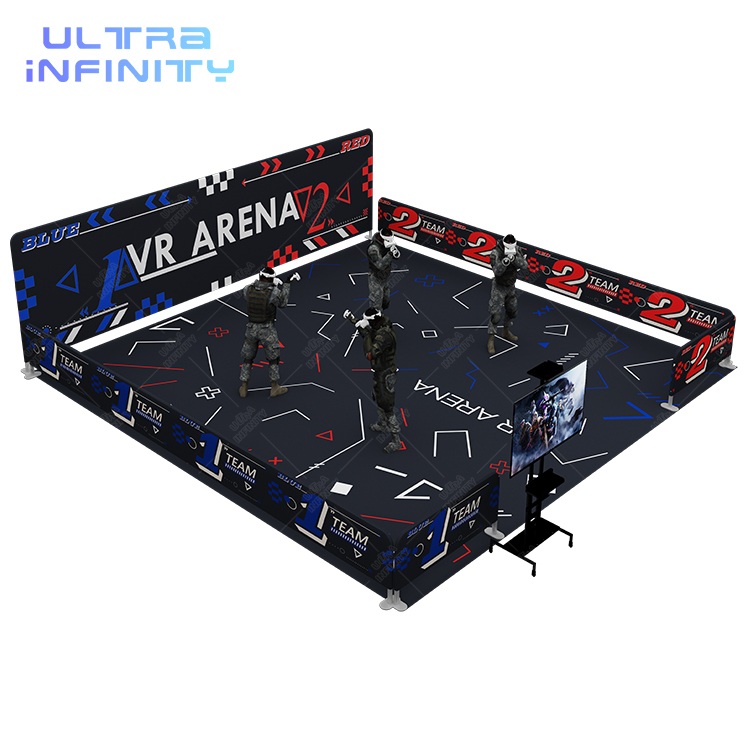
The equipment line splits by format, and the formats price very differently. The compact anchor of the category is the single-seat motion chair: the published cost guide (how much a VR chair costs) puts a commercial 360 chair at roughly USD 6,000 to 12,000 or more, and the same class of machine - the VR 360 motion chair single seat - carries a first-seat all-in figure of roughly USD 10,000 to 18,000 once the electrical work, the floor preparation and the first content library sit on top, per the published profitability analysis (the VR chair profitability analysis). At the other end of the scale, a free-roaming arena like the Free Roaming VR Arena 2.0 is a multiplayer system - trackers, backpack or tetherless headsets, the play volume and the station hardware - and it prices as a zone investment rather than a per-machine line, which is why the format guide (the commercial VR equipment guide) treats footprint and budget as one decision.
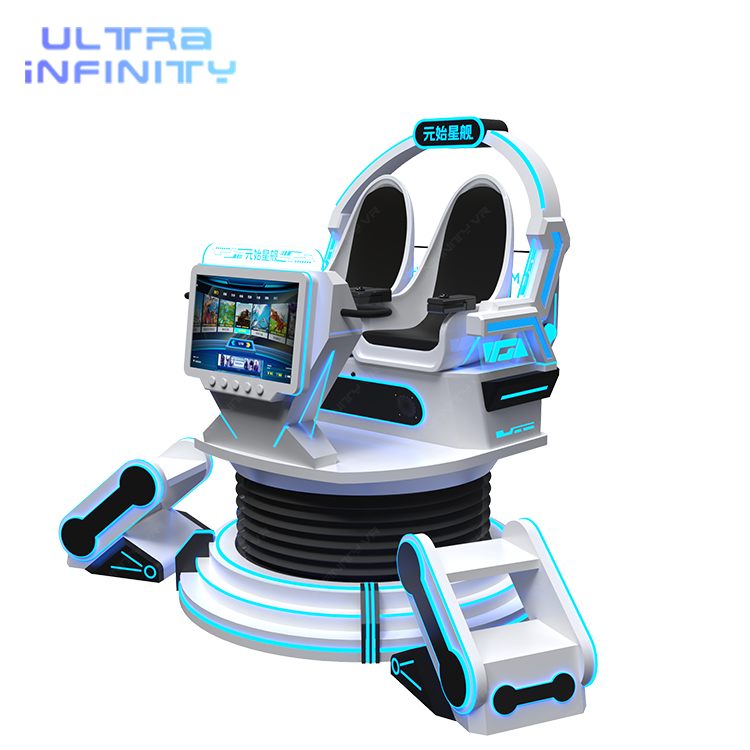
Between the two poles sits the capsule format. A two-player 9D cinema seat like the VR Starship U2 prices between the single chair and the arena because it sells two riders per cycle: the machine cost roughly doubles against a single seat, and so does the per-cycle revenue, which keeps the payback math honest only when the venue has the paired foot traffic to fill both seats. The published egg-chair format comparison (how many VR chairs fit in 50 square meters) prices the space side of the same trade: a 30-to-50 square meter corner holds a small chair fleet, and the arena is a different building decision entirely.
The practical budgeting rule the guide lands on: match the format to the floor, then price the fleet. A single chair is the cheapest test of a VR corner; a row of chairs multiplies throughput on the same counter staffing; a capsule pair sells couples and siblings; an arena sells groups and birthday parties and needs the room to justify it. The published format-mix checklist (the commercial VR equipment guide) sequences those decisions against foot traffic rather than against the catalogue, and the budget follows the sequence.
The lines that break VR budgets are the ones outside the equipment quote. Power and ceiling come first: the published install guide (the ceiling and power requirements for 360 VR chairs) separates the rated draw of a chair from the circuit capacity the room must reserve, and it records the rotating envelope that needs roughly 3.8 meters of clear height for a 360 platform - a clearance that disqualifies rooms after the invoice is signed unless it is checked first. Floor loading rides on the same check for the heavier capsule and arena systems.
Headsets are the consumable buyers misprice most often. The published headset selection guide (how to choose a commercial VR headset) frames the choice by venue duty cycle rather than by consumer spec, and the published replacement analysis in the same cluster prices per-session wear into the operating line: at venue throughput, a headset is a wearing part with a planned refresh, not a one-time purchase. The hygiene supplies that travel with the headsets - face pads, lens care, liners - sit on the same shelf box as the maintenance spares (the VR chair maintenance guide).
Content and service close the stack. The content library needs its licenses kept current and its rotation refreshed, because the published profitability analysis ties repeat play to the library the guest finds on the day; the ride profiles that pair each film to the chair motion need re-verification after every update, which the maintenance guide schedules monthly. Service is the last line: a venue technician can own the daily-weekly routine, and the service arrangement behind the warranty covers the motion-base electronics beyond it. Buyers who write those two lines into the budget before signing the equipment order are the buyers who do not discover them in month four.
The budget becomes an order through a sequence, and the sequence protects both the cash and the floor. First, measure the room against the format: the 50-square-meter analysis (how many VR chairs fit in 50 square meters) converts floor area into a chair count with the spacing the rotating envelopes need, and the free 3D layout design (the free 3D layout design) drops the specific fleet onto the actual plan before anything ships. Second, verify the install lines - power, ceiling, floor - against the product specifications. Third, price the operating stack: headset refresh, hygiene, content, service. Only then does the equipment invoice go out, with the fleet sized to the room instead of the room squeezed around the fleet.
Financing and phasing are the last levers. The published lease-versus-buy analysis in the equipment cluster prices the trade between cash outlay and monthly cost as a growth decision - lease the fleet while utilization is unproven, buy once the ride counts are on the log - and phasing the order (a chair pair this quarter, the capsule row next, the arena when the group business proves itself) keeps every installment matched to revenue that has already arrived. The published profitability model (the VR chair profitability analysis) supplies the ride counts that trigger each phase.
The final check is the product set itself. A budget built around the catalogue holds together when the equipment classes are compatible - the single-seat 360 chair, the two-player 9D capsule and the free-roaming arena share the counter-staffing model, the content platform and the maintenance discipline, so a fleet can grow across classes without re-engineering the operation around it. That compatibility is what turns a one-machine purchase into a VR zone, and it is the difference the equipment guide (the commercial VR equipment guide) is really written to explain.
The questions buyers ask when they budget commercial VR equipment, answered with the published references.
By class: a commercial 360 motion chair runs roughly USD 6,000 to 12,000 or more, and the first seat all-in lands at about USD 10,000 to 18,000 with electrical work, floor preparation and the first content library. Capsule pairs price between chairs and arenas, and a free-roaming arena prices as a zone investment rather than a per-machine line.
Five lines outside the equipment quote: circuit capacity and any electrical work, ceiling clearance for rotating platforms, the headset refresh cycle at venue duty, content licenses and rotation, and the service arrangement beyond the warranty. Each has a published reference line in the cluster.
A small VR corner starts at about 30 to 50 square meters for a chair fleet with proper spacing; a rotating 360 platform needs roughly 3.8 meters of clear height; a free-roaming arena is a zone-level footprint decision. The published layout analysis converts floor area into chair counts.
The published lease-versus-buy analysis treats it as a growth decision: lease while utilization is unproven to keep cash available, buy once the ride counts on the maintenance log prove the floor. Phasing the order by format keeps each installment matched to revenue already arriving.
At venue duty cycles a headset is a wearing part with a planned refresh, priced per session in the published replacement analysis. The hygiene loop (face pads, lens care) runs on the daily schedule alongside it, and one known-good spare stays in the rotation.
The published format-mix checklist sequences by floor and foot traffic: a single 360 chair or a chair pair tests the corner, a capsule row adds paired riders, and the free-roaming arena follows when group and party business justifies the zone. All three classes share the same counter staffing and content platform, so the fleet can grow across classes.
Five lines to carry into a commercial VR equipment budget.
Start the sequence: drop the fleet onto the actual room with the free 3D layout design, then build the order around the VR 360 motion chair single seat, the VR Starship U2 capsule and the Free Roaming VR Arena 2.0, and read the commercial VR equipment guide for the format-mix logic that sequences them.
Send us the room and the format you are weighing: we will return the four-layer budget model, the fleet sizing and the floor plan with the free 3D layout design - anchor the order with the VR 360 motion chair, the VR Starship U2 capsule or the Free Roaming VR Arena 2.0.