A profitable VR arena in 2026 is not built by buying hardware - it is built by running one ledged sequence: size the floor to your traffic, cost the build line by line, model revenue per square meter, prove the payback, then launch and keep the floor filled. Each step in this guide relays to a published deep dive in the same cluster, so you get the model here and the full math in the step you need.
The headline numbers that anchor the 2026 model: a free-roam arena holds roughly 4-8 players per session and runs 8-15 minute rounds, pricing lands near $12 a head with group rounds - and a mid-size arena reaches around $320 per square meter a month when the floor stays full. The free-roam VR arena ROI blueprint and the 2026 setup-cost breakdown open the cost side, while the revenue-per-square-meter report opens the income side; this guide binds them into the launch ledger.
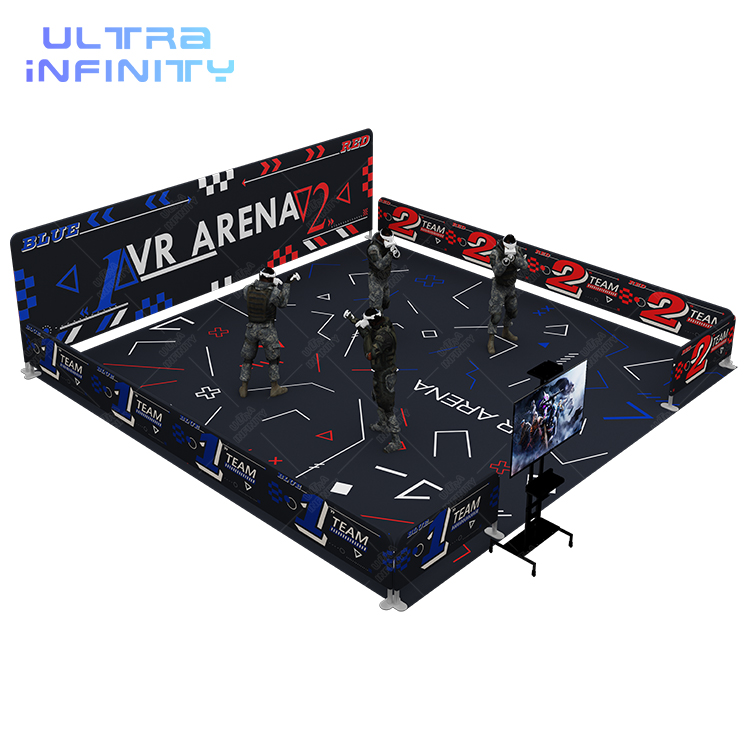
VR arena profitability is floor-size sensitive: too small and queues cap your revenue, too large and empty space rents against you. The VR arena sizing guide sets the floor at a playable minimum around 40 m2 and walks the 60-80 m2 mid-range and the 120 m2 full-spec build, while the mall atrium yield guide shows a compact 80 m2 combat floor doubling yield by running four-player rounds through one host desk.
Sizing the way the cluster models it: a 60 m2 arena running 4-player combat with an 8-minute session schedule is the reference day that hits $1,200 gross in the 60 m2 daily-revenue math. The practical rule is sized-to-wait: if your evenings would run a queue longer than a session, the floor is undersized for your traffic - and when they would not, the floor is oversized for your market.
Before a single line of build cost, answer three questions: confirmed walk-through traffic per day, the session length that keeps a group feeling (8-15 minutes), and the number of concurrent groups your staff can host. The five-payback-mistakes guide documents the cost of getting this wrong - sized claims, short sessions and undersized buffer zones throttle throughput on opening day.
| Floor Sizing Reference | Configuration | Reference Day | Cluster Deep Dive |
|---|---|---|---|
| 40-60 m2 lean build | 4-player, 1 arena | ~$1,200/day (60m2 reference) | 60 m2 arena daily math |
| 80 m2 atrium build | 4-player rounds, host desk + spectator wall | Yield-doubling layout | atrium yield guide |
| 120 m2 full spec | 8-player, multi-mode | Higher per-session capacity | arena sizing guide |
The 2026 setup-cost guide breaks a free-roam arena into line items: headsets, backpack PCs, tracking hardware and infrastructure, with the honest range spanning a 4-player starter around $28,000 up to a full 8-player build around $85,000. The earlier free-roam ROI blueprint frames the same build as a commercial decision with a per-pod yield and a payback horizon you can benchmark against.
Do not skip the non-player lines when you cost the build - they are the ones that break payback models. The heat and ventilation guide covers the HVAC load of a packed arena (headsets, backpack PCs and bodies all warm the room), and the first-aid protocol guide covers the safety staffing that a reactive floor needs. Both belong in the build line item, not in a surprise column.
| Build Line | 2026 Planning Range | Source |
|---|---|---|
| 4-player starter (full) | ~$28,000 | 2026 setup cost |
| 8-player full build | ~$85,000 | 2026 setup cost |
| HVAC / ventilation load | Packed-floor allocation | heat & ventilation guide |
| Safety staffing + protocol | Reactive floor line | first-aid protocol |
| Per-pod yield (older baseline) | $3,600/mo per pod | free-roam ROI blueprint |
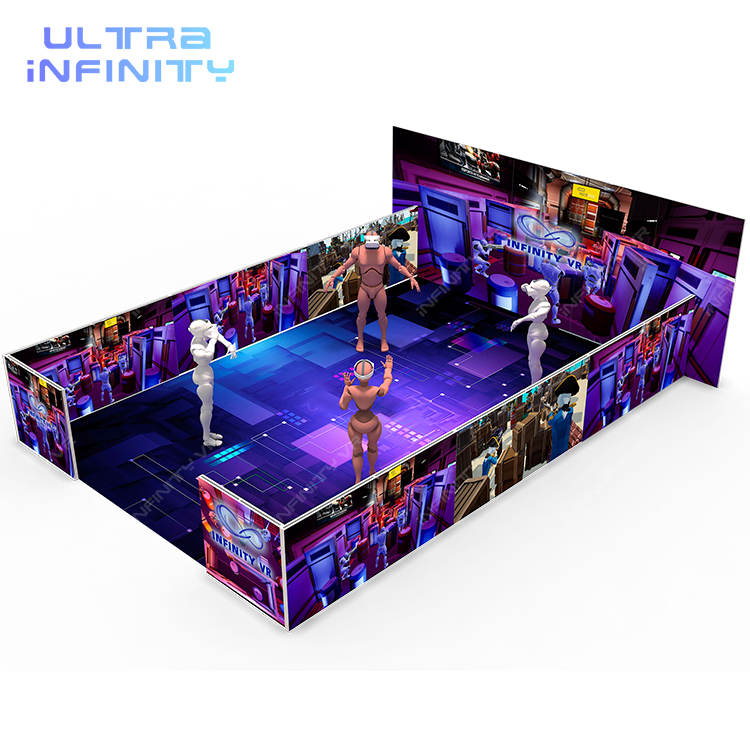
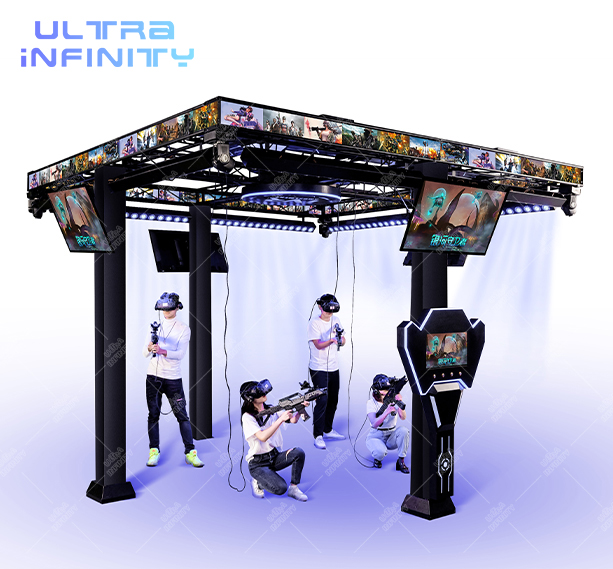
The single most reliable leverage point is equipment: the VR Arena 2.0 system is the flagship walking-shooting configuration for a full floor, the free-roaming VR arena is the multiplayer space package, and the VR standing-platform multiplayer unit slot-fills smaller corners. Ask the sales team for the dated quote that itemizes headsets, backpacks and tracking so your payback math starts from a real number.
The number that decides arena value is revenue per square meter, because it is what beats the rent. The VR Arena 2.0 per-square-meter report models a 200 m2 arena reaching about $320/m2 monthly when capacity, session turnover and utilization behave - a planning ceiling you can test against your own floor. The two arenas vs a row of shooters guide measures the same question at the configuration level with tested per-meter returns.
Per-head pricing is the multiplier under per-square-meter: the charge-$12-a-head math explains why an arena prices a shared 15-minute group round at $12 a head while a solo cabin prices half as much - the arena sells a group-round structure that moves four players per session, which is how 4-player throughput compounds into per-square-meter yield. Set your own round price with the arena pricing ladder: a 15-minute walk-in rate, a private buyout tier and a season pass.
| Revenue-per-sqm Reference | Planning Value | Cluster Source |
|---|---|---|
| VR Arena 2.0 (200 m2) | ~$320/m2 per month | per-sqm report |
| 60 m2 reference day | ~$1,200 gross/day | 60 m2 daily math |
| Per-head pricing | $12/head shared group round | $12-a-head pricing |
| Per-meter config comparison | Arena vs shooter row, tested | arena vs shooter row |
Model both days: a peak day at full queue and a weekday at school-group-led customer flow. The weekday filling guide builds the school-group and esports-league demand that keeps weekdays from dragging the monthly per-square-meter number down.
Payback is the step where the cluster is most explicit, because it is the number buyers care about. The mall arena $20,000-a-month P&L builds a bottom-up profit and loss from six revenue streams to a $20,000 month, and the arena vs 9D motion theater cash flow compares a free-roam arena with a motion theater on the same mall floor to show which pays back first in year one.
The five mistakes that kill payback - oversized footprint claims, sessions too short for memory, undersized buffer zones, understaffed host desks and a single-price menu - are the negative case in the payback mistakes guide. A clean year-one model avoids all five and lands the payback from the $28,000-$85,000 build range inside the horizon the ROI blueprint benchmarks, with the per-square-meter report as the density ceiling on the top line.
| Year-One Reference | Planning Value | Source |
|---|---|---|
| 6-stream P&L target | ~$20,000/month (mall build) | mall arena P&L |
| Arena vs 9D comparison | Year-one cash flow, same floor | arena vs 9D cash flow |
| Payback killers (avoid) | 5 named mistakes | 5 payback mistakes |
| Per-pod yield baseline | $3,600/mo per pod | free-roam ROI blueprint |
When the model passes, commit - then give the floor the second revenue line the cluster documents: the families-all-evening guide shows the kid-zone + adult-combat floor plan that turns a two-hour visit into a full evening, and the spectator wall that the atrium yield guide sells as a queue-side revenue stream.
The last step is execution. The 30-day go-live timeline walks ordering, shipping, installation, calibration and the soft-launch window that gets a signed order to a first paid session, and the week-one traps live in the mistakes guide. Launch-day readiness includes the staffing and safety protocols in the first-aid guide and the airflow plan in the ventilation guide - a packed floor on a hot day is a review risk no amount of per-square-meter modeling fixes.
After launch, profitability is a filling job, not a building job: school groups and esports leagues for weekdays (weekday fill guide), the family-stay floor plan for evenings (families guide), the buyout and season-pass tiers for weekends (pricing ladder). The queue is the profit engine - build the host desk and the spectator sightline to make it visible (atrium yield guide).
Run your actual floor plan through the free 3D layout service so the sizing and buffer-zone math binds to your real walls, and ask the sales team for the dated quote with headsets, backpacks and tracking itemized - then close the ledger with your own numbers, because the profitable arena in 2026 is the one whose model survives contact with its venue.
The launch questions venue owners ask about opening a profitable VR arena, answered on the ledger above with relays to each deep dive.
Yes, when it is sized to traffic and run full. The cluster models a mid-size arena reaching about $320 per square meter a month, a 60 m2 floor clearing ~$1,200 gross a day, and a six-stream P&L target of ~$20,000 a month for a mall build - with payback inside the build-return horizon of the ROI blueprint. Profitability is a filling job after launch, not a buying job.
The 2026 setup cost guide prices a 4-player starter around $28,000 up to a full 8-player build around $85,000, covering headsets, backpack PCs, tracking and infrastructure. Earlier free-roam blueprints framed the same class per-pod with a $3,600/month-per-pod yield baseline.
A VR Arena 2.0 at 200 m2 reaches about $320/m2 monthly when capacity, session turnover and utilization behave - the planning ceiling in the per-square-meter report. Configuration-level comparisons against a row of shooters are measured in the two-arenas-vs-shooters guide.
The cluster benchmarks a year-one cash flow comparison between a free-roam arena and a 9D motion theater on the same mall floor, and the ROI blueprint provides the per-pod yield baseline. The five-mistakes guide names the errors that stretch payback - sized claims, short sessions, undersized buffers, thin host desks and single-price menus.
4-8 players per session at 8-15 minute rounds is the working cluster range. The 60 m2 reference runs 4-player combat on an 8-minute schedule to hit ~$1,200 a day, and the per-head math explains why a shared group round prices at $12 a head.
Yes - the sizing guide sets 40 m2 as the playable minimum, and the atrium yield guide shows an 80 m2 floor doubling yield through four-player rounds at one host desk plus a spectator wall. Small arenas earn best per square meter when the queue stays close to the till.
The mall P&L breaks a $20,000 month into six streams: walk-in rounds, buyouts, season passes, parties and events, spectator/F&B adjacencies and weekday programs. The pricing ladder and weekday-fill and families guides operate each stream individually.
Only when both are on the same floor decision. The year-one cash flow guide compares free-roam arena vs 9D theater capex, monthly revenue and payback on the same mall floor - the decision table it builds is how owners choose.
The 30-day timeline covers ordering, shipping, installation, calibration and a soft-launch window from signed order to first paid session. Week-one risks (buffers, host desk, single-price menu) are the launch traps in the mistakes guide.
Fill weekdays with school groups and esports leagues, evenings with the kid-zone + adult-combat family plan, and weekends with buyout + season-pass tiers - then keep the queue visible at the host desk. Each is a published deep dive in this cluster.
Run your floor plan through the free 3D layout service so sizing and buffer-zone math bind to your real walls, and the sales team can quote headsets, backpacks and tracking itemized - then close the ledger with your own numbers.