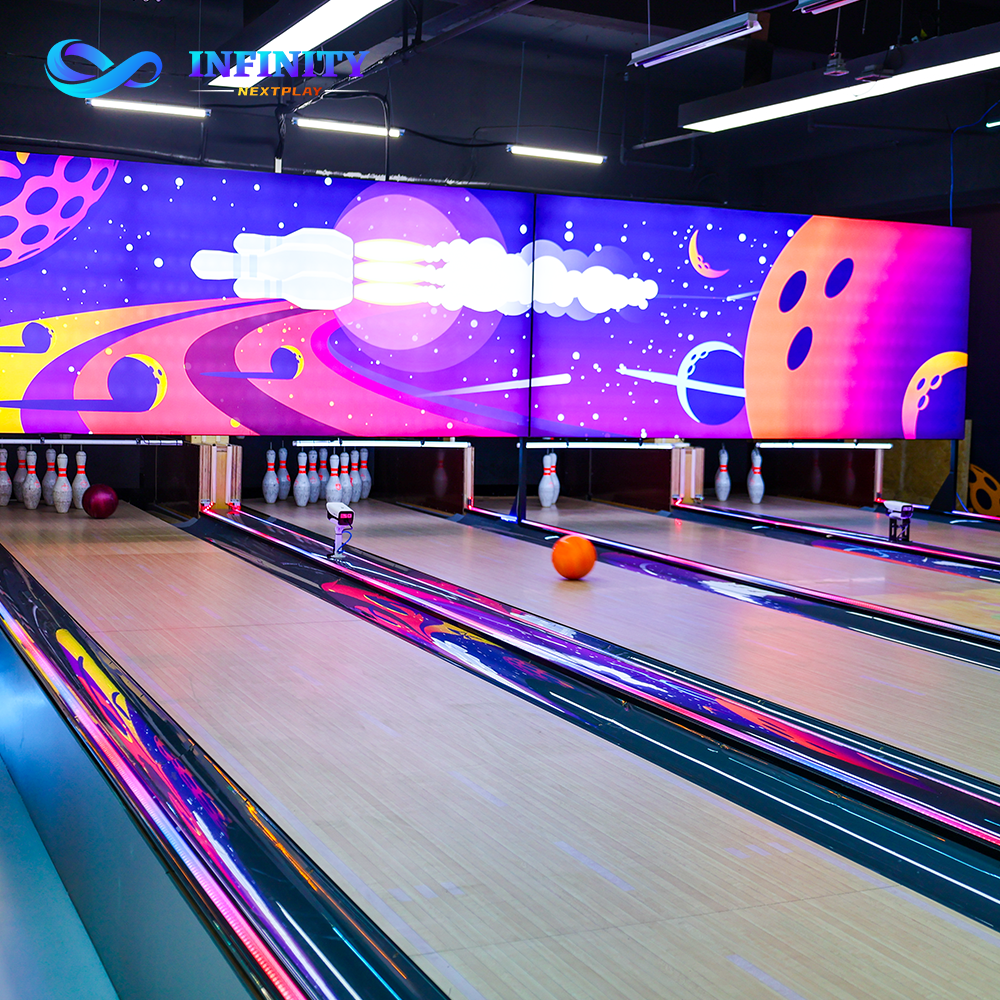
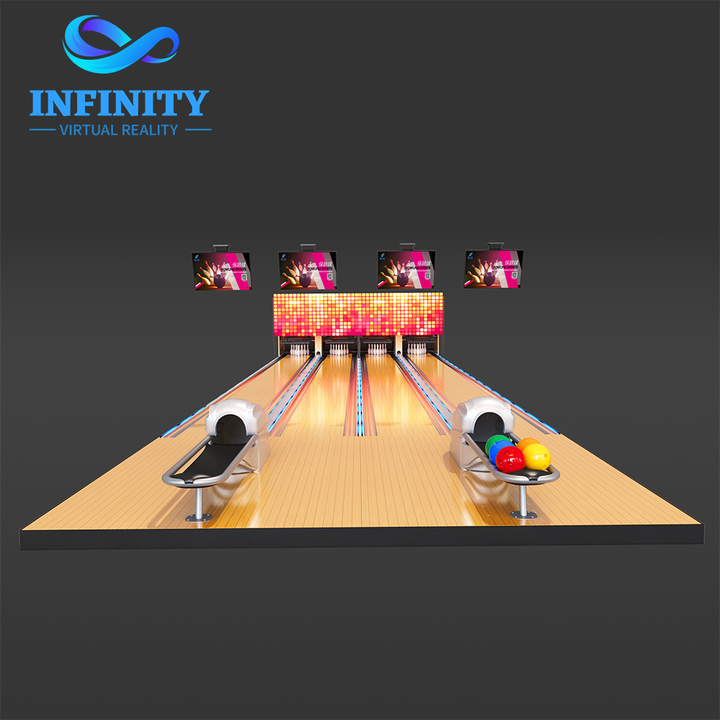
Buying commercial bowling equipment is not a shopping list of machines. It is selecting a playable lane system - the approach and lane surface, the pinsetter, the ball return, the automatic scoring, the masking unit and the seating - that has to match the floor you own, the format you sell and the traffic you expect. Most of the confusion in the market comes from the word "package": the price per lane changes with the format, the lane count and the procurement route, so the correct comparison starts from the full package, not from a price tag on a single machine.
The three commercial formats stack differently, and each one changes what you physically put in the room. A standard international 10-pin lane runs about 26 m and is the full-width house format, sold as a complete venue set in the standard 10-pin bowling alley package. A string-lane room ships compact: the turnkey two-lane string configuration uses roughly 9.7 m to 13 m per lane and delivers professional lanes in about half the floor area of a standard alignment, covered in the 2-lane string bowling turnkey. Duckpin is the club format - a lane of about 14 m with a 1.5 kg ball and no finger holes, earning around USD 45 per lane-hour in published use (the duckpin lane format guide). The full system-level comparison of the three sits in the 10-pin vs duckpin vs string comparison guide. A buyer needs a format decision and a room measurement before any equipment quote makes sense.
The rest of the purchase is procurement style. New equipment arrives with delivery, on-site installation, commissioning and operator training inside the package; used equipment saves the first-cycle cost but hands over someone else's wear, and the trade-in math is a separate section below (the used equipment refurbishment guide). In every route, the contract to read is the package line: what travels from the supplier to the first game, and who pays for each step.
The price is built from components, and two of them decide how the room performs. The pinsetter is the maintenance heart of the lane: 10-pin free-fall units recycle pins mechanically over the full 26 m approach, while string pinsetters raise each pin on a string and, per the published cluster guide, can cut bowling maintenance costs by up to 75 percent (the string pinsetter maintenance guide). That single percentage shows up in the operating budget every single month, which makes the pinsetter the first question to ask about any quote.
The ball return system sets the throughput. The first-party spec on the standard 10-pin package quotes an accelerated ball return that cuts the between-frame wait by about half, from roughly 15-20 s to 7-8 s, on the standard 10-pin bowling alley package: that is the number that decides how many games a lane sells per hour rather than how many people can stand at one lane. Automatic scoring and the masking and electronics complete the playable unit, and the full-venue component checklist is published in the full-venue bowling package contents guide.
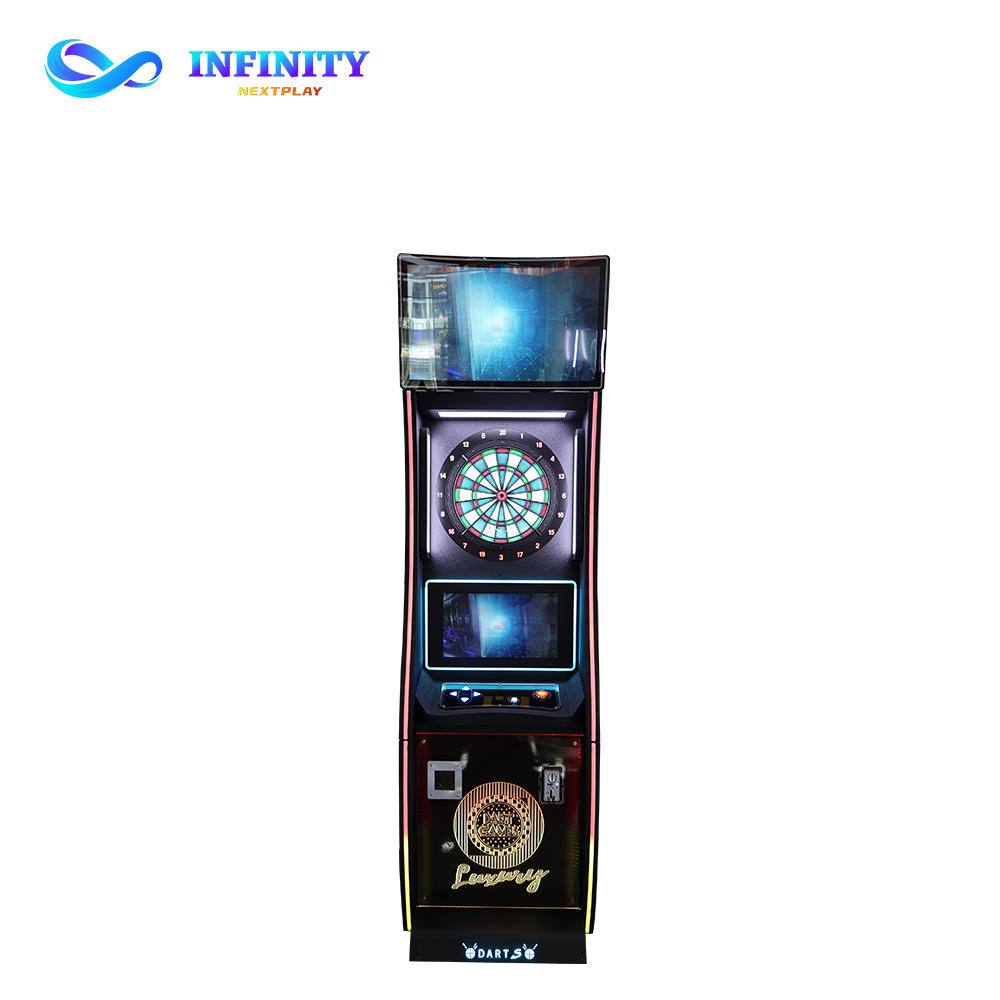
For the compact formats, the same floor can carry more than lanes. A two-lane string room or a duckpin wing shares its bar, seating and staffing with a co-attraction, and a third playable line such as the X7 online electronic dart machine rides the same footprint and the same front-of-house team, turning a bowling room into a three-game room. The component lines that every commercial quote should show are the ones below; a package that cannot list them line by line is a package to walk away from.
The used-equipment question is a math question, and the cluster has already published both halves of it. The used arcade and VR equipment guide walks through refurbishment: a secondhand unit looks like a discount until you price inspection, parts, reintegration and the downtime in between. The honest frame for a bowling purchase runs through the resale table below, which is published in the arcade equipment resale value guide and applies the same logic to any revenue machine with a resale market.
| A USD 20,000 machine after three years | Resale value | Real cost to own |
|---|---|---|
| Sold outright | USD 6,000 | USD 14,000 |
| Traded into a new unit | USD 10,000 | USD 10,000 |
| Scrapped (no market) | USD 0 | USD 20,000 |
Read the table as the three ways to own a floor. The machine that sells after three years costs USD 14,000 net; the machine that is traded in against the next purchase costs USD 10,000 net because the trade credit is meaningful; the machine with no resale market costs the full USD 20,000. The same machine, three ownership styles, three different real costs. The correct read: what you actually pay is the purchase price minus what the floor will pay you back, and that depends on the format you buy and the life you plan for it.
Applied to bowling, the difference narrows in an interesting direction. New compact formats - string and duckpin - are cheap enough at the package level that a used-unit discount buys less; a turnkey string room costs a fraction of the flagship builds, and buying new buys the commissioning, the warranty and the training day that keep a small room staffable. Full-size ten-pin projects are where the used market was born: the remodels of league houses feed it, and a used 10-pin unit is a real option when the building, the power and the intended life are all known.
A turnkey package is the whole route from the design to the first pinned game. The published package-contents guide (the full-venue bowling lane package guide) makes the decisive point with a project number: at identical scope, a single-supplier quote is the difference between a USD 150,000 project and a USD 180,000 project. The savings are not from volume discounts alone; they come from eliminating the gaps between a lane supplier, a scoring vendor and separate installers, gaps that show up in coordination fees and rework.
On pricing, the published per-lane breakdown anchors the order of magnitude: around USD 16,500 per lane inside a four-lane set, USD 28,500 for a complete four-lane duckpin package, USD 33,000 for a complete two-lane string package, and about USD 950 per lane for installation on top (the per-lane bowling cost breakdown). Those are equipment-and-package figures; the building side of the budget (construction and fit-out) is separate and is quantified in the complete bowling alley cost guide. The full-sized 10-pin set is the volume-dependent end of the range, which is why the cost guide quotes USD 12,000-80,000 for equipment per lane across formats and project sizes.
Whatever the quote, the package should itemize the route. Confirm that the price includes delivery to site, crating-off and staging, the gate-one walk where the crew confirms the lane widths before install, on-site installation, the power-drop checklist, a commissioning day and operator training, and a spares and warranty line (the full install sequence is published in the bowling equipment install timeline guide). A vendor that cannot line-item these is selling machines, not a room.
Bowling installs run on two clocks, and the published timeline guide (the bowling equipment install timeline guide) separates them clearly. The equipment clock for a four-lane duckpin wing or a two-lane string room is 5 to 7 working days on site, with one more day for commissioning and training; a single duckpin lane installs in one to two days once the floor is leveled. The building clock is the longer one: roughly 3 to 5 weeks in a new shell and 6 to 10 days in a converted unit. Buyers plan against the building clock and schedule the supplier once the room is ready, not before.
Two site facts decide whether the timeline holds. Power: the cluster specifies one 220 V, 4.5 kW circuit per lane pair on dedicated breakers, tested with a multimeter before the crew arrives, and notes that while string and duckpin pinsetters are forgiving on phase, ten-pin scoring is not. Floor: the lanes need a leveled surface, the crew confirms widths at the first walk, and the compact string and duckpin formats do not need a crane because the lanes ship on standard skids. A building with the power drop and the level floor ready is a building that can close a 5 to 7-day install without surprises.
The purchase is only half the math; the other half is what the lanes produce. The published cost guide (the complete bowling alley cost guide) gives the planning bands current commercial projects are quoted against: a compact two-lane string install in the USD 80,000-150,000 project range, a six-lane boutique center around USD 250,000-600,000, a twelve-lane family entertainment room around USD 850,000-1,700,000, and a flagship twenty-lane-plus build that can cross USD 2,000,000 in a new building. Equipment sits at USD 12,000-80,000 per lane depending on format and volume.
Against those costs, the same guide publishes revenue per lane near USD 36,000-45,000 a year with a typical payback of 4 to 7 years, and the operating numbers improve with the compact formats: a duckpin lane holds a rate around USD 45 per lane-hour with venues reporting 98 percent equipment availability across peak seasons and morning pre-opening checks under 12 minutes per lane (the duckpin lane format guide), while string pinsetters pull the maintenance line down by up to 75 percent (the string pinsetter maintenance guide). In plain terms, the compact formats trade a smaller top line for materially lower fixed cost, which is why they dominate the bar, hotel and boutique segments.
The purchase decision is therefore three numbers, not one: the package line (what the room costs to open), the operating line (maintenance and staffing per month), and the production line (revenue per lane per year). The table below pulls them into one view using published figures.
One table, three routes to the same commercial floor. Equipment and package figures are the published per-lane and package numbers from the deep-linked guides; revenue lines are the published per-lane benchmarks.
| Format | What ships | Space line | Package anchors | Revenue and operation |
|---|---|---|---|---|
| Standard 10-pin | Full lane set with accelerated ball return (about 7-8 s wait) | About 26 m international standard lane | USD 12-80K equipment per lane by volume; projects from USD 850K at 12 lanes | USD 36-45K revenue per lane per year; heavier maintenance on free-fall pinsetters |
| String (compact) | Two-lane turnkey room, string pinsetters | About 9.7-13 m per lane, about half a standard floor | USD 33K two-lane turnkey package; USD 80-150K compact project | USD 36-45K revenue per lane per year; string pinsetters cut maintenance up to 75% |
| Duckpin (club) | Compact lane set, 1.5 kg ball | About 14 m lane, fits a 240 m2 lounge | USD 28.5K four-lane package (about USD 16.5K per lane) | About USD 45 per lane-hour, 98% availability, morning checks under 12 minutes |
Read the table against the buying decision. The 10-pin row is the volume play: the standard 26 m house format with a faster return system, bought when traffic is high enough to justify the build and the maintenance. The string and duckpin rows are the cost plays: the same revenue-per-lane band for a fraction of the project cost, which is the published reason they dominate bars, hotels and boutiques. The comparison guide (the 10-pin vs duckpin vs string comparison) and the per-lane breakdown (the lane cost breakdown) hold the full line-by-line differences behind this table.
The questions buyers ask when they price commercial bowling equipment, answered with the published references.
The published cost guide quotes equipment at USD 12,000-80,000 per lane depending on format and volume, with modern package anchors at about USD 16,500 per lane inside a four-lane set, USD 28,500 for a four-lane duckpin package and USD 33,000 for a two-lane string package, plus about USD 950 per lane for installation.
It looks cheaper but the resale table settles it: a USD 20,000 machine costs USD 14,000 to own if sold after three years, USD 10,000 if traded into the next purchase, and the full USD 20,000 if it has no resale market. Used 10-pin units from league-house remodels are the real used option; compact string and duckpin packages are cheap enough new that the used discount buys less.
Lane surfaces and approach, pinsetter, ball return, automatic scoring and masking, delivery, on-site installation, commissioning and operator training, plus the power and floor-readiness checklist. The published package guide shows the single-supplier version as the USD 150K project versus the USD 180K project at the same scope.
The equipment clock is 5 to 7 working days for a four-lane duckpin wing or two-lane string room, plus one commissioning and training day; a single duckpin lane installs in one to two days once the floor is leveled. The building clock is roughly 3 to 5 weeks in a new shell and 6 to 10 days in a converted unit.
Buy on operation, not on price. The standard 26 m 10-pin set is the volume play with a faster return system; string rooms ship in about half the floor area and string pinsetters can cut maintenance costs by up to 75 percent. Duckpin is the club format at around USD 45 per lane-hour. The full comparison is published in the 10-pin vs duckpin vs string guide.
About USD 950 per lane for installation, one 220 V 4.5 kW circuit per lane pair on dedicated breakers, a leveled floor and any construction work (the building clock), the commissioning and training day, the spares and warranty line, and the resale risk on used units. The cost guide publishes the full construction and fit-out layers behind the equipment figures.
Five lines to carry into a commercial bowling equipment purchase.
Start with the room: measure the floor, run the format decision, and drop the lanes onto the actual plan with the free 3D layout design. The step-by-step sportainment equipment buying guide holds the full purchasing routine, and the per-lane cost breakdown is the honest planning anchor for the first lanes.
Send us the room dimensions and the format you are leaning toward: we will return the package line, the revenue and payback model, and the floor plan with the free 3D layout design - start from the 2-lane string bowling turnkey or step up to the standard 10-pin bowling alley full set.