String pinsetter bowling equipment is the machine set that makes a bowling lane low maintenance: the pinsetter, the string frame above the pins, and the scoring and release system that turns them into a playable lane. The name comes from the simple nylon string attached to the top of every pin. Instead of mechanically sweeping the deck, lifting pins through an elevator and spotting them through a moving deck, the string system lifts the pin up, lowers it down and resets it in place. That one design decision removes most of the machinery inside a traditional pinsetter, and the maintenance math follows the machine almost entirely.
The difference is visible in the moving-part count. The published string pinsetter maintenance guide (the 75-percent maintenance-cost analysis) compares the fleet-level numbers directly: a free-fall machine carries more than 3,000 moving parts, including elevators, shuttle mechanisms, sweep arms and detector systems, while a commercial string pinsetter runs 800 to 1,000 parts. Fewer parts is not a marketing phrase; it is the whole maintenance thesis. Every moving part is a scheduled failure, and a machine with a fraction of the subsystems has a fraction of the things that can jam, bend or need adjustment mid-league.
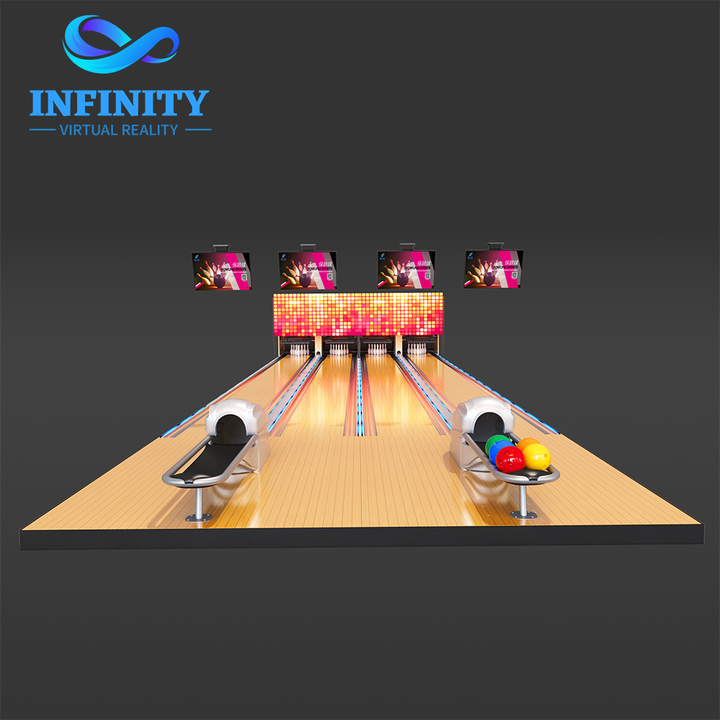
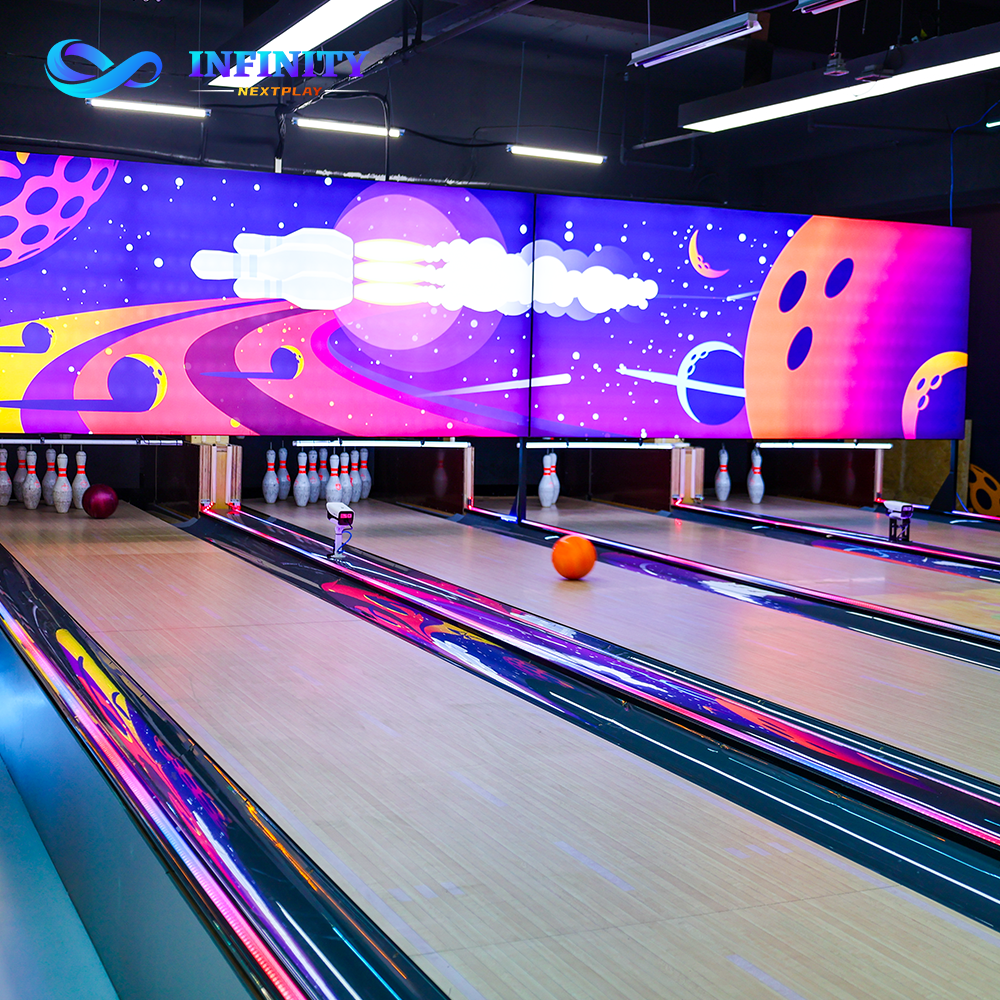
For a venue, the package it comes in is just as important as the mechanism. The turnkey string room ships as a two-lane system in about 9.7 to 13 m per lane, roughly half the floor area of a standard 26 m alignment, with automatic scoring and a compact machine bay that needs no crane: it is the configuration reviewed in the commercial 2-lane string bowling equipment product. The full procurement route, from the format decision to the package line and the install timeline, is covered separately in the commercial bowling equipment buying guide.
The complete string pinsetter system is more than the pinsetter itself. A commercial string lane package includes the approach and the throw-down lane surface, the string pinsetter bank, the ball return and ball set, the automatic digital scoring and the masking unit, plus delivery, on-site assembly and the operator training day that teaches the 15-minute routine to the staff who will run it. That is the component list to compare when the words "string pinsetter bowling equipment" appear on a quote: a complete low-maintenance lane, not a machine sitting in a crate. The same component logic runs across every bowling format, which is why the buying guide (the commercial bowling equipment buying guide) starts from the full package line rather than a single-machine price.
The maintenance advantage is mechanical, not just financial. On a free-fall machine, every subsystem has its own wear cycle: chains stretch, springs fatigue, sensors misalign and detector banks burn out, and the first sign of trouble is often a dead lane during peak hours. On a string machine, the failures are the reverse: the string frays, the knot loosens and the pin base chips, and every one of those signs is visible during a simple walk-down. The weekly guide (the 15-minute weekly string pinsetter routine) makes the point directly: a free-fall pinsetter hides its problems inside the table behind the lift cables, pawls and spotter table, while a string pinsetter wears on the outside where the operator can see it.
That visibility turns maintenance from an emergency call into a scheduled walk. The published routine is 15 minutes per lane per week built on four checkpoints, with a 5-5-5 split: five minutes on strings and pins, five on the deck and pit and five on a scoring test. A 10-minute string swap handles the parts that do wear, and a spare kit stocked at 10 strings per lane keeps the replacement in-house instead of waiting on a courier during a league night.
The result shows up in the reliability numbers the maintenance guide (the 75-percent maintenance-cost analysis) publishes: free-fall lanes average 4 to 6 breakdown events per month and 4 to 6 lost lane-hours, while string lanes average 1 to 2 events and 1 to 2 lost lane-hours. Repairs run 45 to 90 minutes on free-fall versus 15 to 30 minutes on string, because the average string repair is a part swap and not a rebuild. At USD 150 to 200 per lane-hour of peak bowling revenue, the downtime gap alone is worth about USD 400 to 800 per lane per year without counting a single part.
The 75-percent figure that follows string pinsetter bowling equipment is a line-item claim, not a slogan. The published maintenance analysis (the 75-percent maintenance-cost analysis) breaks the annual cost into the four lines operators actually track: pinsetter parts, pinsetter labor, pin replacements and electrical. On a typical free-fall lane the four lines total about USD 9,400 a year; on the string equivalent they total about USD 2,700, which is the origin of the widely quoted cut.
| Maintenance line (per lane per year) | Free-fall machine | String machine |
|---|---|---|
| Pinsetter parts | USD 2,800 | USD 700 |
| Pinsetter labor | USD 4,200 | USD 1,100 |
| Pin replacements | USD 1,500 | USD 300 |
| Electrical | USD 900 | USD 600 |
| Total | About USD 9,400 | About USD 2,700 |
Two lines in that table deserve a closer look. Pin replacements collapse almost entirely because a string pin never leaves its string, so broken necks and spotter damage that consume free-fall pin inventory simply do not happen. Electrical drops because the string motion draws less power per lane, which cuts the bill that runs alongside every mechanical failure. The labor line drops hardest of all, because the machine almost never stops and the repairs that do happen are part swaps the operator handles during the weekly walk.
The weekly routine is what keeps the lane inside the string column of that table. The published routine (the 15-minute weekly string pinsetter routine) sets tension by a bounce test, lifting the pin head 2 cm and watching it settle: one swing back to center is set, two swings means the tension needs adjusting. The monthly deep check goes further, with a torque check on the rail clamps that hold the string tops, a wear inspection on drive belts and the sweep motor, the gearbox oil level check and a spare-parts audit against the past month of consumption. The kit that held 10 strings per lane at the start of the quarter is the kit that runs out mid-quarter at the venue that skips the audit, and the audit is the difference between a planned swap and a Saturday phone call.
Sized against the fleet, the string column is the difference that pays for the equipment. The published analysis (the 75-percent maintenance-cost analysis) closes the math at four lanes: string pinsetters save about USD 33,000 per year in maintenance on a four-lane house, which is why the reduced footprint and the reduced operating line make string bowling the standard choice for bars, hotels and boutique venues. The maintenance guide also notes that the string system keeps the fleet above 98 percent uptime when the weekly and monthly schedule runs, because the failure modes are gradual and the walk-down catches the fray, the chip and the drift before they stop the lane.
The low maintenance does not come at the cost of the game. String pinsetter bowling equipment is certified for sanctioned professional play by major bowling organizations, including USBC certification for string pinsetters competing against free-fall traditional machines, as the published rules-and-mechanics masterclass (the USBC-certified string pinsetter rules guide) documents. The game structure is unchanged: the standard 10 frames, the standard pin count and the standard scoring, with 300 still the maximum perfect game.
What players notice is physical, not scored. String pinsetters produce slightly slower pin action, and the strings are visible above the pins, but the published guide (the 75-percent maintenance-cost analysis) notes that none of these differences affect scoring, and league bowlers play the same recorded game. On the scoring side, loose string tension changes the pin position on the deck, which is exactly what the weekly bounce test protects: a lane that holds its tension holds its scoring accuracy.
The same string technology also runs the full competition deck. The 26 m international standard 10-pin installation carries string pinsetters under the league schedule, which is why the product page (the standard 10-pin bowling alley product) pairs the full-size venue format with the low-maintenance string pin line. A venue can therefore run the compact two-lane string room for the casual floor and the full 26 m string deck for tournaments on the same technology, with one maintenance routine covering both.
The player experience also comes with a mechanical bonus that the compact formats exploit. Because the string system clears fallen pins at the deck instead of recirculating them mechanically, the cycle is fast: the published analysis (the 75-percent maintenance-cost analysis) clocks the string recycle at about 0.60 s and stops a minor jam from an approach walk in about 15 minutes, versus the free-fall repair call that can run an hour. Fallen pins stay visible to the bowler, so a minor issue is seen and cleared from the approach instead of waiting on a mechanic walk. Faster, predictable cycles mean faster games per lane, which is the revenue side of the low-maintenance story. The first-party accelerated ball return on the standard 10-pin bowling alley cuts the between-frame wait to about 7 to 8 seconds, keeping the tournament deck at the same pace the casual room already delivers.
Durability is the second part of the low-maintenance story, and the published lane-surface guide (the 20-year synthetic deck durability analysis) is the reference the industry cites. The comparison tracks three lines: games before a major rebuild, moving parts per unit and the rebuild labor itself. The string pinsetter leads on all three, running the million-game class before a major rebuild on fewer than 50 moving parts, with a rebuild that takes 2 to 4 hours on site because the field-serviceable design replaces the spotting assembly with a simple string-and-winch cycle.
| Format comparison | String pinsetter | Duckpin unit | 10-pin free-fall |
|---|---|---|---|
| Games before major rebuild | 1M+ | 1M | 500K-700K |
| Moving parts per unit | Fewer than 50 | About 80 | 300+ |
| Rebuild labor | 2-4 hours | 4-6 hours | 2-3 days |
| Service model | Field serviceable | Field serviceable | Factory service |
Read the row that matters most for a busy venue: rebuild labor. The string unit is back on the lane the same day; the free-fall machine goes to the shop for days. The same guide (the 20-year synthetic deck durability analysis) adds the lane-surfaces clock behind the machine: the synthetic panel deck holds 20-plus years versus 10 to 15 years for wood, and monthly pinsetter PM runs 6 to 8 hours. Operators also report 2 to 3 times the run life between major rebuilds on the string motion, because it wears a fraction of the parts, a figure the maintenance analysis (the 75-percent maintenance-cost analysis) attributes to reported replacements in the fleet.
The durability guide (the 20-year synthetic deck durability analysis) also publishes the maintenance cadence that keeps the second clock honest: lane oiling and conditioning runs daily to protect the deck wear layer, pinsetter PM runs monthly for 6 to 8 hours to protect the machine rebuild interval, the ball return gets a weekly inspection on the belt and lift path, the scoring and sensor check runs monthly, and a full audit runs quarterly against the warranty record. None of those lines are heavy, but together they decide whether the deck reaches the 20-year claim on synthetic or dies at year 10 on wood. The total-cost-of-ownership view in the same guide settles the format question: over 15 years the compact formats spend the least on surface work and machine rebuilds, the string pair follows the duckpin wing closely, and the ten-pin wing spends the most per lane on the machine line.
The fastest route to a low-maintenance floor is usually not a new build; it is a retrofit. Converting to string pinsetter bowling equipment does not mean buying new lanes: the string system fits the existing lane bed, the existing ball return and the existing approach, because the conversion replaces the pinsetter on the existing structure. The install is a machine swap, not a construction project, which keeps the capital number at the machine cost instead of a build-out cost, as the published maintenance analysis (the 75-percent maintenance-cost analysis) details.
The conversion plan is phased on purpose. Operators convert the busiest lanes first, because the saving follows the failure frequency: a center that converts its busiest six lanes and keeps its quietest four on free-fall captures most of the maintenance saving at about a third of the conversion capital. The published playbook converts in groups of two to four lanes between league seasons, retains the free-fall machines that still hold value, and sells them as a matched set to fund part of the switch. In the five-year model, a converted center spends about USD 13,500 on pinsetter maintenance against USD 47,000 for the center that stays on free-fall, while the conversion capital of about USD 36,000 is offset by the traded-in machines.
On the install side, string lanes are the fast end of the bowling spectrum because the machine bay is smaller and the deck is lighter. The published install guide (the 5-7 day install timeline analysis) puts a two-lane string room at 5 to 7 working days on site, with six to eight days typical for boutique units, and notes that the compact formats need no crane because the lanes ship on standard skids. The 10-pin line is the heaviest machine line and the install time tracks the deck and pinsetter weight.
The four new-lane and retrofit routes all land on the same operating floor. The complete procurement route, from site readiness to the turnkey package and the cost bands, sits in the commercial bowling equipment buying guide, and the project-scale bands across formats live in the complete bowling alley cost guide. The compact string room occupies roughly half the floor of the standard alignment, which is the layout lever bar and hotel operators use to fit two lanes where one 10-pin set would stand; the published compact string guide (the string bowling solutions guide) walks through the venue math behind that space saving, lane by lane, for entertainment venues. Same technology, same scoring, same 15-minute weekly walk: the only variable left is the room you put it in.
On the retrofit floor, the two-lane string room also plays well with a third playable line that shares the same staff. A venue that adds the X7 online electronic dart machine to the corner of the string room gets automatic scoring, global online play and a tournament-ready game that fills the bar while the lanes run, all on the same front-of-house team that already owns the 15-minute weekly walk. The compact formats were built for exactly that mix: one machine team, three revenue lines.
The questions operators ask when they evaluate string pinsetter bowling equipment, answered with the published references.
Yes, and the line items prove it. The published analysis compares per-lane annual cost on four lines, parts, labor, pin replacements and electrical, totaling about USD 9,400 on a free-fall lane versus about USD 2,700 on a string lane, a cut of roughly 75 percent.
A nylon string attached to the top of every pin lifts the pin up, lowers it and resets it in place. The design removes the elevator, the shuttle, the moving deck and the spotting fingers of a free-fall machine, dropping the moving-part count from 3,000-plus to 800-1,000 per machine.
Yes. String pinsetters are certified for professional play by major bowling organizations, including USBC certification versus free-fall traditional machines, with the standard 10 frames, the same pin count and 300 as the maximum score.
A 15-minute walk per lane with four checkpoints and a 5-5-5 split: five minutes on strings and pins, five on the deck and pit, five on a scoring test. The string check runs look, feel and set, with the 2 cm bounce test for tension, and the 10-minute string swap handles worn strings from a 10-strings-per-lane kit.
The string unit runs about 1 million games before a major rebuild, on fewer than 50 moving parts, with a 2-4 hour field-serviceable rebuild. Operators report 2 to 3 times the run life of a free-fall machine between major rebuilds.
Yes. The string system fits the existing lane bed, ball return and approach, so the conversion is a pinsetter swap instead of a build. Operators convert in groups of two to four lanes between seasons, starting with the busiest lanes, and the busiest-six conversion captures most of the saving at about a third of the capital.
Five lines to carry into a string pinsetter evaluation.
Start with the floor: measure the room and drop the lanes onto the actual plan with the free 3D layout design, then compare the turnkey commercial 2-lane string bowling equipment against the full standard 10-pin bowling alley, and read the complete bowling alley cost guide for the project bands that anchor the budget.
Send us the room dimensions and the lane count: we will return the string pinsetter configuration, the maintenance line for your fleet, the retrofit or new-build cost model, and the floor plan with the free 3D layout design - start from the commercial 2-lane string bowling equipment or step up to the standard 10-pin bowling alley competition deck.