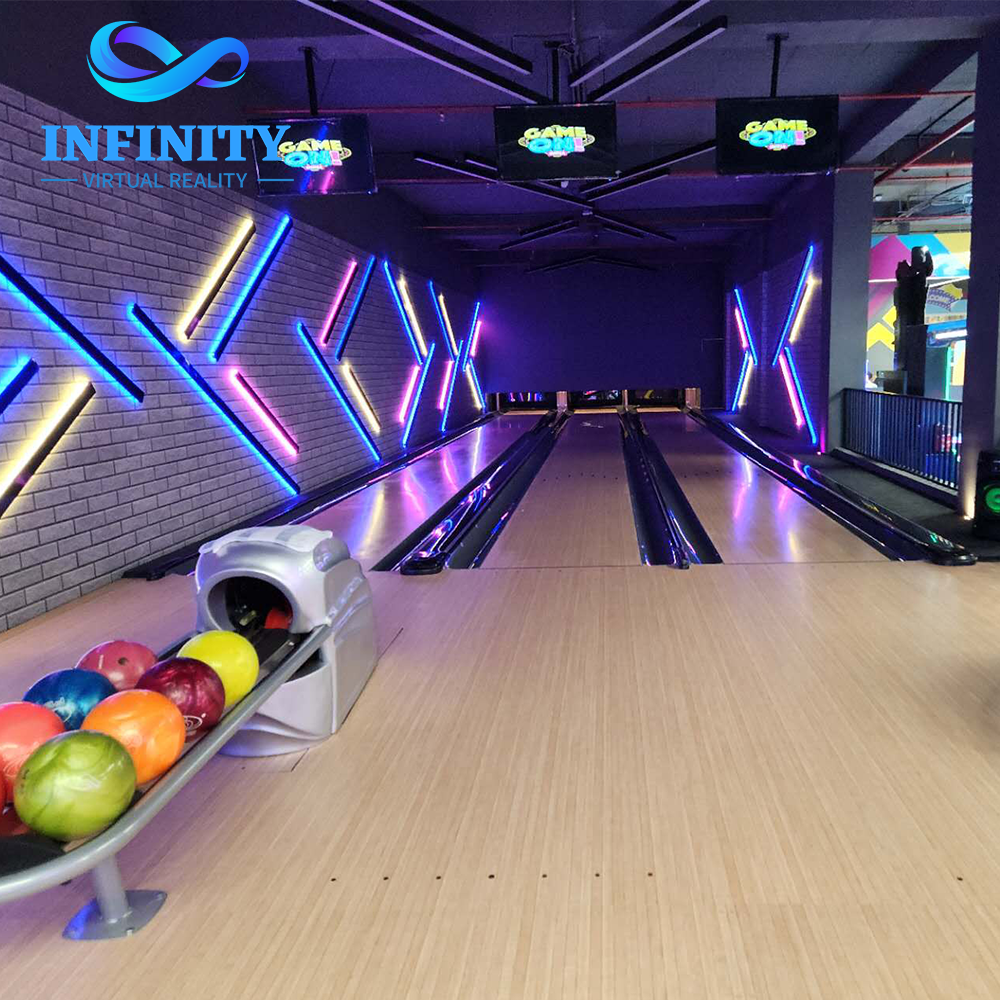
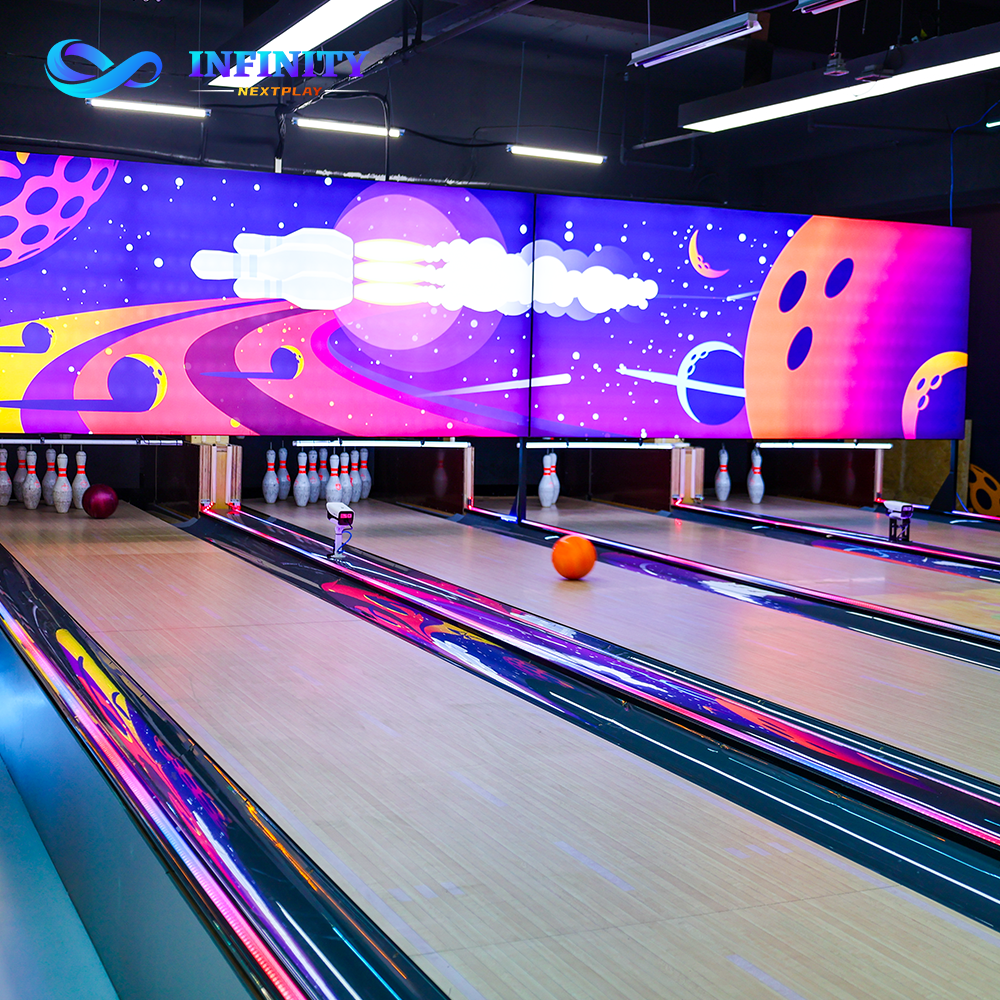
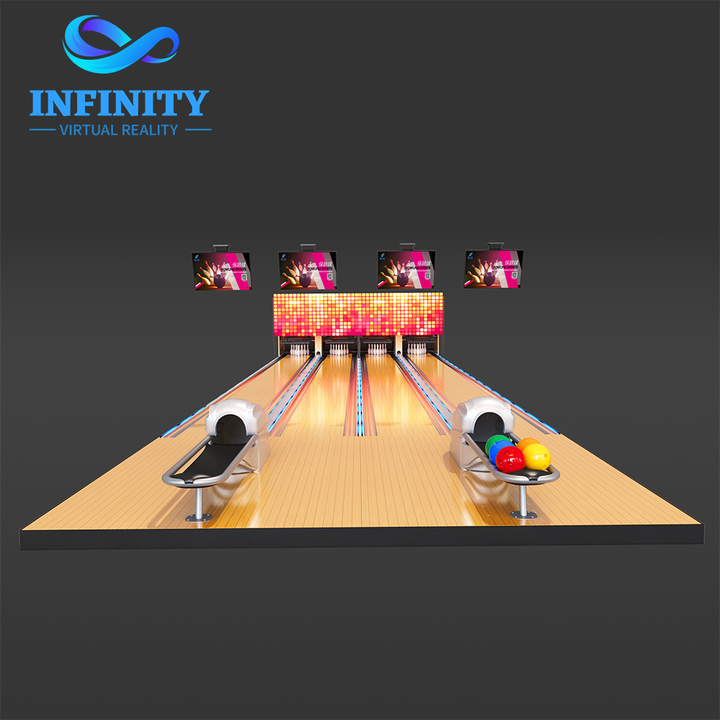
Duckpin bowling equipment is the machine set that puts a real bowling game into a space where a full-size alley never fits: the short duckpin lane, the integrated automatic pinsetter, the ball return and the scoring system that together form a lane a bar or hotel staff can run. The equipment is small by design. A duckpin lane runs about 12 to 14 m of play instead of the 26 m international ten-pin geometry, the ball is a fist-size no-finger-hole object of about 1.5 kg, and the pins are shorter and lighter than ten-pin, so the whole line compresses into the footprint a hospitality venue can actually spare. That compression is what buyers mean when they search for duckpin bowling equipment: a complete small-footprint lane, not a scaled-down toy.
The format primer (the duckpin bowling format guide) sets the two measurements that separate the equipment from everything else in the bowling catalogue. A duckpin ball is about 12 cm across and weighs roughly 1.5 kg, against 6 to 7 kg for a ten-pin ball, and it carries no finger holes at all. That difference is why a child, a guest in formal dress and an adult who has never bowled can all play the same lane in the same evening, and why the format turns over roughly twice as many games per hour as ten-pin: the short lane and the light ball shrink the learning curve and the game cycle together.
For a venue deciding whether the line is a real purchase, the package matters more than the pin count. The full duckpin system reviewed on the duckpin bowling system product is engineered for a converted bar, hotel floor or basement: automatic pinsetting, an integrated ball return and the scoring run directly by the person behind the counter, with no separate front desk and no pinsetter machine room. Every component ships and installs as a lane, which is exactly the package list to compare when the words "duckpin bowling equipment" show up on a quote.
The footprint is the first number a bar or hotel operator asks for, and it is the number duckpin wins on. The published space analysis (the least-space lane analysis) measures a two-lane duckpin wing at roughly 260 m2 including the approach, the seating and the service aisle, against 18 m of depth for the string lane and 26 m plus a machine room for the ten-pin lane, with 3 m of ceiling height clearing the whole build and a footprint about 40 percent under the ten-pin equivalent. The format wins the space comparison because the lane length, the machine room and the ceiling requirement shrink together.
The published bar-fit analysis (duckpin bowling for bars) breaks the same story down to the individual lane: each duckpin lane runs 12 m of play plus the 2 m approach and the machine pit, the pair sits side by side in a 4.2 m width, and the two-lane pair fits in 55 to 70 m2 with the seating strip in front. The vertical and technical checks are short: 3 m of clear height over the pin deck, a 220-volt 20-amp circuit per lane, and a 60 cm service access behind the machine pit. A bar with a 150 m2 floor has room for the pair plus a party corner, which is the article's own rule of thumb for the format that fits a live room.
Against the fleet, the same footprint math shows up on the balance sheet. The published duckpin-vs-ten-pin comparison (the duckpin vs 10-pin payback analysis) prices the duckpin lane at about 28 m2 of footprint against 65 m2 for ten-pin, and the four-lane duckpin investment at about USD 120,000 mid-estimate against USD 240,000 for a four-lane ten-pin room. The 12 m deck uses a fraction of the material of the 26 m alignment, four duckpin lanes occupy about the floor area of one ten-pin pair, and the pinsetters are smaller, lighter and cheaper to ship, which is the structural reason the compact package exists at its price point at all.
What makes a duckpin lane runnable by bartenders is the machine line, and the machine line is integrated rather than bolted behind a service wall. The published durability analysis (the lane-surface durability analysis) describes the NextPlay duckpin lanes as synthetic-deck lanes with integrated automatic pinsetters, the same treatment given to the string lanes with their field-serviceable string units and the ten-pin lanes with the heaviest machine line. Integrated means no dedicated pinsetter room, no conveyor to the back of the house and no crane on install day, and the duckpin machine runs on the string-pinsetter principle, which the bar-fit guide (duckpin bowling for bars) credits with keeping the maintenance at a weekly walk-down with a spare-parts kit that fits in a shelf box.
The lighter ball changes the mechanical load. Because the duckpin ball lands lighter and the string pinsetter carries no free-fall crash, the acoustic and wear profile is smaller than a bar expects, and the venue that adds the lane-divider felt kills the residual noise that cross-lane chatter makes. The same guide (duckpin bowling for bars) closes the shell checklist with a standard leveling kit on the slab, which keeps a leased space reversible and turns the install into an equipment placement rather than a construction project.
The staffing math follows the machine. The published three-system comparison (the three-system full-venue comparison) notes that the duckpin lane draws 4.5 kW per pair, runs with no lane-oil machine and no heavy ball-return servicing, and has a failure rate low enough for a single attendant per shift to run four lanes, shoes, scoring and the bar during the quiet hours. That is the operating answer to the question "what is duckpin bowling equipment for": it is machinery a hospitality team can operate without hiring a bowling mechanic.
Durability rides on the same integration story. The published lane-surface analysis (the lane-surface durability analysis) gives the synthetic panel deck a 20-plus-year life against 10 to 15 years for wood laminate, with the pinsetter line on its own clock of roughly one million games before a major rebuild and the duckpin units carrying integrated automatic pinsetters on that line. The equipment is sized for a decade-long amenity, not a seasonal fad, which is the reservation most operators have before they sign a compact bowling order.
A duckpin bowling equipment quote is only useful when it describes a complete lane, and the complete set is easy to enumerate. The package includes the approach and the throw-down lane surface, the integrated automatic pinsetter, the ball return and the duckpin ball set, the automatic digital scoring and the masking unit, plus delivery, on-site assembly and the operator training that teaches the day-to-day run to the staff who will operate it. The product page (the duckpin bowling system product) names the design goal directly: space-saving design with easy installation, ideal for bars, hotels and boutique venues, delivering the full bowling experience in about half the footprint of ten-pin.
The install timeline is the second thing operators check, because downtime is revenue. The published bar-fit guide (duckpin bowling for bars) puts the duckpin pair at 5 to 8 working days inside a live bar, with the two-lane pair delivered and installed between USD 60,000 and 90,000 depending on the machine spec and the fit-out scope, and the operating cost under 12 percent of the lane revenue. The four-lane version of the same story sits in the published budget analysis (the $30K four-lane package analysis): a $30,000 budget buys the four-lane duckpin equipment line, the compact 12 m lane uses a fraction of the material of the 26 m ten-pin lane, and the total opening budget lands between USD 40,000 and 48,000 with the fit-out around the lanes planned as a second, smaller line.
Scoring is part of the package, not an extra. The integrated scoring platform runs the duckpin ruleset automatically, and the same booking, scoring and analytics layer can run duckpin next to string and ten-pin lanes in one venue, which is the mixed-floor pattern the published three-system comparison (the three-system full-venue comparison) recommends: a ten-pin campus that adds a duckpin family wing, or a duckpin bar that later adds a ten-pin room, both on one dashboard. For a venue that wants the maintenance-light alternative at an even lower entry point, the commercial 2-lane string bowling equipment runs the same scoring on a string pinsetter, and the standard 10-pin bowling alley carries the heavier group session when the room has the full footprint for it.
The game is part of the equipment decision, because the scoring curve decides who plays. Duckpin plays at three rolls a frame, and a full clear on the third ball scores ten with no bonus, a faster and more forgiving game than ten-pin, which is exactly why it holds a mixed-age bar crowd longer than a conventional lane. The published revenue-lift analysis (the two-lane revenue-lift analysis) makes that point directly: the three-roll frame and the forgiving clear rule keep a group at the lane through the whole match instead of dropping off after a strike or a spare.
The ball makes the rule playable. A duckpin ball of about 12 cm and 1.5 kg with no finger holes can be rolled one-handed by a child, and the format's accessibility removes the two barriers that keep families and casual groups away from conventional lanes: the weight and the finger-fit. The format guide (the duckpin bowling format guide) adds the staffing consequence: because the lanes are short and the ball return is integrated, the person pouring drinks can start a game, which is how compact lanes end up inside lounges that were designed as bars first.
The pace of play is a revenue input. The published three-system comparison (the three-system full-venue comparison) puts duckpin at roughly two games per hour per lane thanks to the short cycle and light pins, and the profit-format analysis (the most-profitable-format comparison) gives a duckpin lane about USD 198 per day at 70 percent utilization in a footprint of about 80 m2 per lane, the density ranking that small-venue owners need. Faster games per lane is the revenue side of the equipment story, and the equipment is what makes the faster game possible.
The lane rate is the number that turns a square-meter story into a business case. The published duckpin format guide (the duckpin bowling format guide) benchmarks the average lane and bay rate at about USD 45 per hour, and the bar-fit guide (duckpin bowling for bars) runs that rate at 4 players per lane as the base, with peak weekend hours at the full lane fee and a half-price kid session filling the dead Sunday afternoon. The published three-system comparison (the three-system full-venue comparison) prices the same floor by the game: at USD 4.50 per game and 70 percent utilization, four lanes contribute about USD 9,000 per month, and the shorter learning curve means children play two or three games instead of leaving after one.
The payback follows the revenue stack. The published payback comparison (the duckpin vs 10-pin payback analysis) ranks duckpin first on revenue per square meter at about USD 134 per m2 per month against USD 86 for ten-pin, with an illustrative payback of about 14 months for a four-lane duckpin room against 18.5 months for ten-pin. The bar-fit guide (duckpin bowling for bars) builds the same math at the two-lane scale: against a 2,800-dollar monthly lane fee, a 1,100-dollar weekly drink margin and a 1,500-dollar monthly event average, the honest monthly net lands between USD 2,800 and 4,200 and the payback runs 14 to 18 months, with the league season, the event layer and the attach design as the three levers that move the number down.
The revenue-lift analysis (the two-lane revenue-lift analysis) adds the caution that protects the math: utilization is the master lever, and under 50 percent utilization two lanes stop paying for themselves. The build that passes the bar's own foot-traffic test, places the lanes in the sight-line of the main seating, settles the lane on the same POS counter as the drink tab and respects the duckpin scoring curve is the build that lands near the 14-month line.
| Duckpin lane business line | Two-lane bar build | Four-lane room |
|---|---|---|
| Lane rate | About USD 45 per lane-hour | About USD 45 per lane-hour |
| By the game | Two games per lane-hour | About USD 9,000 per month at 70% use |
| Install | 5-8 days, USD 60-90K installed | USD 30K equipment line, USD 40-48K total |
| Footprint | 55-70 m2 pair | About 28 m2 per lane |
| Payback | 14-18 months | About 14 months illustrative |
The full procurement route, from the format decision to the package line and the install timeline, is covered in the published buying guide (the commercial bowling equipment buying guide), which starts from the complete package line rather than a single-machine price. For the venue still choosing between the duckpin wing and the other compact formats, the three-system comparison (the three-system full-venue comparison) lays the decision out as a floor plan question, and the buy-side review (the standard 10-pin bowling alley product) and the string entry set (the commercial 2-lane string bowling equipment product) complete the catalogue a buyer should hold before signing an order.
The questions operators ask when they evaluate duckpin bowling equipment, answered with the published references.
A complete duckpin lane includes the approach and throw-down lane surface, the integrated automatic pinsetter, the ball return and ball set, the automatic digital scoring and the masking unit, plus delivery, on-site assembly and operator training. The package is designed to run without a pinsetter machine room, directly by bar or hotel staff.
Each duckpin lane runs about 12 m of play plus the 2 m approach and the machine pit, the pair sits in a 4.2 m width, and the two-lane pair fits in 55 to 70 m2 with the seating strip in front. The build clears a 3 m ceiling and uses about 40 percent less floor than the ten-pin equivalent.
Duckpin machines run on the string-pinsetter principle with an integrated automatic pinsetter, so there is no dedicated machine room, no lane-oil machine and no heavy ball-return servicing. The lighter duckpin ball lands softer and the string line carries no free-fall crash, which keeps the acoustic and wear profile small.
The duckpin ball is about 12 cm and 1.5 kg with no finger holes. Duckpin plays at three rolls a frame, and a full clear on the third ball scores ten with no bonus, a faster and more forgiving game than ten-pin that holds mixed-age crowds at the lane for the whole match.
A two-lane duckpin pair installs in 5 to 8 working days inside a live bar, delivered and installed between USD 60,000 and 90,000 depending on the spec and fit-out, with operating cost under 12 percent of lane revenue.
The published benchmarks put the duckpin lane at about USD 45 per lane-hour and about USD 198 per day at 70 percent utilization, with a four-lane room contributing about USD 9,000 per month at USD 4.50 per game and an illustrative payback of about 14 months.
Five lines to carry into a duckpin bowling equipment evaluation.
Start with the floor: measure the room and drop the lanes onto the actual plan with the free 3D layout design, then compare the turnkey duckpin bowling system against the commercial 2-lane string bowling equipment entry set and the full standard 10-pin bowling alley, and read the commercial bowling equipment buying guide for the procurement route that anchors the order.
Send us the room dimensions and the lane count: we will return the duckpin configuration, the footprint plan, the installed cost model and the floor plan with the free 3D layout design - start from the duckpin bowling system, compare the commercial 2-lane string bowling equipment entry set, or step up to the standard 10-pin bowling alley.