Bowling is back as the social anchor of entertainment venues, arriving in three very different systems: the international ten-pin alley, the compact duckpin lane and the low-entry string lane. Each answers a different space, budget and audience question, and this blog gives the comparison an owner needs before signing an equipment order. NextPlay supplies all three systems, so the recommendation is built from real installations, pricing and operating data.
The first mistake owners make is choosing by reputation instead of by footprint and revenue per square meter. A 26-meter lane needs a sports-hall ceiling and a strong power budget, but carries the highest price per game. A duckpin lane runs in under half the length, fits a converted bar or basement, and turns games over faster. A string lane gives a venue its first two lanes for a fraction of the capital, with pinsetters any staff member can maintain. Each is right for a specific floor plan and customer profile.
The third option is rarely discussed but almost always correct: run two systems in one venue. A ten-pin campus anchors the league calendar while a duckpin wing fills weekday daytime with families, or a string pair opens a neighborhood venue that later upgrades to ten-pin. The mixed approach spreads risk and lets one booking, scoring and analytics platform run every lane. The sections below price each system and show how they combine into one profitable floor.
One venue, one budget, three lane systems - and a wrong pick means a hall that sits half-empty.
Match the system to the footprint and the audience, then mix two systems to spread risk and fill weekday hours.
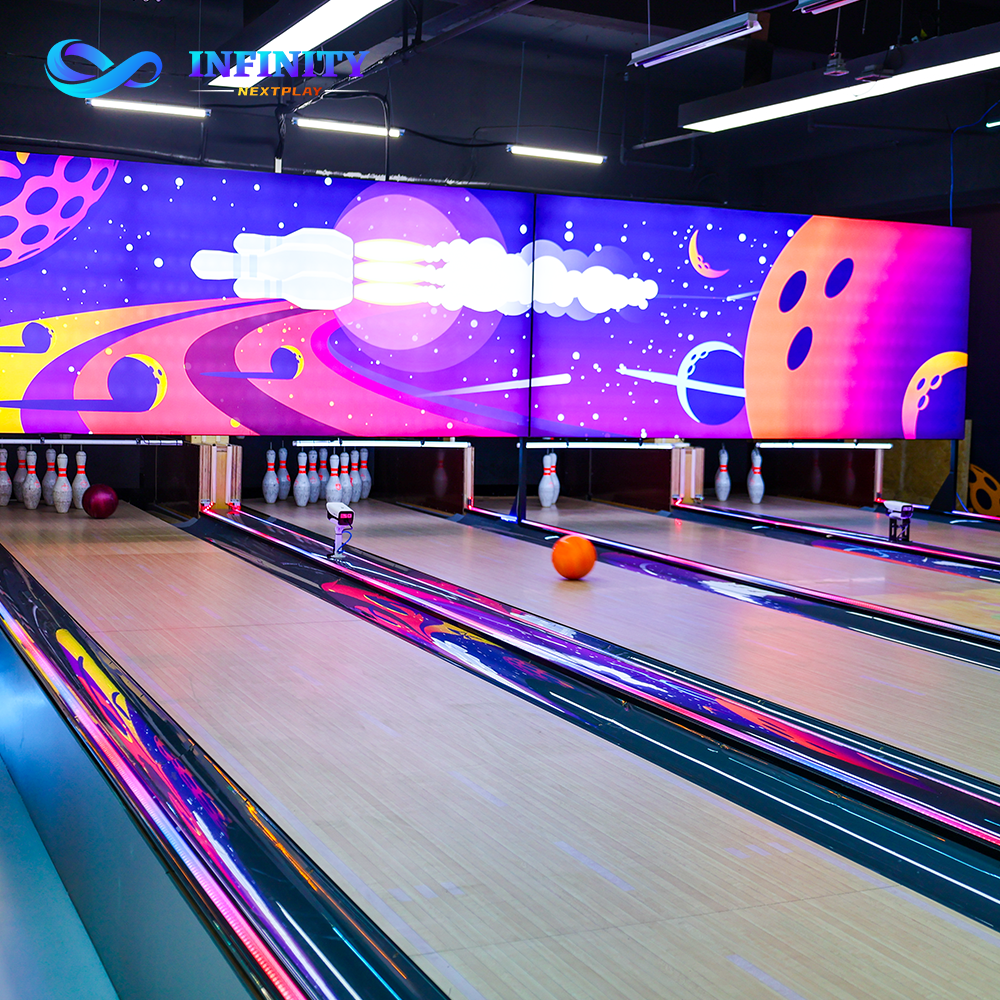
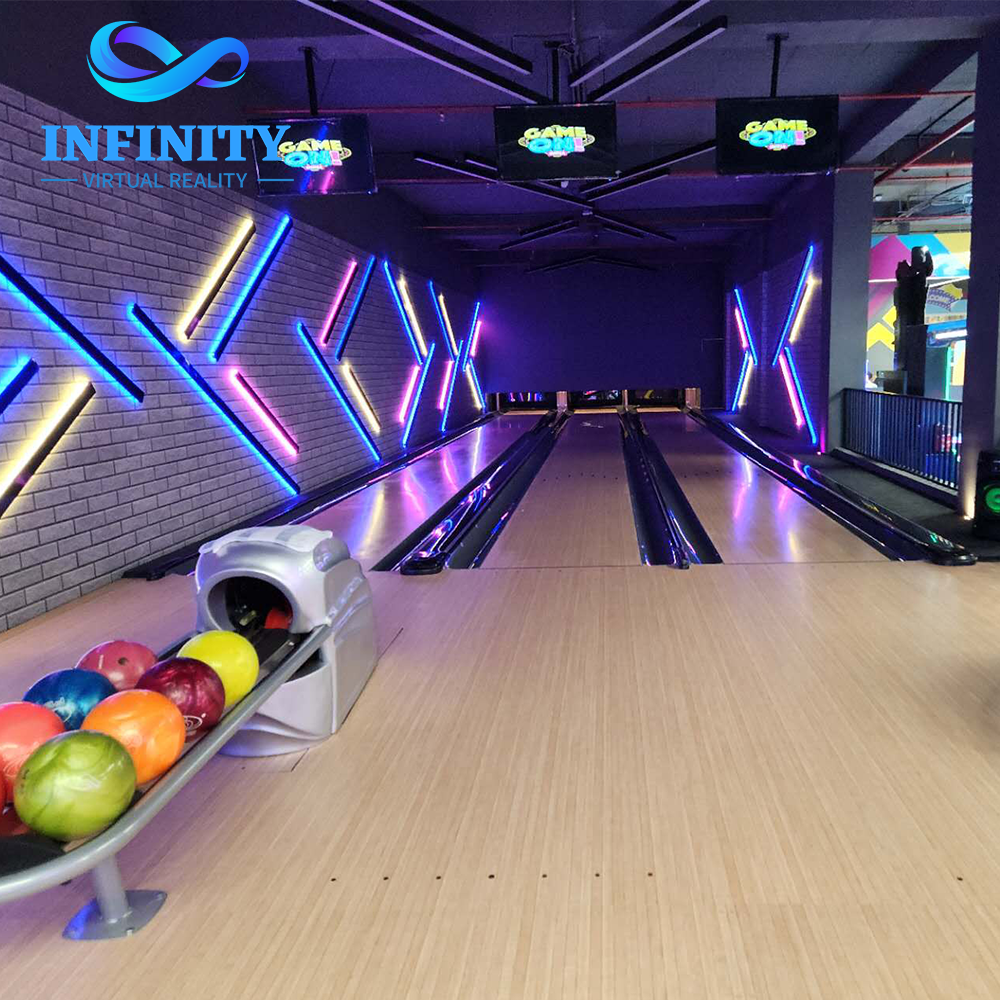
Ten-pin is the flagship system of the industry: international-standard lanes of 26 meters, automatic pinsetters, foul-line cameras and LED scoring. It is the format of professional tours, national leagues and the largest family entertainment centers, and the strongest revenue generator per lane in this comparison. The NextPlay 10-Pin Bowling package matches tournament lane geometry, which matters for venues that want league licenses and competitive credibility from opening day.
The economics of a ten-pin campus are built on volume and premium hours. At $6.50 per game and 32 games per lane per day, a four-lane campus clears about $830 per day and $21,500 per month from games alone, before shoe rental at $3.50 per pair and league fees. An eight-lane configuration roughly doubles that, which is why the ten-pin campus typically anchors venues of 1,000 square meters or more. The lane system draws 4.5 kW per lane pair and needs a clear ceiling of 4.5 to 6 meters, so the building shell decides the call before any budget conversation starts.
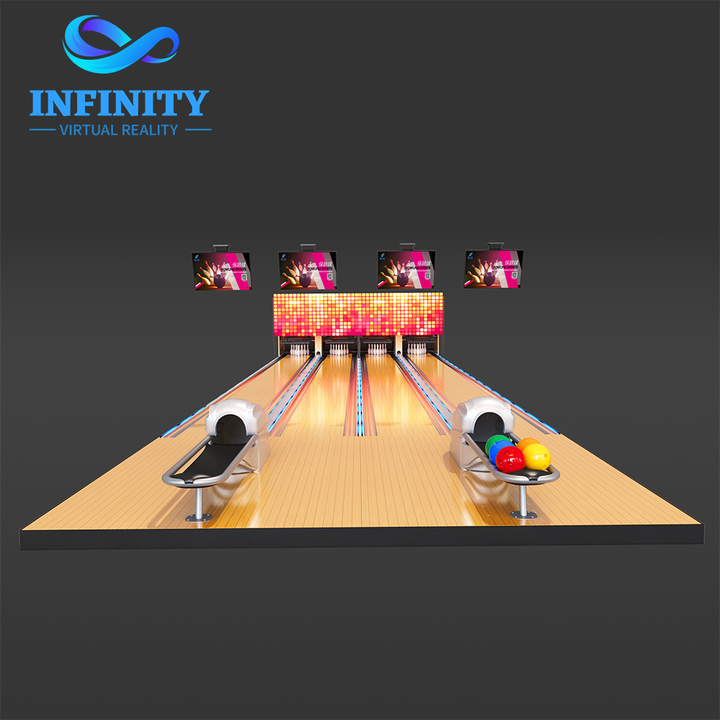
Duckpin shrinks the game without shrinking the experience: lanes of about 12 meters, lighter pins, smaller balls and a shorter cycle that turns over roughly twice as many games per hour as ten-pin. The NextPlay Duckpin Bowling system is engineered for that role: automatic pinsetting, a footprint that fits a converted bar or hotel basement, and a failure rate low enough for a single attendant per shift. A duckpin wing occupies roughly 300 square meters including the shoe counter, making it the densest bowling revenue per square meter.
Duckpin economics favor family traffic and first-timers, the audience that fills weekday daytime hours. At $4.50 per game and 70% utilization, four lanes contribute about $9,000 per month, and the shorter learning curve means children play two or three games instead of leaving after one. Hotels, boutique venues and sports bars install duckpin as a social zone that keeps groups in the building after the frames end.
The operational case for duckpin is equally strong. A single attendant runs four lanes, shoes, scoring and the bar during quiet shifts, and the lane draws 4.5 kW per pair with no lane-oil machine and no heavy ball-return servicing. Venues that start with duckpin often add ten-pin later, and venues that lead with ten-pin add duckpin as the family wing. Either way both systems share one dashboard, one league module and one pricing structure, the practical argument for buying both from a single supplier.
String bowling is the entry system that opens the bowling business to venues no traditional alley would touch. Each lane uses pins tethered to a string mechanism, removing the heavy pit machinery of ten-pin and cutting capital and maintenance to a fraction. The two-lane String Bowling set ships as a complete room: lanes, pinsetters, scoring, seating and ball returns, sized for ceilings from 3 meters and floors from about 180 square meters. For a neighborhood bar, a community center or a small FEC, string bowling is the difference between owning lanes and never trying.
String lane economics are built for gentle volume and long tails. At $5.00 per game and 28 games per lane per day, two lanes clear about $280 per day and $8,400 per month, and the low operating cost keeps almost all of it as margin. The string pinsetter is the most serviceable design in the industry - a broken string is fixed in minutes by any staff member with the supplied spare kit, with no technician call-out. That self-service reliability is the real value of the system for venues without a maintenance staff.
The decision matrix below is the summary an owner should put in front of their architect and lender. Every figure is the operating assumption NextPlay uses in its own feasibility reports, so each line can be stress-tested. The three systems occupy different price, footprint and revenue bands: pay more capital and space for ten-pin volume, less for duckpin density, least for string reach.
| System | Lane Length | Games / Lane / Day | Price / Game | Monthly Revenue (4 lanes) | Best Fit |
|---|---|---|---|---|---|
| 10-Pin Bowling | 26 m | 32 | $6.50 | About $21,500 | Sports centers, large FECs |
| Duckpin Bowling | 12 m | 44 | $4.50 | About $9,000 | Bars, hotels, boutique venues |
| String Bowling | 18 m | 28 | $5.00 | About $8,400 (2 lanes) | Neighborhood, entry venues |
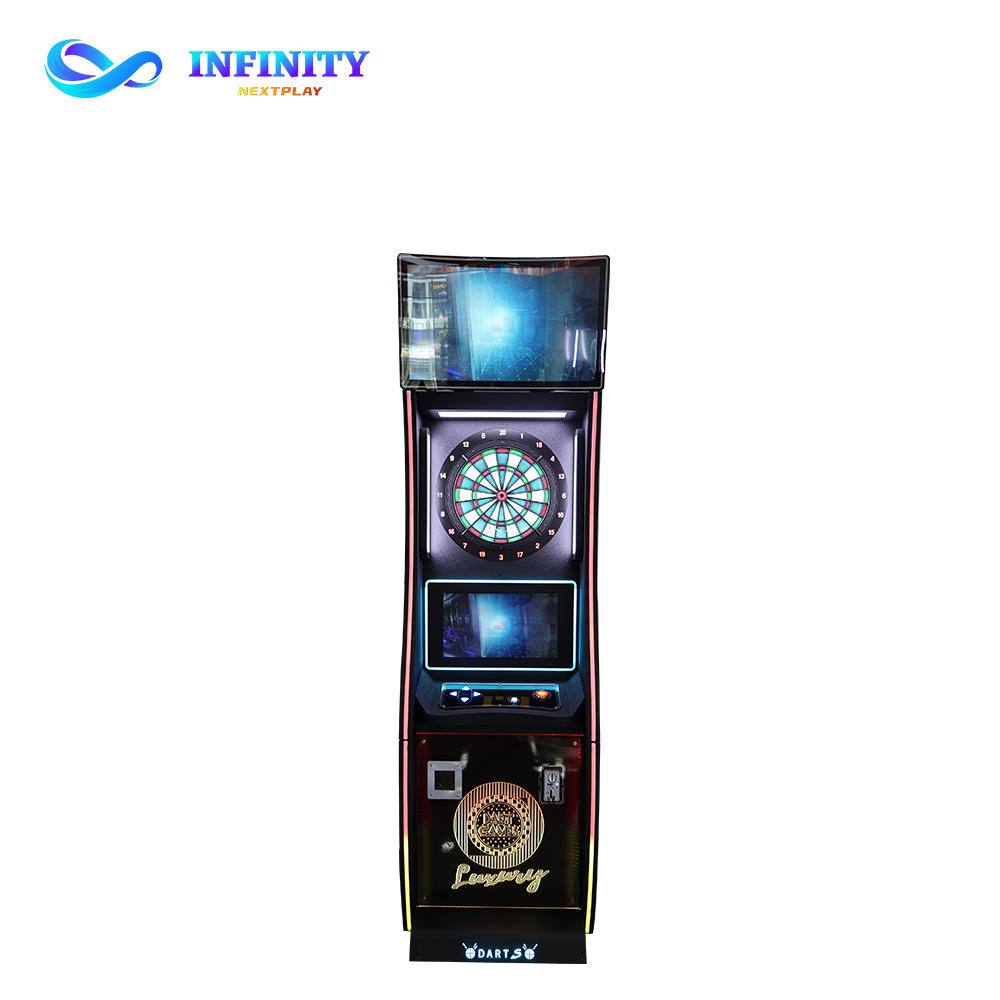
The mixed-venue strategy combines the bands instead of choosing one. The most profitable reference configuration is a ten-pin campus as anchor, a duckpin wing as the family daytime engine, and dart or shooting bays beside the lanes for groups waiting for a free lane. The anchor guarantees evening volume, the wing smooths weekday daytime, and waiting-area games lift per-head spend. One dashboard and one staff roster run the mix, so it adds revenue without adding headcount.
Owners starting smaller can reverse the sequence: open with a string pair or duckpin wing, prove the catchment, then add ten-pin lanes with the cash flow the first system generated. The booking, scoring and analytics platform is identical across every configuration, the practical reason to buy the whole floor from one supplier: one warranty, one spare-parts list and one cloud diagnostic report for every lane.
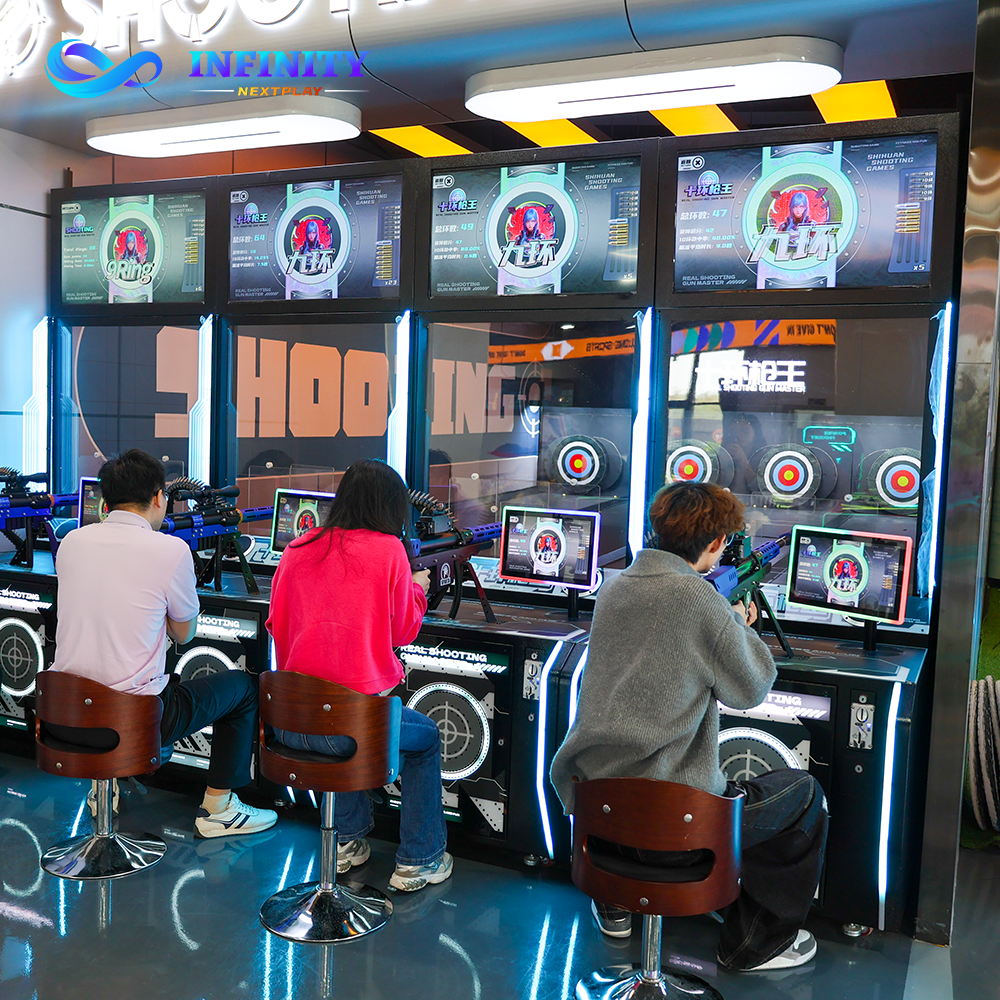
The full bowling package NextPlay delivers is priced around the mixed configuration above and ships in phases, so revenue starts while later phases are still being installed. The core package covers a four-lane ten-pin campus, a two-lane duckpin wing and the shared scoring and booking platform; the companion package adds the Dart Machine X7 bays and the Shooting Q4 simulators that turn the waiting area into its own revenue line. Equipment, fit-out guidance, training and a two-year cloud maintenance contract are itemized for lenders.
The revenue model is deliberately conservative. The ten-pin campus carries about $21,500 per month, the duckpin wing about $9,000, string pairs or a second wing add their own line, and dart, shooting and lane-side food and drink add roughly 25% on top of ticket revenue. The equipment portion pays back in 4.5 to 6 months at target utilization, and the full project returns within 18 to 24 months of opening. The table below shows where each dollar is earned.
| Revenue Stream | Anchor | Monthly Target | Share of Mix |
|---|---|---|---|
| Ten-pin campus | 4 lanes, games and shoes | $21,500 | 42% |
| Duckpin wing | 2 lanes, family play | $6,000 | 12% |
| Dart and shooting bays | X7 and Q4 systems | $7,000 | 14% |
| Food, drink and lane-side | Bar rail and kitchen | $10,000 | 20% |
| Leagues, events, retail | Birthdays and prizes | $6,000 | 12% |
Support is where a bowling purchase is won or lost, which is why NextPlay packages service into the price. Every lane connects to a cloud diagnostic system that reports pin-feed faults, lane temperature and scoring health to the venue dashboard and the NextPlay service desk, so most issues are resolved remotely or with the on-site spare kit before a technician is needed. Staff training covers the three systems in one session because the control software is shared. Phased deployment protects cash flow because income starts in month four.
Ten-pin bowling earns the most per lane at about $21,500 per month for four lanes, but it also demands the largest space and capital. Duckpin earns less per lane yet more per square meter, so most venues end up with a mixed floor.
A string two-lane set fits floors from about 180 square meters with a 3-meter ceiling, and a duckpin wing fits converted bars and basements. Both run with a single attendant and no technician.
The equipment portion of a mixed package pays back in 4.5 to 6 months at target utilization, and the full project returns within 18 to 24 months of opening, with revenue starting in month four.
Yes. Staff training covers all three systems in one session, and every lane connects to a cloud diagnostic system with a two-year maintenance contract and an on-site spare kit.
Get the equipment list, floor plan and revenue model from the NextPlay bowling engineering team.