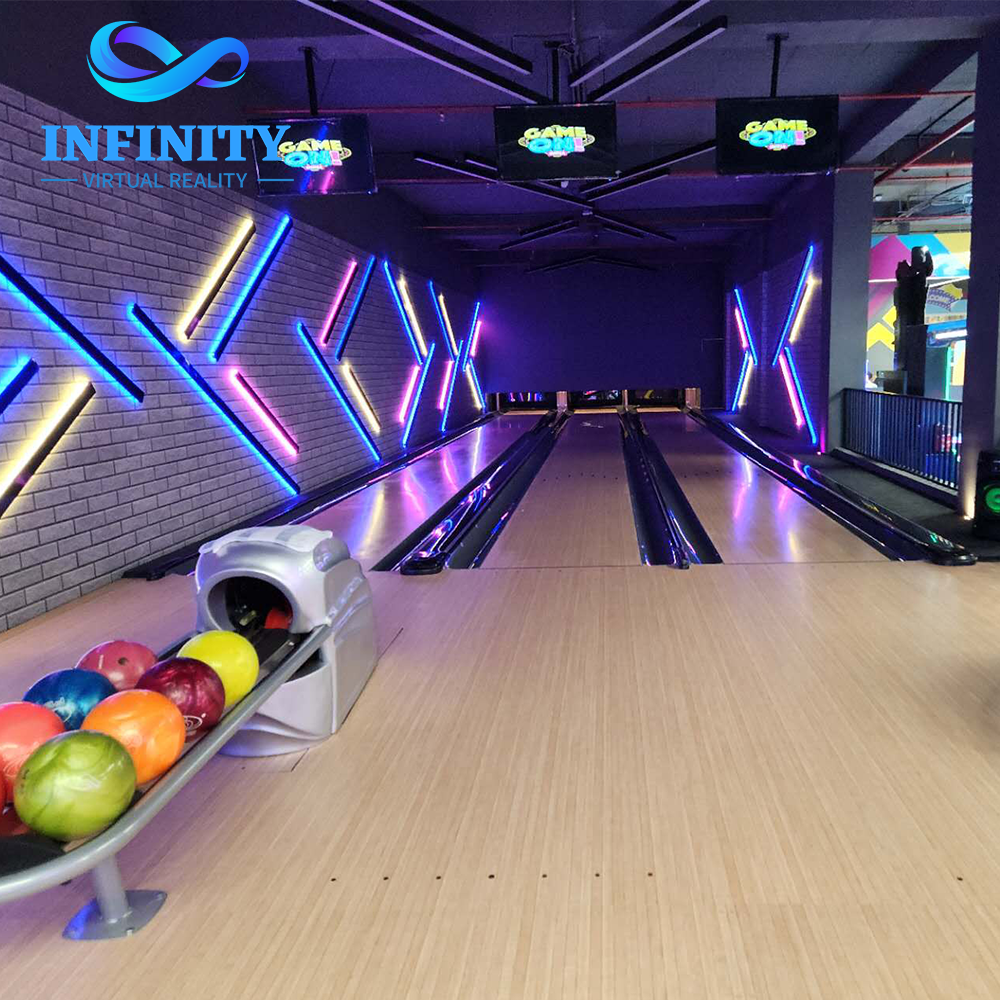
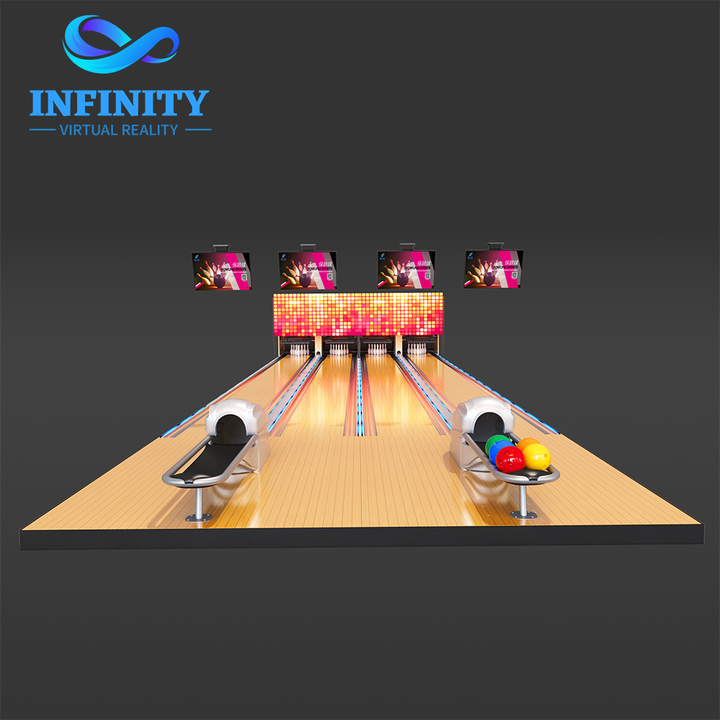
A budget of $30,000 sits in the middle of the bowling market: too small for a ten-pin pair, generous for a two-lane string room, and exactly the right size for a four-lane duckpin wing. The answer to the title question is yes, with one discipline: the $30,000 must be spent on the equipment line, and the fit-out around the lanes must be planned as a second, smaller line. This guide prices the equipment honestly, then shows how the building work fits into a total opening budget of $40,000 to $48,000.
The Duckpin Bowling system is the price-to-density leader of the industry because the compact 12-meter lane needs a fraction of the material of a 26-meter ten-pin lane. Four duckpin lanes use about the same floor area as one ten-pin lane pair, and the pinsetters are smaller, lighter and cheaper to ship. That is the structural reason the four-lane package exists in the $30K range while a ten-pin pair does not.
The package covers the lane hardware and the scoring platform, not the building. Every line in the breakdown below is quoted equipment-only, matching the NextPlay quotation format, and the fit-out section that follows converts the shell into a venue with its own budget line. An owner who keeps the two lines separate avoids the classic mistake of spending the whole budget on machines and opening with an unfinished room.
The equipment line for the four-lane duckpin package is built from four repeating lane items plus the shared platform items, and the table below lists them at 2026 benchmark pricing. The repeating items scale with the lane count, which is why a four-lane order quotes better per-lane than a two-lane order.
| Line Item | Quantity | Unit Price | Subtotal |
|---|---|---|---|
| Duckpin lane with automatic pinsetter | 4 | $5,800 | $23,200 |
| Automatic scoring terminals (pair) | 2 | $1,400 | $2,800 |
| Shared scoring and booking platform | 1 | $1,200 | $1,200 |
| Spare-parts kit and first-year cloud diagnostics | 1 | $700 | $700 |
| Ball returns, shoes and counter kit | 1 | $600 | $600 |
| Total equipment line | $28,500 |
The per-lane price of $5,800 in the package reflects the four-lane quantity, the shared commissioning visit and the shared spares, and it is the number that makes the $30K package real. Buying the same hardware as two separate two-lane orders typically adds 8% to 12% to the line, which is the practical argument for committing to the four-lane wing at once.
The scoring platform is the line item owners underestimate most. The package includes the automatic scoring terminals, the booking calendar, the league module and the analytics dashboard as one shared line, so there is no per-lane software charge and no subscription surprise after opening. The same platform runs the string and ten-pin systems, which matters when the venue expands later.
Installation is included in the equipment line for the bowling hardware itself: the lanes, the pinsetters, the scoring terminals, the ball returns and the commissioning of the whole system. NextPlay sends a commissioning team for the four-lane wing, and the work covers the machine envelope, the electronic setup and the operator training on the scoring and booking platform. The site work before the team arrives is part of the fit-out line, not the equipment line.
The installation scope is the reason the wing opens with a single attendant per shift. The automatic pinsetters and the digital scoring mean the staff job is loading, shoe counter and the bar line, and the cloud diagnostics report faults to the venue dashboard before they stop a lane. A venue that budgets a trained operator instead of a maintenance technician keeps the operating cost at the level the payback model assumes.
The fit-out line for the four-lane duckpin wing lands at $11,500 to $19,500 in 2026 pricing, which brings the total opening budget to $40,000 to $48,000. The wing needs a leveled floor over about 250 square meters, power drops for the 4.5 kW per lane pair, the shoe counter and lockers, seating beside the lanes, and the bar or redemption rail that carries the food and drink line. A converted bar or basement unit that already has usable power and a 3-meter ceiling can hold the fit-out to the lower end of the range.
| Fit-Out Line | Low Estimate | High Estimate |
|---|---|---|
| Floor leveling and lane bed prep | $3,000 | $5,500 |
| Power drops, lighting and air handling | $3,500 | $6,000 |
| Shoe counter, lockers and seating | $3,000 | $5,000 |
| Bar rail or redemption zone | $2,000 | $3,000 |
| Total fit-out | $11,500 | $19,500 |
Two fit-out decisions protect the budget. First, keep the player zone simple in phase one: seating, the shoe counter and one bar rail are enough to open, and the waiting-zone games can arrive with the revenue they will generate. Second, use the NextPlay fit-out checklist during design so the power and ceiling work is done once, because re-leveling a floor or re-running power after opening costs more than the original work.
The revenue model for the wing uses the conservative operating assumptions of the bowling market: $4.50 per game, 44 games per lane per day at 70% utilization, and shoe rental at $3.50 per pair. On those numbers the four lanes clear about $9,000 per month before the food and drink line, and the equipment line of $28,500 pays back in about 5 to 7 months at target utilization. The table below shows the monthly picture.
| Revenue and Cost Line | Monthly Figure |
|---|---|
| Game revenue (4 lanes) | $8,100 |
| Shoe rental revenue | $1,200 |
| Food and drink margin | $1,800 |
| Total monthly revenue | $11,100 |
| Staff, power and consumables | $3,200 |
| Net monthly contribution | $7,900 |
The net contribution of about $7,900 per month covers rent and financing and still returns the full opening budget of $40,000 to $48,000 within 6 to 7 months of operation at target utilization. The model is deliberately conservative: it assumes no league revenue, no event hire, no premium on weekend hours, and no second shift, all of which are upside in a working venue.
The sequence that makes the numbers hold is opening discipline. The wing opens with the four lanes, the scoring platform and the bar rail, staffed by one attendant per shift, and the league calendar and the waiting-zone games are added in the second quarter with the cash flow the first quarter generates. Venues that follow that sequence in NextPlay reference data stay above $20 per square meter per month from the third month onward.
The equipment line for a four-lane duckpin package is about $28,500 including installation and the scoring platform; with the fit-out line the full opening budget is $40,000 to $48,000.
Four lanes with automatic pinsetters, automatic scoring terminals, the shared booking and league platform, ball returns, the shoes and counter kit, installation and a spare-parts kit with first-year cloud diagnostics.
A single duckpin lane runs $6,500 to $8,000 when bought alone, and about $5,800 per lane in the four-lane package thanks to the quantity price and the shared commissioning visit.
The bowling hardware installation is included: lane assembly, pinsetter setup, scoring terminals, ball returns and platform configuration, commissioned in about 5 working days once the site is prepared.
About 250 square meters including the lanes, the shoe counter and the seating, with a 3-meter ceiling minimum and 4.5 kW of power per lane pair.
Yes. The scoring and booking platform is shared with the string and ten-pin systems, so the wing can add lanes or a second system without re-platforming or re-training staff.
A four-lane duckpin package does fit a $30,000 budget, because the duckpin lane is the price-to-density leader of the bowling market and the four-lane order buys the best per-lane price. The equipment line of about $28,500 includes the lanes, the pinsetters, the scoring platform, installation and the spares, and the fit-out line of $11,500 to $19,500 completes a venue that opens for $40,000 to $48,000.
The decision rule is simple. If the budget is $30,000 and the space is 250 square meters, ask NextPlay for the four-lane duckpin quotation and the fit-out checklist on the same sheet. If the numbers in this guide match the building, the wing pays its equipment back in 5 to 7 months and carries the fit-out within the first year, which is the fastest capital return available in the bowling market at this budget level.
Get the four-lane duckpin quotation, the fit-out checklist and the revenue model from the NextPlay bowling engineering team.