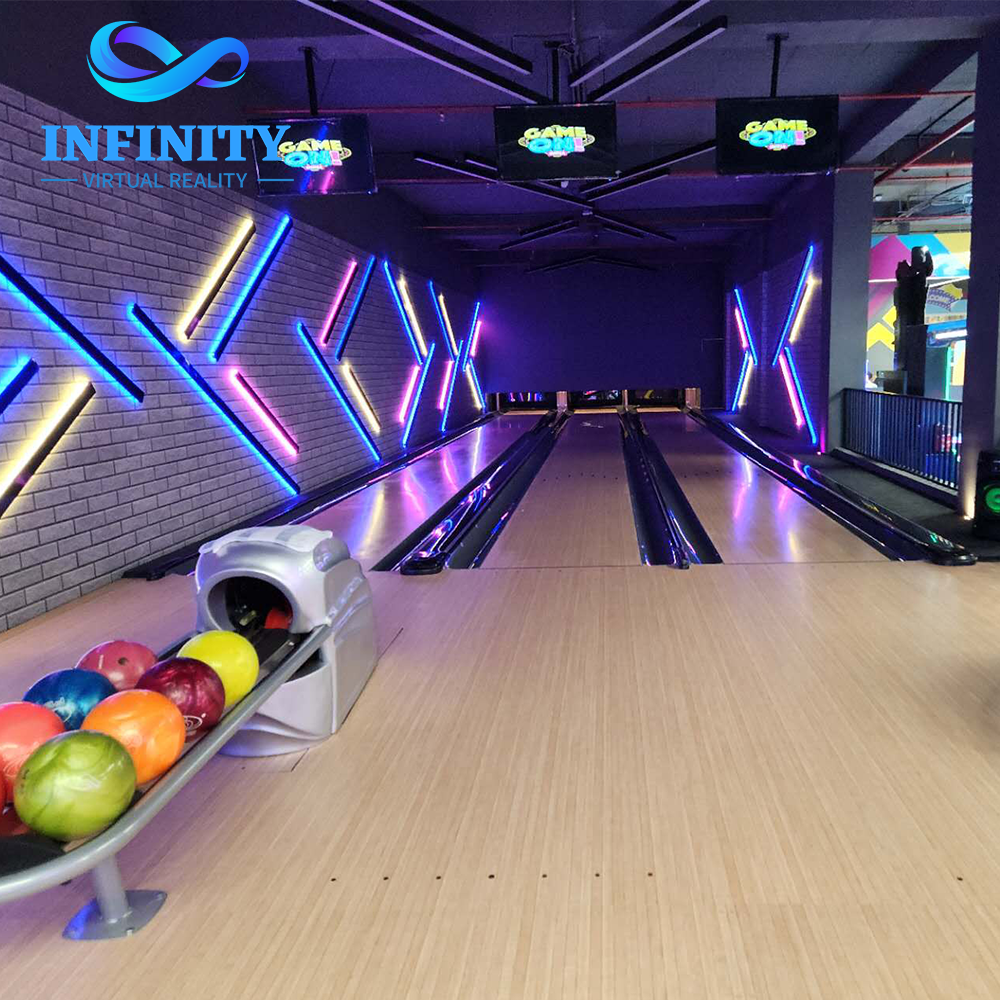
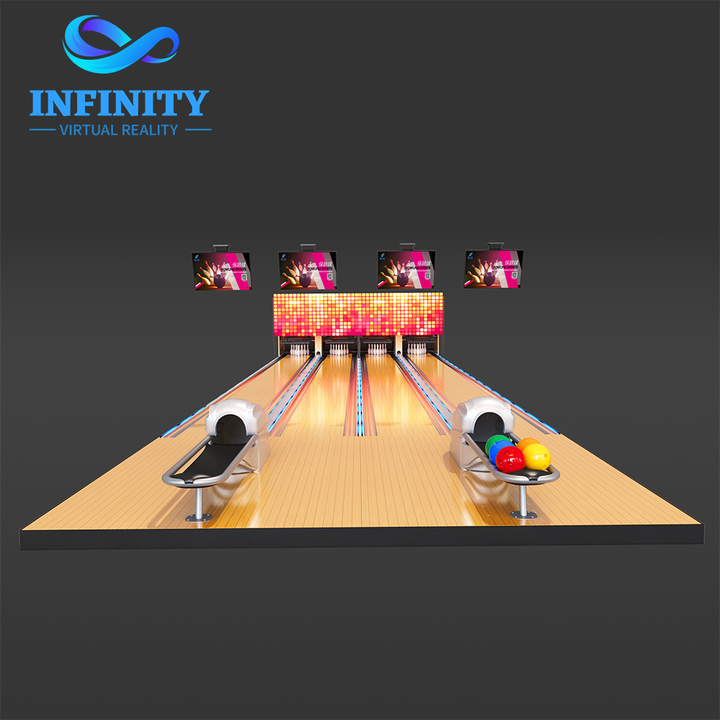
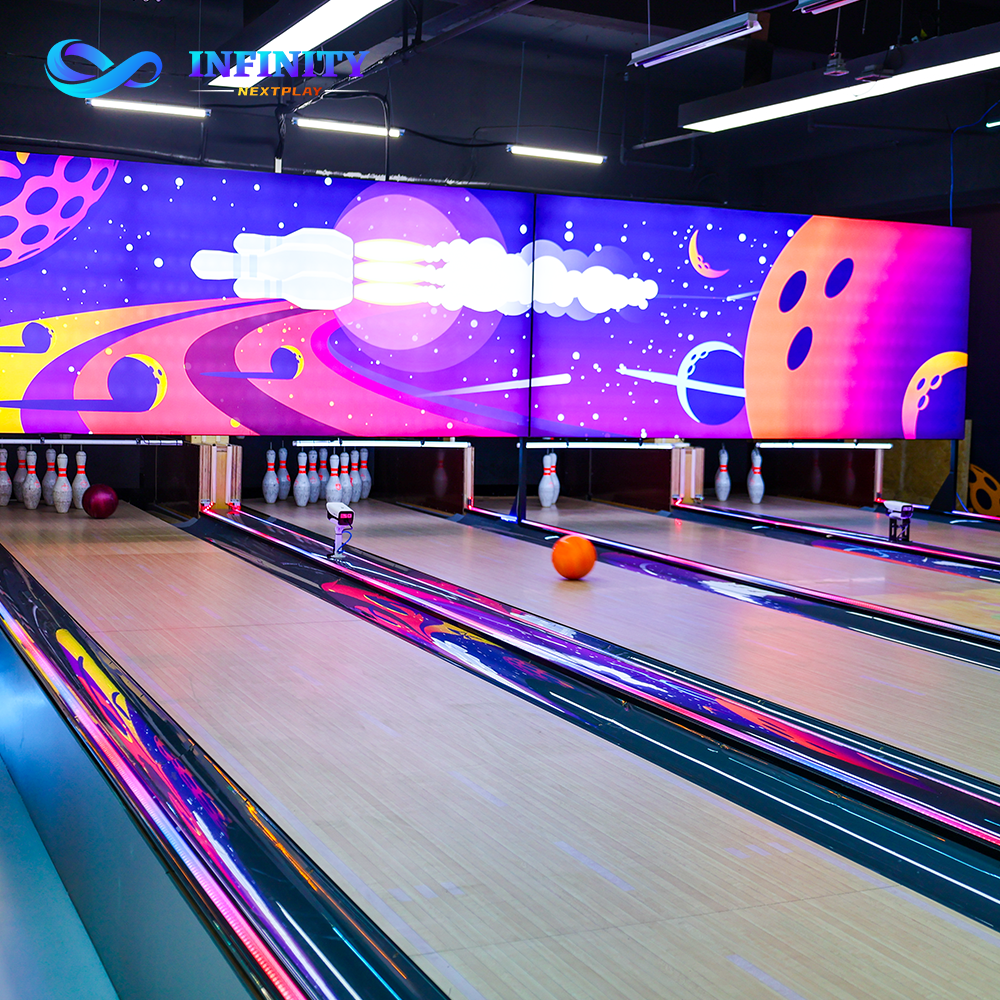
Duckpin is the bowling format that fits a bar because the format shrinks every dimension that stops bowling from fitting: the lane runs 12 meters instead of the 26-meter ten-pin deck, the ball fits the hand at under 4 kilograms instead of the 7-kilo house ball, the pins stand smaller and lighter and the scoring stays simple enough that the first-time player needs no instruction. The bar guest who never books the bowling center plays the duckpin lane without the intimidation, and the no-intimidation format is what converts the bar crowd into the bowling crowd.
The format also fits the bar rhythm: the duckpin frame plays fast, the full game of ten frames runs 30 to 40 minutes for four players and the group books the lane by the half hour instead of the evening. The short session matches the round cycle of the bar: the group plays a game, returns to the table for the round and books the second game when the round lands. The play rhythm and the drink rhythm interlock, and the interlock is the revenue pattern that the single-format venues never capture.
The two-lane pair is the smallest unit that changes the calendar: one lane serves the walk-in pairs and leaves the groups waiting, the pair of lanes runs the head-to-head format that fills the weeknights and the pair is the minimum that the league format needs. The bar that installs the pair buys the event calendar, and the event calendar is what the second half of this math covers.
The two-lane duckpin pair fits in 55 to 70 square meters: each lane runs 12 meters of play plus the 2-meter approach and the machine pit, the pair sits side by side in the 4.2-meter width and the seating strip in front of the lanes takes the remaining meters. The bar with the 100-square-meter floor gives the lanes the back third and keeps the bar counter and the main seats intact, and the bar with the 150-square-meter floor adds the party corner that the league nights use.
The vertical and the technical checks are short: the lane needs 3 meters of clear height over the pin deck, the power feed is a 220-volt 20-amp circuit per lane and the machine pit needs the 60-centimeter service access from behind. The duckpin machines run on the string-pinsetter principle, the maintenance stays at the weekly walk-down and the spare parts kit fits in a shelf box, and the technical footprint is the reason the format installs where the ten-pin deck never could.
The floor and the shell close the checklist: the slab takes the lane with the standard leveling kit, the acoustic question is smaller than the bar expects because the duckpin ball lands lighter and the string pinsetter carries no free-fall crash, and the venue that adds the lane divider felt kills the residual noise that the cross-lane chatter makes. The shell that passes the four checks takes the lanes without the renovation project.
The revenue stack of the two-lane pair runs three layers: the lane fee, the game bundle and the event layer. The lane fee is the base: the 45-dollar-per-hour benchmark fills the pair at the 4-players-per-lane density, the peak weekend hours run both lanes at 80% and the weekday evenings run one lane at 60%, and the blended month lands near 2,800 dollars of lane revenue for the pair. The base layer alone covers the rent of the meters the lanes occupy.
The game bundle is the second layer: the book-the-pair package that sells both lanes for the group of eight at the 70-dollar hour reads as the deal, the lane-plus-pitcher bundle that attaches the first round to the booking captures the drink margin at the reservation and the last-frame-challenge that sells the third half hour keeps the group past the planned stop. The bundles move the revenue from the per-hour fee to the per-visit spend, and the per-visit spend is the number the bar P and L actually reads.
The event layer is the third: the weeknight lane buyout at 300 to 500 dollars, the corporate team night that books the pair plus the party corner and the birthday package that runs the Sunday afternoon. The layer sells the same lanes at the premium price to the planner who books the room instead of the lane, and the planner bookings are what turn the pair from the attraction into the calendar.
The weeknight engine is the reason the two-lane pair pays: the Monday doubles league signs the 8 pairs into the 8-week season at 15 dollars per player per week, the season pre-pays 1,900 dollars before the first frame and the league owns the quietest night of the bar calendar. The Tuesday corporate recurring slot books the same pair for the office league that the nearby companies renew quarterly, and the Wednesday open doubles night charges the 5-dollar entry that pays the prize pot and fills the room with the regulars who bring the newcomers.
The formats rotate so the lanes never go dark: the Thursday trick-shot and format night runs the alternate games that the duckpin board supports, the Friday and Saturday return to the walk-in peak at the full lane fee and the Sunday family session runs the half-price kid rate that fills the dead afternoon. The rotation gives every night a product, and the night with a product is the night the staff plans for instead of the night the staff survives.
The calendar compounds: the league season builds the roster that the next season renews, the corporate slot builds the quarterly invoice that the sales team can forecast and the open night builds the walk-in funnel that feeds the weekend. The bar that runs the weeknight engine measures the covers, and the covers on the league nights run 25% above the pre-lane baseline because the players bring the non-bowling partners who sit at the bar.
The drink and food attach is the margin the lane fee never shows: the lane player stays 50 to 70 minutes per booking, the stay adds the round that the walk-in evening skips and the round at the bar margin lands near 7 dollars per player per visit. The pair that serves 160 player-visits a week adds the 1,100 dollars of drink margin that the lane booking sheet never counts, and the food attach follows because the group that books the lane orders the platters that the table crowd splits.
The attach runs on purpose in the well-designed bar: the lane-side service window that the server staffs during the league nights keeps the drinks flowing without the queue, the score-screen sponsor line that carries the drink special puts the offer where the players stare and the frame-break happy hour that prices the round between the fifth and seventh frames turns the game break into the order window. The design decisions cost nothing at the install and compound every week.
The attach also sells the premium pours: the league regular moves from the house pint to the named whisky that the bar stocks for the league shelf, the corporate night books the cocktail package that the standard crowd never orders and the birthday party runs the pitcher tier that lifts the average check. The lane is the excuse for the upgrade, and the upgrade is what the attach math ultimately measures.
The two-lane payback math starts at the installed cost: the duckpin pair lands between 60 and 90 thousand dollars delivered and installed depending on the machine spec and the fit-out scope, the install runs 5 to 8 days inside the live bar and the operating cost stays under 12% of the lane revenue. Against the 2,800-dollar monthly lane fee, the 1,100-dollar weekly drink margin and the 1,500-dollar monthly event average, the honest monthly net lands between 2,800 and 4,200 dollars and the payback runs 14 to 18 months.
The payback moves with the three levers that the earlier chapters built: the league season that pre-pays the quarter, the event layer that sells the lanes at the premium and the attach design that turns the booking into the bar tab. The bar that runs all three finishes near the 14-month line, and the bar that runs the lanes as the unstaffed walk-in attraction finishes near the 20-month line and learns the lesson that the calendar is the product.
The after-payback years run as the annuity: the machine reserve that the net funds covers the pinsetter service and the lane refurbish, the league renewals arrive without the acquisition cost and the lane reputation that the league builds recruits the corporate slots. The pair that paid for itself becomes the floor anchor that the bar expands around, and the expansion question is the second pair or the food upgrade that the lane traffic justifies.
The case is the 120-square-meter neighborhood bar that gave the back 60 square meters to the duckpin pair: the install ran 6 days, the lanes opened at the 40-dollar weekday rate and the 50-dollar weekend rate, and the first quarter filled the Thursday-to-Sunday peak while the Mondays stayed quiet. The second quarter launched the Monday doubles league and the Tuesday corporate slot, the weeknight covers rose 27% against the baseline and the lane revenue crossed the 3,000-dollar month with the event layer still ramping.
The attach numbers told the second story: the league nights ran the check average 35% above the walk-in nights, the lane-side service window staffed from 7 pm kept the round cycle tight and the score-screen special moved the featured whisky at two bottles a week. The owner's summary: the lanes did not add a game to the bar; they added a booking business to the bar, and the booking business is what the weeknights had been missing.
The case scales down and up: the 90-square-meter wine bar runs the single duckpin lane with the walk-in pairing and books the second lane as the phase two, and the 200-square-meter sports bar runs the four-lane block with the league calendar that owns three weeknights. The format family is the point: the duckpin pair is the entry, and the entry scales with the room and the calendar the operator builds.
The install checklist starts with the quote scope: the lane pair price that includes the machines, the lanes and the scoring, the delivery and install crew terms, the floor leveling kit, the power run to the pit and the service access framing. The checklist continues with the shell: the 3-meter height check, the 220-volt 20-amp circuit per lane, the acoustic divider felt and the lane-side service window rough-in. The venue that writes the two halves into the quote buys the project instead of the change order.
The timeline runs in weeks: the quote and the deposit in week one, the production and shipping in weeks two to six, the install inside the live bar in 5 to 8 days and the staff training on the scoring, the shoe and ball flow and the service window on the closing day. The opening playbook fills the first month: the friends-and-family league that tests the lanes, the launch week lane discount that seeds the walk-in traffic and the league sign-up sheet that sits on the bar counter from day one.
The closing rule: the bar installs duckpin bowling to sell the calendar, and the math that justifies the lanes is the league-plus-event-plus-attach stack that the pair enables. Anchor the lanes on the systems built for the bar model: the Duckpin Bowling System for the 12-meter pair that fits the bar shell, the String Bowling system for the venues that run the string-pin format beside the duckpin and the 10-Pin Bowling Alley for the larger room that graduates to the full deck, and let the two-lane math decide the order.
The pair fits 55 to 70 square meters: two 12-meter lanes side by side in a 4.2-meter width plus the approach, the machine pits and the seating strip in front. The bar keeps the counter and the main seats intact and gives the lanes the back third of a 100-square-meter floor.
The blended month lands near 2,800 dollars of lane fees, the drink attach adds about 1,100 dollars a week of margin and the event layer averages 1,500 dollars a month. The honest net runs 2,800 to 4,200 dollars per month for the pair.
The installed pair at 60 to 90 thousand dollars pays back in 14 to 18 months when the bar runs the league season, the event layer and the attach design. The unstaffed walk-in-only approach stretches toward 20 months, which is why the calendar is the product.
The weeknights are the point: the Monday doubles league pre-pays 1,900 dollars per season, the Tuesday corporate slot renews quarterly and the Wednesday open night feeds the weekend funnel. The league-night covers run about 25% above the pre-lane baseline.
The format is quieter than the ten-pin deck: the duckpin ball lands lighter, the string pinsetter carries no free-fall crash and the lane divider felt absorbs the cross-lane chatter. The 3-meter height check and the 220-volt circuit are the only technical asks.
The install runs 5 to 8 days inside the operating bar, the crews work the day shift and the staff training happens on the closing day. The opening playbook seeds the traffic with the friends-and-family league and the launch-week lane discount.
Send your floor plan, your ceiling height and your power layout, and our team will return the two-lane duckpin quote, the weeknight event playbook and the league launch kit sized to your bar.