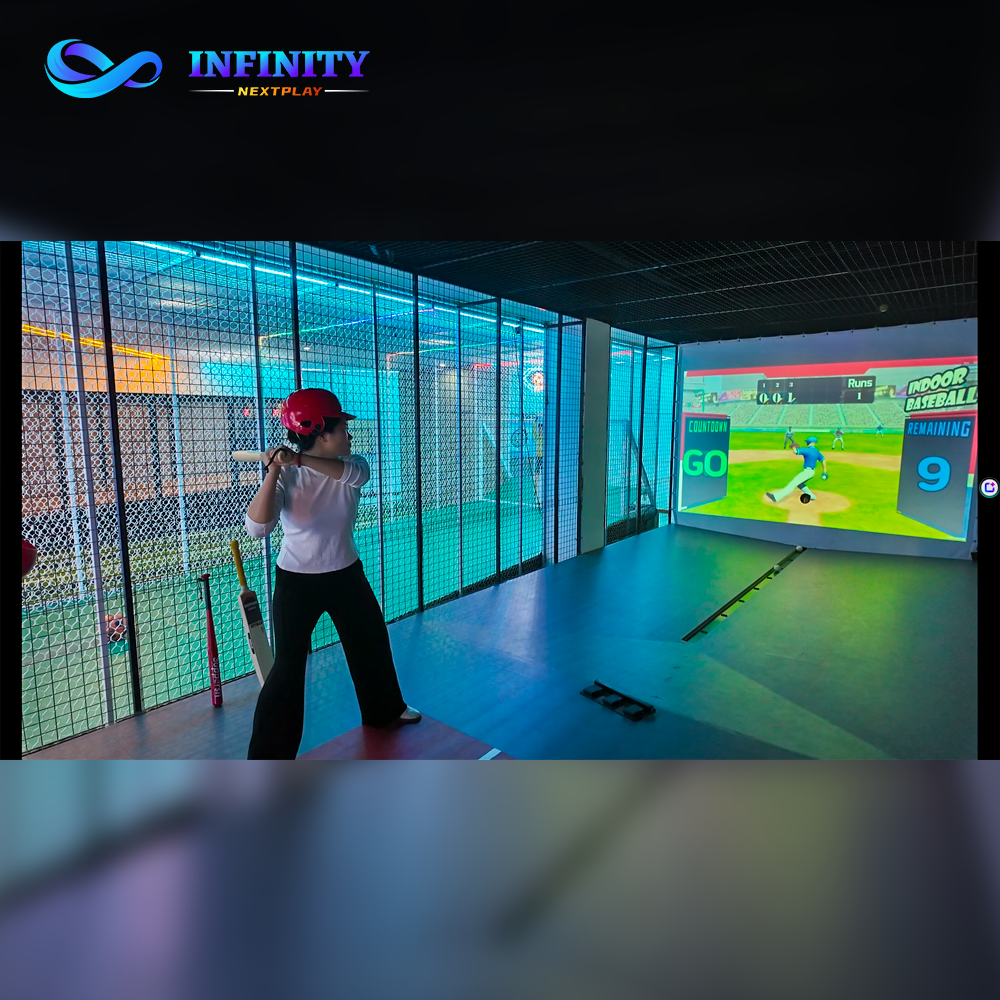
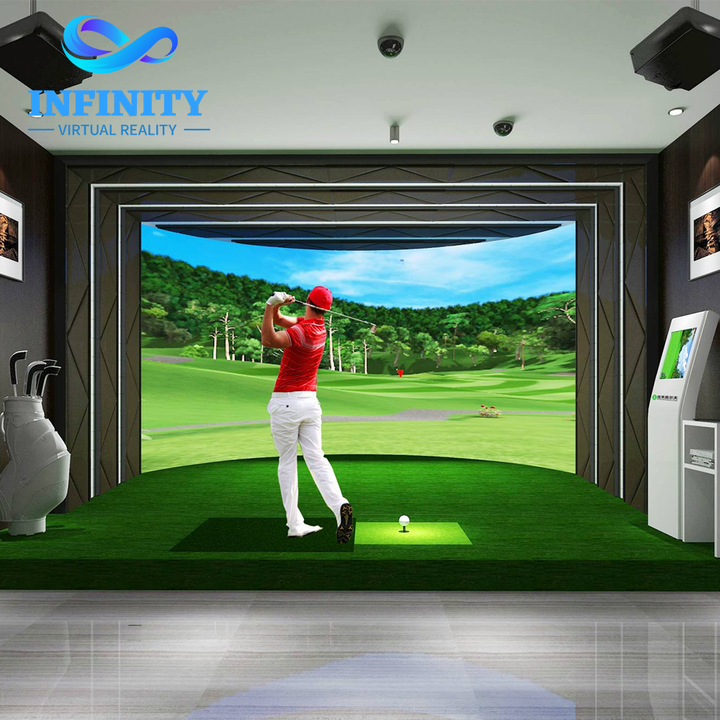
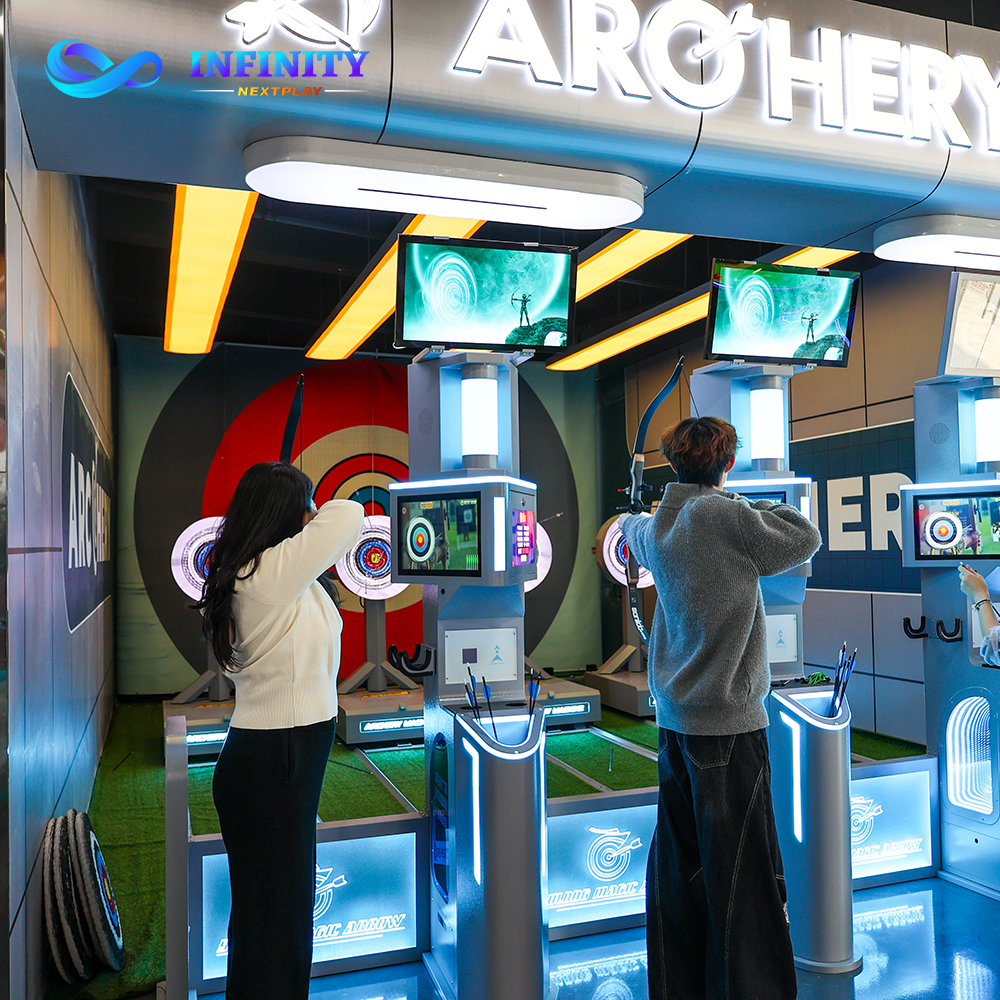
Four cost layers, verified 2026 price bands and a three-tier budget table: a starter multi-sport corner from the low five figures, a standard bay in the $18K-60K hardware class, and a four-bay zone all-in.
How much does a multi-sport simulator cost? The honest 2026 answer is that the question hides four separate budgets stacked behind one sticker price: the machine, the bay it sits in, the software that keeps it earning, and the first year of running it. Published commercial bands put the equipment itself at $18,000-60,000, and the fit-out around that equipment adds $40,000-75,000 for every bay before a single guest queues. This guide breaks a multi-sport simulator install budget into four layers, prices each layer against sourced 2026 anchors, and closes with a three-tier budget table you can take into a contractor meeting.
The single-number habit is how buyers end up comparing mismatched quotes. Vendor pages carry a $3,500-5,000 sensor add-on and an $18,000-60,000 turnkey system on the same screen, and a buyer who compares those two figures is comparing a component with a room. The same confusion appears one level up, where venue-wide posts price the whole building instead of the simulator zone - the top sportainment cost list is the wider frame, while this piece stays strictly on the equipment scope.
| Cost layer | What it buys | 2026 magnitude (sourced) | Anchor and confidence |
|---|---|---|---|
| Layer 1 - Hardware | The simulator itself: enclosure or screen, sensor stack, projector, play surface | $18K-60K turnkey; $8K-35K VR-based; $3,500-5,000 add-on kit | Vendor-reported: JAMMA buying guide; TruGolf / aboutGOLF price lists |
| Layer 2 - Buildout and install | Shell prep, power, ceiling, safety clearance, flooring, networking, reception | $40K-75K per bay; about $50,000 licensed fit-out paid to the contractor | Supported: NGF survey / X-Golf FDD; Verified: Zero Latency licensor text |
| Layer 3 - Software and content | Licence or subscription, sport and game packs, booking and payment, updates | From about $1,000 for a one-time module; $3,500-5,000 expansion kits; 16% revenue share | Vendor price lists (Foresight, aboutGOLF, TruGolf); Verified: Zero Latency licence |
| Layer 4 - First-year operating | Staff, power and HVAC, marketing, service, consumables, payment fees | 35-55% of gross in a vendor run model; utilisation floor at 25% | Vendor illustrative: JAMMA ROI model; platform data: golfoclock.com / fitmygolfclubs.com |
Reading order matters. Settle Layer 1 first, because the system type fixes the footprint, the power draw and the ceiling requirement; Layer 2 follows from that footprint; Layer 3 is an annual line that changes the payback arithmetic; Layer 4 is where first-year budgets actually break. Every layer below is priced with the same rule: published band first, worked arithmetic second, assumption printed next to the number.
Layer 1 is the band everyone quotes and the one quoted most often out of context. According to JAMMA's multi-sport simulator buying guide (2025-11-22), a commercial multi-sport turnkey package - full screen, playing mat, sensor stack - runs $18,000-60,000, occupies a 12-25 m2 footprint and is rated at 20-40 guests per hour. The same guide bands the market by system type: golf-focused builds at $20,000-80,000, VR-based builds at $8,000-35,000, and compact batting systems at $12,000-40,000.
Two more reference points sit either side of that band. According to JAMMA's HD multi-sport cost article (2025-08-14), mid-range commercial systems land at $15,000-40,000 and true commercial installs at $40,000-100,000 and up; on the light end, vendor price lists put a 60+ sport integrated machine - the Sports Simulator Elite Edition with three cameras - at $29,950, an aboutGOLF Multisport sensor at $3,500 and up, and a TruGolf MultiSport ARCADE 14-game add-on at $4,500-5,000. For scale only, an industry report cited by JAMMA puts the sports-simulator market at $2.0 billion in 2022 growing to $4.9 billion by 2030 at an 11.8% CAGR - directional background, not a budget input.
| System type | 2026 band | Footprint and throughput note | Source and confidence |
|---|---|---|---|
| Multi-sport turnkey (screen + mat + sensors) | $18,000-60,000 | 12-25 m2; 20-40 guests per hour | Vendor-reported: JAMMA buying guide (2025-11-22) |
| Mid-range and commercial tiers | $15,000-40,000 mid; $40,000-100,000+ commercial | Larger enclosure, higher-duty components | Vendor-reported: JAMMA HD cost article (2025-08-14) |
| Golf-focused system | $20,000-80,000 | 10-20 m2 per bay including safety clearance | Vendor-reported: JAMMA buying guide |
| VR-based system | $8,000-35,000 | Compact corner; 30-50 m2 can open a small VR corner | Vendor-reported: JAMMA buying guide; vartarcade facility list |
| Compact batting system | $12,000-40,000 | Net, sensor and projection in a batting lane | Vendor-reported: JAMMA buying guide |
| 60+ sport integrated machine | $29,950 | Three cameras, 60+ sports in one cabinet | Vendor price list: Sports Simulator Elite Edition |
| Add-on / sensor kit route | $3,500-5,000 | Bolts onto an enclosure you already own | Vendor price lists: aboutGOLF from $3,500; TruGolf ARCADE $4,500-5,000 |
| Multi-sport vs single-sport range | Multi $10,000-70,000; single $15,000-150,000+ | Dwell 30-60 min multi vs 60-120 min single | Vendor-reported: JAMMA multi vs single-sport (2025-11-24) |
| Installed single station (internal cross-check) | $25,000-60,000 all-in installed | One station, installed, published cluster figure | Verified: published NextPlay cluster figure |
The trap is scope, not price. The add-on route assumes an enclosure, a projector, a play surface and an installation crew already exist; the turnkey route arrives as a complete bay. Comparing $3,500 with $18,000 compares a sensor with a room, and the difference shows up on installation day as Layer 2.
Two checks keep an honest band honest. First, the installed-station figure our own cluster publishes - $25,000-60,000 all-in for a single station - brackets the $18,000-60,000 turnkey band instead of contradicting it, because installation already sits inside that number. Second, the closest published proxy for a multi-sport bay is a golf bay: about $45,000 per bay on the NGF operator survey and $62,000-68,000 per bay in the X-Golf Item 7 filings, and a steady-state golf bay is put at $95,000-115,000 a year at 36% utilisation and $55 per hour (Supported, Tabski). Both reference points land inside the same order of magnitude as the Layer 1 bands.
Layer 2 is the part of the quote that never appears on a product page. The build reference carried in the verified registry is $40,000-75,000 per bay, assembled from an NGF operator survey at about $45,000 per bay and X-Golf Item 7 filings of $407,850-536,850 across six to eight bays, which works out to $62,000-68,000 per bay. That is construction and installation money: shell preparation, power distribution, ceiling work, flooring, safety clearance, networking and the reception that feeds the bays.
Licensed operators show the same split from the other side. According to the Zero Latency licensor terms, fit-out runs about $50,000 and is paid separately to the contractor, on top of the licence itself. Whether the cheque goes to a contractor or to a franchisor, the pattern is identical: equipment price and build price are two different purchases, and only one of them appears in the headline.
Space rules the layer. A bay needs 10-20 m2 including safety clearance, and a multi-sport turnkey package needs 12-25 m2 (Vendor-reported, JAMMA); motion simulators want at least 3 m of ceiling height and a small VR corner can open in 30-50 m2 (Vendor, vartarcade facility list). Then there is the floor you cannot sell: an industry guide puts 25-35% of total area into reception, circulation, queueing and back-of-house, and a vendor rule-of-thumb splits the plan 60% play, 20% circulation, 15% support, 5% queueing. Every square metre in that non-play share still carries rent and still has to be fitted out.
| Fit-out line | What it covers | Sourced magnitude | Anchor and confidence |
|---|---|---|---|
| Bay shell and safety clearance | The playable envelope plus the cleared area around it | 10-20 m2 per bay; 12-25 m2 multi-sport turnkey | Vendor-reported: JAMMA buying guide |
| Ceiling height and structure | Head clearance for motion rigs and projection throw | 3 m minimum for motion simulators; 30-50 m2 small corner | Vendor: vartarcade facility list (registry) |
| Per-bay construction | Floor prep, power, ceiling, surfaces, commissioning | $40,000-75,000 per bay ($45,000 NGF; $62,000-68,000 X-Golf) | Supported: NGF operator survey; X-Golf Item 7 FDD |
| Licensed-venue fit-out | Construction billed outside the equipment and licence | About $50,000 paid separately to the contractor | Verified: Zero Latency licensor text |
| Non-play floor | Reception, circulation, queueing, back-of-house | 25-35% of total area | Industry guide: victoractivategames.com (2026-06-18) |
| Plan allocation rule | How the drawn floor splits before equipment lands | 60% play / 20% circulation / 15% support / 5% queue | Vendor rule-of-thumb: bleegame.com (2025-07-19) |
For the wider envelope - the building, permits, staffing and the shell itself - the sportainment centre open-cost guide prices the venue; this layer stops at the simulator zone. The practical habit before signing any fit-out is to draw the plan at the published allocation split first, then price the bays that fit inside the play share, not the other way round.
Layer 3 is the layer that turns a purchase into a subscription, and it is the one buyers most often forget to line-item. Software and content arrive in three shapes in the 2026 market: a one-time module, an expansion kit, or a revenue share. Foresight lists a multi-sport skill-drill software layer at about $1,000; aboutGOLF and TruGolf sell multisport expansion kits at $3,500 and $4,500-5,000 respectively; and Zero Latency licenses its arcade at 16% of ticket revenue, a verified licensor term and the shape that keeps the recurring line visible for as long as the doors are open.
| Recurring line | How it is charged | Anchor in the fact base | Confidence |
|---|---|---|---|
| Software module (one time) | Single purchase, then owned | About $1,000 for a multi-sport skill-drill layer | Vendor listing: Foresight |
| Content and sport packs | One-time expansion kit | $3,500-5,000 per kit | Vendor price lists: aboutGOLF, TruGolf |
| Licence against turnover | Percentage of every ticket | 16% of ticket revenue | Verified: Zero Latency licensor text |
| Operating envelope (all layers) | Share of gross, every month | 35-55% of gross | Vendor illustrative: JAMMA ROI model |
| Booking, payment and telemetry | Per-transaction or annual | Quote line - confirm before signing | Checklist item (published quote checklist) |
A subscription is not automatically worse than a one-time purchase - it depends on update cadence and on whether new sports are the reason guests return. The budgeting rule is simpler than the debate: put Layer 3 on the spreadsheet as an annual number from day one, beside the Layer 1 and Layer 2 capital, so payback is calculated on the real cost of ownership rather than on the machine price alone. The published commercial VR equipment budgeting guide applies the same discipline to a VR zone: price the software year before the hardware order goes out.
One recurring line deserves its own note: a revenue-share licence such as the 16% Zero Latency term moves with turnover, so it costs less in a soft month and caps the upside in a strong one. A flat annual licence does the opposite. Model both against your own attendance forecast rather than against a vendor example, and keep the annual figure visible next to the capital frame in the Layer 4 table below.
Layer 4 is where first-year budgets break, because it is nearly invisible at purchase. A vendor run model puts operating cost at 35-55% of gross; platform data puts the floor at 25%, where a staffed four-bay venue below 25% annual utilisation cannot cover its fixed costs; and first-year utilisation averages about 33%. Together those numbers describe year one exactly: full operating cost while the calendar is still filling. The published top sportainment cost list makes the same point at venue scale - the killer lines are rarely the ones on the equipment invoice.
| Hidden line | Why it bites | 2026 anchor | Source and confidence |
|---|---|---|---|
| Non-play floor | You rent and fit out area you cannot sell time in | 25-35% of total area | Industry guide: victoractivategames.com (2026-06-18) |
| Fit-out outside the quote | Construction billed separately from the machine | About $50,000 to the contractor | Verified: Zero Latency licensor text |
| Revenue-share licence | A permanent slice of every ticket sold | 16% of ticket revenue | Verified: Zero Latency licensor text |
| Utilisation floor | Fixed costs are covered only above a calendar line | Below 25% cannot cover fixed costs; first year averages about 33% | Platform / vendor data: golfoclock.com, fitmygolfclubs.com |
| Operating envelope | Staff, power, HVAC, marketing, service, payment fees | 35-55% of gross | Vendor illustrative: JAMMA ROI model |
| Placement economics | The same hardware earns differently by position | +30-50% play within the first 10-15 m of the entrance; +40-60% dwell with 3+ machine types | Vendor: yulongsports.com (2026-06-15) |
| Warranty and service terms | Two identical prices can hide different cover | Compare cover, response time and parts inclusion before comparing price | Checklist item (no published band) |
Two of these lines have a revenue offset worth naming. An NGF survey of 354 operators found about $0.73 of food-and-beverage spend for every $1 of bay revenue, which is why a bay beside a bar behaves differently from a bay in a warehouse - and why that bar is itself another fit-out line. Placement works the same way: identical machines in the first 10-15 metres of the entrance draw 30-50% more play than the same machines deeper in the room, and rotating three or more machine types lifts dwell time by 40-60%. Neither gain costs more hardware; both change what Layer 1 was worth.
Before anything is signed, run the quote through the published VR arcade equipment quote checklist - FOB terms, freight, on-site cost, commissioning - and keep the procurement discipline of the commercial bowling equipment buying guide: new versus used, what the turnkey package actually contains, and which scope sits on which side of the line. Quotes are not comparable until the scope lines are identical, and that comparison is a checklist job, not a headline-price job.
The table assembles Layer 1 and Layer 2 into three venue tiers. Every figure is either a published band or worked arithmetic (EXAMPLE) on published bands, and every assumption is printed inside its row, because a budget table without assumptions is just a wish list.
| Tier | Layer 1 - hardware | Layer 2 - buildout and install | All-in frame (EXAMPLE) | Footprint and assumptions |
|---|---|---|---|---|
| A - Starter corner (add-on or VR route) | $8,000-35,000 VR-based band, or a $3,500-5,000 add-on kit on an enclosure you own | Assumed at half of the $40,000-75,000 per-bay reference = $20,000-37,500, because the corner reuses an existing finished shell (stated assumption) | $28,000-72,000 | 10-20 m2; add-on route reuses an existing screen and room |
| B - Standard bay (turnkey) | $18,000-60,000 multi-sport turnkey (JAMMA) | $40,000-75,000 per bay (NGF / X-Golf build reference) | $58,000-135,000 | 12-25 m2; full buildout against a raw shell |
| C - Four-bay zone | Included in the published all-in figure | Included in the published all-in figure | $200,000-400,000 all-in for four bays | Four bays plus the 25-35% non-play share; golf-bay four-pack used as the multi-sport proxy |
Worked arithmetic (EXAMPLE), spelled out. Tier B: $18,000 + $40,000 = $58,000 low end, $60,000 + $75,000 = $135,000 high end. Tier A assumes the corner reuses an existing finished shell, so buildout is set to half of the per-bay reference - $20,000-37,500 - which gives $8,000 + $20,000 = $28,000 and $35,000 + $37,500 = $72,500, rounded to a $28,000-72,000 frame. Tier C is not summed at all: the published four-bay all-in of $200,000-400,000 (homegolfhero.com, 2026-07-15) already carries hardware, fit-out and commissioning for a four-bay golf pack, and it is used here as the multi-sport proxy rather than restated as our own figure.
Layers 3 and 4 sit on top of all three tiers. Add the annual software line, an operating reserve at 35-55% of gross, and the utilisation reality of year one - about 33% on average - before any frame in this table is compared against a revenue projection. A vendor illustration shows what that comparison can look like: three-bay models at $75,000, $120,000 and $195,000 of capital are shown returning $158,000, $257,000 and $540,000 a year with 1.4, 1.0 and 0.7 year paybacks, and a single $30,000 bay at $8 per 15 minutes and 720 games a month is shown at $5,760 gross, $4,032 net and about 7.4 months payback - all of it labelled illustrative by the vendor, and none of it a forecast for your room.
Two closing disciplines. Pick the tier first, then confirm that the hardware band inside it is the right system type from the Layer 1 table, and that the footprint fits after the 25-35% non-play share from the Layer 2 chart - a tier that fits the spreadsheet but not the floor is the most expensive mistake on this page. Then take the frame to the wider venue math: the indoor multi-activity entertainment venue cost guide and the top sportainment cost list carry the whole-building view, while this table stops at the simulator zone on purpose. Before any tier is signed off, run the floor through the free 3D layout design: the frame only holds if the bay, the clearance and the queue share fit the plate you actually have.
For the machine itself, the published 2026 band for a commercial multi-sport simulator is $18,000-60,000 for a turnkey package - screen, playing mat and sensor stack on a 12-25 m2 footprint rated at 20-40 guests per hour - according to JAMMA's multi-sport simulator buying guide. Type bands run $8,000-35,000 for VR-based builds, $12,000-40,000 for compact batting and $20,000-80,000 for golf-focused systems. Around that machine sit three more budgets: $40,000-75,000 of buildout per bay, an annual software and content line, and first-year operating cost modelled at 35-55% of gross.
The equipment bundle covers the display or enclosure, the play surface (mat, hitting area or tee zone) and the sensor stack that reads the ball, dart or arrow - the scope JAMMA states inside its $18,000-60,000 band. Installation is a separate layer: shell and floor preparation, electrical distribution, ceiling height verification (3 m minimum for motion rigs), safety clearance, networking, reception and queue space, commissioning and staff handover. Freight, duties and on-site labour do not sit inside the equipment band and must appear as their own quote lines.
The per-bay build reference carried in the verified registry is $40,000-75,000: an NGF operator survey at about $45,000 per bay, X-Golf Item 7 filings at $407,850-536,850 across six to eight bays (about $62,000-68,000 per bay), and licensed-venue examples such as Zero Latency where roughly $50,000 of fit-out is paid separately to the contractor. All three figures are construction and installation scope - the equipment price is already sitting in Layer 1.
Seven lines decide whether year one works: the 25-35% of floor given to reception, circulation, queueing and back-of-house; fit-out paid outside the equipment quote; a revenue-share licence (16% of ticket revenue in one verified licensor term); the operating envelope at 35-55% of gross; the utilisation floor, where below 25% annual utilisation a staffed four-bay venue cannot cover fixed costs and first-year averages run about 33%; warranty, service response and parts terms; and placement, since identical machines in the first 10-15 metres of the entrance draw 30-50% more play.
In four layers, in order: Layer 1 hardware by system type from the published bands, Layer 2 buildout from the $40,000-75,000 per-bay reference adjusted for shell condition, Layer 3 software and content as an annual line, Layer 4 first-year operating reserve. Then pick one of the three tiers in the 2026 table - starter corner, standard bay or four-bay zone - add Layers 3 and 4 on top of its capital frame, and re-check the final quote against the published VR arcade equipment quote checklist before signing.
Send the floor plan and the tier you are aiming at: we will return the four-layer budget frame and the bay-by-bay layout, anchored with the Baseball Batting Simulator, the Indoor AR Golf Simulator and the Digital Archery Simulator A4.