Two years ago, I helped a fitness center owner in Monterrey convert 180 square meters of underused gym space into an entertainment zone that now generates $22,000 per month in net profit. The secret was not one big investment but a carefully curated combination of three attractions: an Archery Simulator A4, a Baseball Batting Simulator, and an Interactive LED Dance Floor. Each game targets a different mood and demographic, which means the zone stays busy from 2 PM through midnight. In this article, I will break down exactly how this combination works, what each game earns, and how you can replicate this setup in your own venue — whether it is an FEC, a gym, a hotel, or a standalone entertainment center.
I have seen hundreds of entertainment venues make the same mistake: they invest their entire budget in one headline attraction and hope it carries the business. A massive trampoline park. A giant VR experience. An elaborate escape room. The problem is that a single attraction has a single audience. On any given night, you are either attracting the people who want that specific experience or you are not. There is no fallback, no cross-pollination, and no way to capture the diverse spending patterns of different customer segments.
The better strategy — and the one that has consistently produced the highest returns in my experience — is to build a multi-mood entertainment zone where each attraction targets a different emotional state. The archery simulator appeals to competitive, focus-driven players. The baseball simulator appeals to sports fans and casual groups. The LED dance floor appeals to social, music-driven crowds. Together, they create a venue that has something for everyone, which means you are capturing revenue across multiple demographics and time slots.
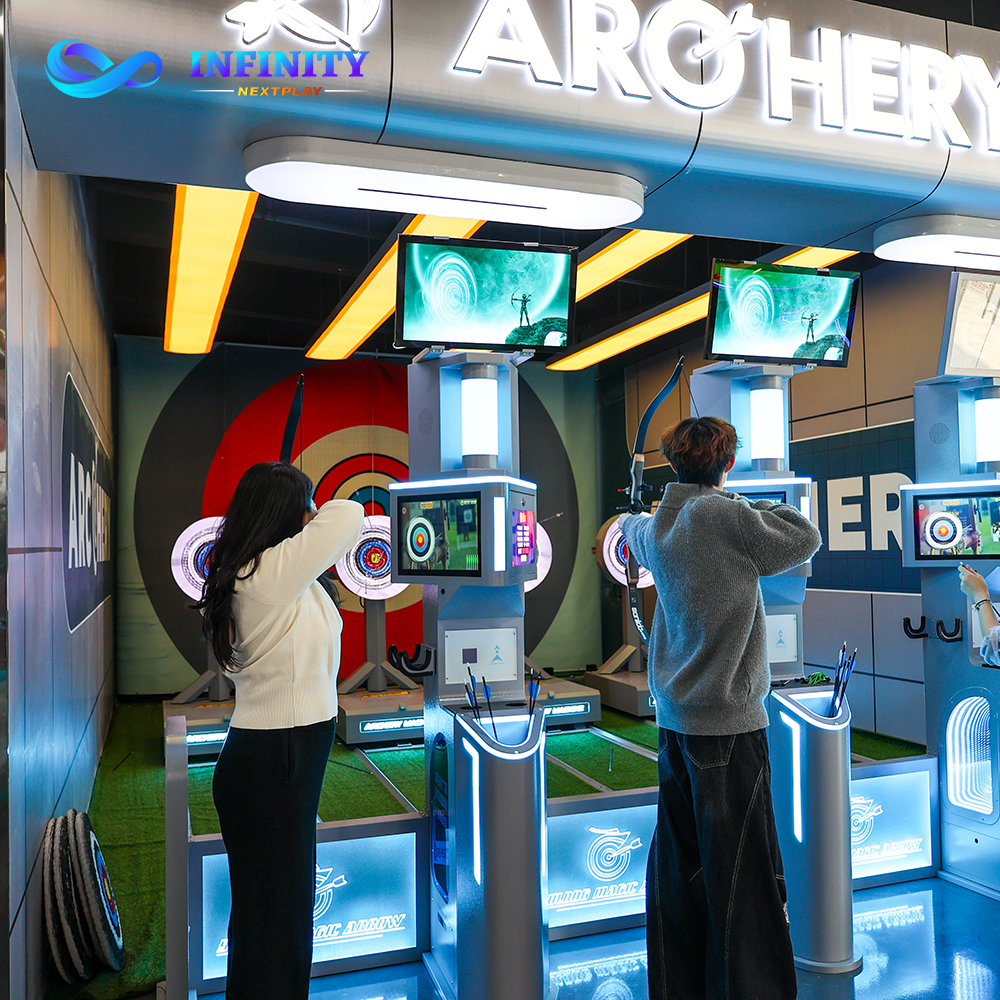
The archery simulator is the anchor of the "combat sports" experience. Unlike traditional archery, which requires a large outdoor range and safety equipment, the A4 digital archery system fits in a 4-meter lane with adjustable track distance. It uses a real bow with suction-tipped arrows that stick to an electronic target, and the scoring is fully automatic with a dual-screen display that shows real-time results to both the player and spectators.
Archery has a unique combination of qualities that make it ideal for indoor entertainment: it is quiet (no loud bangs or mechanical noises), it is visually impressive (the bow draw and arrow flight look great on social media), and it appeals to both men and women equally. In my Barcelona venue, the archery simulator has a near-equal gender split of 52% male and 48% female players, which is rare for entertainment attractions. This makes it an excellent draw for date nights, group outings, and corporate events.
Revenue per square meter is also excellent. The A4 simulator occupies about 5 square meters and generates $300-$450 per week in a mid-traffic venue. At a higher-traffic location, that number can reach $600-$800 per week. The key is the repeat play rate: archery has a 38% repeat visit rate because the skill progression is addictive. Players come back to beat their previous scores, and they bring friends to compete against.
In the Monterrey venue I mentioned at the start, the archery simulator was the first game installed. The owner, Roberto, initially had doubts about whether archery would appeal to his predominantly male, fitness-oriented customer base. He was wrong. Within the first month, the archery lane had a 78% utilization rate during evening hours (6 PM – 10 PM), which was higher than any other attraction in the building. The average game generated $8 per player, and groups of 4-6 were the most common configuration.
Roberto''s key insight was pricing: he offered a "Combat Challenge" package at $15 that included two archery games and one shot at the Shooting Simulator Q4 (which he added later). This package had a 62% attach rate, meaning most archery players also tried the shooting simulator. The cross-play revenue from this single package added $4,200 per month to the zone''s total.
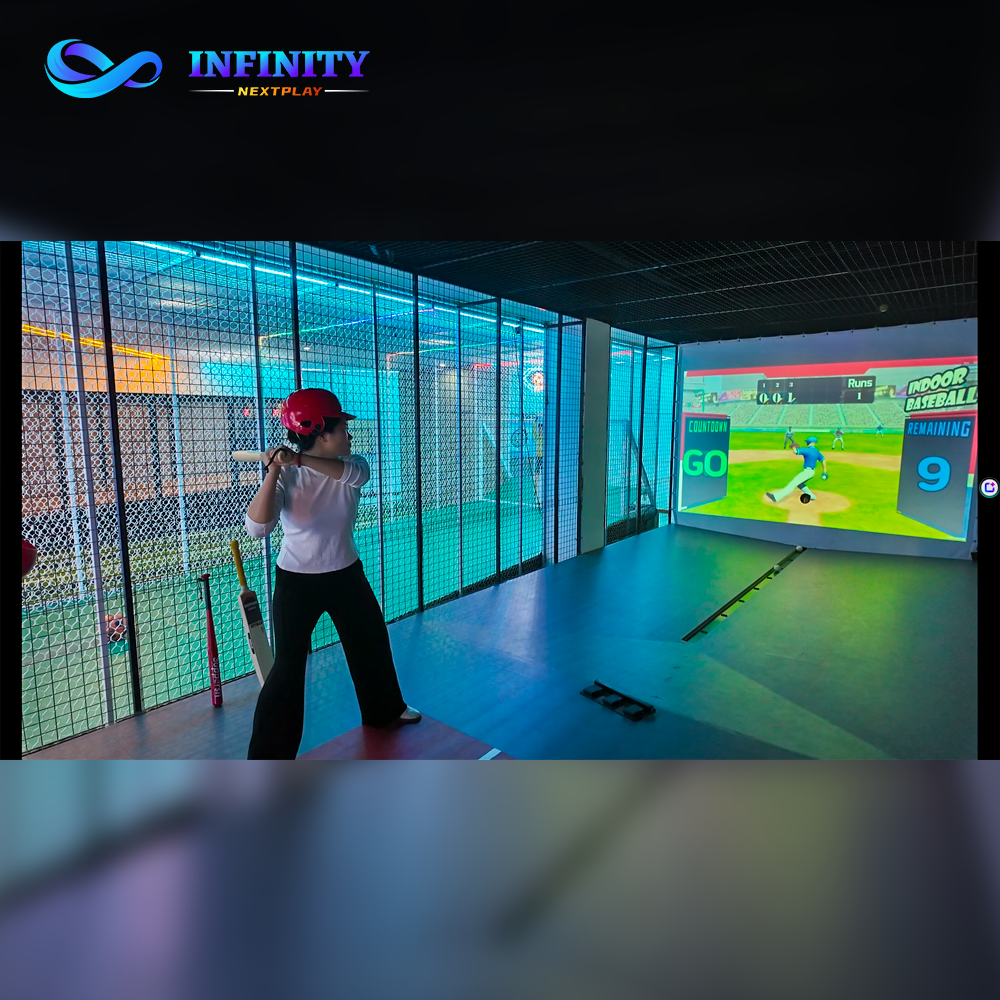
The baseball simulator brings a completely different energy to the zone. Where archery is quiet and focused, baseball is loud and social. The crack of the bat, the HD projection of the ball flying toward you, and the real-time ball tracking create an experience that draws spectators as much as players. This is the game that fills your venue on weekend afternoons when families and casual groups are looking for something fun to do.
Baseball has a universal appeal that transcends age and skill level. A 10-year-old can step up to the plate and have fun. A 50-year-old former college player can challenge themselves with faster pitching speeds. The simulator adjusts difficulty automatically, which means the experience is enjoyable for everyone regardless of skill. This makes it the ideal game for the 2 PM – 6 PM time slot when families, retirees, and casual visitors are your primary customers.
The baseball simulator also has the highest per-session revenue of the three games because each session includes 15-30 pitches, which takes about 8-12 minutes. At $8-$12 per session, that is a strong hourly rate per square meter. The simulator occupies about 6-8 square meters (including the batter''s box and screen area) and generates $400-$700 per week in a typical venue.
| Metric | Archery A4 | Baseball Simulator | LED Dance Floor |
|---|---|---|---|
| Floor space needed | 5 sqm | 7 sqm | 12 sqm |
| Avg. price per session | $8 | $10 | $6 (per 15 min) |
| Sessions per day | 25-35 | 20-30 | 30-50 |
| Weekly revenue | $300-$450 | $400-$700 | $250-$400 |
| Peak hours | 6 PM - 10 PM | 2 PM - 8 PM | 8 PM - 12 AM |
| Primary demographic | Adults 25-45 | Families & casual | Young adults 18-30 |
Notice how each game peaks at a different time of day. This is the key to the multi-mood strategy: the archery simulator drives evening revenue, the baseball simulator drives afternoon revenue, and the LED dance floor drives late-night revenue. Together, they create a 10-hour revenue window (2 PM – 12 AM) instead of the 4-5 hour window you would get from a single attraction.
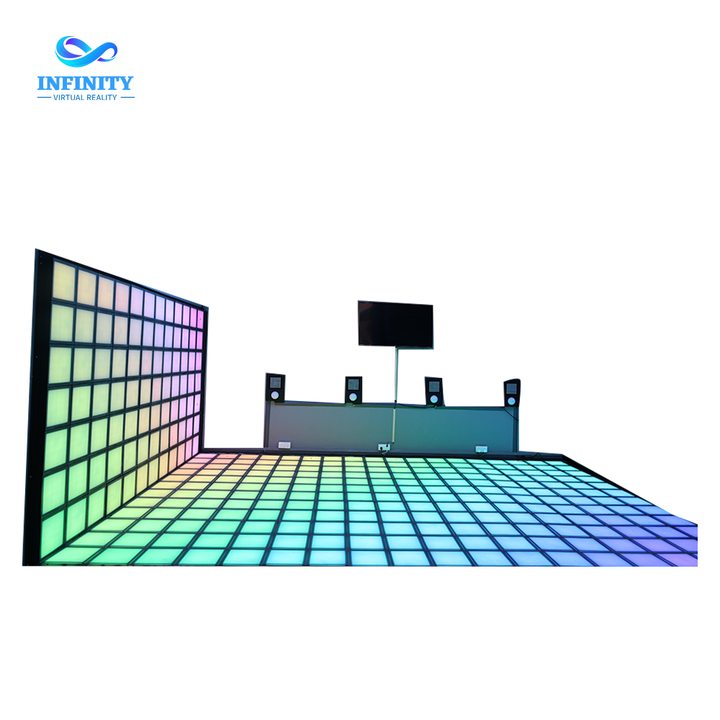
The LED dance floor is the most versatile attraction in the zone because it serves double duty: during the day, it is a visual centerpiece that draws attention and creates ambiance. At night, it transforms into an interactive multiplayer game that generates revenue from groups of friends competing on light-up tiles. The floor features pressure-sensitive tiles that light up in patterns, and players must step on the correct tiles in sequence — it is like a real-life version of Dance Dance Revolution but with a social, competitive twist.
The LED dance floor generates less direct gaming revenue than the archery or baseball simulators, but its value lies in two things: ambiance and social media. A glowing, interactive LED floor is visually stunning and makes your venue look premium and modern. Guests take photos and videos of themselves playing on the floor and share them on social media, which drives organic marketing that no amount of paid advertising can match.
In my experience, venues with an LED dance floor see a 25-35% increase in social media mentions compared to similar venues without one. This translates directly into more foot traffic, more bookings, and higher brand awareness in your local market. The floor also serves as a flexible space: during corporate events, it can be used as a dance floor for the DJ. During birthday parties, it becomes the main attraction. During quiet weeknights, it can be offered as a free amenity to attract customers who will then spend money on other games and F&B.
Here is the actual monthly P&L from the Monterrey entertainment zone, which has been operating for 18 months:
| Revenue / Cost Item | Monthly Amount |
|---|---|
| Archery Simulator revenue | $5,200 |
| Baseball Simulator revenue | $7,800 |
| LED Dance Floor revenue | $4,500 |
| Cross-play package revenue | $6,200 |
| F&B uplift from game zone | $11,500 |
| Corporate event bookings | $4,800 |
| Total gross revenue | $40,000 |
| Staff (2 part-time attendants) | -$3,600 |
| Maintenance & consumables | -$1,800 |
| Electricity (LED floor + games) | -$1,200 |
| Insurance premium | -$600 |
| Net monthly profit | $32,800 |
Total initial investment was $78,000 (archery $14,000 + baseball $22,000 + LED floor $18,000 + installation and seating $24,000). At $32,800 net monthly profit, the payback period is under 2.5 months. Even accounting for seasonal dips and slower months, the zone has never had a month below $18,000 net in 18 months of operation.
Step 1: Map your available space and customer flow. You need a minimum of 50 square meters for a three-game zone (archery 5 sqm + baseball 7 sqm + LED floor 12 sqm + seating and walkways 26+ sqm). Larger spaces (100+ sqm) allow for more seating, a small bar counter, and spectator areas. The key is ensuring that all three games are visible from the entrance — guests should see the action immediately and feel drawn in.
Step 2: Choose games that complement, not compete. The archery + baseball + LED combination works because each game occupies a different emotional lane. Archery is focused and competitive. Baseball is casual and social. LED is music-driven and visual. If you chose three competitive games, they would cannibalize each other. If you chose three passive games, the zone would lack energy. The magic is in the contrast.
Step 3: Design the lighting and atmosphere for each zone. The archery lane should have focused, dramatic lighting that highlights the target. The baseball simulator should have bright, energetic lighting that matches the sports atmosphere. The LED floor should be in a slightly darker area to maximize the visual impact of the glowing tiles. This zoned lighting approach makes the space feel larger and more premium.
Step 4: Create cross-play packages from day one. Do not let guests play just one game and leave. Offer a "Triple Challenge" package ($20-$30) that includes one session at each game. This immediately exposes every visitor to the full zone and increases the likelihood of repeat visits to specific games. Track which games get the most post-package repeat plays to optimize your marketing focus.
Step 5: Market each game to its specific audience. The archery simulator appeals to date-night couples and team-building groups. The baseball simulator appeals to sports fans and family outings. The LED floor appeals to young adults and nightlife seekers. Create separate social media content for each game and target different audience segments. This is far more effective than marketing the zone as a generic "entertainment center."
You need a minimum of 50 square meters for a compact three-game zone. This includes 5 sqm for archery, 7 sqm for baseball, 12 sqm for the LED floor, and 26 sqm for seating and walkways. For a more comfortable layout with spectator areas and a small bar counter, plan for 80-100 square meters. The zone should be designed as a single open space so that guests can see all three games from any position, which maximizes the cross-play effect.
Yes. Commercial-grade LED dance floors are rated for 500+ kg per square meter and are designed for high-traffic event use. The tiles are made of tempered glass or polycarbonate with anti-slip coating. They can withstand everything from a birthday party with 30 kids to a corporate event with 100 standing guests. The floor typically comes with a 2-3 year manufacturer warranty and requires minimal maintenance beyond occasional cleaning.
The archery simulator needs a minimum ceiling height of 2.7 meters (standard commercial ceiling). The baseball simulator needs about 3 meters to accommodate the full swing arc and projection screen. Most commercial spaces have 3+ meter ceilings, so this is rarely an issue. If your ceiling is lower than 2.7 meters, consult with the manufacturer about modified setups that can work in compact spaces.
I recommend a "Triple Challenge" package priced at $20-$30 per person, which includes one session at each game. This represents a 15-20% discount compared to buying each game individually, which incentivizes the cross-play behavior. For corporate events, offer a "Team Battle" package at $150-$250 per group of 8-12 people that includes all three games plus a dedicated scorekeeper. Birthday party packages should include all three games plus a private seating area, priced at $250-$400 for a 2-hour block.
Yes, and this is actually the most common scenario. Most of the venues I have worked with added these games to existing operations rather than building from scratch. The installation can be scheduled during off-hours (late night or early morning) to minimize disruption. Each game takes 2-4 days to install. I recommend installing one game at a time over 2-3 weeks, launching each with a small event to build excitement. This phased approach also lets you optimize pricing and layout based on real customer behavior before committing to the full three-game configuration.
Get a free 3D layout for your space. No commitment required.