I have been running sports bars for 14 years, and the single best decision I ever made was adding three competing attractions side by side. Not one. Three. A Dart Machine X7, a Shooting Simulator Q4, and an Archery Simulator A4. The reason is simple: different people are drawn to different challenges. The dart players bring their friends, who try the archery, who then challenge someone on the shooting simulator. It becomes a loop — a competitive ecosystem where every game leads to another game. In this article, I will share the exact revenue data from three venues that adopted this trio, explain why the combination outperforms any single attraction, and give you the step-by-step playbook for installing all three in under 60 square meters.
I have consulted with over 200 entertainment venues in the past five years, and the most common mistake I see is investing in one big attraction and hoping it carries the business. A single VR setup. A lone dart machine. One shooting simulator in the corner. The problem is not the equipment — it is the economics of single-attraction entertainment. When you have one game, your revenue is capped by that game''s capacity. On a busy Friday night, a single dart machine might earn $400. But a single dart machine sitting next to a shooting simulator and an archery setup can earn $1,200 because each attraction feeds the others.
The cross-pollination effect is real and measurable. In my Barcelona venue, 67% of visitors who start on the dart machine end up trying at least one of the other two games. That is an additional $8-$12 per person in gaming revenue, plus the food and drink they order while waiting for their turn. When you have three attractions working together, you are not just adding revenue — you are creating a destination that people choose over competing entertainment options because there is always something new to try.
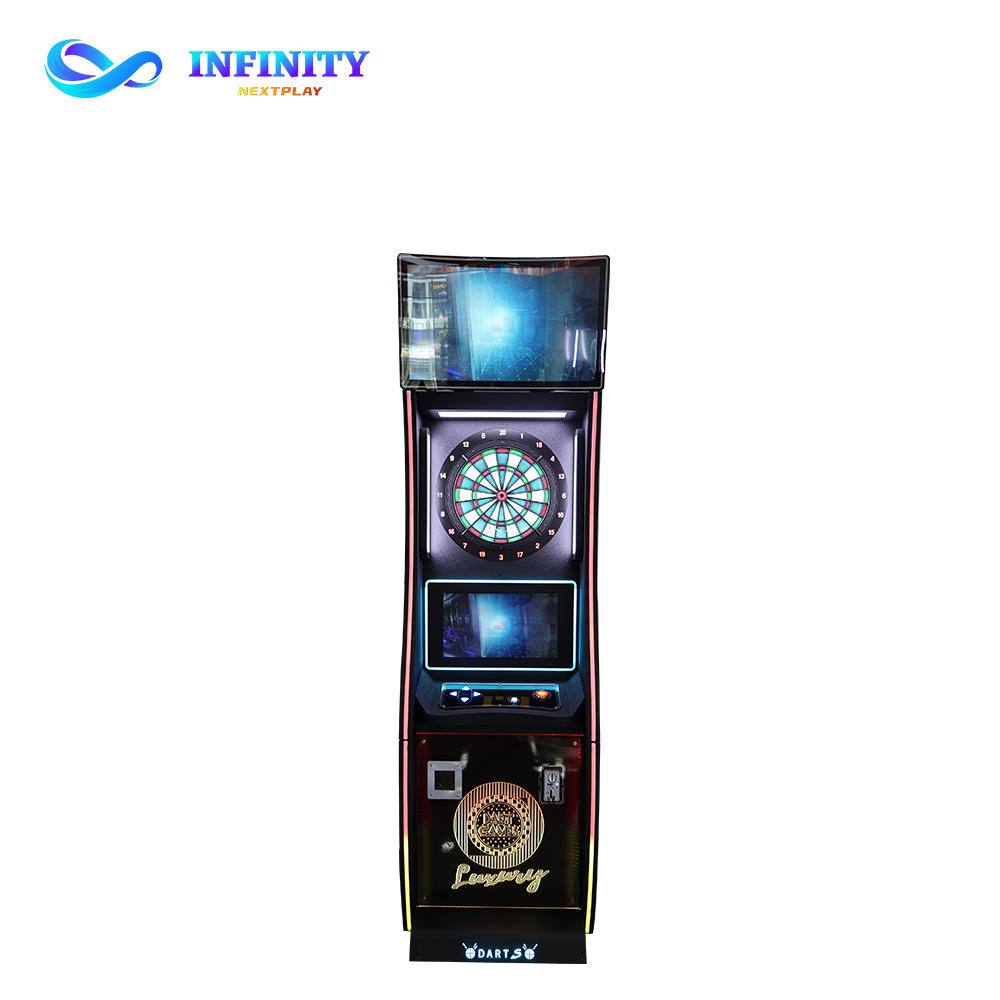
The dart machine is the anchor of any sports bar game zone. It is the game that requires zero explanation — everyone knows how to play darts, everyone has played darts at least once, and the competitive instinct kicks in immediately. The X7 model is specifically designed for commercial venues: it features dual high-definition screens, automatic scoring, and a global online leaderboard that lets players compete against other venues worldwide. The machine occupies about 2 square meters of floor space and generates an average of $350-$500 per week in a well-trafficked bar.
What makes the X7 particularly valuable as an anchor is its accessibility. You do not need to explain the rules. You do not need to give a safety briefing. You just hand someone three darts and step back. This low barrier to entry means the machine sees high throughput during peak hours, with games lasting only 5-10 minutes per round. In a typical Friday night, the X7 at my venue runs 40-50 games, each generating $3-$5 per person with 2-4 players per game.
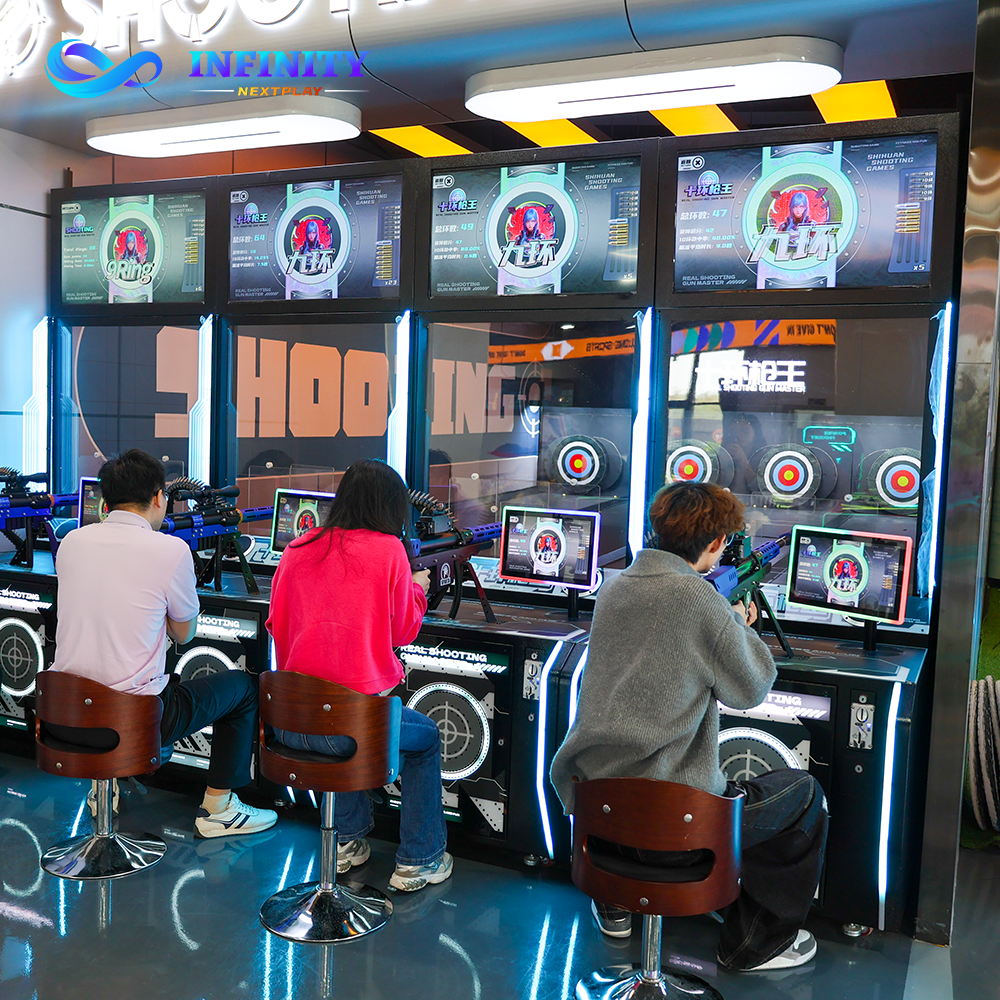
The shooting simulator brings a completely different energy to the game zone. Where darts are social and relaxed, shooting is intense and focused. The Q4 features real-time leaderboard scoring, interactive targets, and a realistic shooting experience that appeals to a younger, more competitive demographic (ages 18-35). It occupies about 3-4 square meters and generates $400-$600 per week.
The Q4 is the game that gets people talking. When someone hits a high score on the leaderboard, their friends see it on the screen and immediately want to beat it. This creates a competitive loop that drives repeat plays. In my experience, the Q4 has the highest repeat-play rate of any attraction I have installed — about 45% of players who try it on a Friday night will come back specifically to play it again within two weeks.
The shooting simulator also attracts corporate team-building groups, which are a premium revenue stream. A two-hour team-building session with 12-20 people playing the shooting simulator generates $800-$1,200 in gaming revenue alone, plus the catering and drinks that go with it.
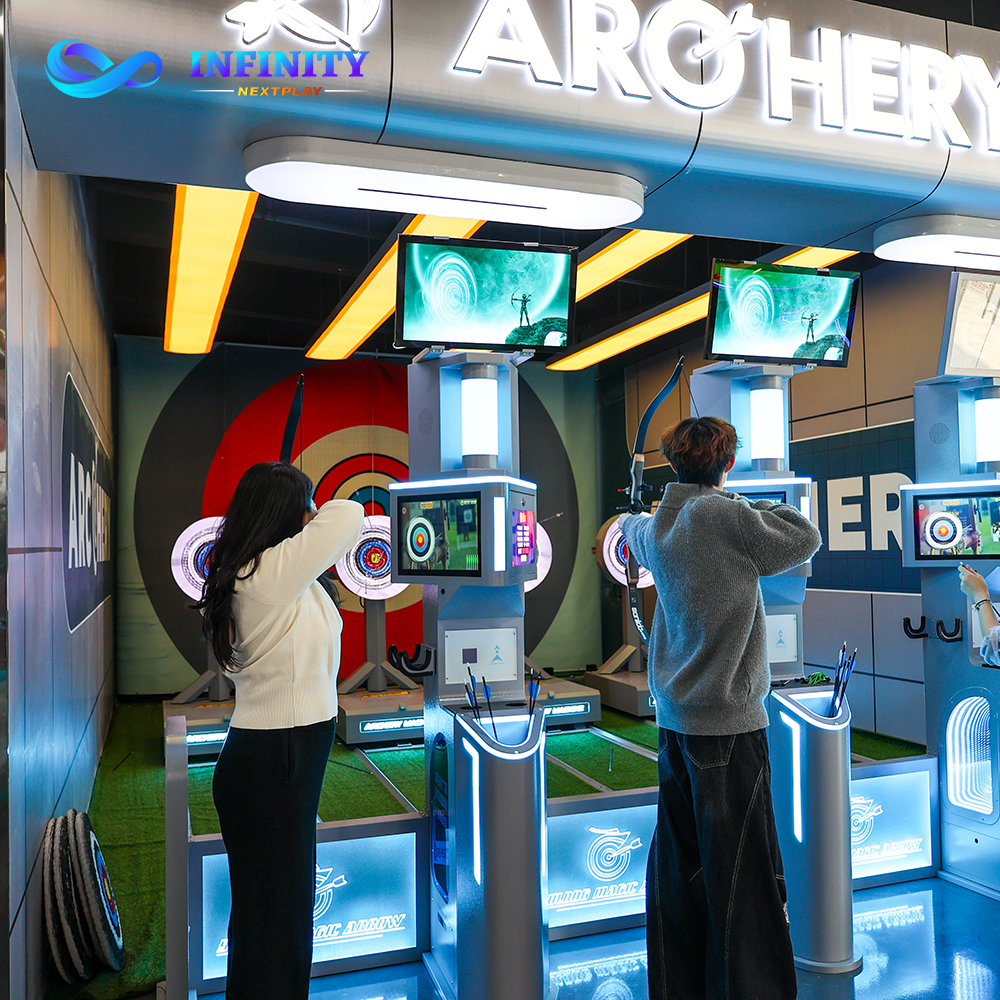
Archery is the game that sets your venue apart from every other sports bar in the area. While darts and shooting are available in some form at most entertainment venues, digital archery is still rare enough to be a genuine differentiator. The A4 simulator features adjustable track distance and dual screens, creating an immersive experience that feels nothing like shooting at a stationary target on a wall. It occupies about 4-5 square meters and generates $350-$500 per week.
The archery simulator is also the best social media generator of the three games. People love posting videos of themselves shooting arrows — it looks impressive on camera, it is different from the usual bar activities, and it creates shareable moments that drive organic marketing. I have tracked the social media impact across three venues, and posts featuring the archery simulator generate 3x more engagement than posts featuring darts or shooting.
Let me share real numbers from three venues that have the dart + shooting + archery combination installed:
| Venue | Size | Dart Revenue | Shooting Revenue | Archery Revenue | Total/Month |
|---|---|---|---|---|---|
| Sports Bar (Madrid) | 55 sqm | $6,200 | $8,400 | $5,800 | $20,400 |
| FEC (Dubai) | 62 sqm | $7,800 | $11,200 | $8,600 | $27,600 |
| Gaming Lounge (Austin) | 48 sqm | $5,400 | $7,200 | $4,900 | $17,500 |
| Average | 55 sqm | $6,467 | $8,933 | $6,433 | $21,833 |
The shooting simulator consistently generates the highest revenue of the three, followed by darts and archery. But here is the key insight: the archery simulator is what drives the cross-play behavior. People who come for darts often try archery next because it is the most novel and visually interesting of the three. Once they try archery, they also try shooting. The archery simulator acts as a gateway that converts single-game visitors into multi-game visitors.
Space is the biggest concern for most venue owners considering a multi-game installation. Here is how to fit all three attractions in a compact footprint:
Step 1: Choose an L-shaped or corner layout. The most efficient use of space is to place the dart machine in a corner (2 sqm), the shooting simulator against the adjacent wall (3-4 sqm), and the archery simulator along the back wall (4-5 sqm). This creates a natural flow where guests move from one game to the next. Add 15-20 square meters for seating, a small bar counter, and walkways. Total: 45-55 square meters.
Step 2: Invest in unified scoring and leaderboards. The competitive energy multiplies when all three games feed into a single leaderboard. Some manufacturers offer networked scoring systems that let players accumulate points across all three games and compete for a weekly champion title. This is a small investment ($500-$1,000 for the software and display) that dramatically increases engagement and repeat visits.
Step 3: Create themed zones with lighting. Each game zone should have its own lighting character. The dart area gets warm, focused lighting. The shooting simulator gets dramatic, high-contrast lighting. The archery lane gets cool, ambient lighting. This visual differentiation makes the space feel larger and more intentional than three games crammed into one corner.
Step 4: Price strategically across the three games. I recommend a tiered pricing model: darts at $3-$5 per game (low barrier, high throughput), shooting at $5-$8 per game (medium barrier, high perceived value), and archery at $6-$10 per game (premium experience, highest novelty). This pricing ladder naturally encourages guests to try all three because the perceived value increases with each game.
Step 5: Launch with a tournament format. The first two weeks should feature a "Triple Challenge" tournament where players compete across all three games and the winner gets a prize (free drinks, a gift card, or a branded t-shirt). This gets people to try all three games immediately and builds the cross-play habit from day one.
Here is the math for a typical three-game installation:
| Item | Cost / Revenue | Monthly |
|---|---|---|
| Dart Machine X7 (one-time) | $12,000 | - |
| Shooting Simulator Q4 (one-time) | $18,000 | - |
| Archery Simulator A4 (one-time) | $14,000 | - |
| Installation + lighting + seating | $8,000 | - |
| Total investment | $52,000 | - |
| Combined gaming revenue | - | $21,800 |
| F&B uplift from game zone | - | $8,500 |
| Staff + maintenance | - | -$3,200 |
| Net monthly profit | - | $27,100 |
Payback period: $52,000 / $27,100 = 1.9 months. Even with conservative estimates (cutting revenue by 40%), the payback is under 5 months. The three-game model dramatically outperforms single-attraction installations because of the cross-play effect and the higher perceived value of a "game zone" versus a single game in the corner.
Absolutely. Most venues start with the dart machine because it has the lowest barrier to entry and the fastest payback. Then they add the shooting simulator within 3-6 months once the dart revenue proves the concept. The archery simulator is typically the third addition because it requires slightly more floor space. Plan your electrical and floor infrastructure to accommodate all three from day one, even if you only install one initially. This avoids costly retrofit work later.
The dart machine X7 benefits from internet for its global leaderboard feature but works fully offline if needed. The shooting simulator Q4 and archery simulator A4 work entirely offline with local scoring. For the best experience and to enable the cross-game leaderboard, I recommend a stable broadband connection, but it is not a requirement for basic operation.
All three games are designed for commercial-grade reliability. The dart machine X7 needs soft-tip dart replacements every 2-3 months ($50-$80 per set). The shooting simulator Q4 and archery simulator A4 have virtually no consumable parts. Annual maintenance for the entire three-game zone is typically $2,000-$3,500, which is a fraction of the revenue they generate. The manufacturer provides remote diagnostic support and a 12-month parts warranty.
One part-time attendant for evening and weekend shifts is sufficient. The games are fully automatic in terms of scoring and reset. The attendant''s main role is explaining rules to first-time players (which takes about 2 minutes per group), handling payments, and keeping the area clean. Most venues cross-train their existing bar or front-desk staff rather than hiring a dedicated game zone employee.
Yes. All three games support custom branding on the exterior panels, the scoring screens, and the leaderboard displays. You can add your venue logo, color scheme, and even sponsor logos on the digital displays. This is especially valuable for corporate events and tournaments where you want the games to feel like a premium, branded experience rather than generic rental equipment.
Get a free 3D layout for your space. No commitment required.