Ask what a sportainment center costs and you will usually get one number - the equipment quote. The published models tell a different story: the quote is only the first line of eight, and the lines that decide first-year profit are mostly the ones nobody put on it. This guide assembles the eight cost lines from the published models on this site - opening budgets, monthly OPEX splits, the quoted-to-final gap, maintenance, downtime and the working-capital line - and shows where each one bites.
A concrete scenario: an operator signs a $45,000 equipment order for a compact floor, budgets nothing beyond it, and opens in month five. The 20-40% published install gap adds $12,000, the staffing line runs 42% of monthly OPEX from day one, and the working-capital buffer is gone by month four - exactly when the weekday calendar is still filling at $300-600 a school block. Every line in this article exists to prevent that month.
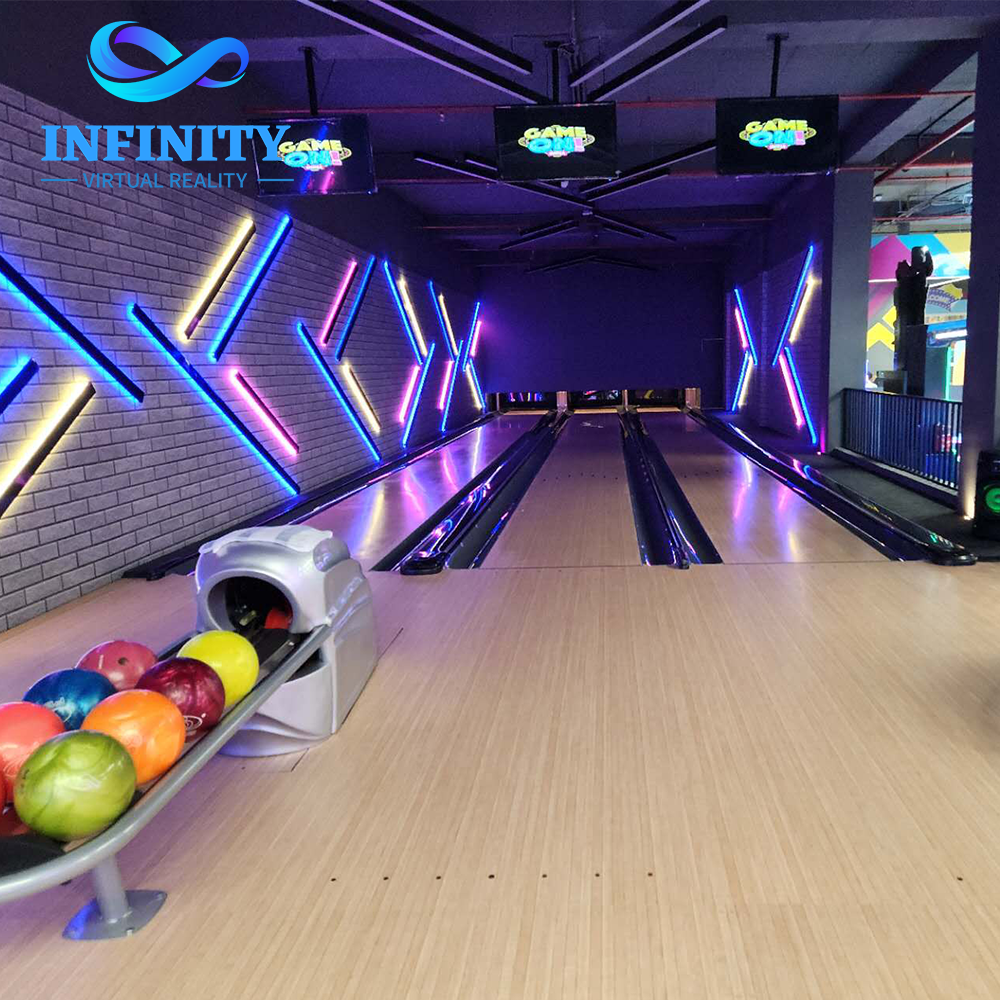
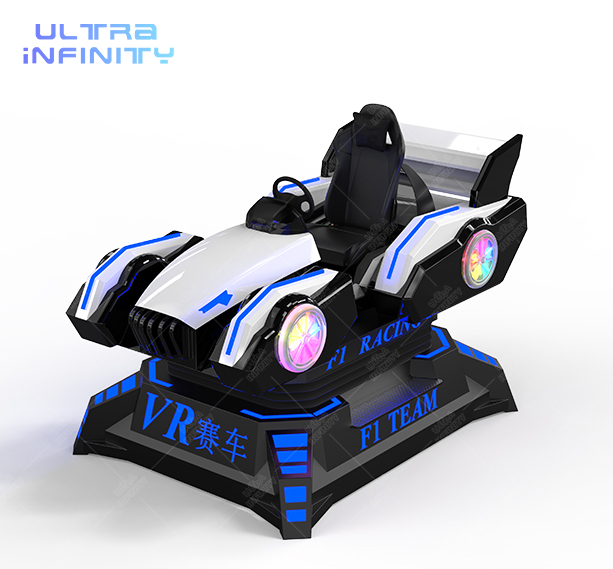
Line 1 - the equipment ladder. The published cost analysis prices the entry tier at about $30,000 of equipment for a four-lane duckpin line inside a $40,000-48,000 total opening budget, moves to $60,000-90,000 for a two-lane string bowling install, and reaches $86,000-118,000 for a laser arena at turnkey scale. The VR ladder runs parallel: a commercial chair at $6,000-12,000 with a first-seat all-in of $10,000-18,000 on the published chair model, and a four-kart kids karting row at $18,000-28,000 on the published karting model. The published rule: two attraction categories is the minimum viable floor, and every category added moves both the build budget and the published $88-135 per square meter revenue ceiling the floor can clear. The hardware anchors sit at the Duckpin Bowling System, the Infinity laser combat system and the Free Roaming VR Arena.
Line 2 - the monthly OPEX split. The published karting OPEX profile itemizes the operating month: $3,800-5,500 for the 45m2 zone, split at about 42% staffing, 28% rent or revenue share, 12% electricity, 9% insurance and licensing and 9% marketing plus miscellany. Two details matter more than the totals. First, staffing is the largest line - the published labor model prices 15-20% of revenue with one to two attendants per hosted zone, and venues that staff on instinct discover the ratio only in the service reviews. Second, electricity is small on VR hardware: each kart draws about 0.5 kW, so the whole fleet adds $100-180 a month - the published number that kills the myth that active gaming floors burn power.
Line 3 - the quoted-to-final gap. The published racing-simulator cost analysis measures the gap between the equipment quote and the final invoice at 20-40%, and names the drivers: power runs to each machine position, floor anchoring, safety cages and queue rails, signage, and the insurance rider the venue discovers at contract time. On the $40,000-48,000 duckpin opening budget that gap is $8,000-19,000 of unbudgeted spend - the single most common reason a planned cash buffer evaporates before opening. The published buying discipline is to quote the room, not the machine, and to hold the gap percentage as a named reserve line.
Line 4 - the recurring lines nobody quotes. The same published analysis itemizes the after-sale lines: software subscriptions at $10-30 per machine per month, headset replacement every 2-3 years because headsets age fastest of any component, and content licensing where the platform charges it. Individually small, together a real line: on a twelve-machine floor the software subscriptions alone run $120-360 a month, and a staggered headset fleet turns year three into a replacement year. The published maintenance economics in the bowling cluster carry the same shape at lane scale - the pinsetter maintenance line scales from $9,400 in year one toward $2,700 a month as the fleet ages and the service contract absorbs the wear items.
Line 5 - staffing against the calendar, not the floor. The published mistake analysis (the year-one mistakes ranking) puts understaffed hosted zones among the invisible failures: the published labor model prices 15-20% of revenue and one to two attendants per arena session, and the zone that runs unstaffed after 6pm loses the league night that was supposed to fill it. The staffing line therefore buys the weekday engines, not just supervision: the published weekday-fill playbook prices school blocks at $300-600 and corporate buyouts at $4,500-7,500, and both need a named attendant on the schedule to exist at all.
Line 6 - the downtime bill. The published downtime model prices a three-day holiday weekend at $18,000 for an 800sqm park and sets the 98%+ uptime expectation that commercial-grade hardware exists to protect. The same model runs the machine-level math: a machine earning $80 a night loses more in a week of downtime than the repair costs. That is the arithmetic behind the equipment-grade decision in Line 1 - the premium is not for speed or graphics, it is insurance on every other line in this article. The consumer-grade purchase is listed first in the published mistakes ranking for exactly this reason.
Line 7 - the marketing fill. The published OPEX split reserves 9% of monthly cost for marketing and miscellany, but the published weekday playbook reframes it as a calendar cost: the 40-55% weekday occupancy target is reached by booking school blocks, league nights and corporate buyouts, and each engine costs staff time and commission before it costs ad spend. The published earnings guide adds the revenue-side contrast that makes Line 7 measurable: corporate groups of 25-80 guests book at $450-1,200 an hour with a 72% F&B margin contribution and a 34% annual rebooking rate - so the marketing line that fills one corporate pipeline pays for itself in rebookings alone.
Line 8 - working capital. The last line is the one that absorbs every underestimate above. Plan at least three months of the published OPEX template before the calendar fills: against the $3,800-5,500 karting monthly profile, roughly $11,000-16,500 held in reserve, plus the 20-40% install gap as a named line. The published payback windows - 6-9 months for the karting zone, 8 months for the battleship cinema, 12-18 months for the two-category floor above 50% utilization - all assume the operator survived long enough to reach the utilization band. Working capital is what buys that survival.
A concrete scenario closes the loop: the operator from the opening section re-prices the plan with all eight lines - the $44,000 opening, the 20-40% gap held as a named $13,000 reserve, the 42% staffing line scheduled against the league calendar, and three months of OPEX in the bank. The project still opens on budget, because the surprise lines were budget lines all along. That is the difference between the published ladder and a vendor quote: the published payback math works on the full eight lines, and so should the order.
| Cost Line | Published Number | Published Source |
|---|---|---|
| Equipment ladder (entry to turnkey) | $30K duckpin package; $40-48K opening; $60-90K string install; $86-118K laser arena | Published cost analysis (blog 2655) |
| Monthly OPEX (45m2 karting zone) | $3,800-5,500 split 42/28/12/9/9 | Published karting model (blog 795) |
| Quoted-to-final install gap | 20-40% of the equipment quote | Published sim cost analysis (blog 2385) |
| Recurring software and hardware lines | $10-30/mo subscriptions; headsets every 2-3 yr | Published sim cost analysis (blog 2385) |
| Staffing the hosted calendar | 15-20% labor share; 1-2 attendants per arena | Published labor and mistake models (blogs 795/2721) |
| Downtime bill | $18,000 weekend at risk; 98%+ uptime target | Published downtime model (blog 855) |
| Marketing fill (weekday engines) | 9% of OPEX; school $300-600; buyouts $4,500-7,500 | Published OPEX split and weekday playbook (blogs 795/2663) |
| Working capital reserve | About 3 months of OPEX ($11,000-16,500 on the karting profile) | Derived from the published OPEX model (blog 795) |
The published cost ladder starts at about $30,000 of equipment for a four-lane duckpin line inside a $40,000-48,000 total opening budget, moves to $60,000-90,000 for a two-lane string bowling install, and reaches $86,000-118,000 for a laser arena at turnkey scale. On the VR side a commercial chair enters at $6,000-12,000 with a first-seat all-in of $10,000-18,000. The published rule of thumb: budget a ladder, not a number, and expect the quoted price to grow 20-40% before opening day.
The published cost analysis measures a 20-40% gap between quoted and final price, driven by power runs, floor anchoring, safety cages, signage and insurance - lines that arrive after the equipment quote is signed. The published racing-simulator cost guide also flags the recurring invisible lines: software subscriptions at $10-30 a month and headset replacement every 2-3 years. None of these show on a quote sheet, and together they decide whether the first-year margin matches the plan.
The published kids-karting model is the cleanest published template: $3,800-5,500 a month for a 45m2 zone, split at about 42% staffing, 28% rent or revenue share, 12% electricity, 9% insurance and licensing and 9% marketing plus miscellany. Against $7,500-11,000 of monthly gross, the zone keeps a 49-55% direct operating margin. Labor is the largest line - the published labor model prices 15-20% of revenue and one to two attendants per hosted zone.
The published downtime analysis prices a three-day holiday weekend at $18,000 for an 800sqm park and sets a 98%+ uptime expectation - consumer-grade hardware is the purchase that quietly voids both numbers. The same analysis notes a machine earning $80 a night loses more in a week of downtime than the repair costs, which is why equipment grade is listed first among the published year-one mistakes.
Plan for at least three months of the published OPEX template before the calendar fills: against the $3,800-5,500 karting monthly profile, that is roughly $11,000-16,500 held in reserve. The published marketing playbook shows why the buffer is needed - weekday school blocks book at $300-600 and corporate buyouts at $4,500-7,500, but the calendar fills over weeks, not days, and the rent line does not wait for the booking.
Utilization-related costs, not equipment price. The published capacity model shows the same 16-player laser arena grossing $22,464 at 30% utilization and $52,416 at 70% - a $30,000 monthly swing on identical hardware - while the published cost analysis shows the equipment ladder itself spanning from $30,000 to $118,000. Spend the diligence on the calendar engines (leagues, school blocks, buyouts) before upgrading the hardware tier, because utilization is what turns either budget into a profit.
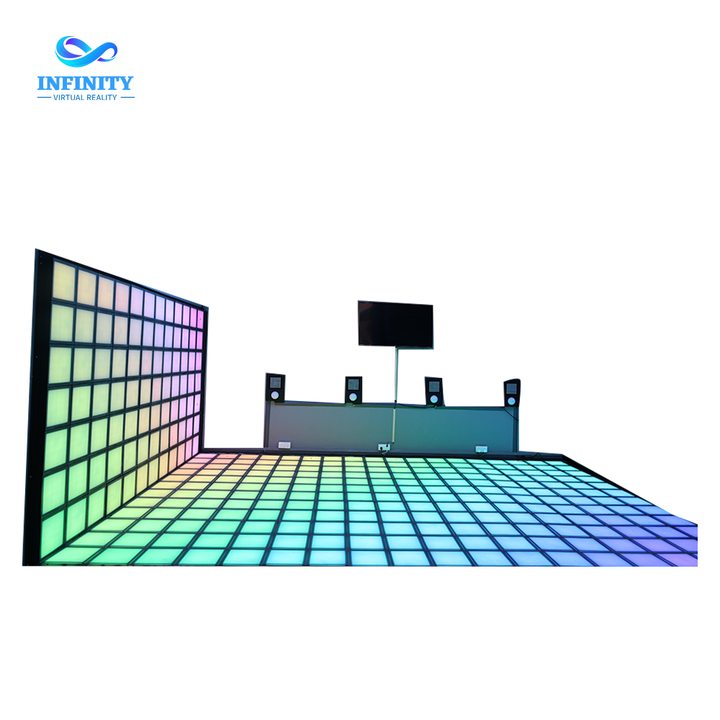
Send us your space and market: we will return the eight-line budget - equipment ladder, install gap, OPEX split and the utilization plan (based on the published 30-70% band) - through the free 3D layout design, anchored with the Duckpin Bowling System, the VR Racing Simulator or the Infinity Grid LED Floor.