An indoor entertainment venue is a commercial facility that runs paid play under one roof: attractions, games, and experiences arranged around a circulation path, with food and beverage and seating supporting dwell. The most common umbrella term is the family entertainment center, or FEC, which the industry describes as a small-scale amusement park indoors, blending arcade games, attractions and dining into a single social destination (industry references, planning reference). An indoor entertainment venue can also be a sports bar with a game floor, a VR experience center, a bowling lounge, or a hybrid that mixes several formats.
What separates an indoor entertainment venue from a single arcade cabinet or a restaurant with one game is intent. The venue is designed so the guest spends time and moves between experiences: the entrance leads to a circulation loop, the loop passes quick-play and attractions, seating and food points sit along that loop, and the mix of attractions is planned deliberately rather than collected by chance. This is why venue planning - not just equipment purchasing - is the defining skill of the format. Our empty-space planning guide covers how that loop is designed.
The category overlaps with adjacent terms investors should keep straight. An arcade is a room of coin-operated games; an amusement park is typically outdoor with large rides; a FEC is the indoor, attraction-led destination in between. An indoor entertainment venue is the broader commercial frame that contains arcade zones, FEC zones and newer digital formats such as VR arenas and sportainment. Understanding the distinction matters because it changes the space, equipment and revenue model an investor plans for.
Across the industry, indoor entertainment venues tend to fall into three families, with hybrids in between. Choosing a format up front - rather than inheriting a jumble of attractions - is what keeps the mix, the budget and the revenue model consistent. The three translate directly into different planning and investment profiles.
| Format | Core Character | Typical Mix | Revenue Model |
|---|---|---|---|
| Family entertainment center (FEC) | Attraction-led, all-age social destination | Bowling, arcade, mini golf, soft play, F&B | Admission + games + F&B + parties |
| Sportainment / sports bar | Game floor attached to adult social and F&B | Darts, archery, shooting, simulators, bar | Per-game + drinks + leagues + events |
| Digital experience center | Premium, tech-led and group focuses | VR arena, simulators, immersive rides, LED | Premium tickets + groups + events |
The FEC is the broadest and most family-oriented of the three, anchoring on mixed-age attractions with parties as a strong revenue line. Sportainment formats lean adult and social, attaching a game floor to food and beverages. Digital experience centers lead with higher-ticket premium attractions and depend on group and event bookings. None is inherently better - each fits a different site, audience and operator strength.
Hybrids are increasingly the norm. A venue may open as a family center and add a sports-bar corner, or run a VR arena beside a duckpin lane. Our per-square-meter format comparison and our attraction mix guide work through how hybrids are balanced on a single floor.
Investors evaluate an indoor entertainment venue on its revenue model before its equipment list. The model earns across several streams: admission and attraction tickets, pay-per-game quick-play, food and beverage, parties and group events, and increasingly membership and packages. Industry analysis of the FEC revenue mix puts admissions at roughly 40%, other attractions at about 19%, and food and beverage at about 16%, with parties, retail and other filling the remainder (revenue-mix analysis, planning reference).
| Revenue Stream | Typical Share (Planning) | How It Grows |
|---|---|---|
| Admission / attraction tickets | ~40% | Anchor sessions, packages, tiers |
| Other attractions / play | ~19% | Quick-play add-ons, simulators |
| Food and beverage | ~16% | Counter, bar, dwell-linked uplift |
| Parties and group events | grows with bookings | Weekday fill, premium packages |
| Membership / retail / other | remainder | Repeat base, stored value |
The streams are connected. Packaging and membership move a guest across streams and lift per-visit spend; dwell time lifts food and beverage; parties fill the weekday gaps that walk-in traffic leaves open. Our attraction package blueprint and repeat visit guide cover the levers in detail.
Average per-guest spend at individual-location FECs runs around $25 (planning reference), and family visits often spend more. The volume side also shapes the model: the industry average FEC carries roughly 150,000-200,000 visitors a year (market analysis, planning reference). A compact venue runs a smaller-footprint, higher-frequency version of the same math.
The indoor entertainment market is large and expanding, which is the core case for investment. The family entertainment center segment was valued around $34 billion in 2025, with projections to roughly $93 billion by 2035 and a mid-single-digit compound annual growth rate across most published forecasts (market reports, planning references). Multiple forecasts land close together, which is the useful signal: the category grows steadily rather than cycling sharply.
The growth drivers are structural. Urban indoor space is increasingly attractive to families and groups when weather limits outdoor play. Digital and social formats - VR arenas, sportainment, interactive competition - draw younger, higher-spending audiences. And operators increasingly build hybrid venues that spread risk across several revenue streams rather than betting on one attraction.
Investors should read the forecast as a tailwind, not a promise. Category growth does not guarantee any single venue succeeds; location, format fit, mix discipline and operating capability decide that. The market data argues the sector is worth entering - the operating plan decides whether the entry earns.
Buying the concept of an indoor entertainment venue is cheap; buying the right one is not. Investors repeatedly underweight the fixed-cost base, the mix discipline and the operating capability that turn a marketplace tailwind into a profitable site. A planning review should test at least five things before capital is committed.
The companion pieces to this guide carry the specifics: how much space a venue needs, how to size the budget, and how to keep the model honest on revenue per square meter. Our business plan guide and revenue-per-square-meter guide are the natural next reads for an investor.
New investors most often start smaller than their ambition and design for growth - a compact venue with reserved power, an extensible circulation loop and a lean mix de-risks the first build and funds the expansion. The discipline is planning the growth path at layout stage, not improvising it after opening.
The venue format becomes real in the equipment that earns on the floor. Three product families carry the formats above - one per anchor type - and the product cards below show the units referenced throughout this guide.
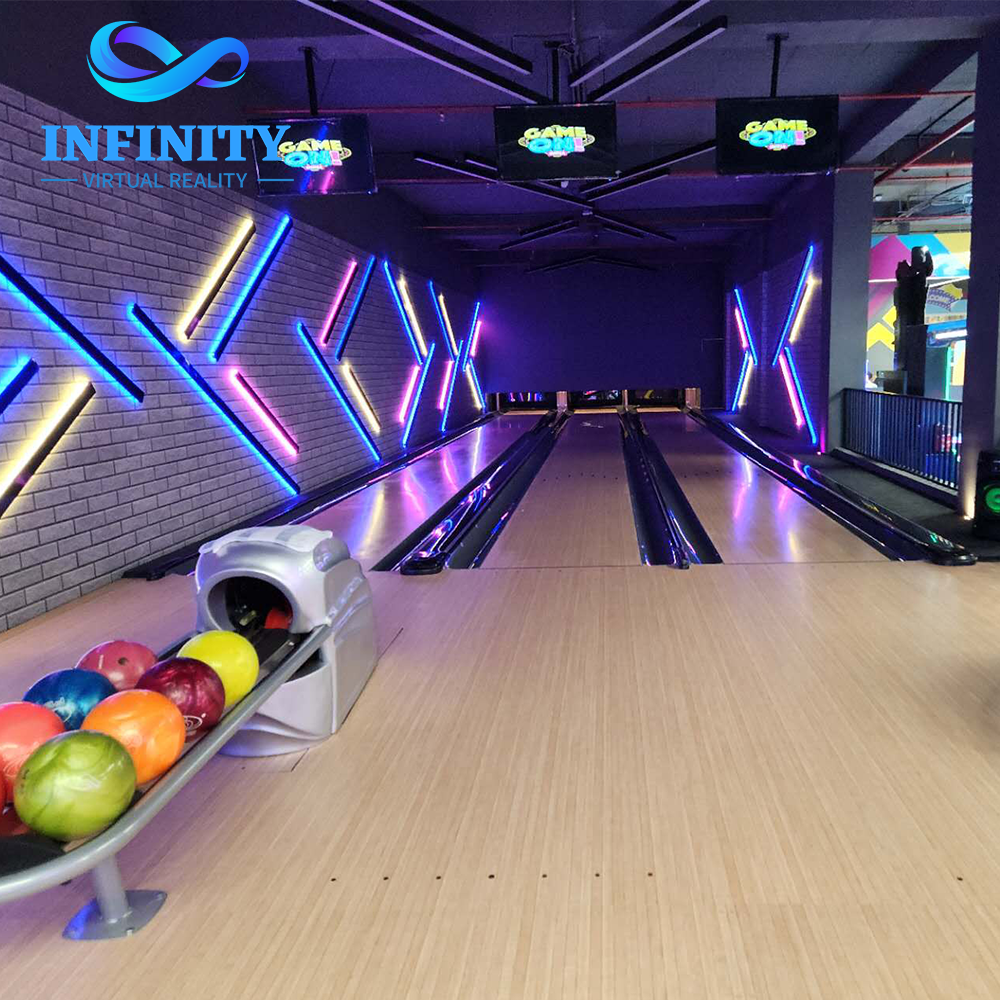
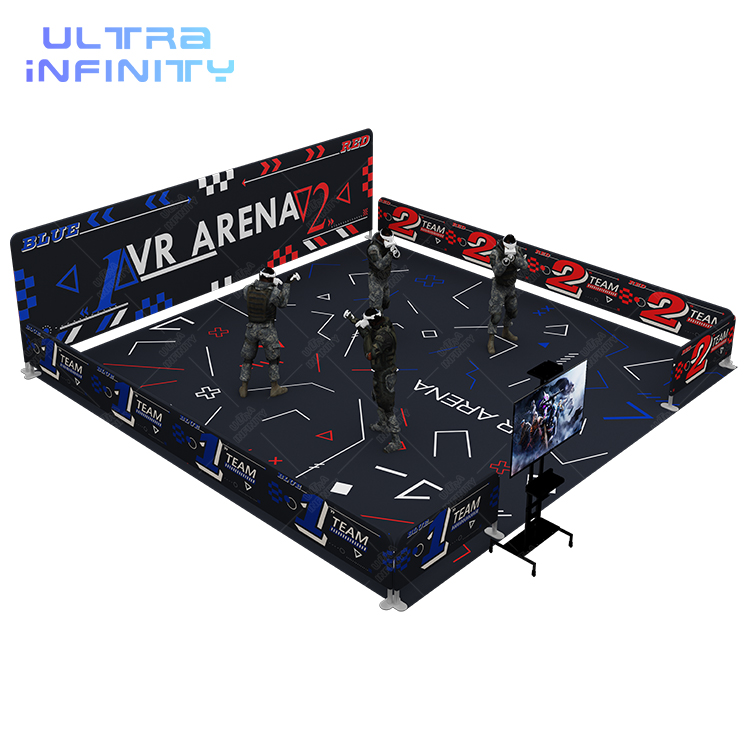
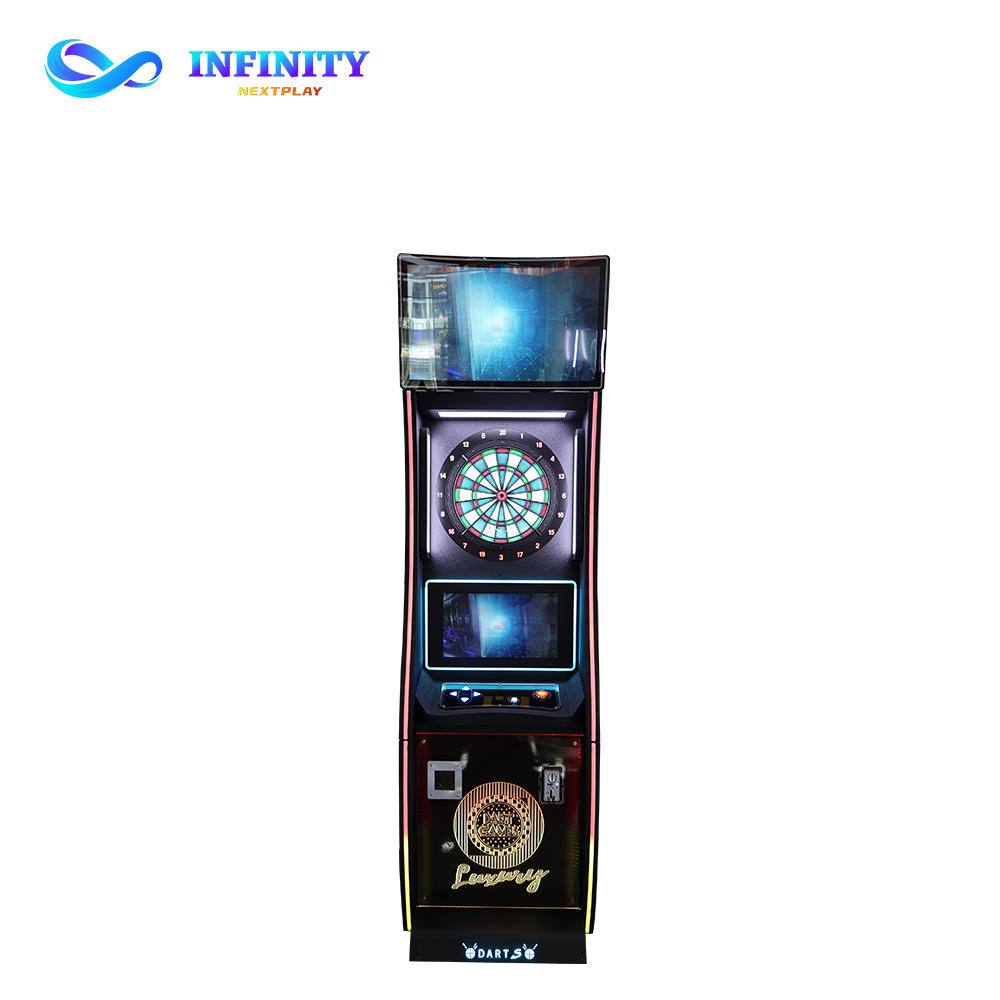
A duckpin bowling system anchors the family entertainment format in a compact footprint, pairing fine with the party and all-age mix of a FEC. A free-roaming VR arena carries the digital experience format, with premium multiplayer play and strong group appeal. An online electronic dart machine anchors sportainment and social leagues, driving repeat per-game play and drink-linked traffic. Together they illustrate how a single indoor entertainment venue can be built from deliberate attraction families rather than a random assortment.
The product families are available direct from NextPlay: the duckpin bowling system anchors the family format, the free roaming VR arena 2.0 anchors the digital experience format, and the online electronic dart machine X7 anchors sportainment. Start with the format that matches your audience, then let the mix grow around it.
For the full inventory and the decision method on choosing attractions, see our attraction mix guide.
A commercial facility that runs paid play under one roof - attractions, games and experiences arranged on a circulation path with food and beverage and seating to support dwell. The family entertainment center, sportainment venue and digital experience center are the main types.
An arcade is a room of coin-operated games. A family entertainment center is a broader, attraction-led social destination that can include arcade zones, bowling, mini golf and dining. An FEC is one type of indoor entertainment venue; an arcade is one element within it.
Individual-location FECs average around $25 per guest across streams (planning reference), and the category grows at a steady rate. Profitability at a specific site depends on format fit, mix discipline, location and operating capability, not on the category average.
New investors typically start at the compact end - around 500m2 is the smallest size that supports one anchor plus quick-play density - and design for growth by reserving power and keeping the circulation loop extensible.
There is no single best format; FEC, sportainment and digital each fit different sites and audiences. The strongest choice matches format to catchment and operating strength, and hybrids spread risk across several revenue streams.
Tell us your site, audience and goals. Our team helps you choose the format, design the attraction mix and start with a free 3D layout of your floor.