Starting an indoor entertainment business is not simply a matter of finding a building and filling it with attractions. The operators who struggle most often skipped the planning step and went straight to equipment shopping.
The biggest decisions usually come down to four questions:
A strong indoor entertainment business plan connects all four decisions before equipment is purchased or construction begins. This article walks through each step so the plan, not the equipment list, drives the project.
Before choosing equipment, define your business model. The single most common mistake in this industry is buying attractions first and looking for customers second.
A clear customer profile shapes everything else. Typical segments include:
The positioning narrows the attraction mix and the whole venue feel. Common directions are:
Do not start buying equipment the moment the concept is clear. A venue lives or dies in its local market, and the same attraction mix can succeed in one city and fail in another.
Survey the market before committing capital:
The core question is not "what equipment do I like" but "what combination of attractions can serve my target customers and business model." The right mix usually matters more than the number of machines.
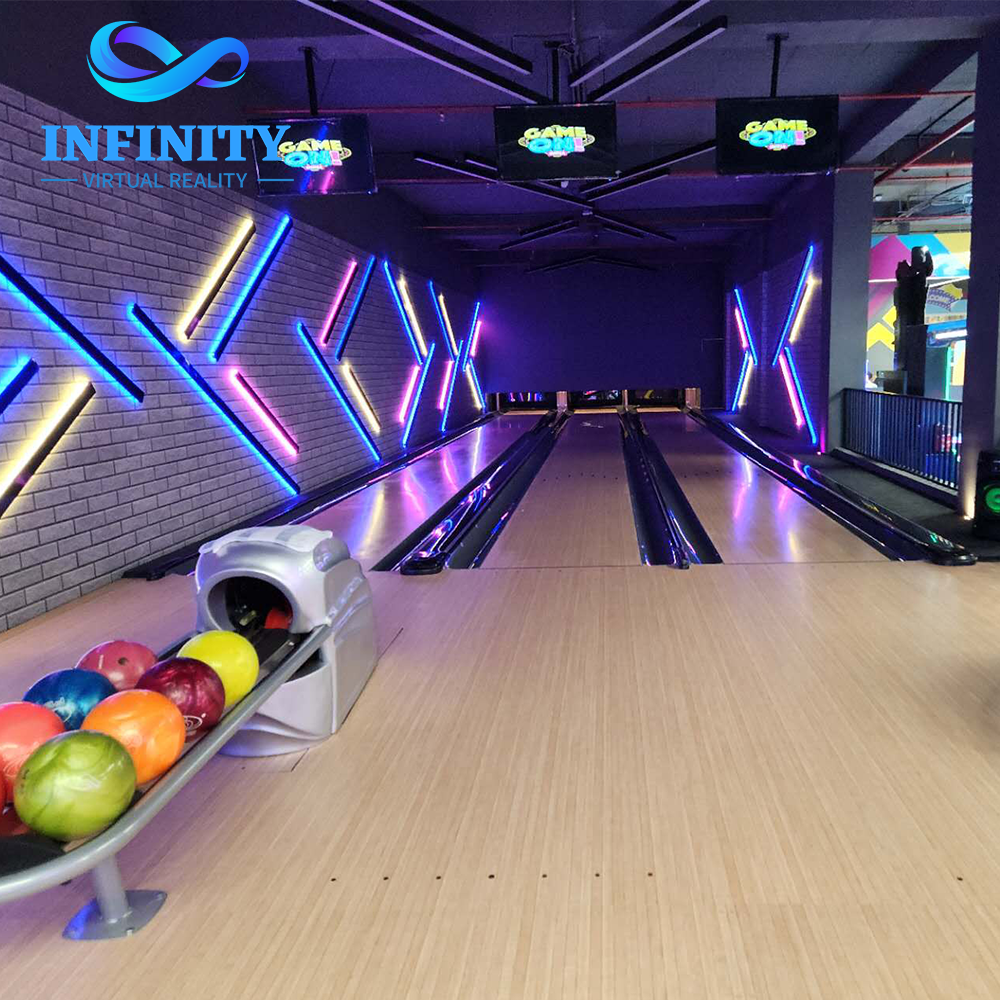
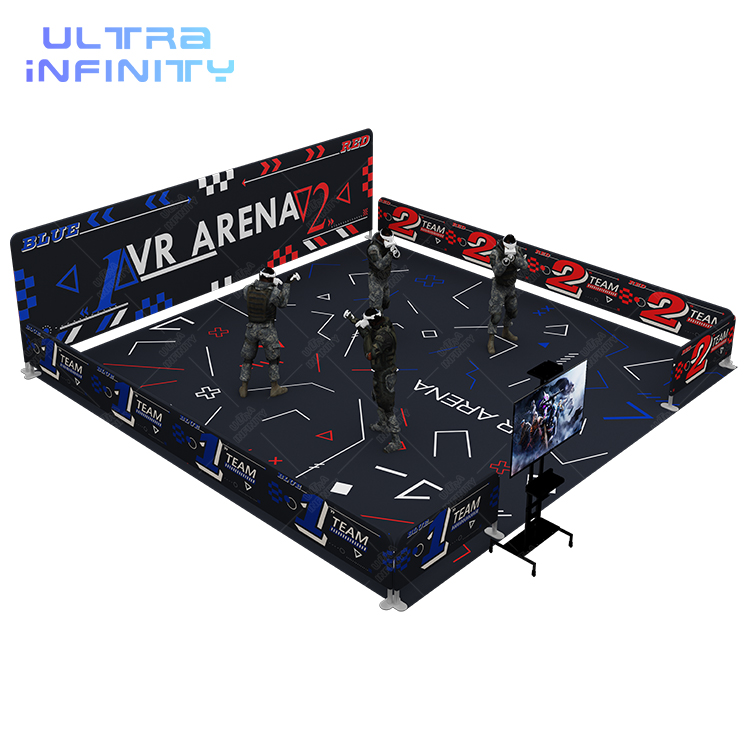
Anchor attractions pull customers through the door. They need more space and a higher investment but they create the reason to visit. Examples include bowling, a VR Arena, mini golf and an inflatable park.
Social attractions drive multi-person interaction and keep groups together. Darts, bowling, multiplayer VR and interactive sports all work because people play with each other, not just against a machine.
Compact attractions monetize small and leftover spaces. Arcade machines, darts, interactive games and compact VR fit corners, corridors and waiting zones without a large footprint.
Space planning should happen before purchase, not after. For the exact footprint each major attraction requires, see our guide on how much space a bowling alley, VR arena, golf simulator and darts area need.
Do not calculate only the equipment footprint. Plan for the full space each attraction occupies:
Distinguish usable area from total building area. A 1,000m2 building does not mean 1,000m2 is available for attractions. The plan must also reserve space for entrance, reception, restrooms, storage, staff areas, technical rooms, walkways and safety zones.
| Space Type | Example Use | Share of 1,000m2 (illustrative) |
|---|---|---|
| Attraction floor | Bowling, VR, darts, games | 55-65% |
| Circulation & waiting | Walkways, queues, lounges | 15-20% |
| F&B and social | Bar, seating, party room | 10-15% |
| Support | Reception, restrooms, storage, tech | 10-12% |
These shares are a planning model, not a fixed rule. The point is to plan the whole building, not just the machines.
A good layout moves customers naturally from one moment to the next. A clean flow looks like this:
| Step | Zone |
|---|---|
| 1 | Entrance |
| 2 | Reception |
| 3 | Anchor Attraction |
| 4 | Secondary Attractions |
| 5 | Social and F&B Area |
| 6 | Additional Activities |
| 7 | Exit |
When the flow is wrong, customers get lost, queues pile up at one machine, and whole corners stay empty. Flow is a revenue design problem, not just a floor plan.
Pricing is not a single price tag. Listing "bowling $X, VR $X" ignores that acceptable prices vary sharply by country and market. Build a pricing model instead.
Customers pay for a single session. Best for darts, arcade, VR and simulators where each play is short and self-contained.
Charges by duration, such as 30 or 60 minutes. Suits VR, bowling and interactive attractions where time on the device is the unit of value.
Bundles such as bowling plus VR plus food, or a five-attraction pass. Packages raise average spend and suit the FEC model well.
Monthly or annual memberships, loyalty programs, birthday parties, corporate events, school groups and private events. Recurring and group revenue is what stabilizes an FEC across the week.
A business plan needs a revenue estimate, even a rough one. Start from the basic formula:
Revenue = Number of Customers x Average Spend per Customer
For monthly planning:
Monthly Revenue = Monthly Visitors x Average Revenue per Visitor
| Assumption | Value |
|---|---|
| Monthly visitors | 3,000 |
| Average spend per visitor | $25 |
| Monthly revenue | $75,000 |
Calculation: 3,000 visitors x $25 = $75,000 per month.
Total revenue is important, but when space is limited, revenue efficiency matters more. Compare two zones:
| Zone | Area | Monthly Revenue | Revenue / m2 |
|---|---|---|---|
| Zone A | 100m2 | $10,000 | $100 |
| Zone B | 200m2 | $12,000 | $60 |
Zone B earns more in total, but Zone A is far more efficient per square meter. For a venue constrained by rent and floor area, efficiency often beats raw totals. For the full method, see our guide on how to maximize revenue per square meter in an indoor entertainment center.
A business plan is incomplete if it only counts income. List the costs that will actually run the venue.
Separating fixed, variable and equipment costs makes the break-even math below meaningful instead of wishful.
Break-even turns the plan from a hope into a testable target.
Break-Even Customers = Fixed Costs / Contribution Margin per Customer
Or, in revenue terms:
Break-Even Revenue = Fixed Costs / Gross Margin
Once break-even is known, every pricing or attraction decision can be checked against how many additional visits it requires.
A successful FEC should not serve only one type of customer. A diversified mix widens the addressable market and smooths demand across the day.
| Customer Group | Attractions That Fit |
|---|---|
| Families | Bowling, Mini Golf, VR |
| Kids | Interactive Games, Inflatable |
| Teenagers | VR, Darts, Arcade |
| Adults | Bowling, Darts, Golf Simulator |
| Corporate Groups | Bowling, VR, Sports Simulators |
A diversified attraction mix can increase the number of customer segments a venue can serve, which in turn supports both weekday and weekend traffic.
Entertainment is not the only income. The most resilient venues build several streams:
For turning underused floor into income, see our guide on how to turn dead space into revenue.
Do not publish a single revenue forecast and call it a plan. Build three scenarios so the business has a range, not a guess.
| Scenario | Visitors | Avg Spend | Monthly Revenue |
|---|---|---|---|
| Conservative | 2,000 | $20 | $40,000 |
| Expected | 3,000 | $25 | $75,000 |
| Optimistic | 4,000 | $30 | $120,000 |
Scenarios also help with financing and with deciding how much equipment the venue can safely support.
The traditional order is weak: building, then equipment, then layout, then pricing. By that point the business model is trapped inside choices already made.
A stronger order runs backwards from the goal:
Use this checklist to turn the article into an actionable plan:
A successful entertainment center starts with a business plan, not simply a list of equipment. The plan decides the customers, the revenue model and only then the attractions.
If you already have a venue, a floor plan or a target project size, we can help you build an attraction mix, layout and equipment plan around your available space and business goals. For a complete venue solution, see NextPlay sportainment, and for the space math behind each attraction see our space-requirements guide.
It is the document that connects four decisions: which attractions to offer, how much space each needs, how customers are charged, and how the venue generates sustainable revenue. It should be written before equipment is purchased.
Start from your target customers and business model, not from personal preference. Most venues use an Anchor plus Social plus Compact structure: attractions that draw a crowd, attractions that keep groups together, and compact attractions that monetize small spaces.
Plan for more than the equipment footprint. Include player area, safety clearance, circulation, waiting and support spaces such as reception, restrooms and storage. A 1,000m2 building rarely means 1,000m2 of usable attraction floor.
Use Monthly Revenue = Monthly Visitors x Average Revenue per Visitor. Build conservative, expected and optimistic scenarios rather than a single forecast, and treat the numbers as planning examples, not guarantees.
Break-even is the point where revenue covers fixed costs. In customer terms it is Fixed Costs divided by Contribution Margin per Customer. The useful question is how many customers each piece of equipment must serve to pay back its investment.
The weak order is building, then equipment, then layout, then pricing. The stronger order is business goal, then target customers, revenue model, attraction mix, space, layout and finally equipment. Deciding how to make money first prevents buying equipment that does not fit the plan.
If you already have a venue, floor plan or target project size, we can help you build an attraction mix, layout and equipment plan around your available space and business goals.