Ask most indoor entertainment venue operators what their biggest growth problem is and they will answer "getting more visitors through the door." It is the natural reflex: more people must mean more revenue. But for a venue that already has steady weekend traffic, the largest and cheapest revenue opportunity is not the next thousand visitors - it is the money sitting unused in the wallets of the visitors who are already inside.
Every indoor entertainment venue runs on three revenue levers: how many visitors arrive, how long they stay, and how much each one spends. The first lever is expensive to pull - it means marketing budgets, discounts and awareness campaigns. The third lever is nearly free to pull, because it changes what happens after a guest has already chosen your venue. Attraction packages are the highest-leverage tool for that third lever: they are a pricing and product design decision, not a traffic decision, and they cost no extra square meters.
| Revenue Lever | What It Moves | Cost to Change | Typical Impact |
|---|---|---|---|
| More visitors | Admission volume | Marketing spend, discounting, new attractions | Grows gross revenue but raises acquisition cost |
| Longer stay time | Dwell per visit | Programming, comfort, layout, F&B speed | More purchase opportunities per visit |
| Higher spend per visitor | Revenue per guest | Pricing design, packaging, upselling | Raises margins with zero added space |
The three levers multiply each other. A guest who stays longer has more chances to buy, and a guest who spends more per purchase opportunity lifts the value of every minute they stay. Operators who only chase visitor volume are pulling one lever while the other two sit idle. The fastest way to start pulling all three at once is a well-designed package menu.
Every new visitor costs acquisition money and needs floor capacity, staff time and equipment wear.
The guest is already inside. Packaging and upselling lift revenue with no new marketing spend and no new floor space.
An attraction package is a pre-priced combination of experiences, access rights and add-ons sold as a single product. Instead of selling laser tag at one price, VR at another and mini golf at a third, the venue sells "the Adventure Pass" that includes all three plus a snack credit at one headline price. The guest buys one decision; the venue sells three purchases.
| Purchase Behavior | Single-Play Pricing | Package Pricing |
|---|---|---|
| Number of decisions | One decision per attraction, repeated all visit | One decision for the whole visit |
| Spend ceiling | Capped by what the guest planned to try | Opens higher tiers the guest would not self-select |
| Dwell time | Leaves after the planned activity ends | Stays longer to use what the package includes |
| Perceived value | Each ticket feels like an expense | Bundle feels like savings even at a higher total |
| Revenue predictability | Walk-in, weather-dependent, uneven | Booked in advance, plan-able, repeatable |
The classic example of the value perception at work: buying a VR session at $15, mini golf at $12 and an arcade card at $10 adds up to $37. Sold together as an "Adventure Package" at $29, the guest reads the bundle as a saving of $8. The venue still collects $29 instead of the $10 to $15 a single-attraction guest would have left behind, and the guest stays long enough to use all three. The package is not a discount - it is a different revenue structure.
Industry research on pricing psychology supports the mechanism. Tiered and anchored pricing has been measured to lift perceived value in the range of 22-35%, and a well-designed decoy option can increase selection of the target tier by 30-45% (pricing psychology research, planning reference). These are the same mechanisms that make a three-tier package menu outsell a flat list of single tickets.
Not all packages work the same way. The most durable venue menus combine five models, each aimed at a different moment of the customer journey. The models below use example pricing to show structure; real price points should be set from your own cost base and market position.
1. Starter Package - convert the first-time guest. A low-price entry bundle that proves the venue. Typical contents: one signature attraction, a small game credit and a snack coupon. Example pricing around $19.99. The goal is not margin - it is converting a hesitant first-timer into a returning guest.
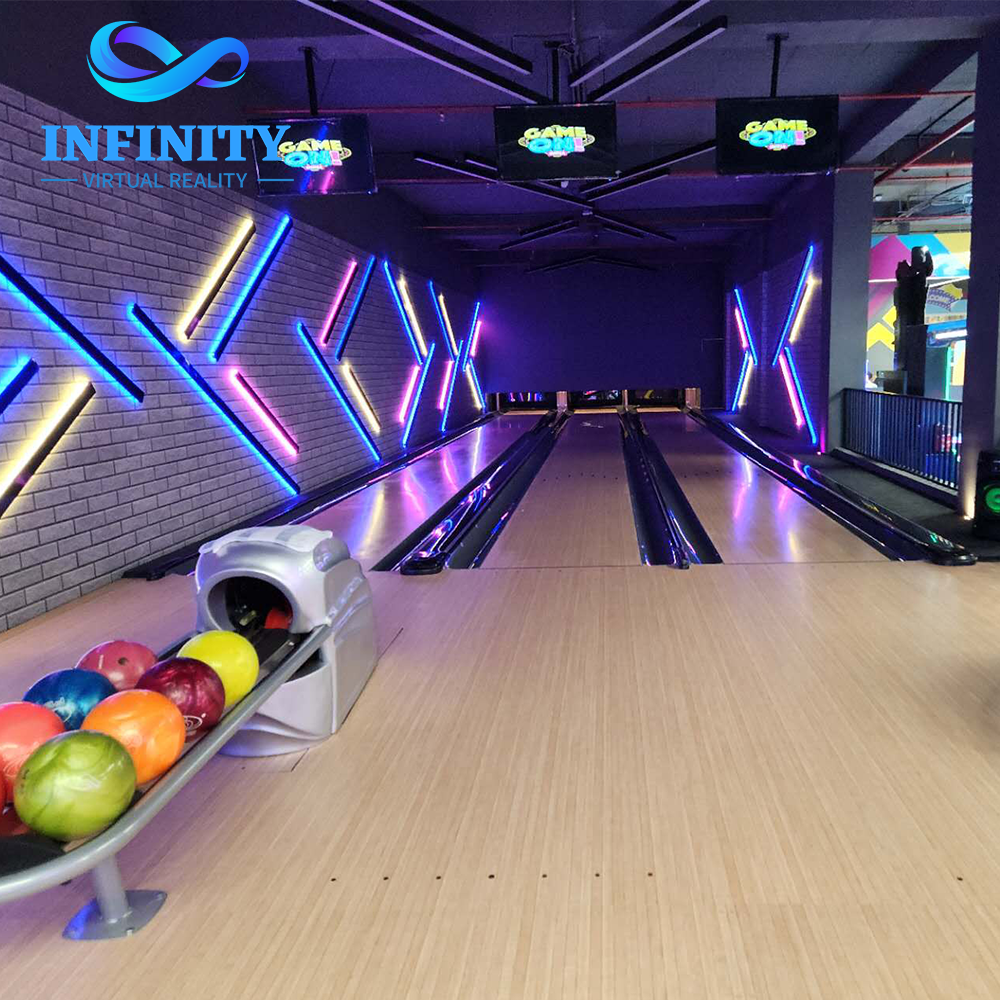
2. Family Package - the revenue engine of most FECs. Families are the highest-value group segment in indoor entertainment, and they arrive in groups of three to six. A family bundle typically covers two adults and two children across mini golf, bowling or VR plus a food combo. Example pricing around $59. Because the whole group is included, the package captures spend that single tickets would fragment into four separate small purchases. A space-saving option like our duckpin bowling system is a strong family-package core because it fits small footprints and plays fast between groups.
3. All-Day Pass / Unlimited Play - extend dwell. For venues with enough capacity, an unlimited pass converts the visit from "a round of something" into "the afternoon." Active entertainment venues already hold guests for roughly 2-3 hours versus 30-60 minutes for passive setups (operator-reported, planning reference). An all-day pass monetizes that extra time. Capacity planning matters: unlimited passes only work when the floor can absorb the load without queues.
4. Birthday and Group Party Package - the highest per-booking revenue. Party packages bundle venue time, a party room, attraction access and food into one prepaid booking. Market pricing for FEC party packages commonly runs from about $11-15 per child to $150-250 for a small group, with large chains offering group deals from around $9.99 per child (public price lists, reported-by). The package turns a slow afternoon into a booked, prepaid, group-size sale, and parties drive the highest repeat-visit rate of any segment.
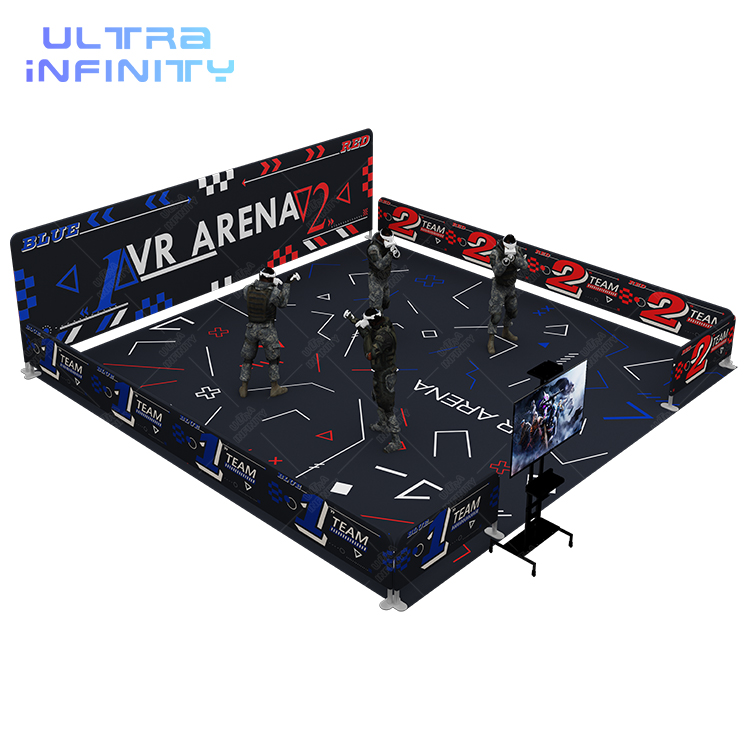
5. Premium / VIP Experience Package - lift the ceiling. A top tier with private room access, priority entry, premium VR or exclusive game time, and merchandise. For many venues the premium anchor is built around a flagship multiplayer experience such as the free roaming VR arena 2.0, which justifies a higher headline price and a longer reserved session. The premium tier does not need to sell in volume - it needs to exist so the middle tier looks like value. This is the decoy-and-anchor structure working inside your own menu: the $89 tier makes the $59 tier feel like the smart choice.
| Package Model | Target Guest | Example Price | Primary Goal |
|---|---|---|---|
| Starter | First-time visitor | $19.99 | Convert and earn a return visit |
| Family | 2 adults + 2 kids | $59 | Capture group spend in one sale |
| All-Day Pass | Dwell-oriented guests | $35-45 | Extend stay and F&B exposure |
| Birthday / Group | Parties, teams, groups | $11-15 per child | Booked, prepaid, high-ticket |
| Premium / VIP | Celebration and corporate | $89-129 | Anchor value and lift margins |
The five models are not competitors - they are a ladder. The starter brings the guest in, the family package raises the average order, the all-day pass extends the visit, the party package locks in bookings, and the premium tier anchors the whole menu. Venues that run only one model leave the other four revenue streams on the table.
Designing a package that converts is a four-step process. Operators who skip the first step - the one that groups packages by customer type instead of by equipment - end up with a menu that looks like a catalog and sells like one.
Step 1: Group by customer type, not by equipment. A guest does not think "VR, bowling, darts, arcade." They think "something for the kids, something for the teens, a date night, a birthday." Structure the menu around the moments your guests actually buy for: family fun, teen adventure, birthday celebration, corporate event, date night. Each package then pulls from the equipment list to serve that moment.
| Customer Moment | Package Concept | Attractions to Bundle |
|---|---|---|
| Family fun | Family Adventure Pass | Mini golf + arcade credit + food combo |
| Teen adventure | Teen Squad Bundle | VR arena + laser or interactive games |
| Birthday | Party Package | Party room + attractions + food + host |
| Corporate / group | Team Night | Bowling or darts + F&B + reserved zone |
| Date night | Duo Pass | Premium VR or bowling + drinks + retail credit |
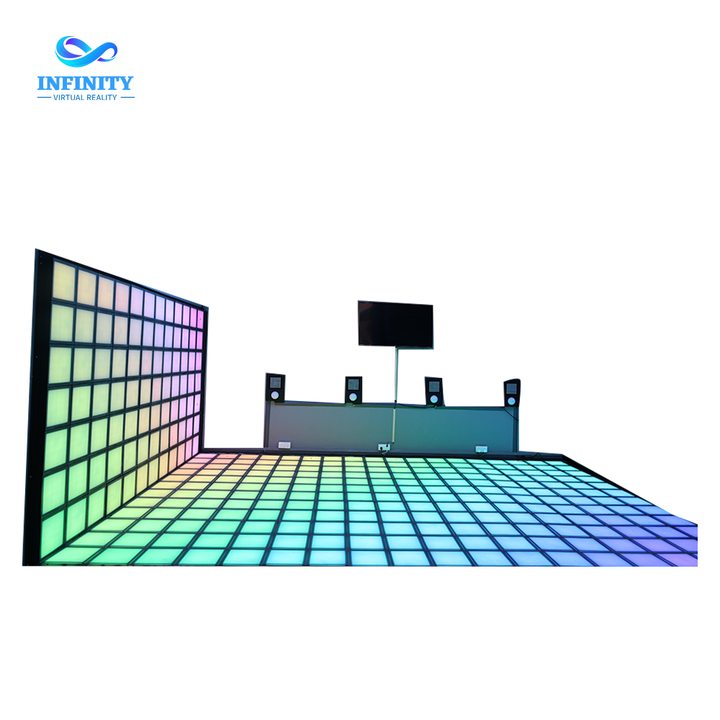
Step 2: Combine a traffic attraction with a high-margin experience and food. The formula is: Traffic Attraction (the famous, high-demand item that pulls people in) + High-Margin Experience (interactive games, premium VR, LED floors) + Food or Merchandise (the highest-margin categories in the venue). Packing three popular attractions together simply discounts three things you could sell separately; mixing roles creates margin. High-margin interactive surfaces such as the Infinity Grid LED dance floor are ideal inside all-day passes and party packages because they host multiple players per square meter at a low marginal cost.
Step 3: Create three price levels with a deliberate anchor. The Good-Better-Best structure works because of anchoring: the highest tier sets the reference point, and the middle tier captures the majority of buyers. A clean example is Basic at $19, Premium at $35 and Ultimate at $59. The Premium tier is the volume seller, the Ultimate tier is the anchor, and the Basic tier is the entry point that makes Premium look like obvious value. Pricing psychology research puts the perceived-value lift of anchored tiering at roughly 22-35% (planning reference).
Step 4: Add time-based packages for off-peak demand. Weekday specials, after-school passes, holiday bundles and early-bird slots convert dead capacity into revenue. Time-based packages are the cheapest product you can sell: the floor is already open, the staff is already paid, and every off-peak ticket is near-pure margin. A complementary tactic is placing beverage and snack stations along queues and walkways - one theme-park case measured a 22% lift in per-capita spend from strategically located queue-side beverage points (vendor-reported, planning reference).
To show how the models come together, here is a package architecture for a 2,000m2 indoor entertainment venue with a VR arena, mini golf, interactive games, an arcade and a food court. The layout and capacity logic for this kind of venue is covered in depth in our guides on bowling lane counts for 1,000m2 venues, space planning for indoor attractions and how many attractions a venue needs.
| Package | Contents | Example Price | Margin Logic |
|---|---|---|---|
| A. Kids Explorer | Mini golf round + arcade card + drink | $25 | Entry tier; low complexity, high attach rate |
| B. Family Adventure | Mini golf + VR session + interactive games + food combo | $59 | Volume seller; bundles traffic + margin + F&B |
| C. Ultimate Experience | Unlimited attractions + premium VR + meal + retail credit | $89 | Anchor tier; lifts perceived value of B |
The economics are straightforward planning math. If the venue currently averages $12-22 of spend per family visit (industry benchmark range, planning reference) and the package menu moves a meaningful share of guests to packages worth $25-89, average revenue per visitor rises without any change to traffic or floor space. Even a conservative mix - say 30% of visitors buying a package at an average $35 instead of $16 of single-play spend - adds roughly $5-6 of revenue per visitor across the whole base. On a venue doing 1,000 paying visitors a week, that is $5,000-6,000 of additional weekly revenue before any extra marketing spend.
The order of sale matters as much as the menu. Sell the package at the entrance before the guest starts buying single tickets; offer the family upgrade at check-in; add the food combo at the F&B counter; and close with a retail or photo add-on at the exit. The full journey - entrance, attraction, food, retail, exit - is where package revenue compounds.
Package design only matters if it shows up in the numbers operators actually manage. Three metrics capture most of the effect.
Average Customer Spend (ACS). The core formula is simple: Total Revenue divided by Number of Visitors. Packages lift the numerator directly. Industry benchmarks for indoor entertainment venues commonly land between $11-24 of spend per paying guest, with IAAPA measuring around $25 of average spend at individual-location FECs across admission, games, F&B, retail and rentals (planning reference). A package menu that raises the per-visitor number by even a few dollars moves venue-level revenue more than most traffic campaigns.
Revenue per square meter. For venue investors, this is the headline metric: the same floor producing more revenue. Packages do not add space - they raise the output of the space you already have. This is the metric that connects packaging to venue valuation, and it is the metric our VR arena revenue analysis and attraction mix revenue model build on.
Revenue mix. The typical FEC revenue mix skews toward admission and attractions, with food and beverage a smaller share (industry mix surveys, planning reference). Packages are the fastest structural tool to shift that mix toward F&B and retail - the highest-margin categories - by attaching food, drinks and merchandise credits to the sale. A venue that moves 10-15% of its mix from admission into F&B and retail keeps more of every dollar it earns.
| Metric | Typical Single-Play Venue | Venue With Package Menu |
|---|---|---|
| Spend per paying guest | $11-24 | $25-35 with packages attached |
| Dwell per visit | 30-90 min passive | 2-3h with passes and bundles |
| F&B + retail share of revenue | 16-20% of mix | 25-35% with bundled add-ons |
| Off-peak occupancy | Empty weekday floor | Booked by time-based packages |
Dwell is the multiplier underneath all of it. Analysis of guest behavior in entertainment venues found a directional link between longer dwell and higher per-capita spend - roughly a 1.3% spend increase for every 1% of additional dwell time (consultancy analysis, directional, planning reference). Active entertainment venues already hold guests for 2-3 hours against 30-60 minutes for passive setups, and our dwell time guide covers how to extend that window further. Packages are the natural complement: dwell creates the time, packages convert the time into purchases.
Most failed package programs fail for the same three reasons. Each has a fix.
Mistake 1: too many choices. A menu with twelve packages creates the same decision paralysis it was meant to remove. The fix is three to five clearly differentiated packages, each with a one-line description and a headline price. If a guest cannot repeat your menu from memory after one visit, it is too long.
Mistake 2: pure discounting. A package that is only "three tickets for the price of two" trains guests to wait for discounts and teaches nothing about value. The fix is to bundle value, not discount price: add access to a premium experience, priority entry, a food item or a retail credit so the bundle is worth more, not just cheaper. Bundle pricing psychology shows customers respond to "more for the same" far better than to "same for less" (planning reference).
Mistake 3: ignoring the customer journey. Packages that cover only attractions miss the highest-margin parts of the venue. The journey runs entrance to attraction to food to retail to exit, and a package that stops at the attraction leaves the food and retail spend on the table.
Discount framing, no journey, no F&B, trains discount-seeking behavior.
Value framing, covers attraction + food, one clear decision for the group.
Three design rules hold the program together. First, cover the whole journey: every package should touch at least two revenue categories. Second, price with an anchor and a decoy: the top tier exists to make the middle tier the obvious choice. Third, measure and iterate: track attach rate, average package value and ACS by package, and retire any package that does not move the number within a defined window.
Package design is not a back-office pricing exercise - it is a venue-design decision that starts before the floor plan is drawn. Professional venue planning treats the package menu as one of five interlocking elements: target audience, available space, attraction mix, investment budget and revenue model. Change any one and the package architecture should change with it. A venue planned around birthday and group business needs a party room and a kitchen; a venue planned around corporate nights needs a lounge zone and a darts or bowling anchor.
This is why our venue guides treat pricing and packaging as part of the same process as space and equipment. Our indoor entertainment business plan guide walks through attractions, space, pricing and revenue together, and our guide on balancing attractions, queues, F&B and revenue space shows how the floor plan and the money plan have to be drawn in the same document. The corporate buyout package format we documented for mini golf is the same package thinking applied to a specific segment.
The practical starting point for a new venue is a 3D layout test before construction: put the attractions on the floor, check the queues, and confirm the package zones - party rooms, F&B counters, retail points - actually fit the journey you plan to sell. A free 3D layout design is available at our 3D layout design page, and our sportainment solutions page covers the full venue offer.
An end-to-end planning partner will model the package menu together with the equipment list, the space plan and the revenue target - not bolt pricing on after the floor is built. That is the difference between a venue that has attractions and a venue that has a revenue system.
Family packages and birthday party packages usually generate the highest revenue per booking, because they target group spending instead of individual tickets. Most venues build a menu around these two, then add a starter, an all-day pass and a premium tier.
Most venues start with two to five attractions per package. Two or three is enough to feel like a bundle, and more than five usually means the package is either too expensive or too shallow. Keep each package simple enough for a guest to repeat it from memory.
Yes, for venues with enough capacity. An all-day or unlimited pass extends dwell time, which raises spend per visitor. It only works if the floor can absorb the load without long queues, so check capacity against the pass price before launch.
Including food or a drink credit is one of the most effective moves in package design, because F&B carries the highest margins in the venue. Even a small add-on moves revenue mix from low-margin admission into high-margin categories.
Bundle value instead of discounting price: add premium access, priority entry, food or merchandise credits so the package is worth more rather than simply cheaper. Use a three-tier menu with an anchor and a decoy so the middle tier carries the volume.
Track attach rate (share of visitors buying a package), average package value, and average customer spend per visit. Compare spend per visitor with and without packages, and retire any package that does not move the number within a defined test window.
Tell us your space, audience and revenue target. Our team will help you plan the attraction mix, the layout and the package menu together - free 3D layout design, equipment selection and a revenue model built for your market.