Sports simulator operating cost, priced on published bands: software and content, maintenance and calibration, consumables, power and staffing per station - with the care rhythm costed in, an annual table for one station and a four-bay zone, and the three to five year ownership frame.
The sports simulator operating cost is the number a venue lives with long after the equipment quote is paid, and it is the number most buy-side conversations skip. The purchase price buys a machine; the operating budget keeps it earning. On published bands, the running lines per station are software and content at $500 to $6,000 a year, maintenance and calibration at $500 to $6,000 a year, and consumables at $200 to $3,000 a year, with power and staffing layered on top according to duty cycle and service model (the commercial cost breakdown). Read against a station earning the published $2,400 monthly yield, the annual care and content lines together equal roughly one to three weeks of the bay revenue they protect (the machine payback anchor, the care schedule).
Five lines make up the year. Two more lines sit outside the machine but inside the budget: the food and beverage-side consumables of running a play floor, and the insurance re-rating a venue picks up when a new attraction class joins the policy. This page prices the five machine-side lines with published bands, shows where each one is fixed and where it scales, and closes with an annual table for one station and for a four-bay zone. The equipment bands themselves belong to the sibling pages: the cross-type list (the price list) and the driver anatomy (why prices vary).
| Annual line | Published range per station | What drives the position |
|---|---|---|
| Software and content | $500 to $6,000 a year | Game library updates, leaderboards, online league play, remote content; higher tiers buy recurring competition features |
| Maintenance and calibration | $500 to $6,000 a year | Sensor alignment, parts replacement, service labor; scales with duty hours, not calendar age |
| Consumables and wear parts | $200 to $3,000 a year | Impact mats, target skins, cables, balls, filters; scales directly with session volume |
| Power | EXAMPLE $300 to $700 a year per bay at 3 kW and 1,200 to 1,800 running hours | Bay draw at 2.5 to 3.5 kW on a blended commercial rate near 12 cents per kilowatt hour (the venue power plan) |
| Staffing share | 15 to 20 percent of revenue for attended formats; low teens at self-service mix | Session mix: kiosk sessions are unattended, hosted and coached formats trade labor for price (the self-service ratio) |
Software is the first recurring line because it is the product. Published licenses run $500 to $6,000 a year per station and the range is not arbitrary: the low end keeps the existing game library running, while the upper end buys the features that fill weekdays - online leagues, global rankings, remote content updates and the leaderboard plumbing that makes a venue social (recurring cost table). A darts bank with global league play is the clearest case: the cabinet is a one-time purchase, and the weekday league schedule is what the license actually sells (the lounge checklist).
The renewal question has a published answer pattern. Multi-sport software floors treat libraries as a lineup decision, with sensible configurations at 12 to 20 sports and the headline sport setting the price ceiling of the room (the lineup test). Single-station formats apply the same logic on a smaller scale: the software line is where a venue chooses whether its machine is a one-visit novelty or a recurring competition product. The first year of license is usually bundled with the machine; the year-two invoice is the one that decides whether the venue keeps the league calendar.
Remote content is the part of the license that pays for itself quietly. Published gameplay specs describe scoring controllers that sit on centralized cloud servers and receive quarterly game mode updates, seasonal themes and new challenge levels automatically - the machine gets new reasons to be replayed without a service visit (the cloud content note). For a venue, that is a marketing calendar delivered through a subscription: the same bay sells a fresh league night every season, and the update lands without a technician on site. The budget line is therefore not support overhead; it is the cheapest content refresh a play floor can buy, and the venues that cancel it are choosing to sell last year lineup at this year prices.
Two habits keep this line honest. First, ask what the renewal includes in writing - update cadence, league hosting, remote support - and what the machine does without it. A bay that loses online matchmaking still runs local play, but it also loses the reason an off-peak player returns on a Tuesday. Second, treat the top of the band as a strategy purchase, not an upgrade: venues selling leagues and corporate formats are the ones the upper tier is priced for, and their session calendars prove it. The recurring lines are also the first thing a venue trims in a slow quarter, and the published playback on that trade is blunt - the features being cancelled are the ones that fill the hours being missed (the revenue model).
The maintenance line looks unmanageable until it is broken into the rhythm operators actually run. Published practice for a commercial bay is 10 minutes a day per bay - a wipe of sensors and screen, a first calibration throw, a close-down sequence and error log - plus a weekly check across the sport libraries, a monthly calibration suite, and an annual full-service day (the year-round care schedule). The same schedule prices as minutes, and the minutes price as budget.
| Rhythm | Time per bay | What happens |
|---|---|---|
| Daily open and close | 10 minutes | Sensor and screen wipe, calibration throw, power-down sequence and session count |
| Weekly | 60 minutes | Sensor response across libraries, filter clean, cable and mount check |
| Monthly | 240 minutes | Full calibration suite, mount torque, firmware and library updates |
| Annual | 480 minutes | Full service day: deep calibration, wear-part replacement, spares audit |
Costed against the published service model, the care line lands at $500 to $6,000 a year per station depending on which parts of the schedule a venue runs in-house, and supplier service plans plus consumables together publish at a low single-digit percentage of unit cost per year (service share). The failure side is priced too: a calibration callout runs $150 to $250, most bad installs need two or three, and a dead lane costs $200 to $400 a day in missed tickets (the install-mistakes record). Two callouts and a weekend outage can equal a year of preventive care - which is the entire argument for the rhythm being scheduled instead of reactive.
One pattern makes the line smaller as the floor grows. A single trained technician covers three or four bays on rounds, because the care schedule is designed for one person, not one per machine; the session count that comes out of the daily log doubles as the utilization feed for the revenue model (the technical rounds). A four-bay zone therefore does not carry four maintenance budgets - it carries one schedule and four spares shelves, which is why the per-bay care cost falls as the bay count rises.
Consumables are small, predictable and directly proportional to sessions. Published bands run $200 to $3,000 a year per station for impact mats, target skins, cables, balls and filters - the parts an active floor touches thousands of times a year (consumables table). The line scales with utilization rather than with the calendar, which makes it one of the easiest budgets to set: estimate peak sessions per month, check the published replacement interval for mats and skins, and the number falls out. The single mistake is deferring replacement past the interval, at which point the wear shows up in refunds and in the sensor calibration the mats no longer hold.
Power is the other underestimated line, and it starts at the machine. Each simulator bay draws a dedicated 220 volt circuit at 2.5 to 3.5 kilowatts, the interactive LED grid about 4 kilowatts, and the blended commercial rate including demand charges sits near 12 cents per kilowatt hour in the published model (the power plan). Cost it as a multiplication: a 3 kilowatt bay running 1,500 hours a year draws about 4,500 kilowatt hours, which prices near $540; a four-bay zone at the same duty lands in the low four figures before HVAC, which the same guide prices as the single largest line in a mixed venue.
Consumables plan differently by format, which is why the band is wide. A darts bank consumes soft-tip points and flights - cents per session - while an archery lane consumes soft-tip arrows, target skins and mat sections, and a batting bay consumes screen stock and balls at rates set by its pitch speed range (format consumables, bay wear list). Golf bays publish a screen replacement of $500 to $1,500 every few years at commercial hours on top of the annual band (golf running costs). The practical approach is a per-format consumables row in the same spreadsheet as the session count, reviewed monthly: a mat that is replaced on interval never becomes a refund event, and the parts list is short enough that a venue can stock a quarter of it on a shelf.
Two power details are budget lines rather than usage lines. First, the service feed is sized at connected load plus 15 to 20 percent of headroom, and the subpanel work that carries the bays is a fit-out cost - the published penalty for adding a feed after the room is finished runs $18,000 to $25,000 against a fraction of that during construction (feed sizing). Second, demand charges bill the monthly peak, not the monthly average, so the corridor that runs all four bays at Saturday peak sets the bill as surely as the kilowatt hours do. Sizing and staggering are therefore operating-cost decisions as much as engineering ones.
Staffing is the largest line on this page and the only one a venue sets by design. The published frame prices attended attractions at 15 to 20 percent of revenue in labor, and the self-service target for a simulator room is built the other way: roughly 80 percent of sessions run unattended, one technician covers three or four bays on rounds, and one host carries the event calendar - which lands the labor line in the low teens of revenue (the self-service ratio). On a zone grossing in the published $5,200 to $14,000 band, the spread between those two models is a meaningful slice of monthly margin (the zone band).
Format decides the mix, and the published productivity index shows how much: an unattended kiosk session returns roughly eight sessions per staff hour, a hosted group session about three, and a coached lesson about one (sessions per staff hour). A room of scored, kiosk-sold formats - a shooting lane with a leaderboard, a self-scored darts bank - buys the eight; leagues, parties and first-time groups buy the three and are worth their labor because they are priced above walk-in rates. The budget line follows the calendar, not the machine count, which is why the staffing line is the one to re-run every season.
One line sits just outside the machine but inside the same budget conversation: insurance. Adding an attraction class re-rates a venue policy, and the published missed-line lists for simulator projects name insurance re-rating alongside freight, compliance and software as the items that surface after signing (missed cost lines). The size of the re-rating depends on the class, the venue and the claims record, so the operating move is procedural rather than arithmetic: notify the broker before installation, price the change while the quote is still open, and keep the incident log that the renewal review will ask for. A class added quietly is a claims conversation waiting to happen.
Two structural decisions move this line more than any roster cut. Automation is the first: an auto-scored lane is genuinely unattended, while a manual-scored lane with the same ticket price still needs a person at peak. Layout is the second: kiosks placed at the entry, bays visible from a single counter, and a party staging area near the host station convert one employee into a floor manager instead of a queue manager. Both decisions are made before the machines arrive, which is why the operating budget belongs in the same conversation as the quote (the zone plan).
Assembled into a single view, the published bands price a station year between roughly $1,500 and $16,000, and a four-bay zone between roughly five and twenty-five thousand dollars, with the spread decided by service model, duty cycle and staffing posture rather than by machine count. The table below is EXAMPLE arithmetic on the published ranges, so every line can be re-run against a specific floor plan.
| Annual running line | One station | Four-bay zone | Basis |
|---|---|---|---|
| Software and content | $500 to $6,000 | EXAMPLE $1,000 to $8,000 with a shared license pool | Published band; sharing follows the 60 to 80 percent second-station rule |
| Maintenance and calibration | $500 to $6,000 | EXAMPLE $2,000 to $12,000 across a shared technician schedule | Published band; one technician per 3 to 4 bays |
| Consumables | $200 to $3,000 | EXAMPLE $800 to $10,000 scaled by sessions | Published band; scales with utilization |
| Power | EXAMPLE $300 to $700 | EXAMPLE $1,200 to $2,800 before HVAC | Published draw of 2.5 to 3.5 kW per bay at a blended rate near 12 cents per kWh |
| Staffing share | Low teens at kiosk mix; 15 to 20 percent attended | Same band; one technician plus a host carries the zone | Published labor band and self-service ratio |
| EXAMPLE annual total | about $1,500 to $16,000 | about $5,000 to $25,000 | Planning arithmetic on published ranges |
The five-year frame is where this budget earns its place in the purchase decision. Published guidance for commercial commissioning recommends modeling a three to five year total cost of ownership before ordering, because the recurring lines change the payback arithmetic rather than decorating it (the TCO recommendation). Run the check both ways: against the machine anchor of $2,400 monthly yield and a 7.1 month payback at full rate (the machine anchor), a $1,500 to $16,000 annual line is a fraction of station revenue; against a quiet bay at a third of utilization, the same line is the difference between a slow payback and no payback. The operating budget does not decide whether the machine is a good idea - it decides whether the venue can hold it long enough to find out.
The five-year frame also contains the upgrade decision, and publishing it prevents a common accounting mistake. Published replacement bands put a mid-band unit upgrade at $8,000 to $30,000, and the read is a crossover: when annual upkeep plus lost sessions approaches the price of a new unit, the economics have already decided (the replacement signals). A $12,000 upgrade that restores full-rate sessions at the $2,400 monthly anchor clears in about five months of restored revenue - but only when the drift was hardware. If sessions faded because demand moved, the same money belongs in marketing or a new bay, which is why the four replacement signals are read in order before any capital line is opened.
The last read is organizational. An operating budget works when one person owns it: the care rhythm has an owner, the license renewal has an owner, and the session log that proves utilization has an owner. The published schedule is written for exactly that arrangement - one trained technician across a three or four bay room - and the venues that keep the lines at the low end of these bands are the ones that assigned the responsibility before the crates arrived. The zone budget page in this batch (cost by venue type) then puts these same lines next to the opening costs, so the full picture sits on one page before the order.
The running-cost questions operators ask before signing, answered with the published bands on this page.
Published recurring bands per station: software and content $500 to $6,000, maintenance and calibration $500 to $6,000, consumables $200 to $3,000, power around $300 to $700 for a 3 kilowatt bay, plus a staffing share that runs in the low teens of revenue at a self-service mix. Assembled, roughly $1,500 to $16,000 a year depending on duty cycle and service model.
The renewal is what keeps online leagues, leaderboards and content updates running. Licenses run $500 to $6,000 a year, and the upper tiers buy the features that fill weekday troughs. Ask what the machine does without the renewal before deciding - local play survives, but the recurring competition layer does not.
The published rhythm is 10 minutes a day per bay, a 60 minute weekly check, a 240 minute monthly calibration round and one annual service day. One trained technician covers three or four bays, and the daily session log doubles as the utilization record.
Impact mats, target skins, cables, balls and filters - parts that wear with sessions rather than with time. The published band is $200 to $3,000 a year per station, and the line is easiest to plan as a function of peak sessions per month.
Each bay draws a dedicated 220 volt circuit at 2.5 to 3.5 kilowatts. At a blended commercial rate near 12 cents per kilowatt hour, a 3 kilowatt bay running about 1,500 hours a year prices near $540. The feed is sized at connected load plus 15 to 20 percent of headroom, and demand charges bill the monthly peak.
On the published model, yes: a room targeting roughly 80 percent unattended sessions with kiosk sales, one technician across three or four bays and one host for leagues and parties lands under the 15 to 20 percent attended band. The mix decides it - kiosk sessions return about eight per staff hour against three for hosted formats and one for coached lessons.
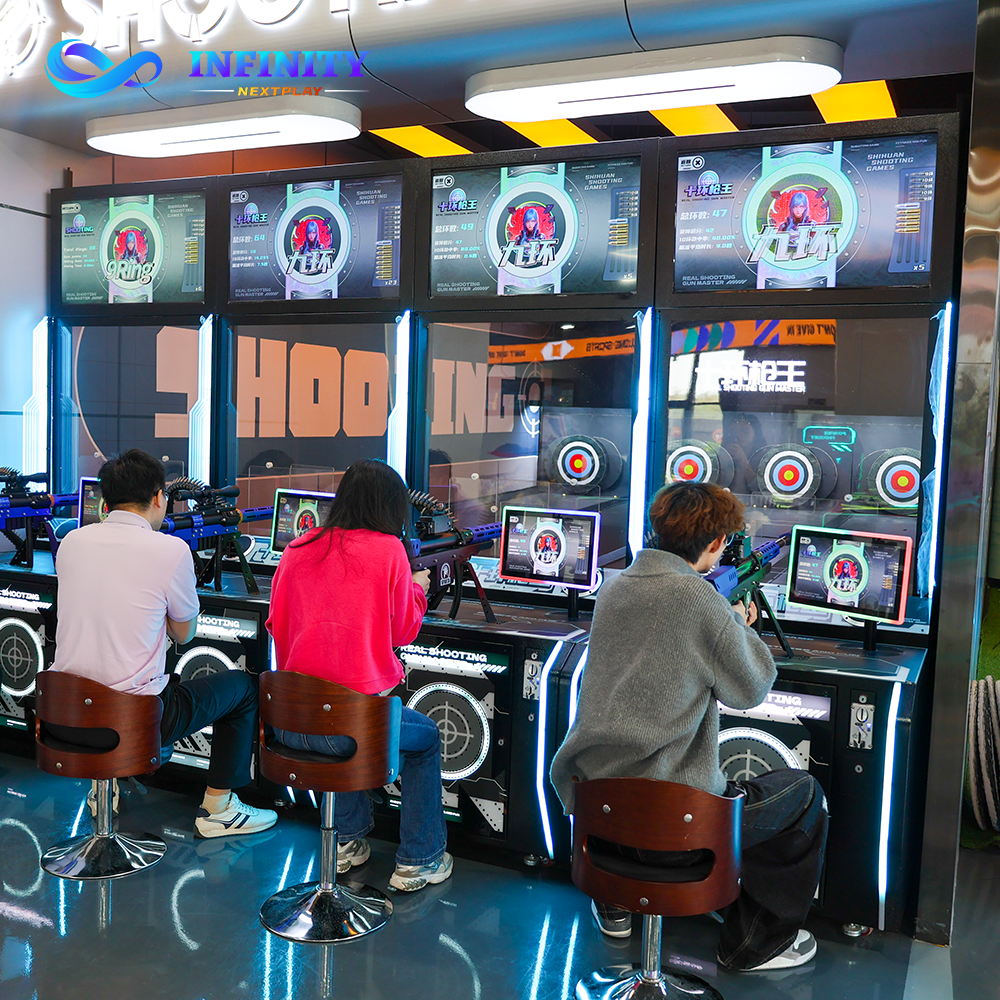
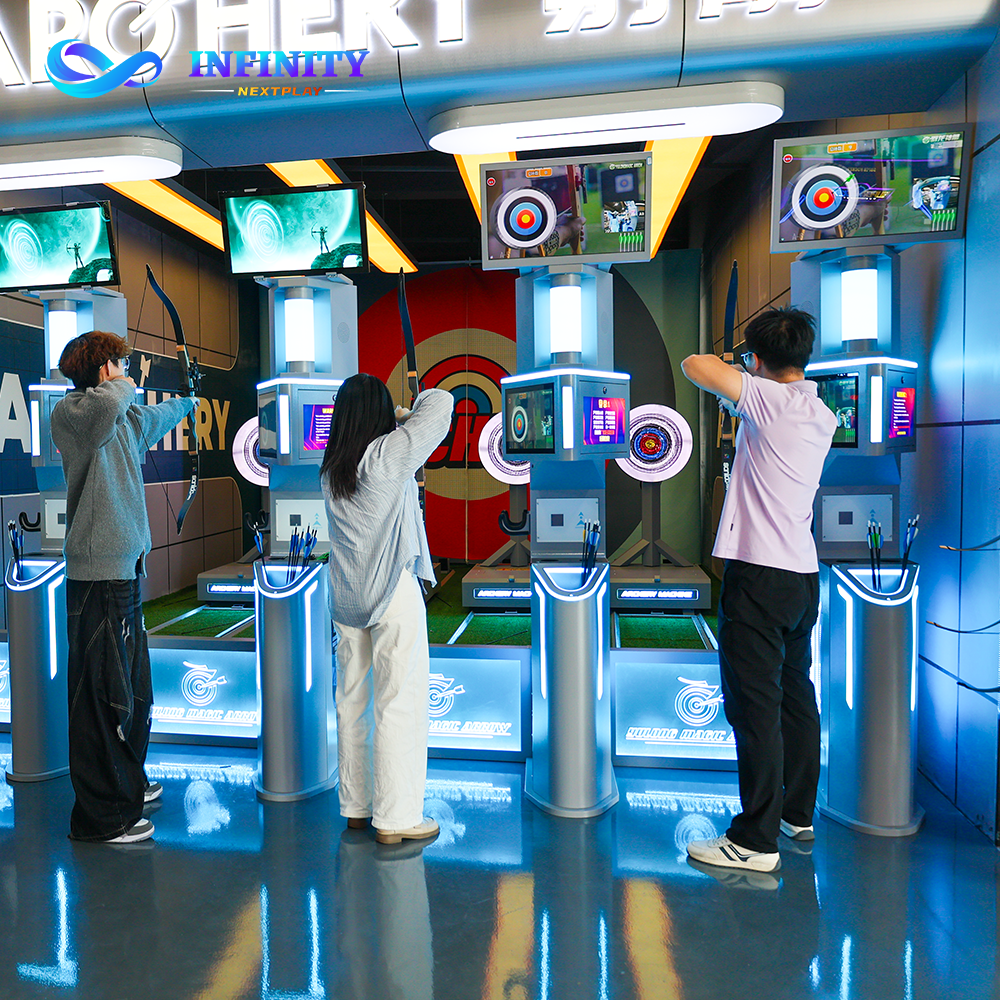
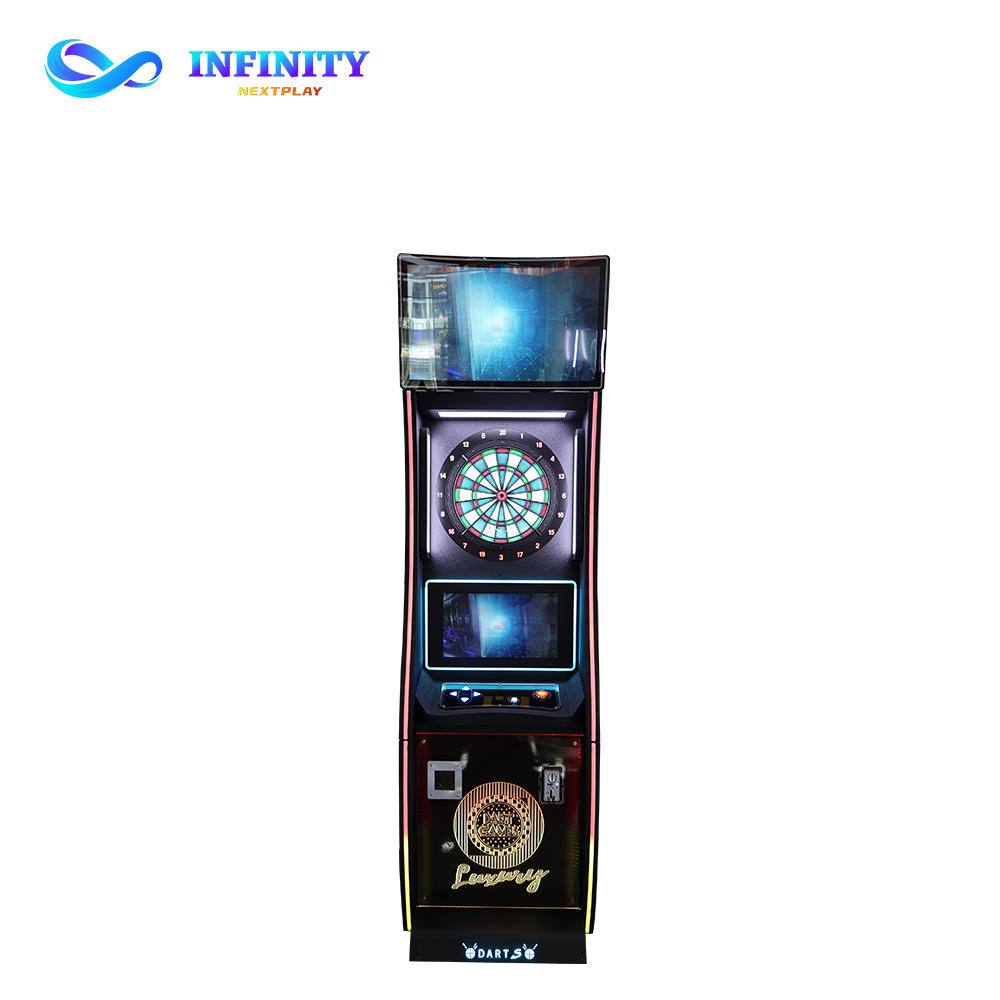
Send the floor plan and the service model you intend to run: the free 3D layout design returns the bay count and the power plan, and this page turns both into a running budget. Anchor formats for the exercise: the Shooting Simulator Q4, the Archery System A6 and the Dart Machine X7. Then read the batch: the price list, the price drivers and zone cost by venue type.