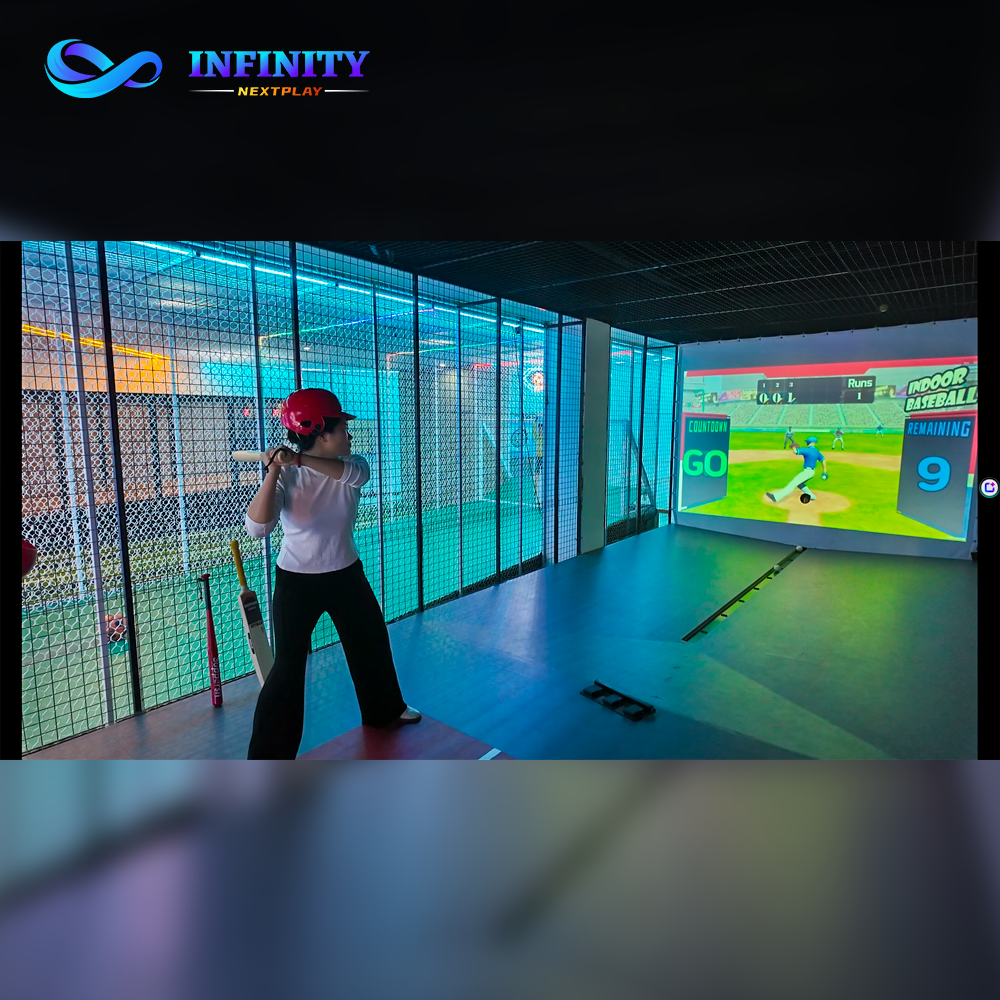
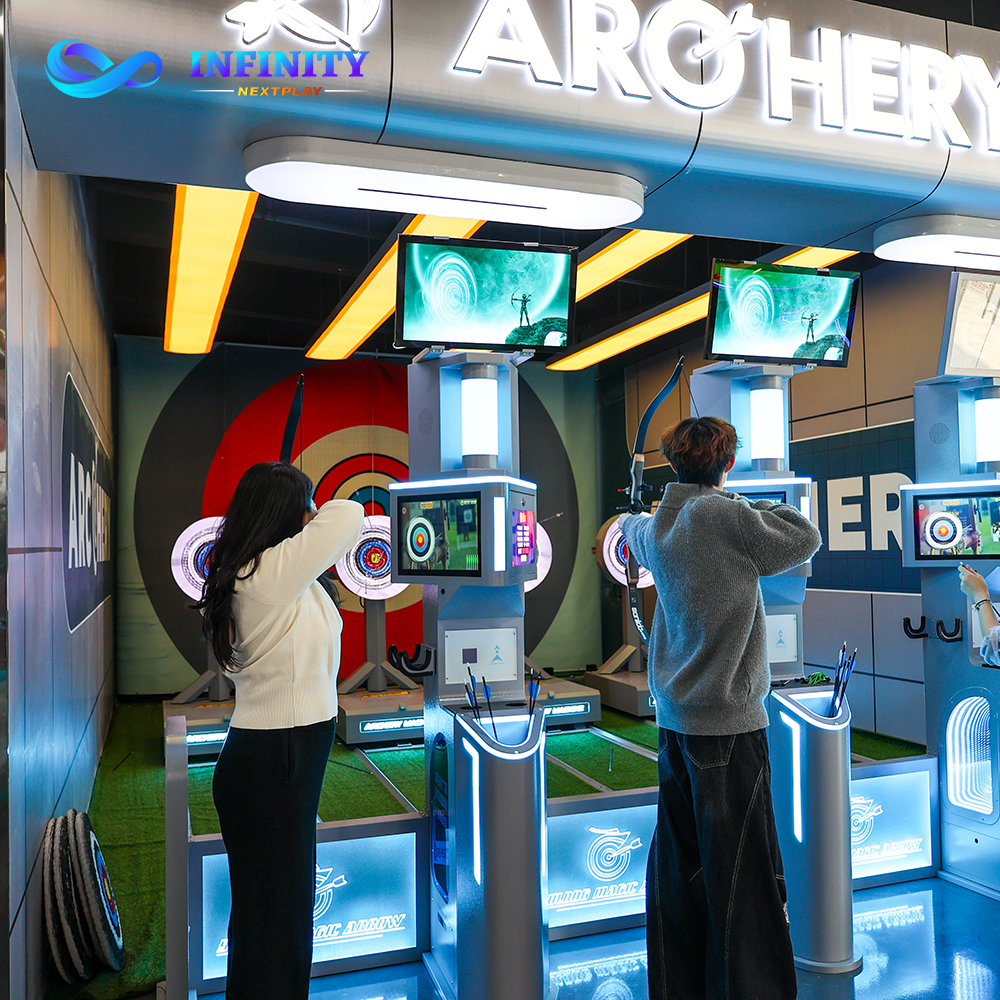
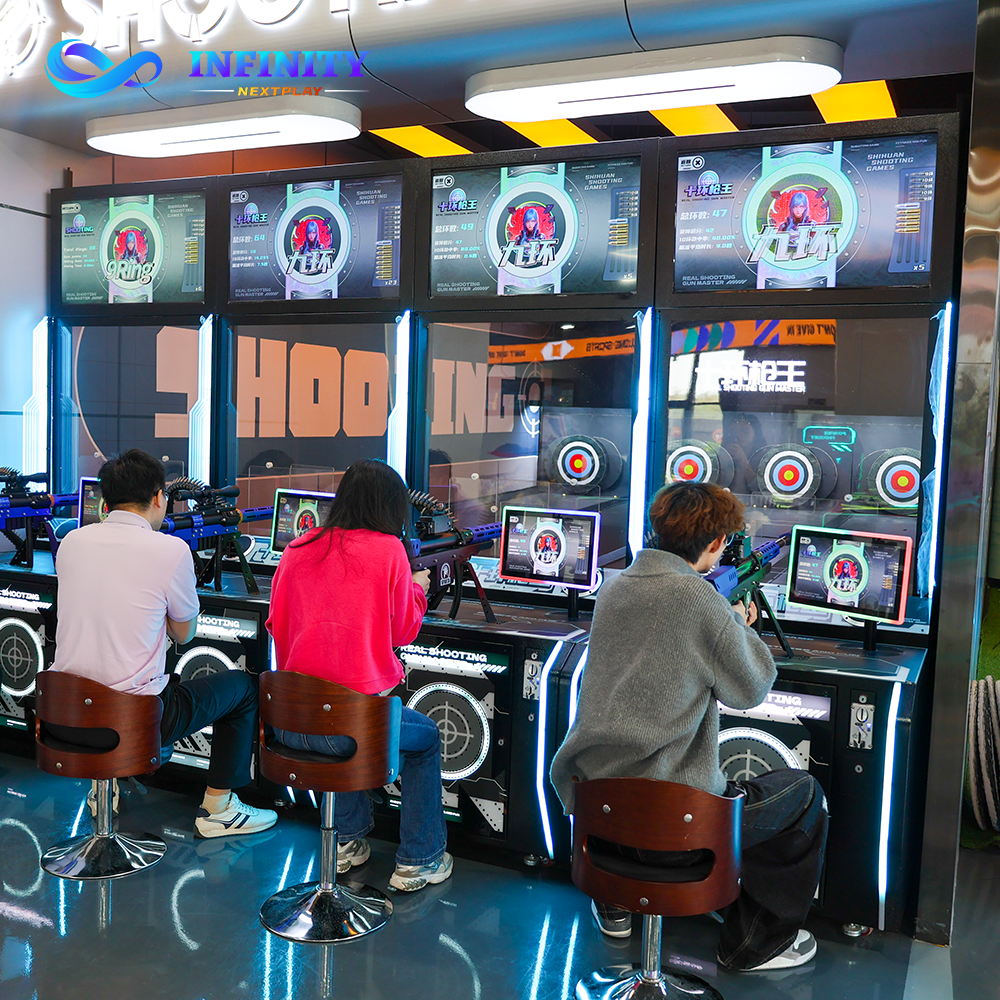
The following commercial sports simulation units form the primary revenue generators within this end-to-end commercial installation.
Designing active gaming experiences for commercial entertainment venues requires a deep understanding of player psychology, level progression, and physical agility mechanics. Operating a Immersive attraction demands an intricate balance between intuitive rules for first-time visitors and deep competitive mechanics for returning players. Modern commercial venue operators evaluate attraction gameplay based on average replay count per session and physical energy expenditure, creating high dwell time and repeat visits.
Key Gameplay Yield Parameters: Average Session Duration: 12-18 Minutes; Replay Conversion Rate: 64% of Players; Multi-Player Cooperation Index: High; Average Calorie Expenditure: 180-320 kcal/session.
Low-latency feedback is essential to maintaining player immersion during high-speed active competition. Hardware sensor grids utilize high-frame-rate optical matrices operating at sub-10ms response thresholds to register foot contact or target impacts in real time. Advanced scoring algorithms process multi-player inputs simultaneously, driving dynamic LED lighting transitions and sound effects that reward high-velocity moves.
Technical Latency Parameters: Sensor Sampling Frequency: 240Hz; Touch Response Threshold: <8.5ms; Scoring Precision Tolerance: +/- 0.5mm; Multi-User Collision Processing: 16 Simultaneous Inputs.
Maximizing venue revenue per square meter requires flexible gameplay pricing structures. Operators configure pay-per-play arcade modes ($3.00 - $5.00 per game) alongside unlimited 30-minute active gaming pass options ($15.00 - $22.00). Centralized venue management software tracks machine play frequency and peak gameplay hours in real time.
Monetization Structure: Single Game Price: $3.50; 30-Minute Unlimited Pass: $18.50; Hourly Group Rental Rate: $120.00; Machine Occupancy Target: 68% During Peak Hours.
Attracting diverse demographics—from young children to corporate team-building adults—demands dynamic level difficulty calibration. Software configurations feature progressive difficulty tiers ranging from Casual Warm-Up to Hardcore Pro Challenge. Adjustable target sensitivity and speed scaling ensure that players of all fitness levels remain engaged.
Difficulty Tier Distribution: Casual Family Mode (35% Session Share), Competitive Amateur (45% Session Share), Hardcore Pro Tournament Mode (20% Session Share). Difficulty Scaling Levels: 12 Configurable Tiers.
Commercial social sports venues generate substantial high-margin revenue through corporate team-building leagues. Custom tournament modes support 4-player relay races, elimination brackets, and cumulative team scoring. Real-time global leaderboards foster friendly rivalries between corporate groups.
Corporate Tournament Parameters: Max Tournament Roster: 64 Competitors; Bracket Processing Time: 45 Minutes; Food & Beverage Margin Contribution: 72%; Corporate Repeat Booking Rate: 36%.
Ensuring safety during high-velocity active gameplay is critical for commercial facility licensing. Floor surfaces integrate dual-layer high-density EVA foam cushions with anti-slip vinyl textures compliant with CE and ASTM standards. Impact-absorbing perimeter padding protects players during sudden directional shifts.
Safety Compliance Specs: Impact Attenuation Index: GMAX <100; Anti-Slip Surface Friction: Class R11; Fire Retardancy Rating: Class B1 / M2; Perimeter Cushion Density: 45kg/m3 High-Density Foam.
Maintaining flawless gameplay responsiveness requires an 8-step daily maintenance standard operating procedure. Operations staff execute pre-opening diagnostic checks prior to welcoming guests. Step 1: Optical grid calibration check. Step 2: HMI touch screen test. Step 3: Audio speaker output test. Step 4: Card reader network check. Step 5: Surface sanitization. Step 6: Power sub-panel voltage check. Step 7: Self-diagnostic loop test. Step 8: Post-closing audit.
SOP Execution Timeline: Pre-Opening Calibration (08:30 - 09:30); Midday Sensor Check (14:00); Post-Closing Sanitization & Maintenance (22:30 - 23:30). MTTR: <20 Minutes.
Active gaming bridges the gap between traditional video games and physical fitness. Integrated telemetry displays track real-time calorie burn, heart rate estimates, and physical agility scores upon game completion. Players scan a QR code on the display screen to sync their workout achievements to mobile health apps.
Fitness Telemetry Metrics: Average Calorie Burn Rate: 280 kcal/hour; Health App QR Scan Rate: 42% of Players; Fitness Enthusiast Retention Increase: +34% Over Standard Arcades.
Integrated HD camera arrays capture automated 10-second video clips of high-score moments, bullseye strikes, and speed agility achievements. Players scan an instant QR code on the scoring display to download watermarked video clips formatted for TikTok and Instagram Stories.
Social Engagement Metrics: Video Clip Download Rate: 46% of Active Players; Organic Impressions Per Player Post: 1,600+ Impressions; Social Conversion Rate to Venue Visit: 18%.
Installing high-intensity active gaming equipment inside mixed-use shopping centers or hotel complexes requires specialized acoustic dampening. Floating floor assemblies and dual-layer soundproof wall enclosures attenuate kinetic foot impact noise and audio sound effects by over 90%.
Acoustic Engineering Parameters: Airborne Noise Reduction: STC 58 Rating; Structure-Borne Impact Attenuation: IIC 62 Rating; Floating Subfloor Isolation: 25mm Rubber Isolation Dampers.
All interactive gaming equipment, scoring controllers, and framing assemblies are packaged in custom shock-absorbing steel crates for international sea freight shipping. Factory-trained installation technicians complete full venue setup and staff training within a compressed 14 to 18-day window.
Logistics Timeline: Shipping Container Capacity: 2x 40HQ; Factory Testing Phase: 100% Pre-Commissioned; On-Site Installation Timeline: 14 Days; Staff Operational Training: 4 Days.
A detailed 12-month pro forma income statement highlights strong venue profitability. High weekend walk-in traffic combined with weekday corporate league bookings ensures rapid payback within 7 to 8 operating months.
12-Month Financial Summary: Year 1 Projected Revenue: $1,150,000 - $1,720,000; EBITDA Operating Profit Margin: 39.5%; Net Cash Flow After Debt Service: $410,000; Breakeven Capacity: 21% Occupancy.
Frequently asked questions by commercial venue developers and entertainment operators regarding active gaming gameplay mechanics.
Q1: How difficult is it for first-time guests to understand active gaming rules? A1: All active gaming attractions feature 15-second animated video tutorials on entry displays, allowing players to understand game mechanics instantly without staff assistance. Q2: Can the gameplay modes be updated remotely over time? A2: Yes, all scoring controllers connect to centralized cloud servers, receiving quarterly game mode updates, seasonal themes, and new level challenges automatically. Q3: What is the ideal group size for active gaming attractions? A3: Game modes support 1 to 6 players simultaneously, making them ideal for small friend groups, family units, and corporate team relays. Q4: What warranty and spare parts support is provided? A4: All structural frames include a 3-year warranty, while optical sensors and LED matrix tiles carry a 12-month direct replacement warranty. Critical spare tiles are included with shipment. Q5: How long does complete site commissioning take from order placement? A5: Factory production and quality audits require 25 to 30 days, ocean freight transit requires 20 to 35 days, and on-site installation requires 14 to 18 days.
A granular disaggregation of weekly revenue streams and operating expenses illustrates the cash flow dynamics of an active gaming venue.
Weekly Cash Flow Metrics: - Weekday Retail Play Revenue (Mon-Thu): $13,800 - Weekend Peak Retail Revenue (Fri-Sun): $27,200 - Corporate Leagues & Private Parties: $11,500 - Food & Beverage Concession Contribution: $7,900 - Total Weekly Gross Revenue: $60,400 - Weekly Direct OPEX (Labor, Utilities, Software, Maintenance): $17,100 - Weekly Net Operating Margin: $43,300 (71.7% Direct Operating Margin).
Delivering a market-leading commercial active gaming venue requires an uncompromised commitment to gameplay design, hardware latency optimization, and automated venue management. Partnering with NextPlay provides an end-to-end end-to-end commercial solution—from 3D spatial layout and custom level programming to factory manufacturing, global logistics, on-site commissioning, and continuous operational support.
End-to-End Commercial Implementation Milestones: Site Survey & 3D Blueprinting -> Custom Level Programming -> Factory Quality Audit -> Sea Freight & Customs -> On-Site Setup & Staff Training -> Grand Opening Marketing.
Contact NextPlay commercial engineers today to receive a custom 3D spatial layout, MEP installation guide, and comprehensive ROI financial projections for your site.