A build plan for an indoor sports hall that runs two clocks: a walk-in bay wall that starts sessions in under a minute, an anchor court that sells the calendar, and the pricing and routing that keep both clocks on one floor.
Every successful indoor sports hall runs two clocks at once. The booked clock sells guaranteed capacity: court sessions, parties, corporate events, league slots - revenue you can forecast weeks ahead. The walk-in clock sells immediacy: a guest walks past the counter, pays for a short session at a bay, and plays inside a minute. Halls that plan only for bookings die on weekday afternoons; halls that plan only for walk-ins never capture the group visit that funds the fit-out. The build decision is the ratio - and the ratio is a floor plan question before it is a sales question.
This is the indoor sports hall business model in three lines: the anchor court is the booked engine, the compact bay wall is the walk-in engine, and the bar converts whatever the other two create - the layering rule from the 500-square-meter budget, re-weighted for the two clocks. This guide walks the two engines, the pricing that keeps them from cannibalizing each other, and the operational rhythm that makes one floor serve both without friction.
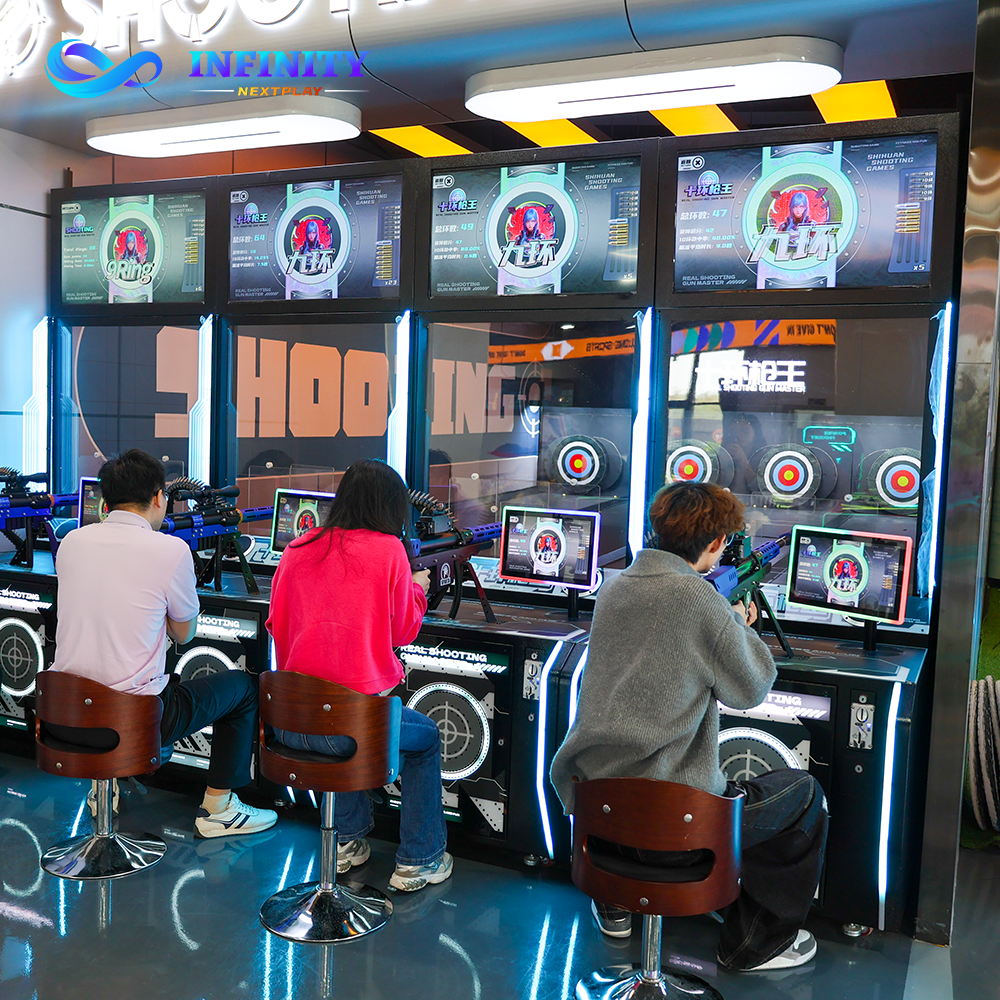
A walk-in session is won or lost at the counter: pay, play, no explanation needed. The stations that deliver that are compact, self-explanatory and short - which is exactly the published profile of the highest per-square-meter earners in a multi-attraction floor. Three formats carry the walk-in wall:
Walk-in geometry matters as much as the hardware: the bay wall belongs near the entrance, visible from the street side of the counter, so the passing guest sees play - not equipment. The published walk-in placement logic (the where to put a baseball simulator for walk-ins piece) generalizes: stations earn where passing traffic meets sightlines, and they starve behind doors and corners.
The booked side of the hall is one asset and one calendar. The asset: a multi-sport court - the published multi-sport simulator primer covers the format and its mode list - flanked by a golf line such as the AR golf simulator for the swing crowd. The calendar: parties on weekends, corporate events on weekdays, leagues on the dead evening - each one pre-paying the court, a block of bays and the bar in a single booking.
The published planning and revenue guides make the booked engine modelable: the multi-sport zone planning guide sizes the court and its clearances, and the zone revenue model prices the session mix - court hours at the anchor rate, bay blocks attached, bar attach riding on both. A hall that treats parties as its margin engine plans them into the floor: a party route that touches the bay wall, the court and the bar in one loop sells all three layers without staff choreography.
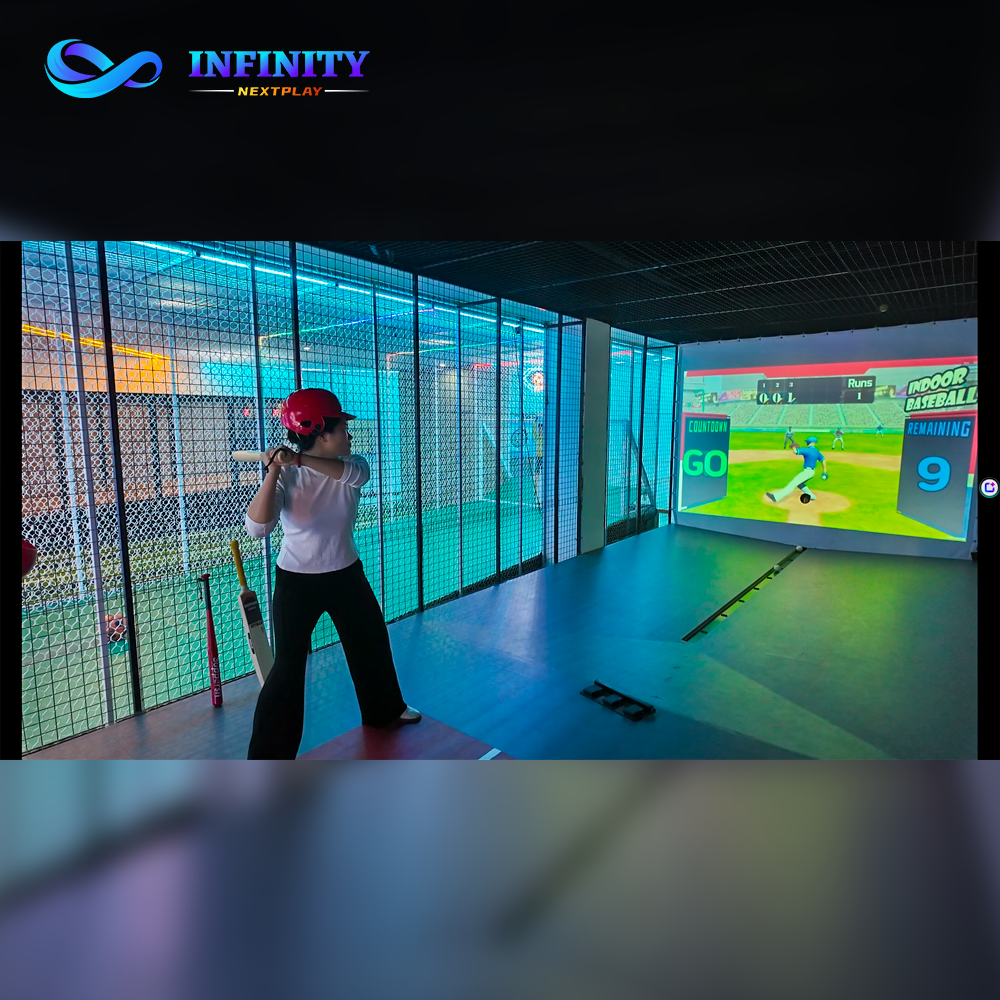
The baseball option deserves its own line when the local market swings a bat: the immersive baseball batting simulator is the strongest single-sport magnet in the compact line, and the published indoor baseball profitability guide prices the zone. As a booked-party anchor for the afternoon slot it frees the court for evening leagues.
The pricing table keeps the two clocks honest: walk-in bays price per short session, the court prices per hour with a minimum, and packages bundle the two for groups who want both. The failure mode is cross-subsidy by accident - a flat hourly rate that makes the darts wall feel expensive, or a per-play rate that undersells a booked court hour. The published per-square-meter comparisons (and the social-format logic the duckpin bowling pair is priced by) all point the same direction: price the station by what it turns over, not by what it cost.
| Clock | Pricing unit | What it protects | The trap to avoid |
|---|---|---|---|
| Walk-in bays | Per short session | The fast queue at the counter | Hourly pricing that punishes an 8-minute game |
| Anchor court | Per booked hour, minimum applies | Guaranteed capacity and staffing | Per-play pricing that undersells peak hours |
| Parties / events | Package: court + bays + bar | The margin that pays the rent | Discounting the bundle into three separate sales |
| Leagues | Per season seat | Weeknight utilization | Free play that trains guests to expect it |
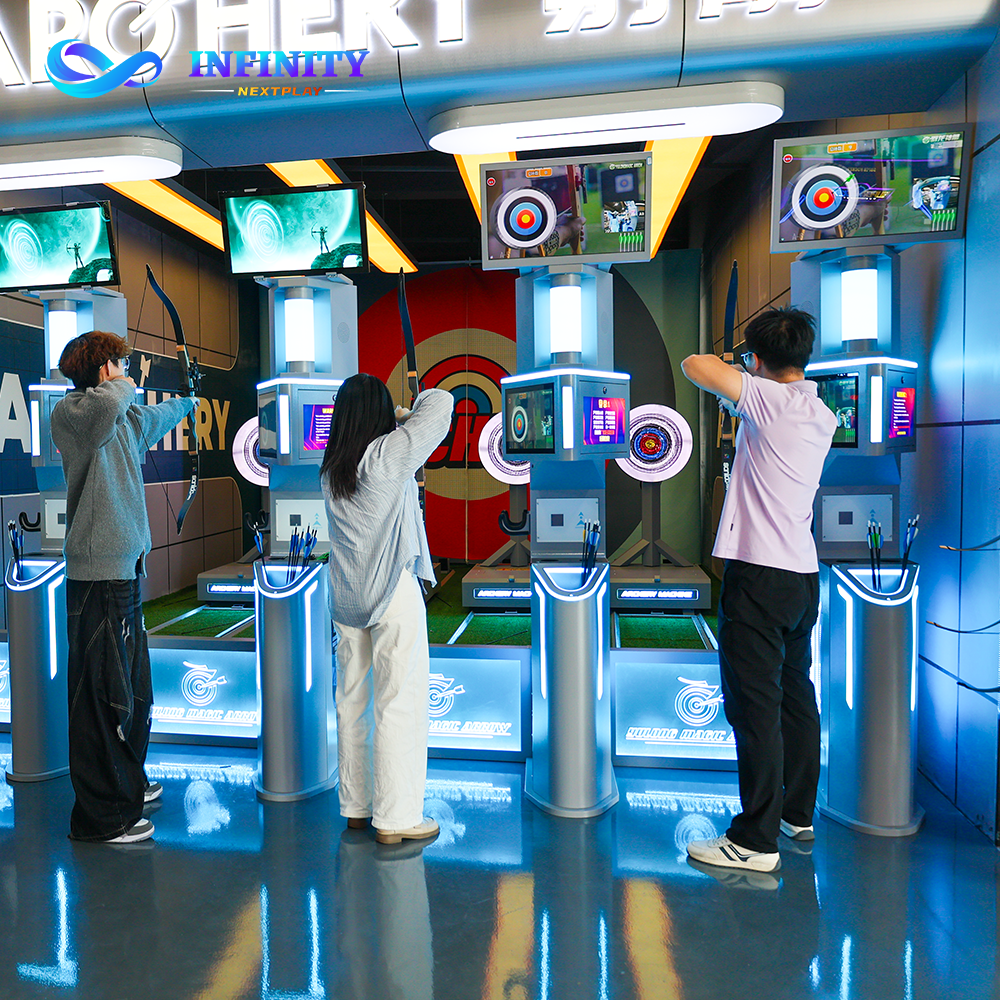
League nights deserve the pricing note: the published darts-league pattern converts the quietest weeknight into a season of guaranteed revenue by selling seats, not sessions. The same season-seat logic ports to shooting and archery leaderboards without new hardware.
One floor can serve both clocks when the rhythm is planned: mornings and early afternoons lean walk-in (school hours keep the court dark; the bay wall and the golf line carry the day), evenings lean booked (court sessions, leagues, the party block), and the bar bridges both. The published customer-journey guide for combined floors (the bowling, VR, golf and darts customer journey piece) maps the routing: walk-ins meet bays at the entrance, booked groups rotate court-first, and every route passes the counter twice.
Staffing follows the rhythm rather than the stations: one host can run the walk-in wall during the quiet hours the court is dark, and the booked hours add a court operator and a bar hand. The LED floor - the interactive LED floor - is the rhythm glue: it needs no operator between events, it absorbs the walk-in overflow, and it converts to the party surface when a booking lands.
The sportainment pattern page (the sportainment overview) shows full floors built on this two-clock rhythm, and the free 3D layout design service marks the walk-in sightlines, the party loop and the court calendar zones on your actual plan - the test that turns the ratio from a spreadsheet into a floor.
Plan the majority of stations for walk-ins: compact bays - darts, shooting, archery - sell short sessions without a reservation, and they are what keeps the hall earning on a quiet Tuesday. One anchor court plus the party calendar carries the booked side. If walk-ins cannot start a session in under a minute, the floor is over-booked by design.
By time and by geography: the anchor court runs booked sessions on the clock while the bay wall serves walk-ins continuously, and the two zones sit far enough apart that a waiting walk-in never watches a private party play. The published customer-journey guide shows the routing; the queue beside the bar converts waiting time into spend.
The published revenue model for a multi-sport zone walks the math per session: booked court hours at the anchor rate, plus the bay queue that never stops between them, plus bar attach on both. Run your own numbers through the guide; the mix in this article is built to maximize the utilization those numbers depend on.
Price walk-ins per short session and booked time per hour with a minimum - the two audiences value different things. Walk-ins buy immediacy; booked groups buy guaranteed capacity and service. The published per-square-meter comparisons show why compact bays price per play while the anchor court prices per hour.
A named score to beat and a reason to come back: leaderboards on every bay, league nights on darts, season leaderboards on the court. The published interactive-darts analysis shows named scoring driving repeat visits; the same mechanic applies to every station in the hall.
They are the margin: a booked party fills the anchor court, pre-pays the bay block and eats at the bar - one booking stacks all three layers. The walk-in floor keeps the hall alive between those bookings; the party calendar is what pays the rent.
The free 3D layout design service marks the walk-in sightlines, the party loop and the booked-court zones on your actual plan - before the order list is written.