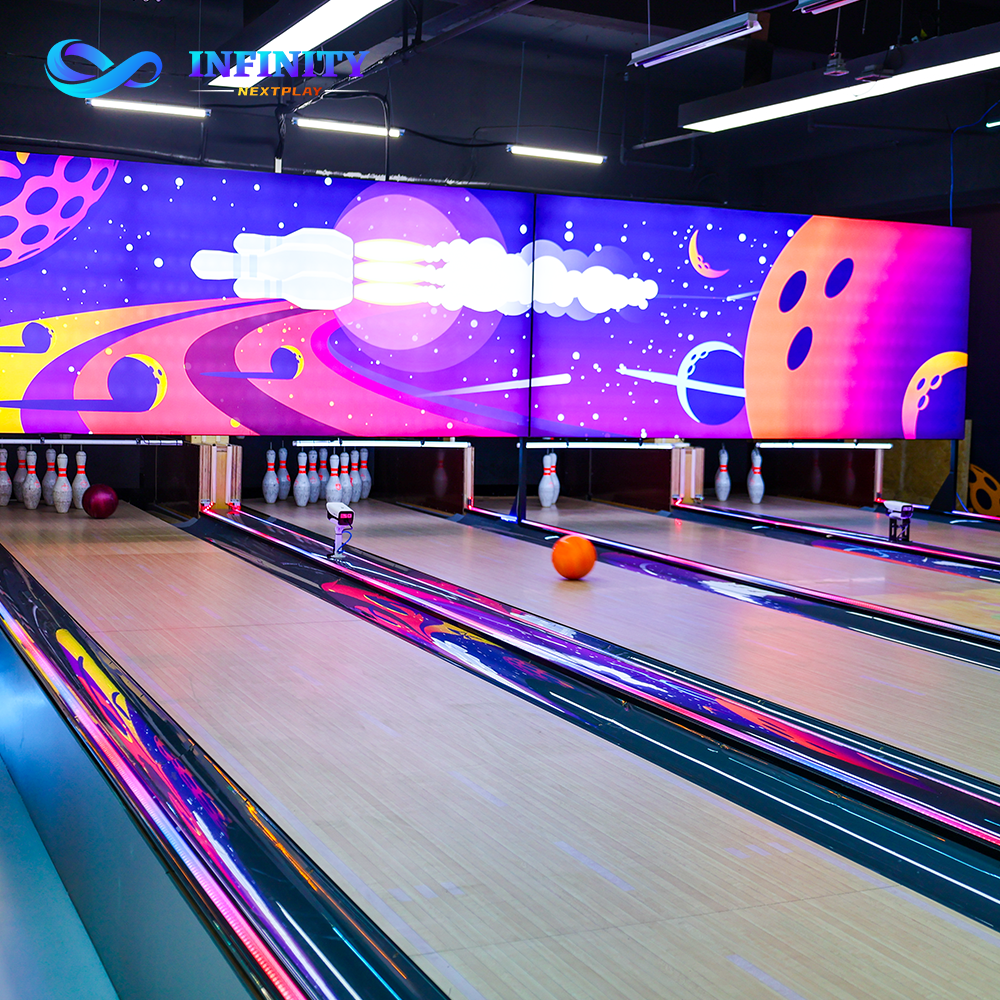
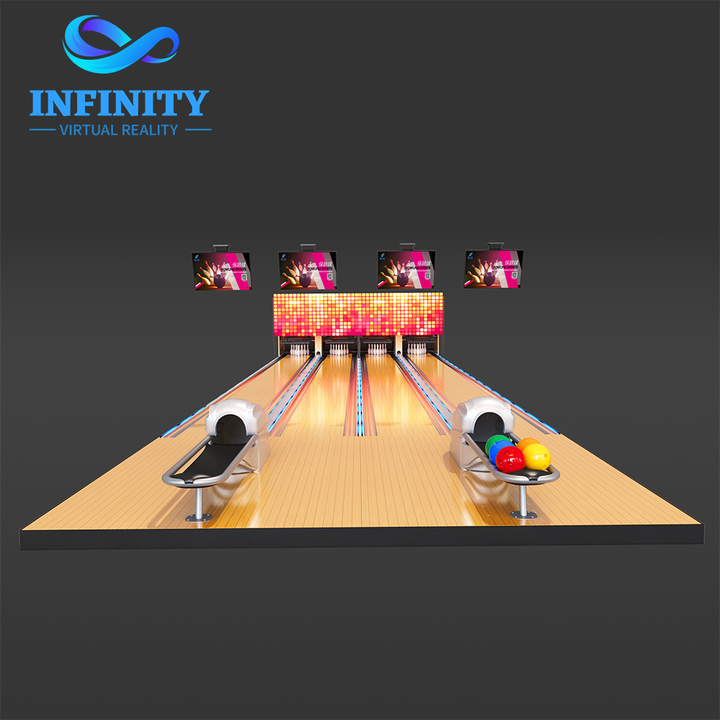
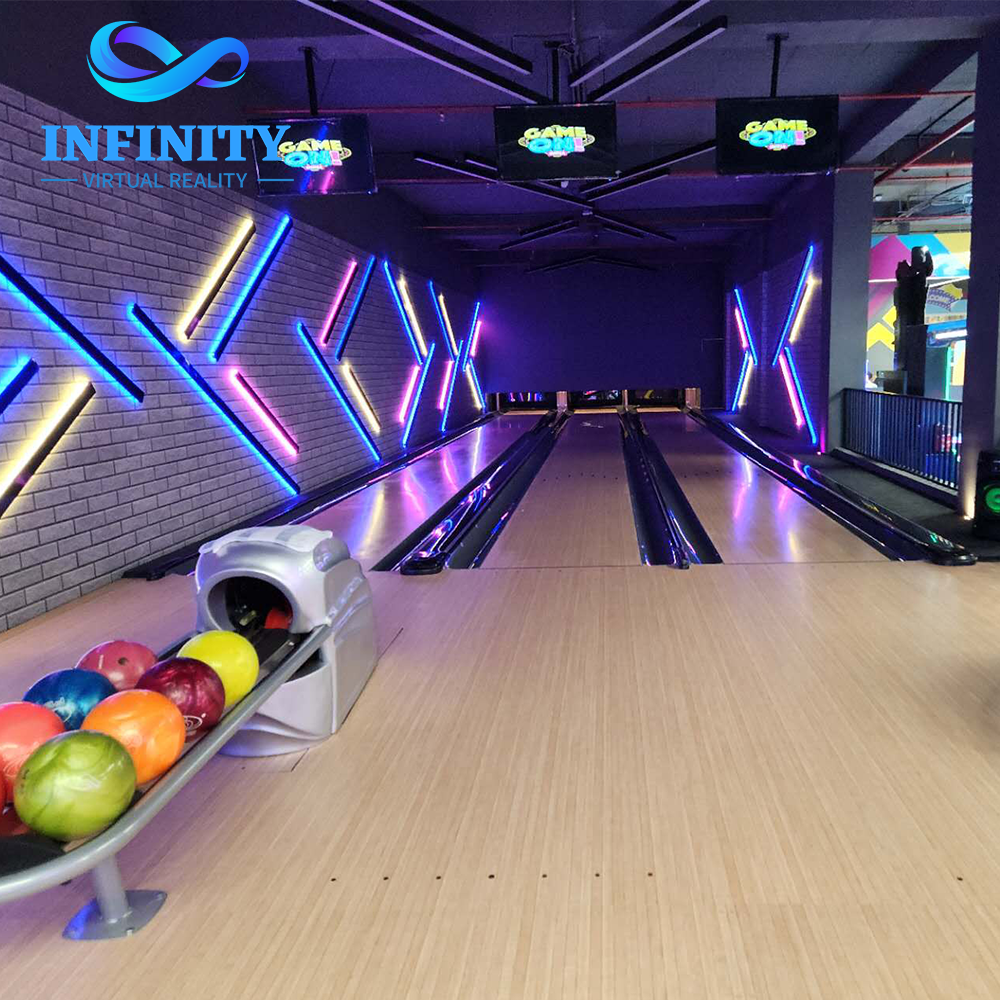
The per-lane arithmetic across the three commercial formats: the published 26m 10-pin, 9.7-13m string and ~14m duckpin spines, the three-zone room around them, and the seating share that turns lane-hours into second-hour revenue.
A commercial bowling alley is bought as lanes and opened as a room: the lane is a fixed-length machine, and the room - approach, seating, circulation, the machine end - is what the lease actually prices. Asking how much space a bowling alley needs is therefore a format question first: the standard 10-pin lane runs about 26 meters (published spec), the 2-lane string turnkey compresses to roughly 9.7-13 meters per lane, and duckpin needs about 14 - three formats, three buildings. This guide sizes each, zone by zone, with the per-lane arithmetic a buyer can run on a real floor plan before signing anything.
The anchors, so every dimension below has a home: the published product specs (26-meter 10-pin, 9.7-13-meter string, 14-meter duckpin), the duckpin format's $45 per lane-hour (published), the string pinsetter's up-to-75% maintenance cut (published), and the $88-135 per-square-meter monthly ceiling that judges the room. The format-level comparison - duckpin vs 10-pin vs string as products - is the published duckpin format guide's subject; this guide stays on the floor plan.
Lane arithmetic, with its basis stated: the published lane lengths (26m / ~9.7-13m / ~14m) are the fixed spine of any plan, and lanes sit side by side at 3.5-4.2 meters of width per lane pair plus gutters - the machine end adds 1.5-2.5 meters depending on pinsetter type. Around the lanes, the room needs three zones: the approach and ball-return strip, the seating-and-table band (the part that earns the second hour), and the circulation that never crosses a live lane. The zone splits below are a worked planning frame (EXAMPLE) anchored to the published specs.
| Format | Lane length (published) | Working envelope per lane (EXAMPLE) | The room it implies |
|---|---|---|---|
| 10-pin international | ~26m | ~150-190m2 all-in per lane with seating | Sports centers, large FECs - the destination |
| String 2-lane turnkey | ~9.7-13m | ~40-60m2 all-in per lane | Retail boxes, entertainment centers |
| Duckpin | ~14m | ~45-65m2 all-in per lane | Bars, hotels, boutique venues |
The 1,000-square-meter case shows the blocks assembling: at the published 1,000m2 plan's zoning, bowling takes the deep end of the floor while seating, bar and side attractions wrap it - the published 1,000m2 lane-count guide runs the lane-by-lane arithmetic in full. The pattern holds at every scale: lanes are the spine, but the seating band is where the dwell - and the second hour of revenue - lives.
The vertical and service checks complete the plan: clear height over the full lane run (no soffits over the pin end), power and ventilation at the machine end, and maintenance access behind it - the annual cost of that access the published lane-maintenance cost guide prices, and the string pinsetter's up-to-75% cut (published) is partly a space decision: string machines need less of the room behind the deck.
Circulation rule: guests flow one way through the bowling zone - shoes and ball pick-up at the entry side, seating along the lanes, and no passing path between a live lane and its scoring console. The seating band does the earning: groups book lane-hours and spend them at the table, which is why the bar-adjacent layouts earn more per lane than the corridor layouts - the pattern the published duckpin-for-bars guide prices at two-lane scale and the bar-combination guide extends.
The revenue geometry, with its basis stated: a duckpin lane books $45 per lane-hour (published) from roughly a 14-meter spine; a string lane compresses further; and the 10-pin lane trades 26 meters of depth for the full-format destination pull. Judged against the $88-135 per-square-meter ceiling, the string and duckpin envelopes carry the duty comfortably at moderate utilization - the arithmetic the ROI guide in this series runs in full. Concrete scenario (EXAMPLE): a 200-square-meter box plans a 4-lane string room at 10-13-meter depth with a 30-40% seating share - the layout the free 3D layout design tests before the lease does.
The multi-attraction note the geometry implies: bowling rarely stands alone - the seat-format neighbors (chairs at 4-6 square meters, the published FEC chair space guide's subject) and the side attractions wrap the deep end, the pattern the published attraction-mix study prices at mall-atrium scale.
Who it is for: the buyer holding a candidate building and a bowling ambition - the checklist is lane length first (26 meters is rarer than buyers think), machine-end access second, seating depth third. The duckpin play fits buildings the 10-pin format cannot; the string turnkey is the bridge between them, and the published duckpin rules guide explains why the smaller format scores higher for beginners - a demand argument that shows up in lane-hour bookings.
Where it fits: run the per-lane envelopes above on your plan, count the lanes the depth allows, and hold 25-35% of the zone for seating before the lane count is final. Close the loop the practical way: format by lane length, zone by the splits above, and test the room through the free 3D layout design - the space test is the cheapest line item in the whole project.
The playing surface plus approach and pin deck brings a standard international 10-pin lane to about 26 meters as shipped - the published spec for the full venue set. String and duckpin formats shorten that: the 2-lane string turnkey runs roughly 9.7-13 meters per lane, and duckpin about 14 meters.
In the string format, four lanes plan near 10-13 meters of depth with 3.5-4.2 meters of lane width plus seating - roughly 150-220 square meters all-in with the seating band and circulation (EXAMPLE frame). In 10-pin the same four lanes demand around 26-meter depth, which most retail boxes cannot give.
The published 1,000m2 plan fits bowling as a zoned anchor with seating, bar and side attractions - the lane count depends on format and the share bowling takes. The full lane-by-lane arithmetic is the published 1,000m2 guide's subject; this guide supplies the per-lane building blocks it assembles.
Lane environments want clear height over the full lane run - low soffits and sprinkler drops over the pin end cost usable length. The vertical check belongs with the lease math, the same way the chair formats check rotation envelopes before signing.
Duckpin: about 14 meters per lane, smaller balls, no shoe-and-ball-return scale - the bar-and-boutique format that books $45 per lane-hour in published use. The string turnkey is the middle step, and 10-pin is the destination format for sports centers.
Per lane-hour it competes well - the duckpin format books $45 an hour from roughly 14 meters, and string lanes cut the footprint again. The honest comparison runs revenue per square meter against the $88-135 ceiling, which the attraction-mix study prices across formats.
Send us your floor plan and lane-length question: we will return the format fit, the zone splits and the lane count through the free 3D layout design - anchored with the Standard 10-Pin Alley, the 2-Lane String Turnkey and the Duckpin Bowling System.