Entry-level commercial adult bowling lanes start at around $12,000 per lane for a compact turn-key string or duckpin format, while a full international-standard 26 m 10-pin lane in a turn-key project typically lands much higher once lane, pinsetter, scoring, installation and site work are added. That wide range is not a pricing quirk: bowling is not one product. The three commercial formats on the market today, standard 10-pin, string-pin bowling and duckpin, have completely different lane lengths, pinsetter systems, space needs, installation depth and running costs, so the right question to ask before ever comparing prices is: which format does your venue, your building and your customer base actually need?
This guide is written for venue owners, investors and operators who want to add adult bowling to a sports center, family entertainment center, bar, hotel or club. Instead of giving one number and stopping, it walks through the real cost structure, compares the three formats on the same grid, and then maps each format to the venue types where it earns its keep. By the end you will know what a bowling lane really costs in your situation, which format fits your space, and which costs only appear after the equipment is installed.
The quick answer for budgeting is two numbers, not one. The equipment itself, meaning the lane, pinsetter, scoring and the core components you see on a quote, can start as low as roughly $12,000 per lane for a compact format, with premium and larger-scale installations rising proportionally as lane count, finish and services grow. The second and often larger number is the installed project cost: turn-key two-lane projects in the 2026 industry guides commonly range from the high five figures into the low six figures, and large multi-lane builds scale further from there. Budgeting with only the equipment number is how venues underestimate a bowling project by 40% or more, so both numbers matter.
The decision framework used in this article is deliberately simple: pick the format first, then the price. Space and ceiling decide string versus 10-pin. Your customer mix and bar revenue decide whether the social, food-and-beverage friendly formats beat the competitive sport format. Budget and retrofit conditions then settle the final configuration. This sequence prevents the most common mistake in the industry, which is falling in love with a price per lane and then discovering the chosen lane physically does not fit the building.
A commercial bowling lane is not a single machine; it is a package of specialist components, and each one carries its own price. When you ask how much a lane costs, the honest answer is that the total is built from the lane assembly, the pinsetter mechanism, the scoring and display system, ball returns and gutters, the approach surface, and then installation, site preparation, electrical work, freight and often permits. Knowing the structure matters because two quotes for the same lane count can differ hugely depending on which of these components the supplier actually includes.
| Component | Typical Role in Adult Bowling | Where the Money Goes |
|---|---|---|
| Lane assembly | The playing surface from approach to pin deck | Material quality, length (26 m standard vs 9.7-13 m compact), sub-flooring |
| Pinsetter | Sets pins and clears fallen pins after each ball | Free-fall vs mechanical string design, cycle speed, reliability |
| Scoring system | Tracks frames, displays scores, runs games | Display size, software, lane-turnover features |
| Ball return & gutters | Returns the ball and directs off-line balls | Accelerated vs gravity return, durability |
| Approach + laneside | The area players walk on and the surround | Surfacing, spacing between lanes |
| Installation & site work | Deliver, lift, assemble, wire and commission | Labor, foundation depth, ceiling access, electrical |
In the 2026 commercial cost guides, two-lane turn-key bowling projects are typically quoted from roughly $86,000 on the low end for a basic synthetic setup up to about $260,000 or more for premium equipment and complex builds, which works out to roughly $43,000 to $130,000 per lane depending on format, components and site conditions. Large new-build facilities with eight to twenty lanes and full venue build-out scale from around three million upward because the shell, seating, bar, kitchen and services dominate the project, not the lanes themselves. These ranges come from current industry planning guides and are the realistic anchor for an installed lane.
For a venue operator the practical way to read these numbers is to separate the compact formats from the full-standard format. The compact formats in the next section, string and duckpin, use shorter lanes with a shallower foundation of around 20 to 23 cm and lowered ceiling requirements, which directly reduces the building work inside an existing building and is why they are the retrofit-friendly options. The full 26 m 10-pin lane is the sport-standard product for venues that can dedicate the space and want the authentic competitive experience. The price anchor of this article, entry-level lanes starting at around $12,000, sits at the compact end of that range before installation and site work.
All commercial bowling lanes do the same thing on the surface: a player rolls a ball and a machine resets the pins. Below that surface the three formats differ in lane length, pinsetter technology, maintenance profile and atmosphere, and those differences decide which product belongs in which venue. The comparison table below puts them side by side on the points that matter for a purchase decision.
| Feature | Standard 10-Pin | String Bowling | Duckpin |
|---|---|---|---|
| Lane length | 26 m international standard | 9.7 - 13 m compact | Compact, shorter than 10-pin |
| Pinsetter | Free-fall (traditional) type | Mechanical string system | Compact pinsetter |
| Foundation | Full-depth lane pit area | About 20-23 cm, retrofit friendly | About 20-23 cm, retrofit friendly |
| Best fit | Sports centers, large FECs | Bars, hotels, retrofit venues | Bars, boutique venues, small spaces |
| Atmosphere | Competitive sport | Social, lounge-friendly | Casual, social, novelty |
| Maintenance | Higher | Lower (mechanical string) | Lower |
| Sound | Traditional pinsetter sound | Quieter operation | Quieter operation |
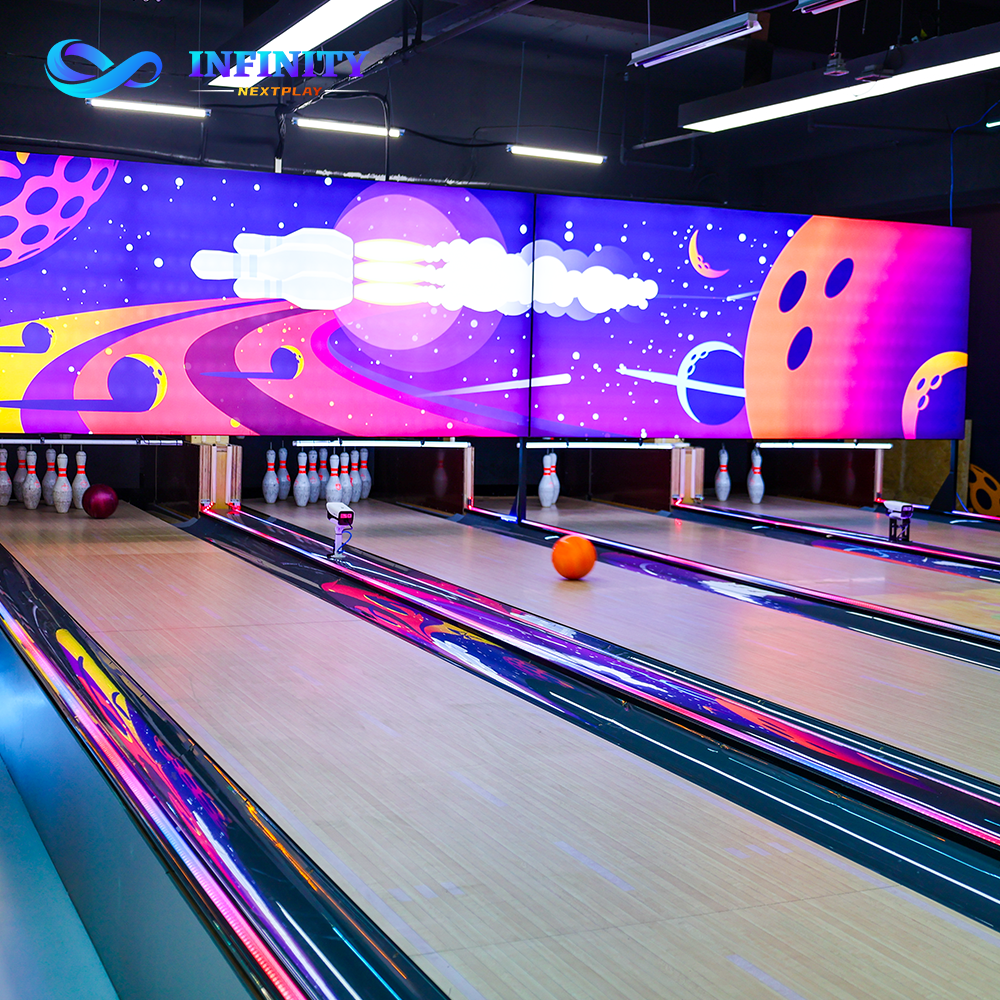
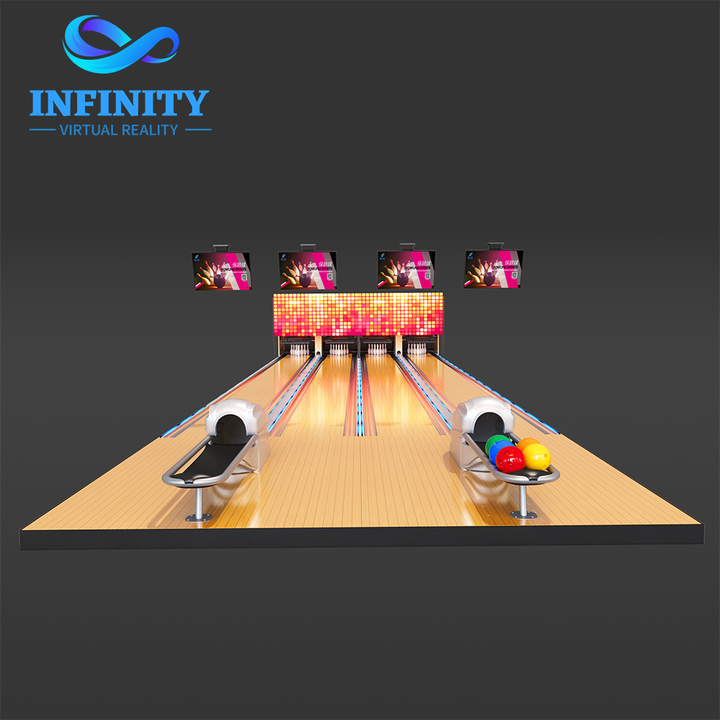
The Standard 10-Pin Bowling Alley is built to the international 26 m standard lane length and is the format used in competitive and league play. It delivers the authentic bowling experience that players expect from a real sports venue: full-length lanes, a traditional free-fall pinsetter, professional scoring and the familiar sights and sounds of a dedicated bowling center. For a sports center or large family entertainment center that wants bowling to be a proper anchor attraction rather than a novelty add-on, the 26 m standard format is the product that carries leagues, tournaments and repeat competitive play. The trade-off is the space and building work it demands, because a 26 m lane needs the full pit depth, full ceiling clearance and the structural approach of a classic bowling hall.
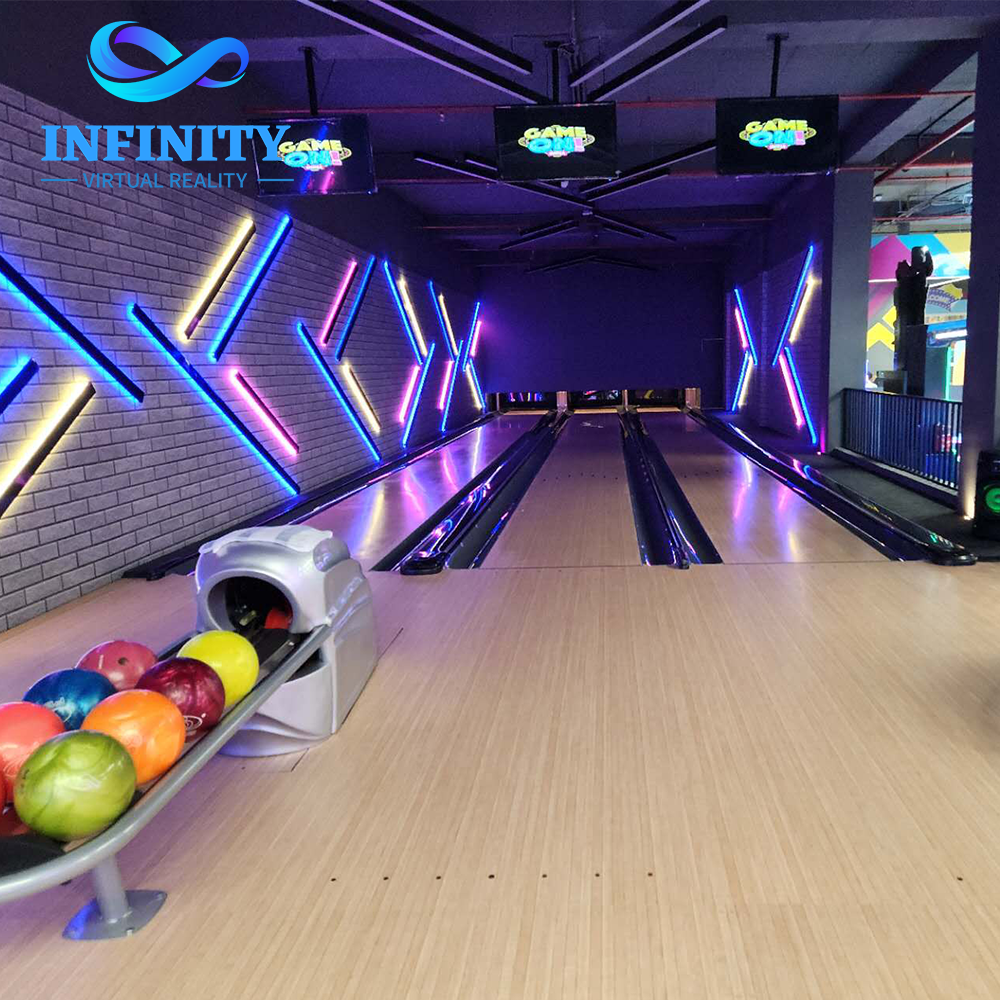
The Commercial 2 Lane String Bowling system uses mechanical string pinsetters attached to each pin, which is a USBC-sanctioned competition format since 2023 and a proven modern alternative for commercial venues. Because the strings carry and reset the pins, the system needs a much shallower 20 to 23 cm foundation and a lower ceiling compared with a free-fall 26 m lane, and it runs quieter, which matters in a bar or hotel lounge. For operators the practical benefits are lower maintenance from the mechanical string system, simpler installation inside existing buildings, and faster install cycles, which is exactly the combination a retrofit venue needs when it cannot dig a full pit or raise the ceiling. The shorter 9.7 to 13 m lane also concentrates play in a smaller footprint, which raises the play density per square meter of floor.
Duckpin bowling uses smaller balls without finger holes and shorter, lighter pins, which makes the game feel approachable for casual players and groups who would never try a league night. The Duckpin Bowling System is positioned for bars, hotels and boutique venues that want bowling as a social magnet: it occupies a compact footprint with the same shallow foundation and lowered ceiling benefits as string, and it is the format that reads most strongly as fun rather than sport. Duckpin is a strong choice when the goal is casual competition, extended guest stay and bar sales rather than running a competitive bowling league.
Format decision is a building and customer decision before it is a price decision. The checklist below runs through the main venue types and the bowling format that fits their constraints and their customer expectations, based on the geometry of each product and the operating profile that has proven to work in each setting.
The single most useful measurement before any format decision is the available lane length in the building. If the space allows a full 26 m run with proper pit depth and ceiling clearance, standard 10-pin is on the table and the sport-standard benefits apply. If the run is shorter, or the floor above is occupied, a string or duckpin lane with its 9.7 to 13 m length and 20 to 23 cm foundation is the practical route. Measure the room, the doorways, the ceiling and the floor-to-floor heights before contacting suppliers, because every format decision flows from those numbers.
Customer mix reinforces the building decision. A venue serving adult groups, couples and office parties benefits from the social formats because the game stays approachable for mixed-skill groups and drives table revenue between turns. A venue serving a committed bowling crowd needs the competitive 10-pin format to hold leagues and event bookings. Many successful installations start with a compact format as a lower-risk pilot, prove the demand, and later add a full 10-pin lane when the space plan justifies it.
Space planning is where most bowling projects get decided or die, and the numbers are very different between the two equipment families. A full 26 m standard 10-pin lane needs the full lane run, the pin pit at the far end, a clear approach and a foul-line zone, plus ceiling clearance for the pinsetter and the ball-return run. On top of that you need laneside seating, circulation space and the room for players to move between lanes. That is why a single 10-pin lane competes for serious floor area in any venue plan.

The compact formats change that arithmetic. A string or duckpin lane runs 9.7 to 13 m instead of 26 m, needs a foundation of around 20 to 23 cm instead of a full-depth pit, and keeps the ceiling requirement low enough to fit inside finished commercial rooms. For an existing building, that is the difference between a feasible retrofit and a building project. The width side of the equation is more forgiving because lanes are modular: a two-lane setup with a shared ball return is a common, space-efficient configuration, and multi-lane halls are built by adding lanes side by side. This is also the reason compact formats are the realistic choice for bars, hotels and boutique venues inside shopping malls or renovated buildings, and why the sport arcade equipment collection is a practical starting point when you plan a multi-attraction floor around the lanes.
Operators who want to compare the compact options in more depth will find two dedicated guides useful: our complete guide to string bowling as a compact bowling solution covers the string-pin product in detail, and the guide to building a complete bowling entertainment zone across 10-pin, duckpin and string shows how venues mix the formats into one operation. Both are written from the operator side, using the same cost, space and maintenance anchors as this article.
| Planning Item | Standard 10-Pin | String / Duckpin |
|---|---|---|
| Lane run length | About 26 m | 9.7 - 13 m |
| Foundation / pit | Full-depth pit area | About 20-23 cm foundation |
| Ceiling requirement | Full clearance for pinsetter | Lower, retrofit friendly |
| Typical first install | Dedicated hall or large venue | Bar, hotel, event room, mall unit |
| Ball return | Standard returns per lane or pair | Shared return typical for pairs |
Three site checks protect every bowling purchase. First, measure the actual corridor and doorway route from the delivery point to the install position, because a lane assembles from long sections that need a continuous path. Second, confirm the floor load and level, because even a compact lane carries significant weight and a level, load-rated base avoids settlement and mechanical issues. Third, verify power and services at the lane position, including enough circuits for scoring, returns and lighting, and plan the maintenance access around the pinsetter and pit area. These checks are cheap to do and expensive to skip, and they apply to every format in this article.
The installed price buys the lane; the operating cost decides whether it stays profitable. Bowling equipment has a genuine, predictable running cost every month: the pinsetter wears, the lane surface needs periodic oiling and resurfacing, balls and returns need servicing, and the scoring software and hardware need updates and occasional repairs. Industry guides commonly budget lane and pinsetter maintenance at a few hundred to a few thousand dollars per year per center depending on scale and usage, and high-volume halls plan a larger share of core revenue for upkeep of lanes, pinsetters and returns. The format choice directly changes that number.
The mechanical string pinsetter is the largest operating-cost difference between the format families. String pinsetters are simpler mechanisms than free-fall pinsetters because each pin hangs on its own string and the strings lift and lower the pins instead of a complex distributor, sweeper and spotting assembly doing the work. Operators of compact installations typically describe the string system as materially lower maintenance, quieter in operation, and free of the need for a dedicated full-time pinsetter mechanic that a conventional tenpin hall keeps on staff. For a bar or hotel running one or two lanes, that difference is the whole difference between an attraction and a cost center.
The other running costs are the same for every format but scale with volume. Lane oiling protects the surface and keeps play consistent; ball and shoe maintenance keeps the guest experience clean; and power consumption follows the pinsetter and lighting choices, where the compact formats draw less than a full hall. Staffing is usually shared with the venue: one attendant can run lanes, returns and scoring and sell shoes and food from the same position, and in a bar or hotel the lane is often self-serve with the existing floor staff covering it. Budget apprentice-level figures for consumables and parts on top of the energy cost, and ask every supplier for their recommended annual spares and service kit before you sign.
A practical way to model operating cost is as a percentage of revenue rather than a fixed budget. Operators planning a bowling line commonly reserve a share of lane revenue for maintenance and parts, so the more the lane earns, the more the upkeep budget can be. Booking regular seasonal service for the pinsetter and lane surface is still necessary: risk of over-reporting cost comes mainly from deferring service until something fails, which turns a small scheduled job into an urgent replacement bill.
The commercial case for adult bowling rests on three revenue levers: lane time sold, food and beverage at the laneside, and extended guest stay. A bowling lane sells time directly, by the game or by the hour, and because a lane keeps a group occupied for far longer than a single arcade machine, the per-visit spend naturally grows. In social venues the lane is also a premium anchor that supports league nights, corporate event bookings, parties and late-evening group demand, all of which stabilize revenue against the off-peak hours of a pure arcade.
| Revenue Lever | How It Works | Why It Matters |
|---|---|---|
| Lane time / games | Charge per game or per hour per lane or per person | Direct, predictable sale; group size multiplies it |
| Food & beverage | Drinks and food sold while players wait and watch | Bar and hotel formats carry lounge pricing |
| Events & leagues | League nights, parties, corporate bookings, tournaments | Fills off-peak slots and builds repeat customers |
| Guest dwell time | Groups stay 45 minutes to 3 hours per visit | Raises spend per visit and word-of-mouth |
Revenue examples from operating venues show what the format can do. A hotel lounge running two string lanes reports tens of games per day at a modest per-game price per person, which translates into meaningful daily lane revenue on top of the bar spend it drives. A compact string setup in a family venue is described as paying back in a few months on the revenue lift alone, and a 10-pin anchor in a family entertainment center is credited with turning a short visit into a multi-hour stay that raises the ticket from fast-food territory to a full meal-plus-entertainment spend. The common thread is dwell time: the lane keeps a group on-site long enough for the second transaction to happen.
Use a simple payback model before ordering. Estimate your achievable daily sales from the lane at a realistic average (lighter on weekdays, heavy evenings), add the food and beverage uplift per visit, subtract the monthly operating cost including maintenance and staffing share, and divide your installed investment by the monthly net. For a compact single-lane format with an entry-level equipment price around $12,000 plus a modest install, the math is often remarkably short; for a full multi-lane hall-style installation, the payback horizon is longer but the absolute return is larger. If the number does not clear your venue target, change the format, the pricing or the lane count before you spend, not after.
Every mistake on this list traces back to the same root cause: treating bowling as one product quoted in price per lane instead of a family of formats that differ fundamentally in space, building work, atmosphere and running cost. If you keep the format decision first, the installed-cost check second, and the building survey before signing, the probability of a cost surprise drops dramatically. And if a supplier cannot tell you exactly what is included in their price per lane, that is itself a red flag worth acting on.
Entry-level compact commercial lanes start at around $12,000 per lane on equipment, while installed project costs for two-lane turn-key setups commonly range from roughly $86,000 on the low end to $260,000 or more depending on format, components and site conditions. Large multi-lane hall builds scale much further. Always compare the full installed total, not just the equipment price.
The compact formats, string bowling and duckpin, are the low-cost entries on equipment, installation and monthly running cost, because their shorter lanes, 20-23 cm foundation, lower ceiling needs and simpler mechanical pinsetters cut both the build work and the maintenance burden. A full 26 m standard 10-pin lane carries higher equipment, building and upkeep costs.
Yes. String-pin bowling is a sanctioned competition format, and it is widely deployed in modern commercial venues because the mechanical string pinsetter is quieter, simpler and lower maintenance than free-fall designs while still scoring and resetting regulation-style pin layouts.
Standard 10-pin needs about a 26 m lane run plus approach, pit depth and ceiling clearance. Compact string and duckpin systems run 9.7-13 m with about a 20-23 cm foundation and lower ceilings, which lets bars, hotels and mall units host them in rooms a full lane never could.
Pinsetter service, lane oiling and periodic resurfacing, ball-return and ball maintenance, and scoring hardware and software upkeep. Budget a running line for parts and service; purchase the supplier recommended annual spares kit, and book seasonal service instead of waiting for failures.
For most bars, string bowling is the practical fit: compact lane length, shallow foundation, quieter operation, lower maintenance and no full-time mechanic requirement. Duckpin is an even more casual, novelty-driven choice for boutique venue positioning. A 26 m 10-pin lane belongs to dedicated sports centers and large FEC halls.
Yes, with planning. Lane layouts are modular and lanes are typically added side by side, so if you reserve the space and services early, you can pilot one or two lanes and expand later. Confirm with the supplier that the chosen format supports staged expansion.
With compact string or duckpin formats, generally no: the mechanical pinsetter is designed for low-maintenance operation and venue staff can cover it with training and a spares kit. A full 26 m 10-pin hall traditionally keeps dedicated maintenance staff because of the higher volume and more complex pinsetter.
Adding adult bowling to a sports center, bar or hotel? Share your available space, ceiling height and target audience, and our team can help you compare the format and configuration that fits your building and budget.