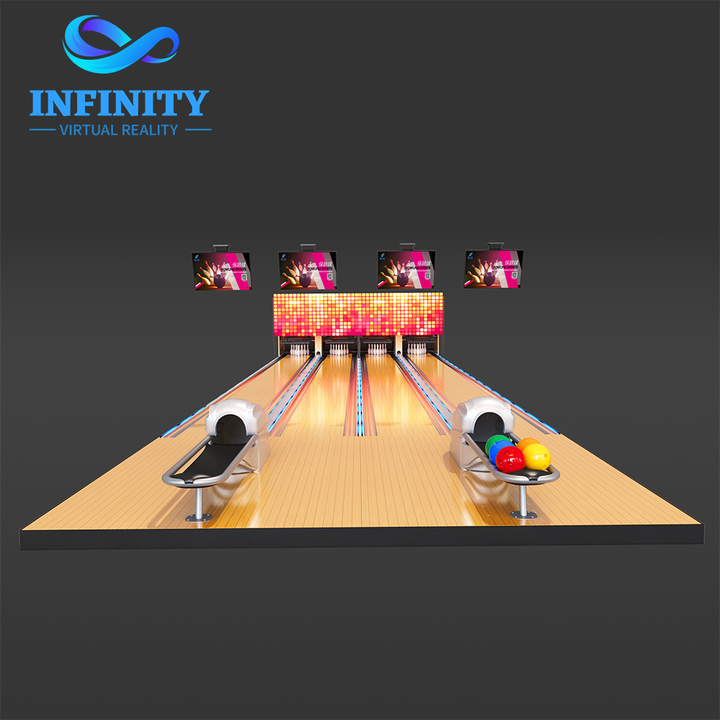
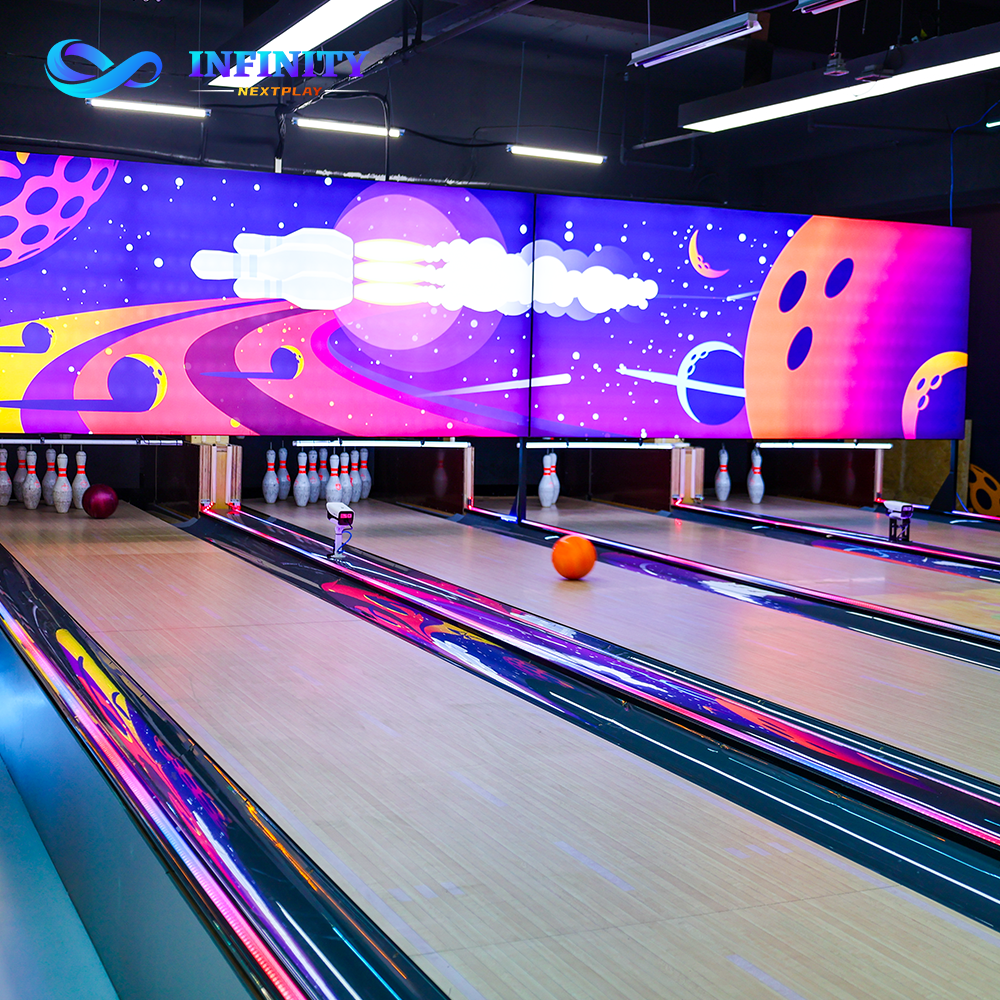
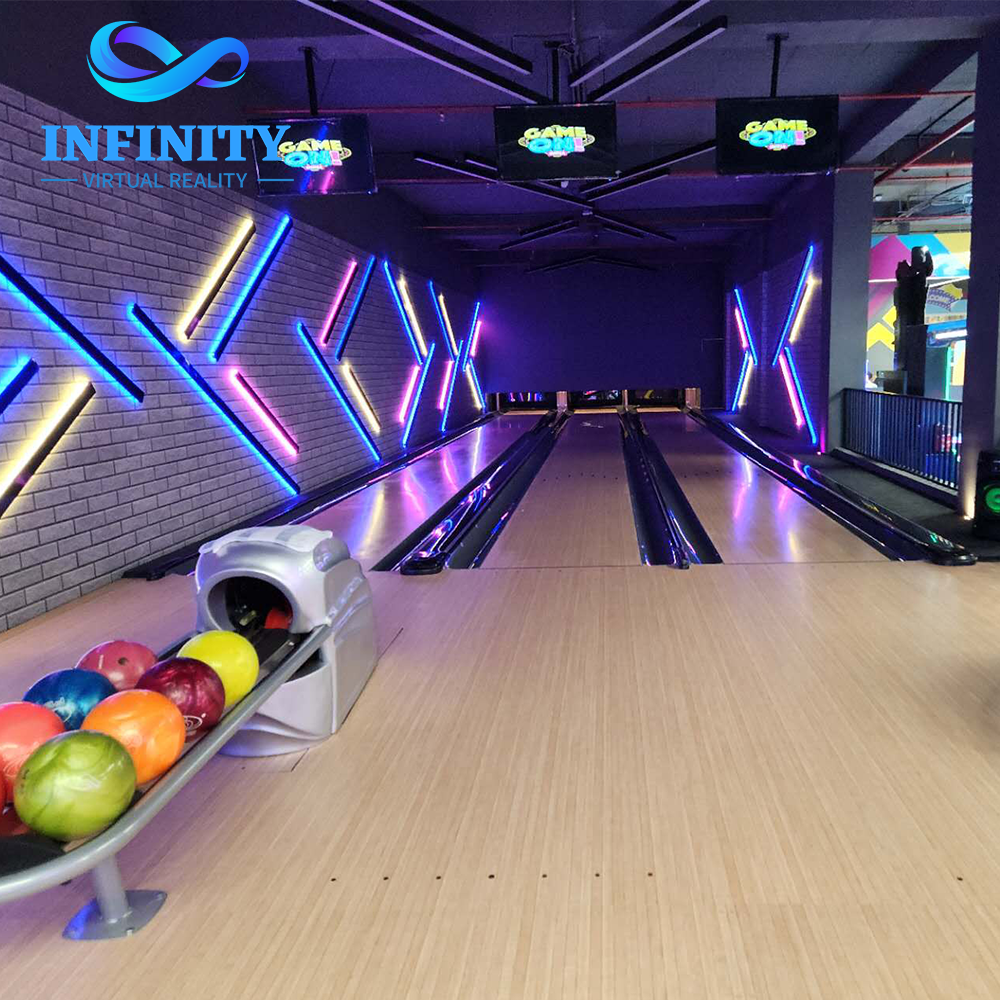
The build cost in four stacks: $12-25K (string) or $35-80K (ten-pin) equipment per lane, the building works around the lanes, the 25-35% front-of-house share, and the soft costs to opening day - wrapped in the published $80K-1.7M project envelopes.
Building a commercial bowling alley is a construction project with a sports-equipment heart, and the build cost is four stacks tall: the lane equipment, the building works that make the equipment installable, the front-of-house that makes lane-hours sellable, and the soft costs that get it all to opening day. The published complete cost guide prices the equipment stack per lane - $35,000-80,000 for a 26-meter ten-pin lane, $12,000-25,000 for a commercial string lane - and the whole-project envelopes from $80,000-150,000 for a two-lane string install up to $850,000-1.7 million for a twelve-lane family center.
The difference between the equipment number and the project number is where most budgets bleed: a two-lane string kit at the low end of the equipment band still lands at $80,000-150,000 installed, because freight, floor works, power, scoring integration and installation labor live between the crate and the first frame. The published buying guide walks the turnkey package scope; this guide prices the build around it.
Stack one, the lane equipment: lane surface and approach, pinsetter, ball return, scoring, masking, balls and pins. The published format guide (the format-cost comparison) anchors the entry point at roughly $12,000 per lane for a compact turn-key string or duckpin format and the sport-standard ten-pin lane much higher. Stack two, the building works: floor flatness across the full lane run, the 9.7-13 meter string or 26-meter ten-pin lane depth the published space guide dimensions at 3.5-4.2 meters of width per lane, power drops at the machine end, ventilation over the pin deck, and the rear service access the maintenance plan requires.
Stack three, front-of-house: seating lanes, food-and-beverage adjacency, the party rooms that fill weekday calendars, decor and signage. The published space analysis prices seating at 25-35% of the room - and that share is what converts lane-hours into second-hour spend. Stack four, soft costs: design and the free 3D layout design stage, permits, freight and on-site installation (the published turnkey install runs 5-7 days on site for a two-lane string room), staff training and the opening reserve.
| Build line (EXAMPLE frame) | Published anchor | What moves it | Watch-out |
|---|---|---|---|
| Lane equipment | $12-25K string / $35-80K ten-pin per lane | Format, brand, options | Scoring integration quotes vary |
| Building works | Scales with lane count and building age | Floor flatness, power, HVAC | Old slabs need leveling surveys |
| Front-of-house | 25-35% of room share (seating) | F&B ambition, party rooms | Under-seating kills second-hour spend |
| Soft costs | Freight + 5-7 day install (2-lane string) | Distance, crane access | Rear service access must precede fit-out |
| Project envelope | $80-150K (2-lane) to $850K-1.7M (12-lane) | All of the above | The gap between kit and project price |
Planning assumptions, stated: the table is an EXAMPLE frame that restates published anchors - line items beyond the equipment stack are planning categories, not vendor quotes, and the published cost guide carries the scenario spread by project scale.
The two-lane build ($80-150K): a compact string room in 9.7-13 meters of depth, the 2-lane string turnkey system as the hardware core, one shared staffing line and the bar next door. This is the build where turnkey scope matters most - delivery, on-site assembly and scoring commissioning in one contract, as the published buying guide specifies.
The six-lane boutique build ($250-600K): mixed formats, real front-of-house, the party calendar as a revenue line. The published lane-count analysis is the sanity check here - the sixth lane only pays if the calendar fills it. The duckpin bowling system earns its slot in these builds as the compact second format.
The twelve-lane destination build ($850K-1.7M): full ten-pin 26-meter standard bowling alleys, tournament-grade scoring, and a building that was chosen for the lanes rather than adapted to them. At this scale the build cost is dominated by the building, and the lane equipment - however large - is the predictable part.
Three lines carry the surprises. Floor works: a bowling lane is a flatness specification, and old slabs hide their true cost until the leveling survey - the deepest lane-run room in the building is not always the flattest. Machine-area services: power, ventilation and the rear maintenance access the published maintenance analysis treats as non-negotiable; retrofitting access after fit-out is the classic rework line. Opening reserve: staffing, marketing and the first slow months between installation day and calendar fill.
The turnkey counter-move is to compress the unknowns into one contract: the published turnkey package (delivery, on-site assembly, commissioning, training) exists precisely because the gap between the equipment quote and the working lane is where builds overrun. The 5-7 day on-site install for a two-lane string room is the published benchmark; ask any vendor to state theirs in writing.
Close the build with the same instruments the guides use: the space guide for the envelope check, the layout service for the room, and the complete cost guide for the scenario table - then price the opex rail before signing, because the build cost is only the first number the lane will ever quote you.
A commercial bowling alley builds out at $12-25K (string) or $35-80K (ten-pin) of equipment per lane, wraps that kit in building works, front-of-house and soft costs that double the number for small rooms - $80-150K all-in for a two-lane string build - and scales to $850K-1.7M at twelve lanes. Budget the building as seriously as the lanes, buy the installable scope as one turnkey contract, and the published scenario table becomes a budget instead of a surprise.
The published 2026 envelopes run $80,000-150,000 for a two-lane string build, $150,000-260,000 for four lanes, $250,000-600,000 for six-lane boutique centers and $850,000-1.7 million for a twelve-lane family center - with equipment per lane at $12-25K string or $35-80K ten-pin inside those totals.
Equipment runs $12,000-25,000 per string lane and $35,000-80,000 per ten-pin lane published; the installed cost per lane lands higher once floor works, power, scoring integration and installation labor are added - the published two-lane string project at $80-150K is the honest per-lane anchor.
The published space guide dimensions the spines: 9.7-13 meters per string lane, about 14 for duckpin, 26 for ten-pin, at 3.5-4.2 meters of width per lane plus seating at 25-35% of the room - price the envelope first, the equipment second.
Floor leveling on old slabs, machine-area power and ventilation, rear service access, and the opening reserve between installation and calendar fill - the published maintenance and cost guides each carry one of these blind spots.
For a two-lane room, yes: the published turnkey scope (delivery, 5-7 day on-site assembly, commissioning, training) compresses exactly the lines where small builds overrun, and it prices the gap between crate and first frame in one contract.
The on-site install benchmark for a two-lane string room is 5-7 days published; the surrounding build works, permits and fit-out set the true calendar - multi-lane and building-heavy projects run on construction schedules, not equipment schedules.
Send your building and target lane count: we will return the four-stack budget, the format recommendation and the install calendar through the free 3D layout design - anchored with the 2-lane string turnkey system.