The investment frame from the published bands: $12-80K equipment per lane by format, $80K-2M project envelopes, the $2.7K vs $9.4K opex rail, the $36-45K revenue line and the 4-7 year payback - mapped into format, capex, opex and revenue decisions.
A bowling alley for business is not one purchase - it is a format decision, a capex stack, an opex line and a revenue model, bought together. The published 2026 cost guide prices the equipment per lane at $35,000-80,000 for a full 26-meter ten-pin build and $12,000-25,000 per lane for a commercial string system, and it prices whole projects from $80,000 for a two-lane string install to $850,000-1.7 million for a twelve-lane family center. The published complete cost guide itemizes those lines; this investment guide maps them into a decision frame - what each format buys, what it costs to run, and what it can earn.
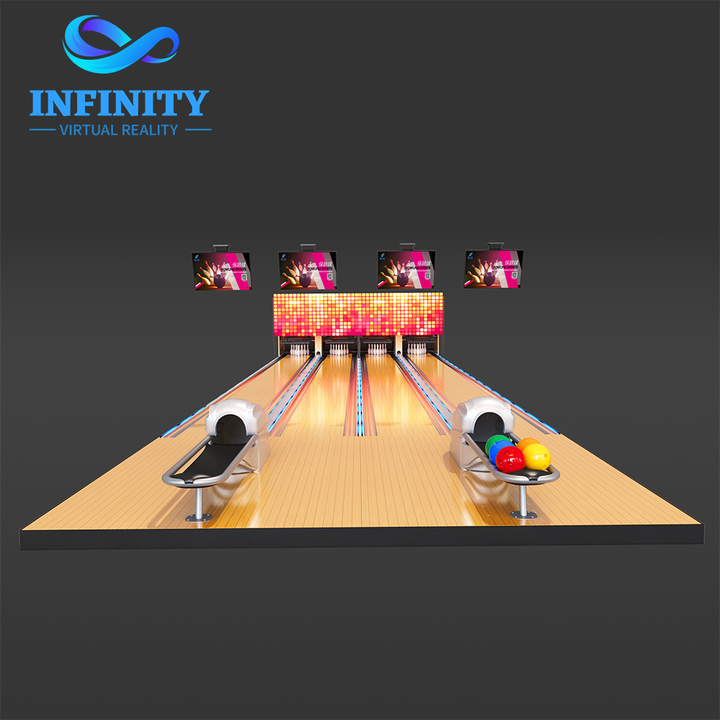
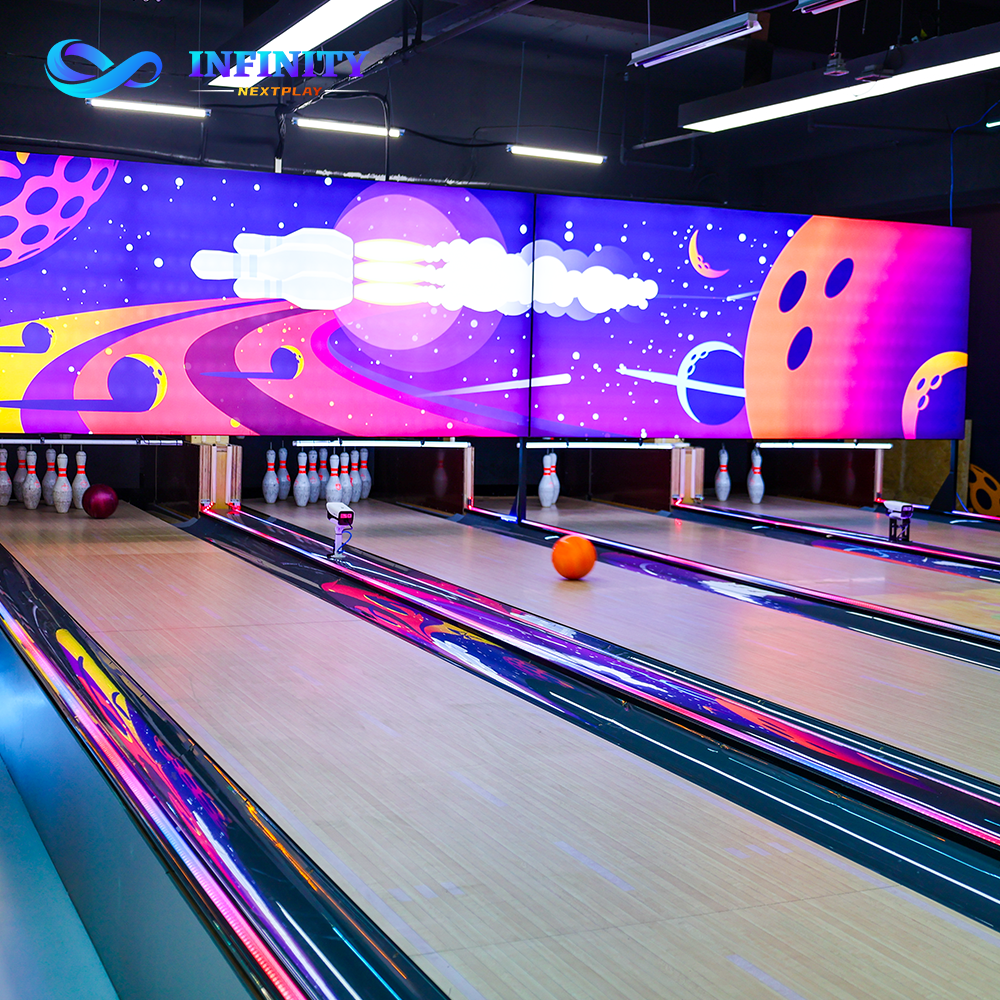
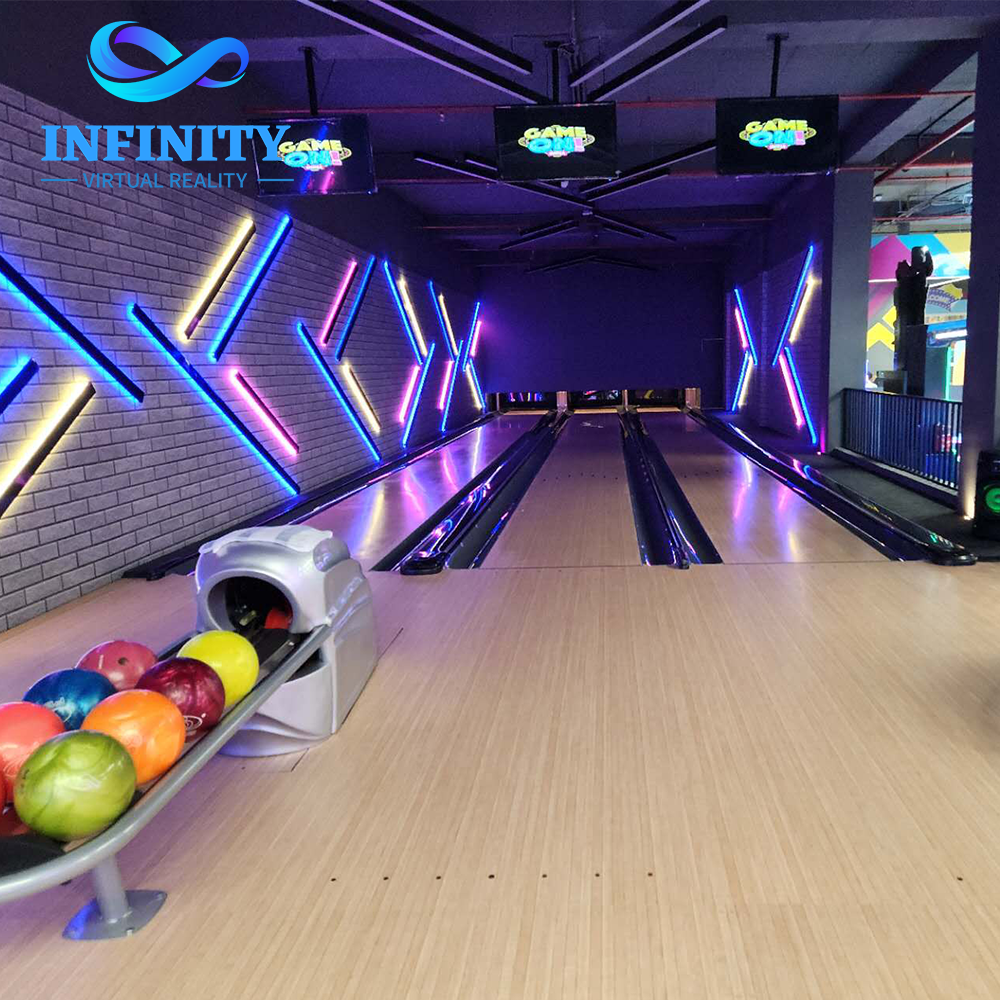
Three commercial formats carry the market. Ten-pin is the sport-standard destination build: full 26-meter lanes, free-fall pinsetters, the highest per-lane ticket. String bowling compresses the lane to 9.7-13 meters and cuts lane maintenance by up to 75% - the format the 2-lane string turnkey system ships as a complete project. Duckpin is the compact social format: a ~14-meter lane, a 1.5 kg ball, and the published $45 per lane-hour that makes it the bar-venue favorite. The published format guide compares all three line by line.
Capex splits into three buckets: the equipment per lane, the building works around it, and the front-of-house. The lane kit itself (surface, pinsetter, scoring, ball return, balls and pins) is the published $12-80K band depending on format; the building works (floor flatness, power, HVAC over the pin deck, the machine-area service access the published space guide dimensions) routinely rivals the equipment line in an unfamiliar building; and seating, bar adjacency and decor turn lane-hours into second-hour spend.
Opex runs on two rails. The maintenance rail is format-decided: the published maintenance analysis prices a working free-fall lane at about $9,400 per lane-year against roughly $2,700 for a string lane - the 75% cut the string pinsetter explainer documents - and reserves the same discipline regardless of format. The operations rail is staffing, utilities and marketing, and it scales with hours open rather than lanes owned.
Revenue follows the lane, not the room. The published bands put a working lane at $36,000-45,000 a year, with the published per-game pricing showing the $5-12 price points and party blocks that build it (the per-game pricing guide and the per-game-vs-per-hour analysis carry those numbers). Food-and-beverage and co-attraction spend ride on top - which is why the bowling-plus-sports-bar pairing is the published revenue multiplier for this cluster.
| Investment line (EXAMPLE frame) | Published band | What moves it | Where the guide lives |
|---|---|---|---|
| Equipment per lane | $12-80K by format | 10-pin vs string vs duckpin | ue 762 cost guide |
| Two-lane string project | $80-150K installed | Building condition, freight | ue 762 scenarios |
| Lane maintenance / year | ~$2.7K string vs ~$9.4K free-fall | Pinsetter type, volume | ue 862 analysis |
| Revenue per lane / year | $36-45K working lane | Pricing model, F&B, parties | ue 762 / pricing guides |
| Typical payback | 4-7 years | Utilization, format mix | ue 762 payback model |
Planning assumptions, stated: the table restates published bands as an EXAMPLE frame - it is an investment map, not a quote. Local labor rates, freight and building condition move every line; the published cost guide carries the sensitivity notes.
The bar or hotel owner adding two lanes: string or duckpin, the $80-150K two-lane project band, one shared staffing line. The published lane-count analysis (the lane-count math) prices this rung, and the bar-duckpin two-lane piece shows the corner earning its floor before the second attraction is even scheduled.
The FEC operator adding a bowling wing to an existing floor: a 4-6 lane string or mixed block in the $150-600K bands, sharing the party calendar the venue already runs. The co-attraction logic the bowling-theme mini golf challenge and the published mix guides carry applies here - bowling as the anchor, sims and social games as the fillers.
The destination builder: a 12-lane-plus family entertainment center at $850K-1.7M or the flagship 20-lane-plus build past $2M on a new building. At this scale the ten-pin 26-meter standard bowling alley becomes the product itself, and the published payback model (4-7 years) is the underwriting frame.
Payback is a utilization story wearing a capex costume. The published 4-7 year band assumes a working lane at the $36-45K revenue line; the same math at half utilization doubles the horizon - which is why the format choice (string's 75% maintenance cut, duckpin's $45 lane-hour) is really a payback choice. The published maintenance analysis prices the downtime side of that equation at $150-200 per lost peak lane-hour.
The disciplined sequence, as the published guides run it: price the format against the building (the space guide first), price the opex rail (maintenance analysis), price the revenue rail (pricing guides), then pressure-test the whole stack as a worked project. The complete cost guide closes the loop with the full scenario table.
Bring the floor plan before the purchase order: the free 3D layout design returns the lane count, the format fit and the room envelope against your actual building - the cheapest capital you will spend on the project.
A bowling alley for business in 2026 is a $12-80K per-lane equipment decision wrapped in a $80K-2M project envelope, run on a $2.7-9.4K per-lane-year opex rail, earning the published $36-45K per working lane - and the format choice is the lever that moves all four numbers at once. Buy the format the building and the calendar can actually fill, and let the published guides - cost, space, maintenance, pricing - do the underwriting.
The published 2026 bands run $80,000-150,000 for a two-lane string install, $150,000-260,000 for four lanes, $250,000-600,000 for a six-lane boutique center and $850,000-1.7 million for a twelve-lane family center - equipment per lane is $12-25K string or $35-80K ten-pin, with building works and front-of-house on top.
String and duckpin carry the small-venue case: the string lane cuts maintenance up to 75% (~$2,700 vs ~$9,400 per lane-year published) and duckpin books $45 per lane-hour on a ~14-meter lane, so both reach the published $36-45K revenue band on a far smaller capex and opex base than a 26-meter ten-pin build.
Two lanes clear the bar-format case in the published scenarios; six lanes is the boutique-center unit at $250-600K; twelve-plus is the destination model. The lane-count analysis prices the marginal lane against the calendar it can actually fill - utilization, not lane count, is the profitability variable.
The published typical payback band is 4-7 years on a working lane earning $36-45K a year; the horizon stretches at low utilization and shortens with F&B attach and party blocks. String formats defend the payback with the 75% maintenance cut and fewer breakdown lane-hours.
As an anchor inside a multi-attraction venue, yes - that is where the published revenue multipliers live (F&B attach, party calendars, co-attraction dwell time). As a standalone ten-pin center it is a destination play with destination capex; the format guides price both paths.
Building works (floor flatness, power, HVAC, service access), delivery and on-site installation, seating and decor, and the opening opex reserve. The published cost guide carries the full line-item spread and the scenario table that prices each project scale.
Send your building and budget: we will return the format recommendation, the lane count and the full capex-opex-revenue frame through the free 3D layout design - anchored with the 2-lane string turnkey system and the 26-meter standard bowling alley.