
Puttshack estimates about 30 minutes for its nine-hole game; Glowing Rooms gives 45–60 minutes for an eighteen-hole round with four players. These are individual operators' descriptions. Check your chosen venue's estimate, then allow separately for arrival, briefing, returns and any other activities when planning the whole visit.
Use the estimate for the course you are actually booking
If you mean a Putt-Putt branded location, ask that location for its course and booking information. If you are using putt putt more generally for miniature golf, compare the actual venue and game format. The naming guide explains the distinction.
The two mini golf examples below are published by the named operators for their own offerings. They show why the hole count, group and conditions belong beside a time estimate. They are not measurements from a common study and should not be averaged into an industry standard.
| Operator's published description | Course and group scope | How to use it |
|---|---|---|
| Puttshack: approximately 30 minutes | Nine-hole game; depends on group size and how busy the course is | Reference for that operator's offering; confirm the chosen booking |
| Glowing Rooms: around 45 minutes to an hour | Eighteen holes, group of four; actual time may vary | Operator-reported guide, not an independent industry average |
Operator descriptions read on 18 October 2026. These examples are from distinct mini golf businesses and are not a Putt-Putt brand-wide timetable.
Check what a package duration includes. For example, the Putt-Putt Fayetteville party FAQ describes 90 minutes in a private party room plus time for attractions. That is a room allocation within a package, not a published ninety-minute golf round. Ask about the attraction sequence, room time and finish arrangements for the package you are considering.
Look at the group and the actual playing tasks
Confirm how many people play together, whether a larger booking is split into groups and how the starts are organised. More participants can add turns and explanation, but do not apply a fixed multiplier to every course. Waiting, attempt rules, game format and assistance may change the pattern.
Include the proposed audience in a trial: first-time visitors, families, experienced players or mixed groups. Record where someone needs an explanation, repeats a shot, retrieves a ball or waits for the group ahead. A difficulty label alone does not supply a group completion time.
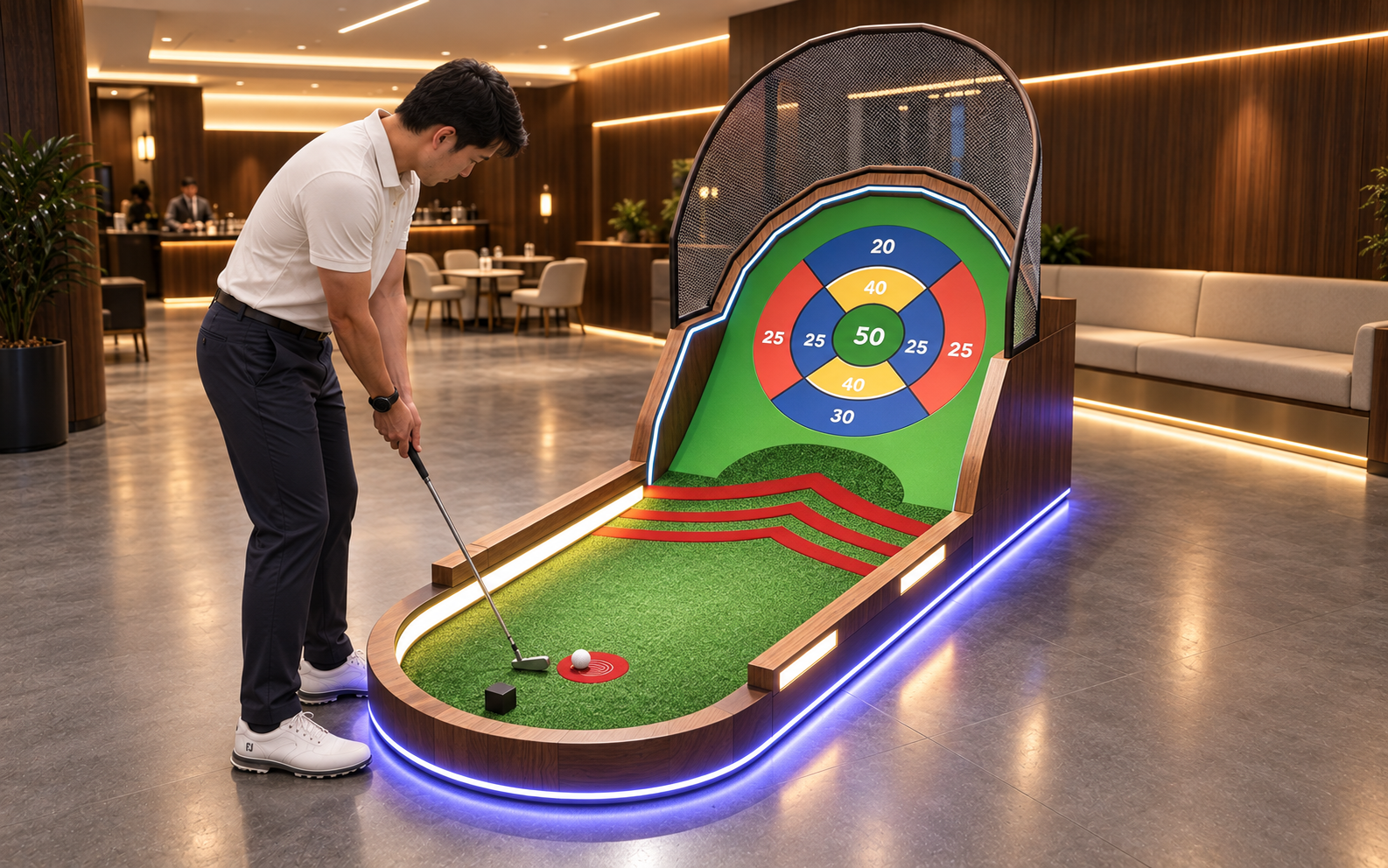
For a concrete task, NextPlay describes its Golf Target Shooting Hole through target zones with different point values. Observe how the group understands the target, records the result and moves to the next turn. Use the observed procedure in your schedule rather than assigning a duration from the product's appearance.
Build the whole visit from separate time blocks
The following is a calculation exercise for one hypothetical nine-hole group, not a forecast for NextPlay equipment or one of the operators above. Assume three minutes of group play at each hole: nine multiplied by three gives 27 minutes. Add nine minutes of waiting between holes to make a 36-minute round.
Now add ten minutes for arrival and equipment, five for briefing and four for returns. Arrival time here is before play; the nine minutes of waiting is during the round, so the two are separate assumptions.
| Hypothetical visit component | Assumed calculation | Minutes |
|---|---|---|
| Arrival and equipment | Assumed before-play time | 10 |
| Briefing | Assumed explanation time | 5 |
| Group play across nine holes | 9 holes × 3 group minutes | 27 |
| Waiting during the round | Assumed total between holes | 9 |
| Returns | Assumed end-of-game time | 4 |
| Whole visit in this exercise | 10 + 5 + 27 + 9 + 4 | 55 |
Teaching assumptions only. Round time is 27 + 9 = 36 minutes; whole visit time is 55 minutes. This is not a validated layout, capacity model or supplier service commitment.

The complete exercise is 10 + 5 + (9 × 3 + 9) + 4 = 55 minutes. Food, travel, another attraction and a second round are not included. Replace each input with the selected venue's instructions or observations before using a visit budget for guests.
The three-minute input is for the whole group's task time at a hole in this example. It is not three minutes per player, a published product specification or a standard to multiply across every course. Keeping the unit explicit avoids a large scheduling error.
Before booking, ask what the time on the ticket means
Find out whether the booking time is an arrival time, a briefing time or a playing start. Check when to arrive, what happens if members of the group are late and whether another activity follows at a fixed time. Use the location's current instructions for those decisions.
Ask whether the advertised duration includes check-in, equipment, queuing and the end of the game. For a party, identify the room allocation and the attraction order. For a large booking, confirm how people are divided and how the finish is coordinated.
Tell the venue about assistance or access needs that affect the visit so the team can discuss the arrangement. If the plan includes a meal or transport afterwards, coordinate that separately instead of treating a round estimate as an exact departure time.
For operators, measure the complete changeover
Observe a session from guest arrival through equipment return. Record the start and finish of the round, the group format, the start arrangement and the waiting conditions. Keep quiet sessions and busy group sessions identifiable in the log so their results are not mixed without context.
Rehearse a practical scenario: one group finishes while a family is waiting to begin and a staff member is answering a scoring question. Note who explains the next start and who collects equipment. Resolve an unclear handover or an unassigned task, then test the revised procedure. The staffing guide covers overlapping duties.
Check the scoring procedure as part of the trial. A paper card, manual digital entry and an automatic function can create different guest actions. Verify the actual steps rather than assuming technology will shorten every session; the scoring comparison sets out the demonstration tasks.
Keep round length separate from start interval and capacity
A group's time on the course is not the same as the interval between starts. Several groups may occupy different holes at once under the venue's operating arrangement. Conversely, a fast-looking hole does not prove that reception, waiting or the next task can accept another group at the same rate.
Do not turn the example above into a guests-per-hour forecast. Check the actual layout, group progression, task overlap and operating requirements before setting a start plan. Use the agreed process and observed conditions when communicating expected round and visit times.
For visitors, the useful answer is the chosen location's round estimate plus the other parts of your visit. For a venue plan, the useful result is a tested timing record that the team can review when the course, guests or booking pattern changes.
Three products to review for your course

Cyclone Spin Hole
A curved lane leads into a circular challenge area. Time explanation, attempts and ball retrieval separately during a trial with your intended groups.
View Details ›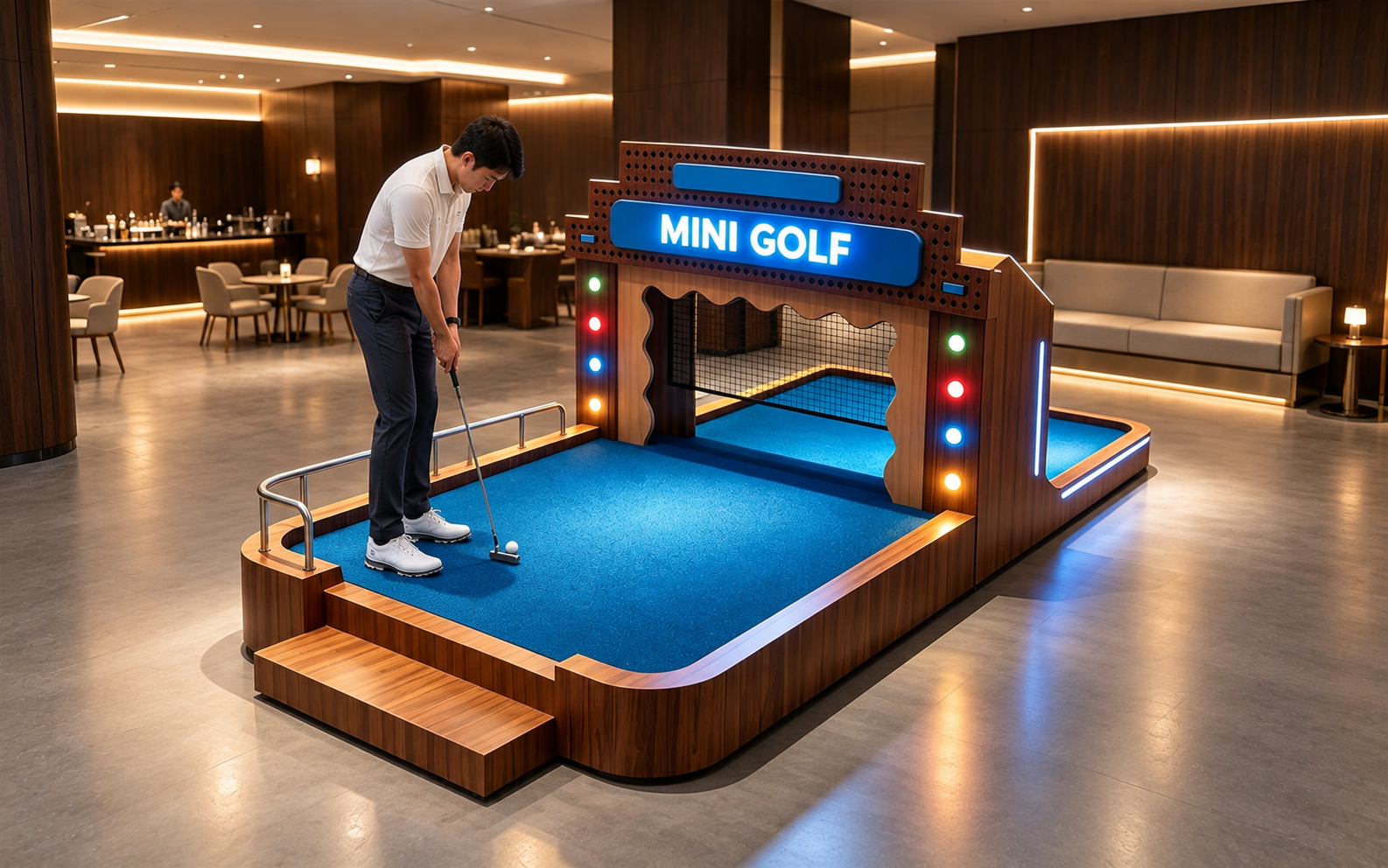
Golf Treasure Hunt Hole
An adventure-themed route leads towards a target area. Observe where a group waits and how the next group begins before assigning a visit duration.
View Details ›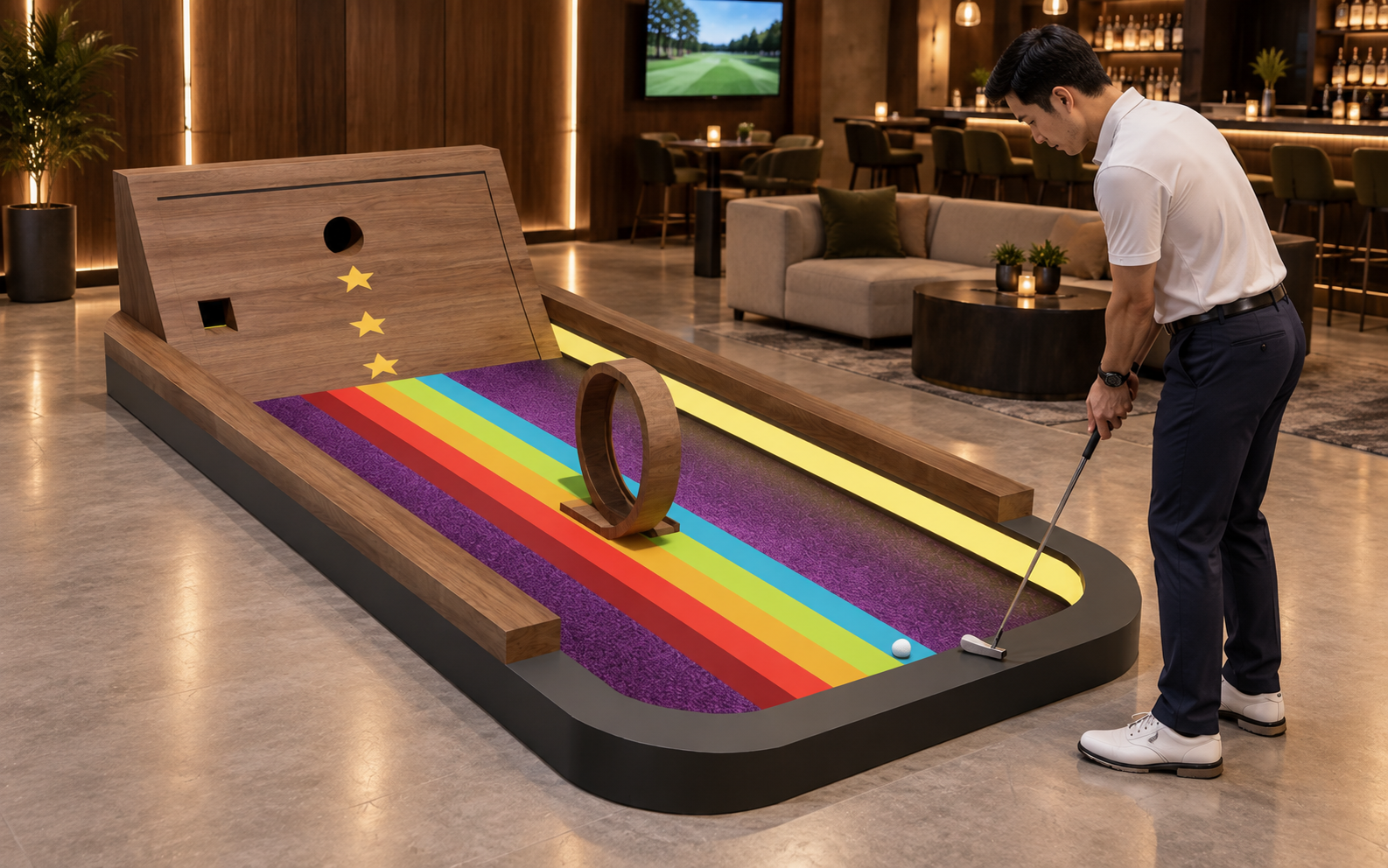
Golf Parkour Hole
Ramps, rings and obstacles form this parkour-themed route. Record repeated attempts and transitions as well as successful play when testing the round schedule.
View Details ›Test the round and the complete visit together
Share the intended group format, selected holes and planned activities. Request a course proposal whose briefing, play, waiting and changeover can be reviewed together.