
For an indoor mini golf operator, the staffing decision starts with the work guests and equipment create during a shift. Map reception, course assistance, resets and booked-group hosting against their actual times. This guide shows how to observe that work, check an illustrative workload calculation and train staff before assigning independent duties.
Start with the jobs your team must cover
A quiet course inside a larger venue may share reception and support with other attractions. A course running private groups alongside walk-ins has a different pattern. Write down what happens from a guest's arrival to the return of the clubs, including payments, explanations, assistance, cleaning and fault reporting.
For each duty, identify where it takes place, when it is required and whether the person can leave it. Roles describe responsibilities; they do not automatically equal separate employees. Combining roles needs a workable sequence and an available replacement when two duties overlap.
| Duty | What to record | Question before combining roles |
|---|---|---|
| Arrivals and payment | Arrival times, transactions, equipment handout | Who handles the next arrival while this person is occupied? |
| Course hosting | Explanations, assistance and interruptions | Can the host reach the relevant area when needed? |
| Reset and upkeep | Task, duration, location and instructions | Can it wait, and who keeps the course available? |
| Booked-group hosting | Start, finish and agreed hosting scope | Which other duties need cover during the booking? |
Responsibility map for your venue; these four duties do not specify a minimum headcount.
Observe the busy period before writing the rota
Use a trial, soft opening or an existing comparable session to record arrivals, group starts, questions, resets and interruptions. Keep the time of each event. An hourly total can hide a short queue at reception while a host is occupied with a group on the course.
Record the work as well as the guests: time spent explaining a game, correcting a score, returning equipment or dealing with an interruption. Include travel between work areas. Note which tasks can wait and which need attention at that moment. This creates a basis for scheduling that you can review against actual service.
Keep weekday walk-ins, organised groups and event sessions separate in the observation log. Their work may arrive in different patterns. Use confirmed bookings to identify overlap; do not treat a hoped-for party sale as the funding already available for an extra shift.
Use this scenario for a staffing rehearsal: on Saturday at 14:00, a booked group is waiting for its briefing while walk-in guests arrive at reception. The assigned host starts with the group and a named colleague covers arrivals. Now introduce a score query from the course and check who can respond. If no one is available, change the allocation or start arrangement and repeat the rehearsal.
A worked example: checking a half-hour workload
The following numbers are invented to demonstrate the calculation. Assume a 30-minute observation window with eight arrivals requiring two staff minutes each, six minutes of scoring assistance, twelve minutes of resets and eighteen minutes of booked-group hosting. These are staff-work minutes, not time per hole or a forecast of visitor capacity.
| Assumed task in a 30-minute window | Calculation | Staff-work minutes |
|---|---|---|
| Arrival assistance | 8 arrivals × 2 minutes | 16 |
| Scoring assistance | Assumed total | 6 |
| Resets | Assumed total | 12 |
| Booked-group hosting | Assumed total | 18 |
| Total included task time | 16 + 6 + 12 + 18 | 52 |
Teaching example only. Replace the inputs with observations; omitted duties and simultaneous tasks still need review.

The sum is 16 + 6 + 12 + 18 = 52 staff-work minutes. Dividing by the 30-minute window gives 1.73 worker-equivalents of task time. One continuously available person has only 30 minutes in that window, so this assumed task list cannot be completed by that person within the window.
Two people would provide 60 gross minutes, leaving eight minutes against this incomplete task list. That does not demonstrate that two people are sufficient: the timing, location and skills may prevent sharing, and breaks, travel, supervision or other duties may require additional cover. Draw the actual overlapping tasks on the shift plan, then test it during operation.
Check what the selected equipment changes
Watch staff and guests complete a round using the proposed equipment. For scoring, distinguish player identification, ball-event detection, stroke counting and displaying results. If a function is included, test the staff actions still required when a shot is missed, a turn is interrupted or an entry needs correction. The eight-feature comparison guide provides the questions for that demonstration.
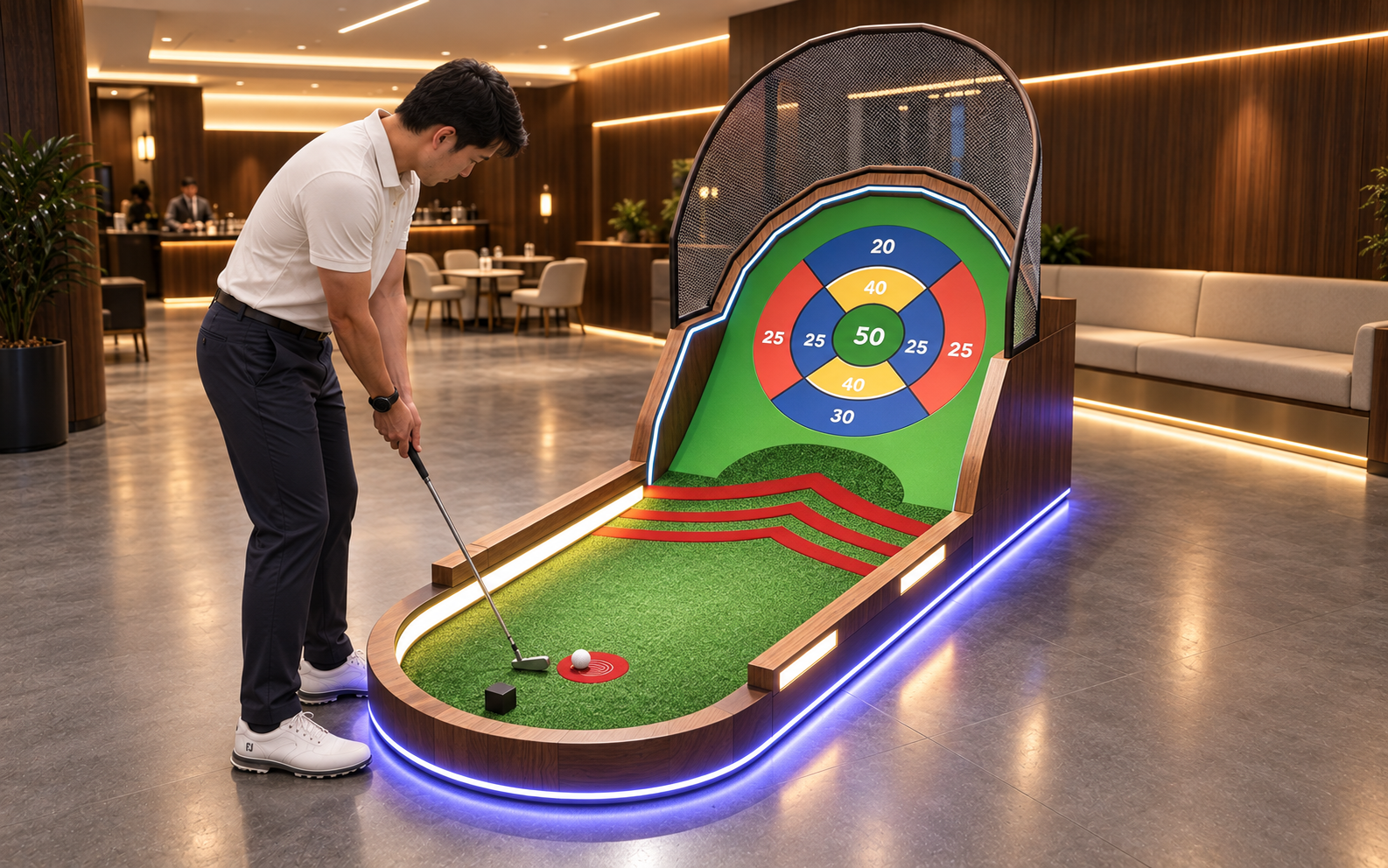
Use the product task rather than its theme as the observation point. NextPlay describes the Golf Target Shooting Hole through different scoring zones. Observe how players understand the target, how the quoted version records a result and how the next turn starts. The description alone does not establish a saving in staff time.
Assign cleaning, checks and resets from the actual manufacturer's instructions and agreed operating procedure. Software may change a task, but reception, assistance, fault response and shift cover still need assigned responsibility. Have your site team determine any supervision requirements for the installed arrangement.
Train to observed competence, then sign off
Use a training checklist with demonstrations and supervised practice. Begin with the venue route and guest explanation, then practise normal play, an interrupted session and the handover to another colleague. Make the escalation contact and the limits of each employee's authority explicit.
The table below is a training plan template, not a promise that a new host will be ready within a week. The trainer should record the observed task, outstanding support and the decision about independent duties.
| Practice task | Evidence for the trainer | Record at handover |
|---|---|---|
| Welcome and game explanation | Trainee explains and checks understanding | Support still required |
| Normal session and reset | Trainee follows the agreed procedure | Equipment/version used |
| Interrupted turn or score correction | Trainee uses the authorised action or escalates | Limits of authority |
| Shift and break cover | Trainee identifies the replacement and contact route | Named cover and outstanding tasks |
Sign off the actual task and employee, rather than assuming a fixed number of training days produces competence.
Include a rehearsal of the periods when one person must leave their usual position. The trainee should know who takes over and how to contact them. Complete the venue's relevant safety and emergency training separately with the responsible people; a blog checklist cannot replace it.
Write the cover into each shift
Put names beside the duties, with the working period, handover and break cover. If reception is shared, identify who serves arriving golfers while the receptionist is helping another attraction. If an employee hosts a private group, show who covers their other duties during that booking.
Check the plan against the building layout and the available communication method. A colleague elsewhere in the venue is useful cover only when the colleague can actually respond. Agree who can pause admissions or a hole when the operating team needs assistance, using the venue's procedures.
Calculate wage costs from the actual paid hours and the relevant employment costs in your location. Include opening, closing, training and cover in the budget. For the wider calculation, the ROI and cash-payback guide separates operating costs from revenue assumptions.
Review the plan after the course settles into regular operation
Keep a short shift log of queues, help requests, unresolved faults and missed tasks. Discuss the observed workload with the team and compare similar sessions. If the same overlap recurs, adjust the start pattern, assigned duties, training or staffing and observe the next session.
Retest when the attraction mix, equipment, opening hours or booking pattern changes. A quieter month is useful evidence for that period; it does not prove the same rota will cover a sold-out group event. Keep the current duty plan with the training and handover records so the team can see which version applies.
Three products to review for your course

Beer Pong Golf Hole
The beer-pong theme uses cup targets with different point outcomes. Rehearse explaining the cup targets, confirming the result and preparing the next turn with your team.
View Details ›
Bowling Golf Hole
The putting lane leads towards bowling-pin targets. Observe ball return and any pin-reset steps before assigning staff duties.
View Details ›
Golf Treasure Hunt Hole
An adventure-themed route leads towards a target area. Walk through guest instructions, ball retrieval and assistance during a group changeover.
View Details ›Plan the course and the operating duties together
Send your floor plan, intended guest sessions and available staffing arrangements. Ask for the equipment proposal and operating tasks to be reviewed together.