

Putt-Putt is a miniature-golf brand. Mini golf is the wider putting activity. For an indoor venue, compare the proposed holes, rules, scoring and guest procedure, and identify the supplier or franchise arrangement in the project brief.
The useful distinction is activity versus brand
Putt-Putt's own history describes a branded miniature-golf game and a franchise business. The company dates its founding to 1954 in Fayetteville, North Carolina. When considering a proposal under that brand, ask the provider to identify the franchise and course deliverables.
If someone asks for putt putt, establish what they want to play or buy. Do they mean a visit to that brand, or are they asking for a small putting course more generally? In a project brief, write down the actual supplier, any proposed franchise arrangement and the course specification. The name alone is not an equipment schedule.

Do not use the name to predict the entire experience
A course description needs more than a label. Separate the shape of the playing task from its scenery, the method of recording results and the way a session is organised. A familiar-looking lane can still have particular operating rules; a heavily themed scene still needs a clear place to start and finish.
For comparison purposes, describe the individual features in the table below. These questions apply to the actual proposal in front of you. They do not establish a universal hierarchy between branded courses, independent courses or themed indoor attractions.
| What you are describing | Information to request | What the label does not establish |
|---|---|---|
| Activity or brand | Actual operator, supplier and any franchise arrangement | The detailed specification of a proposed course |
| Playing task | Route, target, obstacles and next-turn procedure | A universal difficulty or time per hole |
| Theme and setting | Scenery, lighting and the space they occupy | A guaranteed ticket premium or guest response |
| Scoring procedure | Rules, inputs, corrections and result display | Automatic counting of every stroke |
| Visit format | Group arrangement, start, finish and included service | A fixed capacity or staffing ratio |
A description checklist, not a rating of brands or a general specification for Putt-Putt courses.
Compare what the player has to do
Ask for a demonstration of the selected holes. Watch where a player stands, what they aim at, how they choose a route and how the ball is recovered or the next turn begins. Include a missed attempt as well as a successful one. Those observations provide information about the game that a format name cannot supply.
For example, NextPlay describes its Bowling Golf Hole as putting along a lane toward pin targets. That is a specific task to test with your audience. The bowling theme does not establish a round duration, automatic scoring capability or required number of staff.
Use the intended guests in the trial: families, first-time visitors, competitive groups or a mixture. Record explanations and assistance needed at each task. If one design is easier for your trial group to understand, retain the observation and its conditions instead of extending it into a rule about all courses with that name.
Indoors, the complete layout matters more than the label
Place the proposed equipment on a measured floor plan. Add playing positions, waiting, ball access and staff tasks, then review the routes to reception and the rest of the venue. Check obstructions, supporting facilities and the installation information for the selected versions. Have the responsible site team review local project requirements.
Use the same layout brief for each proposal. A general description such as short course, adventure golf or interactive mini golf does not establish the space available for people around the equipment. The space-planning guide explains the distinction between a product footprint and the whole venue area.
The following review turns an indoor concept into decisions that the designer and operator can check together.
| Indoor planning decision | What to show on the proposal | How to check it |
|---|---|---|
| Arrival and start | Reception, explanation and waiting positions | Walk through a group arriving and another starting |
| Playing and circulation | Selected units, player positions and surrounding routes | Rehearse actual tasks and movement |
| Scoring and assistance | Inputs, displays and staff access | Demonstrate normal play and a correction |
| Finish and next activity | Returns and the route onward | Check finishing guests against the next arrival |
| Upkeep and changes | Service access and proposed replacement/removal method | Review drawings and supplier instructions |
Use the measured site and actual equipment. This checklist is not a dimensioned layout or an operational capacity calculation.
Plan scoring, session length and ticket format separately
Agree what a result means and who records it. Stroke-based play, points challenges and group competitions need their own rules and explanation. Paper cards, manual digital entry and automatic functions should be assessed by demonstration. The scoring comparison separates ball-event detection, player identification, stroke counting and result calculation.
Measure visit duration using the selected course and the intended group format. Include briefing, waiting, play and returns. A name or theme does not establish that one course always finishes faster, and a decorative feature does not by itself support a higher ticket price.
Build the offer around the service you can deliver: a casual round, a hosted competition or a private-group session. Specify the included activities and staff responsibilities. Compare the actual cost and guest procedure rather than assigning a premium or a throughput advantage to the words on the sign.
Write a course brief that a supplier can answer
State the room, audience, intended playing tasks, scoring needs and visit format. Ask for a measured layout, named equipment versions, installation scope and operating information. If a franchise is part of the proposal, identify the brand arrangement and its deliverables separately from the equipment and site work.
For an independent indoor course, describe the proposed product and experience in its own terms. Ask the supplier to demonstrate the elements that matter to your guests and have the operating team review the complete visit. This gives you a useful comparison between actual offers while keeping the naming distinction clear.
Three products to review for your course

King's Ultimate Golf Hole
A branching layout offers several target holes. Use the alternative routes to discuss the actual game rules rather than relying on a format label.
View Details ›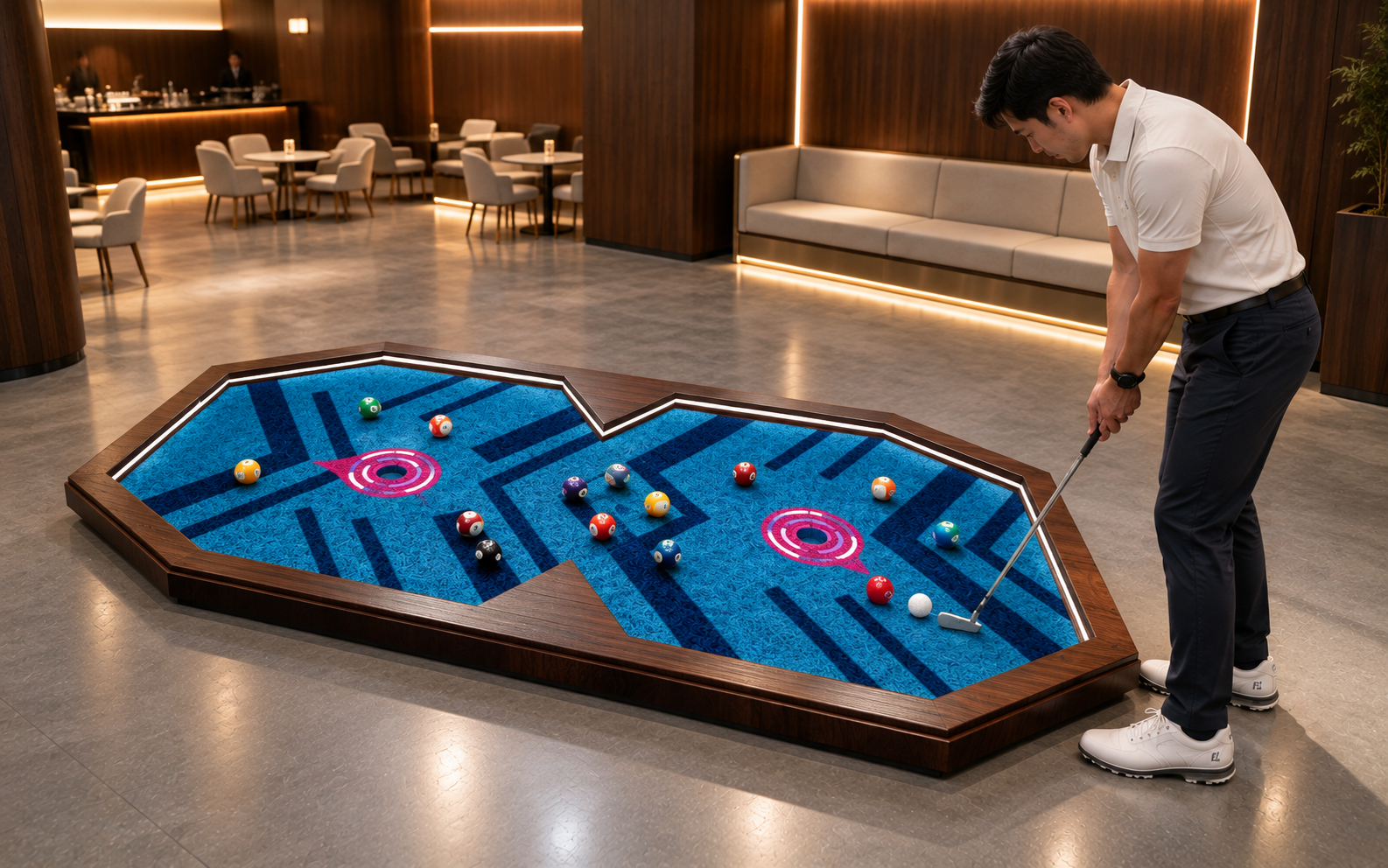
Billiard Golf Hole
A billiard-inspired layout combines putting with ball-shaped obstacles. Compare its themed obstacle task with the putting format your visitors expect.
View Details ›
Curve Block Golf Hole
Curved lanes and blocking obstacles define the route. Review the proposed ball path and attempt rules when explaining differences between course concepts.
View Details ›Describe the indoor course you want to operate
Share your floor plan, target audience and preferred playing experience. Request a proposal that identifies equipment, layout, scoring and the work needed at your site.