The six considerations, priced from the published bands: $1.5-8K hardware by tier, $300-500 coin-op net vs the $1,850 league-model yield, payback 14-20 months vs 7.6 - and the revenue model that decides which book your room lands in.
A commercial dart machine is the cheapest attraction a bar can buy and the easiest to buy wrong. The published bands frame the money: $500-1,500 for a basic electronic board, $1,500-4,000 for a commercial coin-operated machine, $4,000-8,000 for an online multiplayer unit (the published cost guide), against a profit side that runs from $300-500 a month net on coin-op (the published profit piece) to the $1,850 monthly yield of the league-driven online model (the published X7 ROI model). The gap between those two earnings stories is not the machine - it is the six considerations this checklist walks.
The six, in decision order: the revenue model your room can actually feed, the footprint the machine asks for, the audience your traffic mix carries, the operations load you are agreeing to, the network features that separate a game from a calendar, and the after-sales terms that decide year three. Each consideration below is priced against the published anchors, so the checklist reads like a purchase order review, not a brochure.
One, the revenue model. Coin-op earns $0.50-1 per game and nets $300-500 a month (published) - steady, anonymous, and capped by footfall. Online league play earns the same wall space $1,200-2,500 through team entries, drink minimums and global matchmaking (published league math) - the model that fills weekdays, as the published weekday darts piece shows at $240 a league night in entries alone. The model is the first decision because it decides the hardware tier.
Two, footprint: under 3 square meters for the machine, plus a throw line and standing room - the most space-efficient line on any bar's floor plan. Three, audience: the coin-op board suits a walk-in crowd; the online machine suits a room that can host a league night - same hardware family, different room. Four, operations: cash collection and board upkeep on coin-op; online accounts, match scheduling and light IT on the networked tier. Five, network features: global play and automatic scoring are what make the league calendar run itself. Six, after-sales: parts availability and software support decide year three - the consideration the brochure skips.
| Consideration (EXAMPLE scoring frame) | Coin-op board | Online multiplayer (X7-tier) | Why it matters |
|---|---|---|---|
| Hardware cost | $1.5-4K (published) | $4-8K single / $14-18K x4 (published) | Entry ticket vs league entry |
| Monthly yield | $300-500 net (published) | $1,200-2,500 (published) | The earnings gap |
| Payback | 14-20 months (published) | 7.6 months (published X7) | Cash conversion |
| Footprint | Under 3 m2 | Under 3 m2 + throw line | Both are space-cheap |
| Operations load | Cash collection, upkeep | Accounts, scheduling, light IT | Staff time is real cost |
| Repeat-play engine | Per-game novelty | Leagues, rankings, global play | The calendar builder |
Planning assumptions, stated: the scoring table is an EXAMPLE frame quoting the published bands verbatim - your room's traffic re-weights every row, and neither column is a quote.
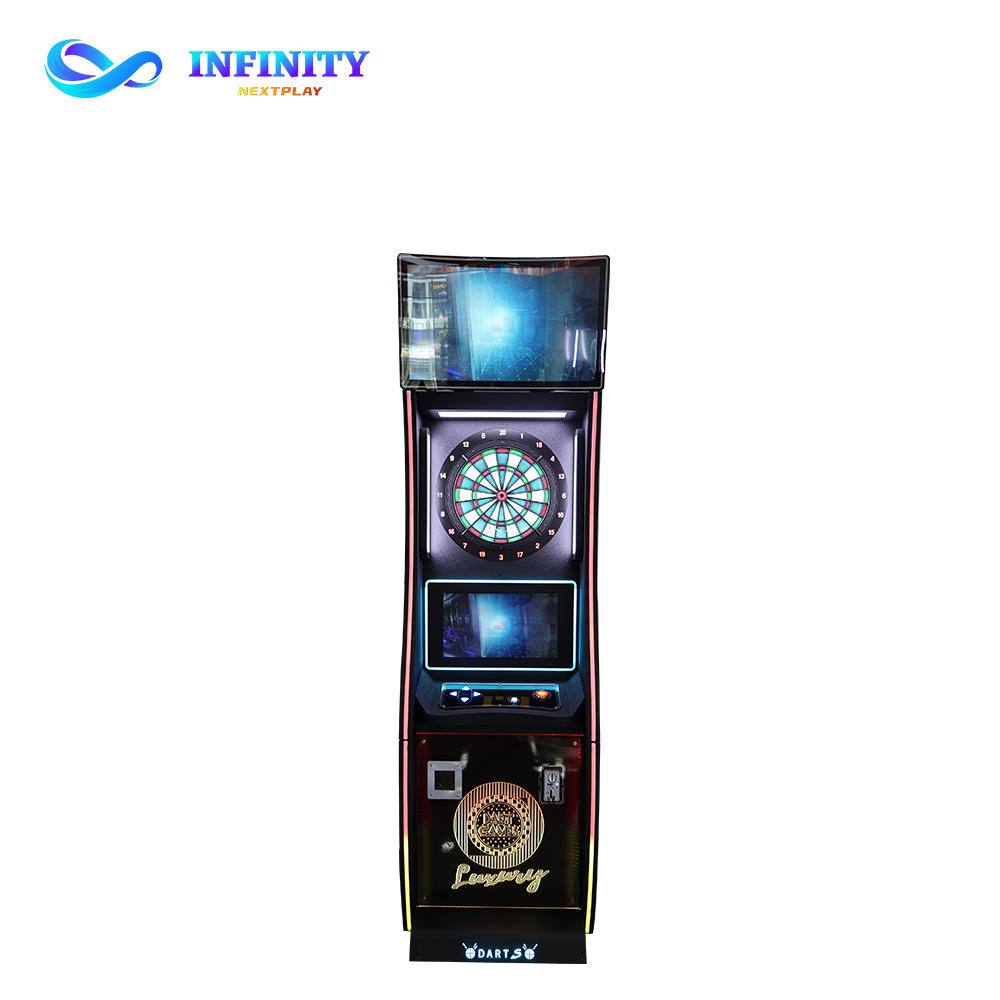
The solo bar with a walk-in crowd: one coin-operated machine at $1.5-4K (published) does the job - $300-500 a month net, 14-20 month payback, zero league ambitions required. This is the set-and-forget tier, and the Professional Arcade Dart Machine X3 is its full-venue expression: dual HD screens, automatic scoring, built for exactly this traffic.
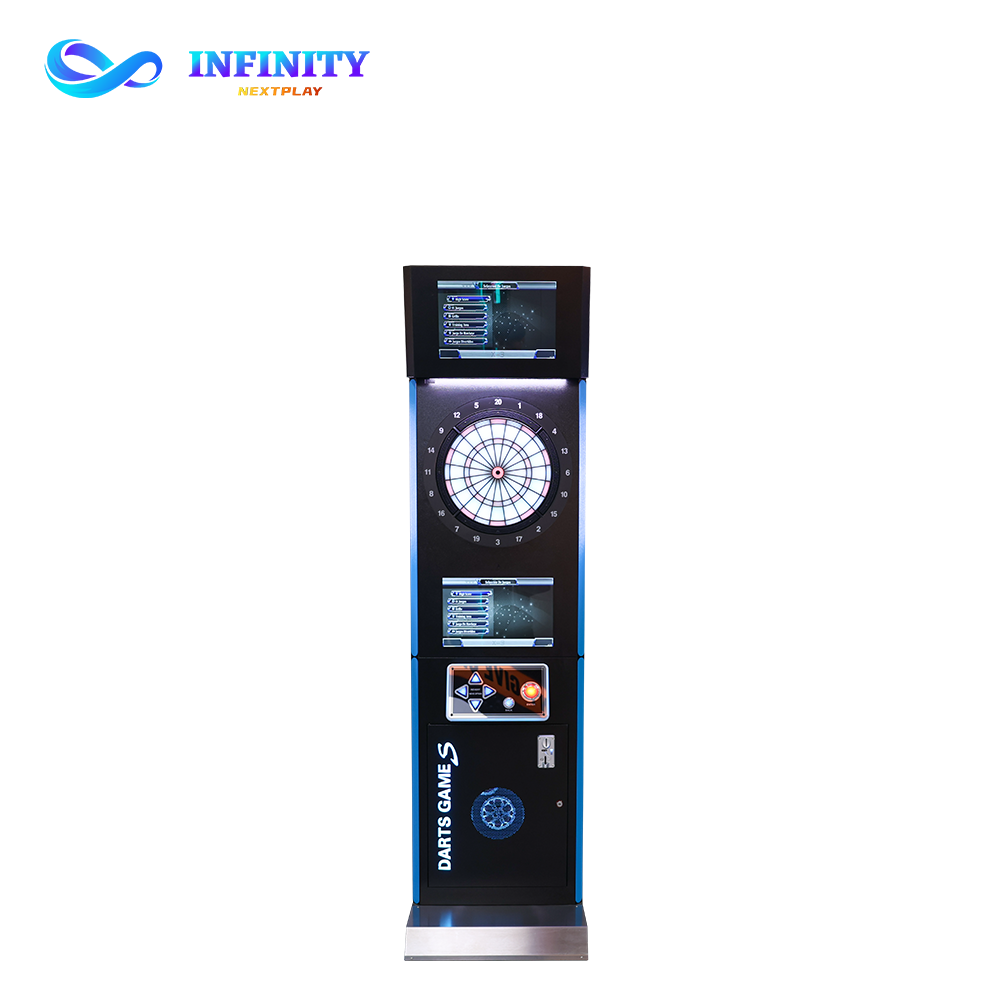
The sports bar with weekday dead hours: the online tier is the answer. The published league model turns two weeknights into a reservation-backed calendar - eight teams, $15 entries, drink minimums (the published darts-night launch guide) - and the $1,850 monthly yield with the 7.6-month payback is what that calendar produces. The Online Electronic Dart Machine X7 is the tier's machine: global play, automatic scoring, league-ready.
The multi-attraction venue: darts as the connective tissue. Under 3 square meters a machine tucks between heavier anchors and holds the waiting minutes - the same zone logic the duckpin corner books around, and the full-venue layout question is a free 3D layout design away. Four online units is the published league-ready entry ($14-18K configured).
The payback frame, from the published numbers: a coin-op board at $1.5-4K against $300-500 net lands 14-20 months (published); a four-unit online configuration at $14-18K against the league model's yield lands near the published 7.6 months on the benchmark machine. The gap is the league calendar - which is why the six considerations lead with the revenue model and not the price tag.
The first quarter, as a checklist: place the machine where the room's eye lands (footprint is not the constraint, sightline is), price the per-game at the published $0.50-1 band, and watch the yield for a month. If the wall converts walk-ins, the coin-op case is proven. If the room shows up for the machine instead of the other way round, book the league night and let the online tier's calendar pay the difference - the published profit guide carries both books.
What should venue owners consider? The revenue model first - coin-op's $300-500 or the league model's $1,850 (both published) - then the footprint that fits under 3 square meters, the audience the room actually carries, the operations load the tier asks, the network features that build a calendar, and the after-sales that outlives the invoice. The hardware bands are the published facts ($500-8K by tier); the decision is which earnings story your room can feed - and the published X7 model shows what the online tier earns when it is fed.
Six things, in order: the revenue model (coin-op per game vs online league play), the footprint (under 3 square meters), the audience your room actually has, the operations load (cash collection, online accounts, board upkeep), the network features that drive repeat play, and the after-sales terms. The published cost and profit guides price the first two.
The published bands: $500-1,500 for a basic electronic board, $1,500-4,000 for a commercial coin-operated machine, and $4,000-8,000 for an online multiplayer unit. The four-unit online configuration with cards, wall protection and league activation prices at $14,000-18,000 in the published X7 model.
The published comparators: a coin-operated board nets $300-500 a month with a 14-20 month payback, while a league-driven online machine books $1,200-2,500 a month - the $1,850 monthly yield with a 7.6-month payback is the published X7 model's benchmark.
Only if you want the league economy. Online play is what turns a per-game board into a recurring, reservation-backed calendar - the weekday league math fills dead hours at $15 team entries and drink minimums. A solo bar with no league ambition can run coin-op and skip the network features.
Under 3 square meters for the machine itself, plus the throw line and the crowd that watches - the dart machine is the most footprint-efficient attraction a bar can run, which is exactly why it pairs with everything else in the room.
One machine proves the demand; the league economics start when two or more units let teams play simultaneously - the published four-unit configuration is the league-ready entry. Start with one, watch the per-game yield for a quarter, then scale to the league format.
Send your room's traffic mix: we will return the tier recommendation and the league-night plan through the free 3D layout design - anchored with the Online Dart Machine X7 and the Arcade Dart Machine X3.