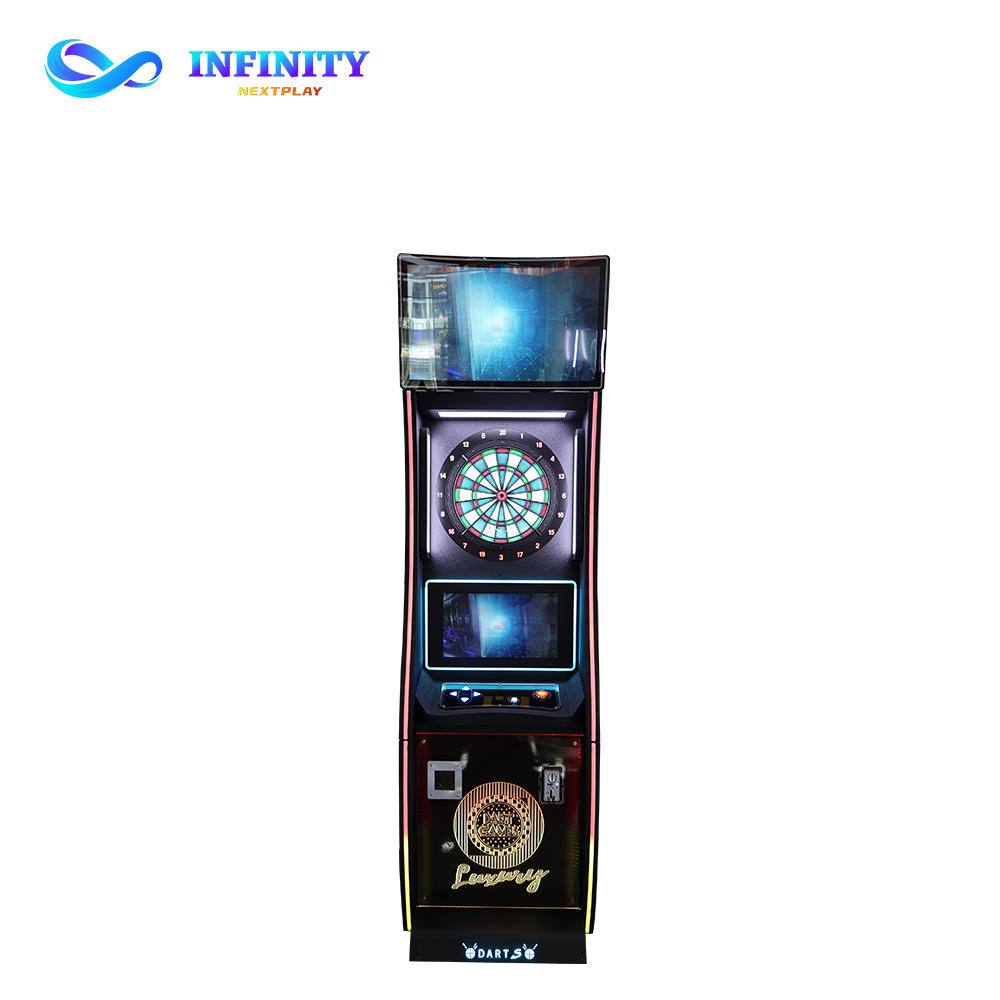
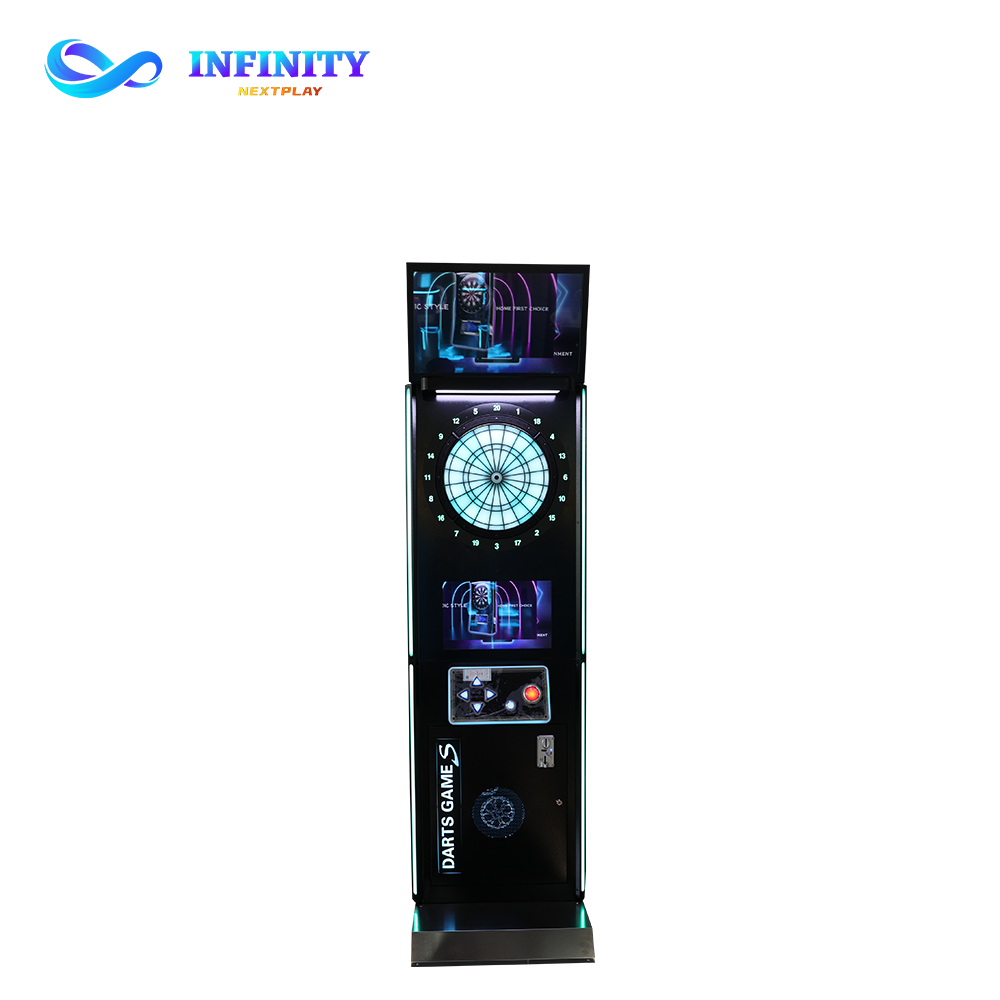
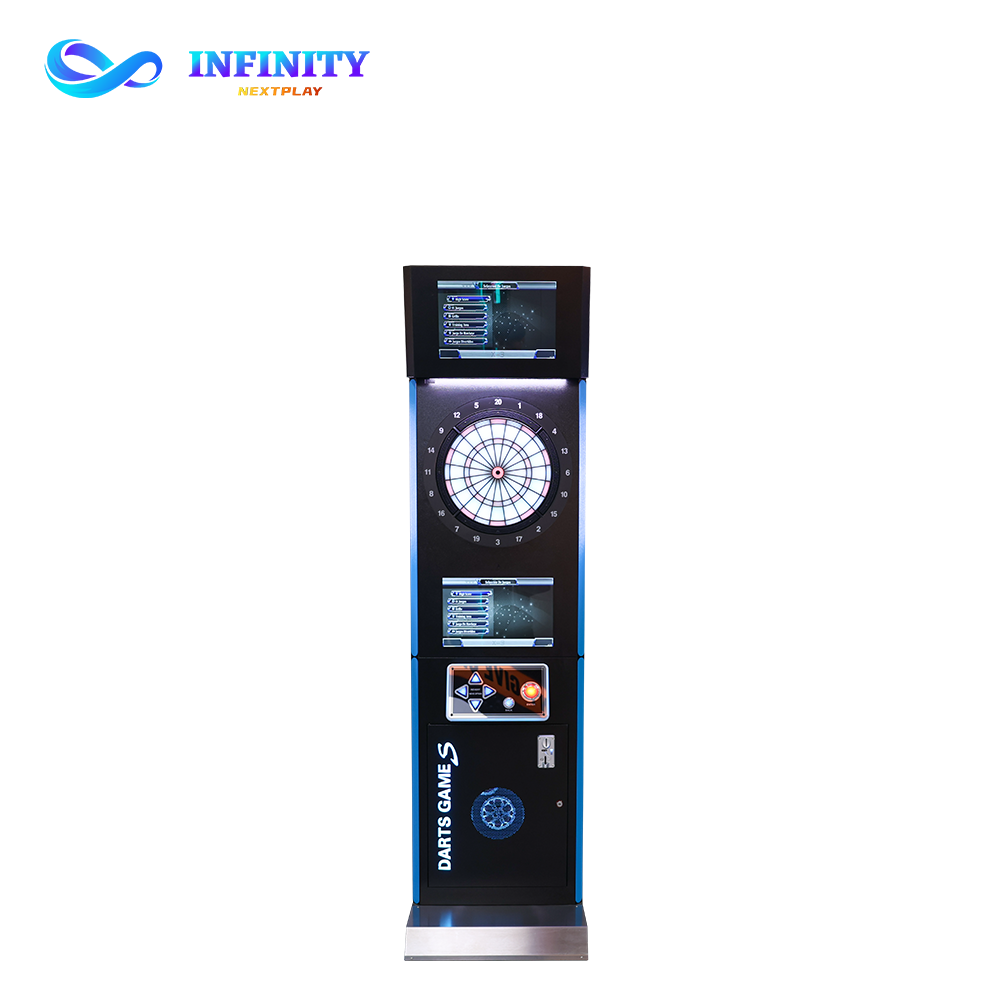
Sports bars, clubs, and boutique FECs face a constant challenge: filling floor space with attractions that deliver repeat visits without high staffing costs. The X7 Online Electronic Dart Machine solves this with a globally connected league platform that turns casual drinkers into loyal weekly competitors, generating consistent per-machine revenue while driving beverage sales through every league night.
Most bar operators measure entertainment by space consumed, not revenue generated. A pool table occupies roughly 10 square meters, produces roughly $300 to $600 in monthly coin drops, and requires constant cue and chalk maintenance. An electronic dart machine occupies under 3 square meters, yet league-driven models regularly produce $1,200 to $2,500 per month, a yield per square meter that is three to five times higher than almost any other static attraction in a typical sports bar floor plan.
The revenue engine is not the hardware itself, it is the community that the hardware creates. The X7 Online Electronic Dart Machine connects every unit to a global cloud league network, allowing players in your venue to compete in real time against opponents in other cities and countries. That single feature converts a game into a recurring appointment. Players return every league night because their ranking, their statistics, and their team standing depend on consistent attendance, which means the bar sells the same seat, the same beer, and the same game slot every single week.
From a pure commercial engineering standpoint, dart machines also solve the labor problem. One bartender can supervise four machines from the bar counter, because automatic scoring, automatic player rotation, and card-reader payment handle every step of the transaction. There is no cash collection at the machine, no manual scorekeeping, and no referee required, which keeps staffing costs near zero for the entertainment zone while the F&B margin funds the entire payback.
The X7 is engineered as a competitive gaming platform rather than a standalone arcade cabinet. Every machine ships with a 27-inch high-definition display, automatic soft-tip dart scoring, and built-in Wi-Fi that connects to the global league server. Players register once with a player card or QR account, and their entire competitive history, handicap, win rate, and division placement follow them to any X7 unit in the world.
League mechanics follow a proven seasonal structure. A typical venue runs an eight-week league season with one play night per week. Each league night generates two hours of tournament play per machine, followed by a post-match happy hour that extends the average dwell time from 45 minutes to more than two and a half hours. Data from operating league venues shows that organized league play increases machine usage from roughly 6 hours per week to over 28 hours per week, a nearly fivefold utilization increase that transforms a casual amusement device into a scheduled revenue asset.
The global connectivity layer adds a second revenue stream through cross-venue competition. Seasonal international tournaments hosted on the X7 network attract entries from hundreds of registered venues, and operators earn a share of entry fees processed through the machine. Combined with local league registration fees, typically $10 to $20 per player per season, a venue with eight active league members per machine generates predictable recurring income before a single casual walk-in game is sold.
Installation is deliberately simple for venue operators. Each unit requires a standard grounded power outlet, a Wi-Fi or Ethernet connection with a 2 Mbps minimum bandwidth for league sync, and roughly 4 square meters of clearance zone around the throwing lane. No structural reinforcement, no ceiling mounting, and no special HVAC is required, which means a four-machine dart wall can be added to an existing bar in a single weekend with only minor floor marking and protective side paneling.
A standard league-driven deployment is four X7 machines, which together form a competitive dart lounge inside a sports bar. The total equipment CAPEX for a four-unit configuration, including player cards, wall protection, and cloud league activation, lands in the range of $14,000 to $18,000 depending on regional freight and installation scope. This modest capital base makes dart the fastest-returning entertainment category available to an existing bar operator.
The model deliberately uses conservative assumptions. It assumes the venue reaches only 60 percent of league-driven capacity in the first quarter, that no tournament prizes are subsidized by the venue, and that F&B increment is limited to the league night window rather than the full week. Under a fully promoted league calendar with two play nights per week, the same four-unit configuration typically returns capital in under six months while establishing a defensible competitive community that competitors cannot replicate without installing identical league hardware.
X7 Global League Machine: 2.2m x 1.1m footprint, 27-inch HD display, automatic soft-tip sensor scoring, Wi-Fi/Ethernet cloud league sync, card-reader payment system, 220W average power draw on 110-240V supply, CE / UL / ISO 9001 compliant components, zero staffing requirement per machine, 4 m² clearance zone per unit, 2 Mbps minimum league bandwidth, soft-tip darts only with replaceable tip cartridges (roughly $40 per 500 tips every 3-4 months).
Placement determines profitability more than any other operational decision. Machines clustered near the bar counter capture spontaneous walk-in games, while a dedicated dart lounge in the rear half of the venue supports league nights without disrupting the main bar service flow. The recommended zoning model below balances casual access, league privacy, and F&B integration.
Electronic dart machines are among the lowest-maintenance commercial entertainment assets available, which is precisely why bars, clubs, and FECs deploy them at scale. The moving parts are limited to the dart tip sensors and the card reader mechanism, both rated for millions of cycles. Operators report zero hardware failures in the first 12 to 18 months of league-driven operation, with the only recurring consumable being soft-tip dart points.
Budget expectations are minimal: roughly $40 for a batch of 500 soft tips every three to four months per machine, plus an annual sensor calibration check that can be performed remotely through the cloud dashboard. Total annual consumable cost per machine typically stays under $200, which means operating margin erosion from maintenance is negligible compared to mechanical attractions such as pool tables, foosball, or redemption games that require belt replacements, coin mech servicing, and cabinet refinishing.
The economics of electronic dart machines are unusually clear. The hardware is affordable, the footprint is small, the maintenance burden is minimal, and the global league platform creates a retention mechanism that no other amusement category can match at this price point. For sports bars, clubs, and boutique FECs evaluating their next entertainment investment, the X7 Global League configuration delivers the strongest combination of short payback, high utilization, and defensible community lock-in available on the commercial market.
The decision framework is straightforward: if a venue has 15 square meters of underutilized floor space and a bar counter that can supervise four machines, the X7 league model converts that space into a scheduled, community-driven, F&B-boosting asset with a sub-eight-month payback. Start with one pair of machines, run one league season, and let the utilization data confirm the expansion case for a full dart lounge.
Contact our commercial project engineers today to receive a custom floor plan layout, league operations guide, and factory-direct quotation for your sports bar or FEC site.