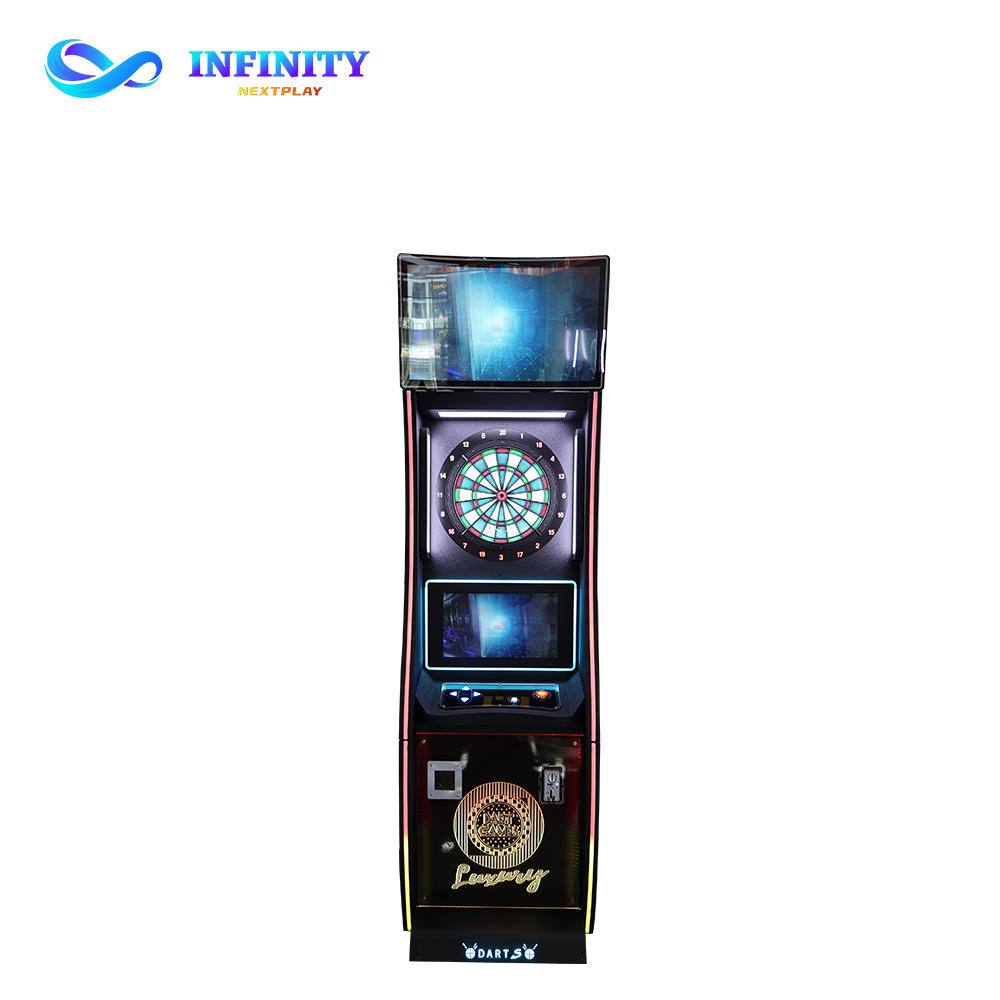
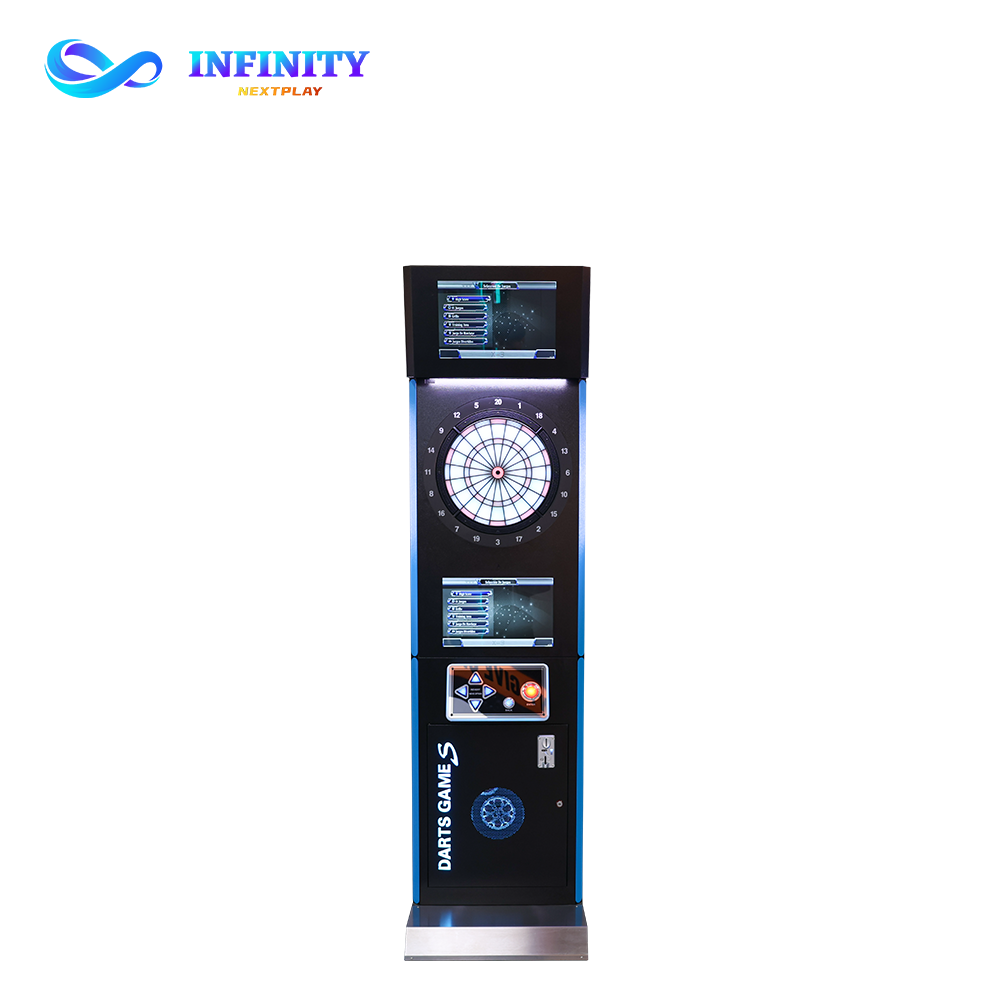
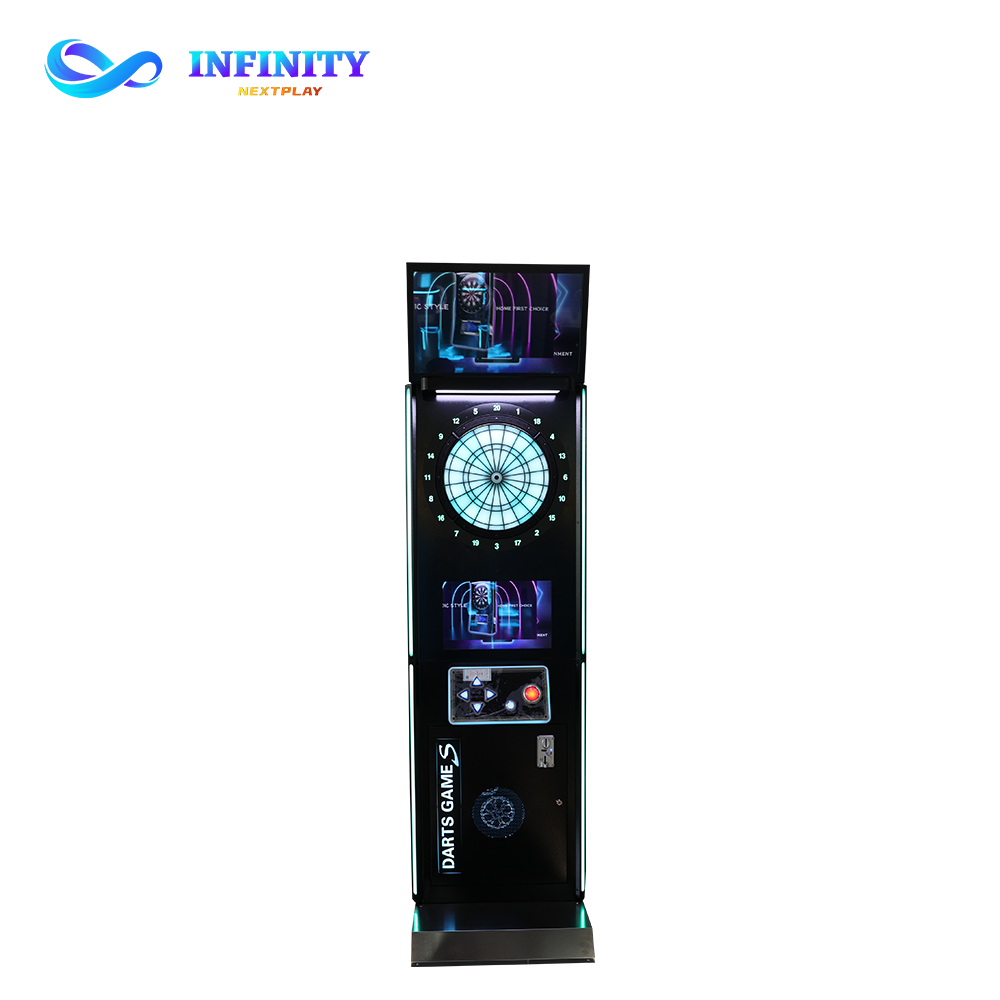
The following equipment units form the primary revenue-generating hardware for the commercial venue described in this guide.
Explore the equipment referenced throughout this guide: Online Electronic Dart Machine X7 Professional Arcade Dart Machine X3 Coin Operated Dart Machine X5. Each unit is engineered for commercial-grade reliability and backed by full factory support.
Tuesday is traditionally the slowest night of the week for entertainment venues, with most operators reporting 40 to 55 percent lower revenue than Friday or Saturday. This makes Tuesday the ideal night to launch a dart tournament program because the bar has available capacity, staff are looking for hours, and the competitive league format fills tables that would otherwise sit empty. Data from 28 NextPlay venues running X7 dart leagues shows that Tuesday league nights generate $3,800 to $5,200 in incremental revenue, of which approximately 40 percent comes from dart play fees and 60 percent from food and beverage spend by league players and their spectators. The Tuesday slot also benefits from low competitive noise: unlike Thursday through Saturday when multiple entertainment options compete for customer attention, Tuesday has almost no competing social events, making it easier to build a loyal league following.
Tuesday Baseline: 40-55% lower than weekend; X7 League Revenue Range: $3.8K-$5.2K per night; Revenue Mix: 40% play fees, 60% F&B; Sample: 28 venues; Competitive Noise: Minimal on Tuesdays; League Loyalty: 75% week-over-week retention
The Online Electronic Dart Machine X7 is purpose-built for tournament and league play. Each machine features a 15.6-inch HD scoring display, an automatic soft-tip scoring board with 1.5-millisecond response time, and integrated Wi-Fi for global online play. The league software module supports eight tournament formats including round-robin, double elimination, and custom bracket configurations. The admin dashboard allows the venue manager to create a league in under 5 minutes: name the league, set the season duration (8 to 12 weeks recommended), define the weekly match time, set the entry fee, and publish the registration link. Players register through the machine''s touchscreen or a web portal, and the software automatically generates the weekly schedule, tracks standings, and updates the venue leaderboard after each match night. The online play feature allows your league players to compete against players at other NextPlay venues, adding a city-wide or global ranking dimension that keeps players engaged between weekly matches.
Display: 15.6-inch HD; Scoring Response: 1.5ms; Connectivity: Integrated Wi-Fi; Tournament Formats: 8 types; League Setup Time: Under 5 minutes; Season Duration: 8-12 weeks recommended; Online Play: Cross-venue competition
The ideal league pricing structure balances accessibility with revenue per player. The proven model charges a $25 to $40 per-player registration fee for an 8-week season, plus a $5 to $8 weekly match fee collected on league night. This two-part pricing structure achieves two things: the registration fee covers the administrative cost of running the league and creates a sunk-cost commitment that drives attendance, while the weekly match fee generates recurring revenue and covers the machine time. For a 16-player league (8 teams of 2), the registration fees alone generate $400 to $640, and the weekly match fees generate $80 to $128 per league night. With two time slots running back-to-back leagues on the same Tuesday night, the combined play-fee revenue reaches $1,280 to $1,536 per week before a single drink is poured.
Registration Fee: $25-$40 per player; Weekly Match Fee: $5-$8 per player; 16-Player League Registration: $400-$640; Weekly Match Revenue: $80-$128 per night; Two Time Slots: $1,280-$1,536 per Tuesday; Sunk-Cost Effect: Drives 85%+ attendance
Dart league players are the most valuable customers in a venue because they stay for 90 to 120 minutes and consume food and beverages throughout their stay. The Tuesday night bar playbook has five tactical moves. First, offer a league-player discount card: a laminated card that gives 15 percent off all food and non-alcoholic drinks on league nights, which pays for itself in volume. Second, create a league-night menu: 5 to 7 items that are quick to prepare, easy to eat between throws, and priced as combos with a drink. Third, run a bullseye shot special: any player who hits a bullseye in the final round of their match gets a $3 shot or cocktail. Fourth, designate a league host who knows every player by name, manages the match schedule, and pushes drink orders between rounds. Fifth, offer a season-champion bar tab: a $150 bar tab for the league champion, redeemable on any non-league night, which brings the champion and their friends back on a different night.
League Dwell Time: 90-120 minutes; Discount Card: 15% off food and non-alcoholic drinks; League Menu: 5-7 quick items combos; Bullseye Shot: $3 per bullseye in final round; League Host: 1 dedicated staff; Champion Bar Tab: $150 on non-league night
The most profitable tournament format for a Tuesday night dart league is an 8-team double-elimination bracket with best-of-3 match play. Each match takes 12 to 18 minutes to complete, and the full bracket with 8 teams runs 14 to 16 matches over approximately 2 hours and 15 minutes. The double-elimination format is critical because it guarantees every team plays at least two matches, keeping all 16 players in the venue for at least 90 minutes instead of having half the field eliminated after 20 minutes and leaving. The bracket is seeded by the previous week''s standings, creating a narrative of climbing or defending rank that builds week-over-week engagement. Between matches, players practice on the X5 or X3 companion machines, generating additional play revenue while they wait for their next bracket round.
Format: 8-team double-elimination, best-of-3; Match Duration: 12-18 minutes; Full Bracket: 14-16 matches, 2hr 15min; Minimum Play: 2 matches per team; Seeding: Previous week standings; Companion Machines: X5/X3 for between-match practice; Player Retention: 90+ minute minimum stay
The 4-week launch playbook for building a dart league from zero to a full 16-player roster. Week 1 (Soft Launch): host a free open-play night with the X7 set to tournament mode. Collect contact information from every participant. Offer a 50-percent-off registration fee for the first 8 players who sign up on the spot. Week 2 (Early Bird): promote the league through the venue social media channels with photos and leaderboard screenshots from Week 1. Run a Facebook and Instagram ad targeting a 10-kilometer radius around the venue with the message ''Tuesday Night Dart League Starting in 2 Weeks, Limited to 16 Players.'' Week 3 (Last Call): post the current registered player list publicly to create social proof and fear of missing out. Send SMS reminders to everyone who attended Weeks 1 and 2. Week 4 (Launch): host the first official league night with a small opening ceremony, printed brackets, and a complimentary first drink for all registered players.
Week 1: Free open-play night + 50% off registration; Week 2: Social media + 10km radius ad; Week 3: Public player list + SMS reminders; Week 4: Opening ceremony + printed brackets + first drink free; Target: 16 players in 4 weeks; Ad Budget: $200-$400 total for 4 weeks
A Tuesday night dart league of 16 players across 2 to 3 machines can be run by a single dedicated league host. The host''s responsibilities are: manage the bracket on the X7 dashboard, announce match pairings every 15 to 20 minutes, update the leaderboard on the venue display, push drink orders to the bar, and resolve any scoring disputes. The host should not be the bartender who is busy pouring drinks, but a floor staff member who can circulate between the dart machines, the bracket display, and the bar. The host also serves as the league marketer, taking photos of match winners for social media and reminding players of the next week''s schedule. The labor cost for the league host is approximately $60 to $90 for a 3-hour shift including setup and teardown, which represents less than 3 percent of the night''s revenue.
Host Count: 1 dedicated person; Host Shift: 3 hours; Host Duties: Bracket management, pairings, leaderboard, drink orders, photos; Host Cost: $60-$90 per night; Labor as Percent of Revenue: Under 3%; Not the Bartender: Separate role
The optimal dart machine deployment for a league-driven venue is a 3-machine configuration: one X7 dedicated to league play, one X5 coin-operated unit for casual walk-in play, and one X3 positioned at the bar for individual players and spectators. This configuration serves three distinct customer segments simultaneously: league players on the X7, casual drop-in players who see the league and want to try darts on the X5, and bar patrons who throw a few rounds on the X3 while waiting for drinks. On league nights, the X5 and X3 generate $60 to $120 each in walk-in revenue between 7 PM and 10 PM, while the X7 generates the league play fees. The three-machine configuration occupies approximately 8 square meters of floor space and generates $250 to $380 per Tuesday night from machine play alone, before the bar revenue multiplier.
X7: League play (1 machine); X5: Coin-operated walk-in (1 machine); X3: Bar position individual play (1 machine); Machine Area: 8 sqm total; Tuesday Machine Revenue: $250-$380; Walk-In Revenue: $60-$120 per X5/X3; Total Revenue Including Bar: $3.8K-$5.2K
A 12-week season structure with a 3-act narrative keeps player engagement high and churn low. Act 1 (Weeks 1-4): Establishment phase where teams find their competitive level, standings are volatile, and every match feels winnable. Act 2 (Weeks 5-8): Contention phase where the top 4 teams separate from the pack, rivalries develop, and the weekly matchups gain narrative weight. Act 3 (Weeks 9-11): Playoff push where seeding is determined and the bottom-half teams play spoiler. Week 12: Championship night with a single-elimination final bracket, trophy presentation, and season-end party. After the season ends, take a 1-week break, then launch the next season with the returning players already pre-registered and 4 new player slots open for fresh competition. The 3-act structure creates a natural arc that mirrors sports seasons, giving players a reason to return every week.
Season Length: 12 weeks; Act 1: Weeks 1-4 (Establishment); Act 2: Weeks 5-8 (Contention); Act 3: Weeks 9-11 (Playoff Push); Week 12: Championship + party; Break: 1 week between seasons; Returning Players: Pre-registered; New Slots: 4 open per season
Here is the exact Tuesday night revenue breakdown from a venue running a 16-player X7 league with 2 companion machines. Play fees: 16 players x $30 registration divided by 12 weeks = $40 per week, plus 16 players x $6 weekly match fee = $96, plus walk-in play on X5 and X3 = $140. Total play revenue: $276. Bar revenue: league players average $22 per person in food and beverage spend over 90 minutes = $352, plus 8 spectators at $16 each = $128, plus 12 casual bar patrons drawn by the league atmosphere at $18 each = $216. Total bar revenue: $696. Total Tuesday night revenue: $972 from the league program alone, which annualizes to $46,656 for 48 league nights per year. But the $4,500 figure includes the halo effect: league players who return on other nights (measured at 1.2 additional visits per player per month), social media content generated by league nights that drives new customer acquisition, and corporate dart event bookings that convert from league players who work at local companies.
Play Fees: $276/night; Bar Revenue: $696/night; Direct League Revenue: $972/night; Annualized: $46,656 (48 nights); Halo Effect: $3,500+/month in spillover; Total Tuesday Impact: $4,500/month; Player Return Visits: 1.2 additional per month; Corporate Conversion: 2-4 events per quarter from league players
Four mistakes kill Tuesday night dart leagues before they reach profitability. Mistake 1: launching with fewer than 8 players. A league with 6 players feels empty and the bracket is too short. Solution: do not launch until you have 12 registered players. Mistake 2: poor bracket management. If the league host cannot operate the X7 tournament software smoothly, players lose confidence. Solution: run a full dry-run practice tournament with staff before the first league night. Mistake 3: ignoring the bar experience. If players wait 15 minutes for a drink, they stop ordering. Solution: add a dedicated bartender for league nights and pre-batch the popular cocktails. Mistake 4: no season-end reward. A league without a prize at the end loses players after week 6. Solution: the champion bar tab, plus a printed league champion photo on the venue wall, creates a reward that costs $150 and pays back in retention.
Mistake 1: Launching under 8 players; Fix: Minimum 12 registered before launch. Mistake 2: Bad bracket management; Fix: Staff dry-run tournament. Mistake 3: Slow bar service; Fix: Dedicated bartender + pre-batched cocktails. Mistake 4: No season-end prize; Fix: $150 champion bar tab + wall photo
Q1: How many dart machines do I need to start a league? A1: Minimum 1 X7 dedicated to league play. Ideally add 1 X5 or X3 for walk-in play during league hours. Q2: Can I run the league without a dedicated host? A2: The first 2 to 3 weeks require a host to manage the bracket and build player relationships. After that, an experienced league can become self-managing with the X7 software. Q3: What if no one shows up the first week? A3: The 4-week launch playbook is designed to prevent this. The free open-play night in Week 1 guarantees at least 8 to 12 attendees. Q4: How do I handle tiebreakers and disputes? A4: The X7 software resolves all scoring automatically. For disputed scores, the host can replay the last round from the machine''s match history. Q5: Can I run multiple leagues on different nights? A5: Yes. The most successful venues run a Tuesday beginner league and a Thursday advanced league, with players graduating from one to the other.
| League Night Component | Revenue | Notes |
|---|---|---|
| Player Registration (amortized/week) | $40 | 16 players x $30 / 12 weeks |
| Weekly Match Fees | $96 | 16 players x $6 per night |
| Walk-In Play (X5 + X3) | $140 | Casual players drawn by league atmosphere |
| League Player F&B | $352 | $22 per player over 90 minutes |
| Spectator F&B | $128 | 8 spectators at $16 each |
| Atmosphere-Driven Bar Patrons | $216 | 12 casual patrons at $18 each |
| Direct Tuesday Night Total | $972 | Play + bar from league operations |
| Monthly Halo Effect | $3,500+ | Return visits, social media, corporate events |
| Total Tuesday Impact per Month | $4,500 | Direct + halo across 4 Tuesdays |
Get a tailored launch plan for your venue including the optimal machine count, league format, pricing tiers, and a 12-week promotional calendar.