The machine and the lines around it: published hardware bands ($500-1.5K board, $1.5-4K coin-op, $4-8K online), the 15-25% that makes it work (protection, darts, spares), the published $14-18K four-unit league quote, and the payback arithmetic - 14-20 months coin-op, 7.6 on the league book.
A commercial dart machine is the cheapest commercial attraction a venue can buy, and the published bands make the entry price precise: $500-1,500 for a basic electronic board, $1,500-4,000 for a commercial coin-operated machine, $4,000-8,000 for an online multiplayer unit (the published bar-perspective cost guide). But the buyer's real question is the all-in number - the machine plus the lines around it - because the gap between a working darts wall and a dead one is almost always the lines, not the machine. The tier decision, staffing fit and buying process live on the buyer checklist; this piece prices the stack.
The all-in frame in one line: machine price + roughly 15-25% in delivery, protection, house darts and spares on the coin-op tiers; on the online tier the published four-unit configuration ($14-18K) already includes the player cards, wall protection and league activation - the number to quote against any rival bid.
Line one is the machine itself - the published bands above, and the tier decision (coin-op vs online) is the buyer-checklist conversation this piece prices rather than relitigates. Line two is delivery and installation: a machine moves on a hand truck and bolts to a wall, so the line is small but real. Line three is wall protection - the mat behind and beside the cabinet that converts bounce-outs into noise instead of drywall invoices. Line four is house darts: two sets per machine, replaced on a season rhythm. Line five is the spare-parts envelope: a segment board, a power brick, a keypad.
The monthly side is the machine's best argument: no dedicated staffing, trivial power, and an upkeep line measured in darts and flights. On coin-op the operator's $0.50-1 per game (published) collects itself; on the online tier the per-card account runs on the platform. The published profit math nets $300-500 a month on coin-op after every line above - which is why the payback question is arithmetic, not hope (the published profit guide runs both books).
| Cost line (EXAMPLE stack, single machine) | Coin-op tier | Online tier | Note |
|---|---|---|---|
| Machine (published bands) | $1.5-4K | $4-8K | The only line everyone quotes |
| Delivery and install | $100-250 | $100-250 | Hand-truck and brackets |
| Wall protection | $150-400 | $150-400 | Cheaper than drywall |
| House darts + flights | $60-120/yr | $60-120/yr | Two sets per machine |
| Spares envelope | $100-200 | $150-300 | Board segment, power, keypad |
| Network activation | - | Included in $14-18K x4 (published) | Cards, league activation |
Planning assumptions, stated: the stack table is an EXAMPLE frame - the machine rows quote the published bands verbatim, the around-the-machine rows are planning references from common bar practice, and the online tier's configured number is the published $14-18K four-unit quote.
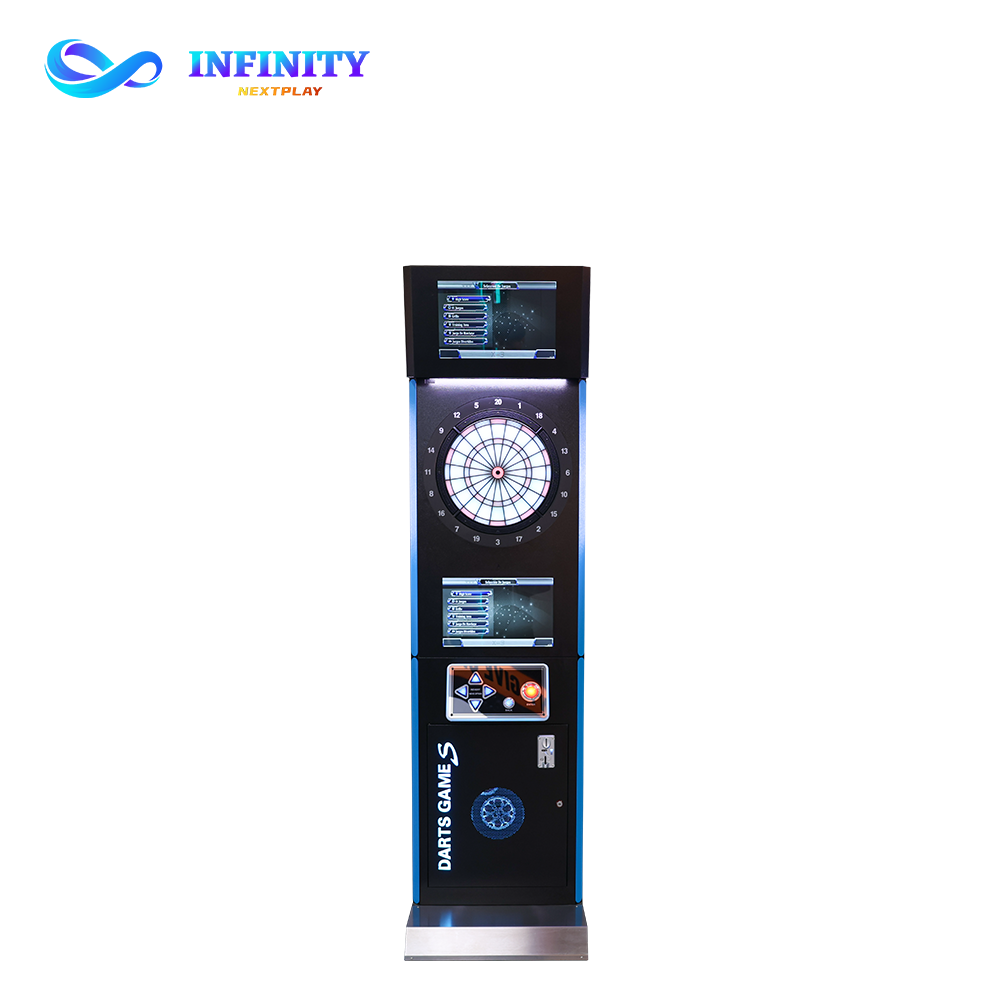
Buy the coin-op machine when the walk-in crowd is proven: $1.5-4K hardware (published) plus the small lines lands a first-year all-in around $2.5-5K, and the published $300-500 monthly net books the payback in 14-20 months. The Professional Arcade Dart Machine X3 is this tier's machine - dual HD screens, automatic scoring, no league infrastructure required.
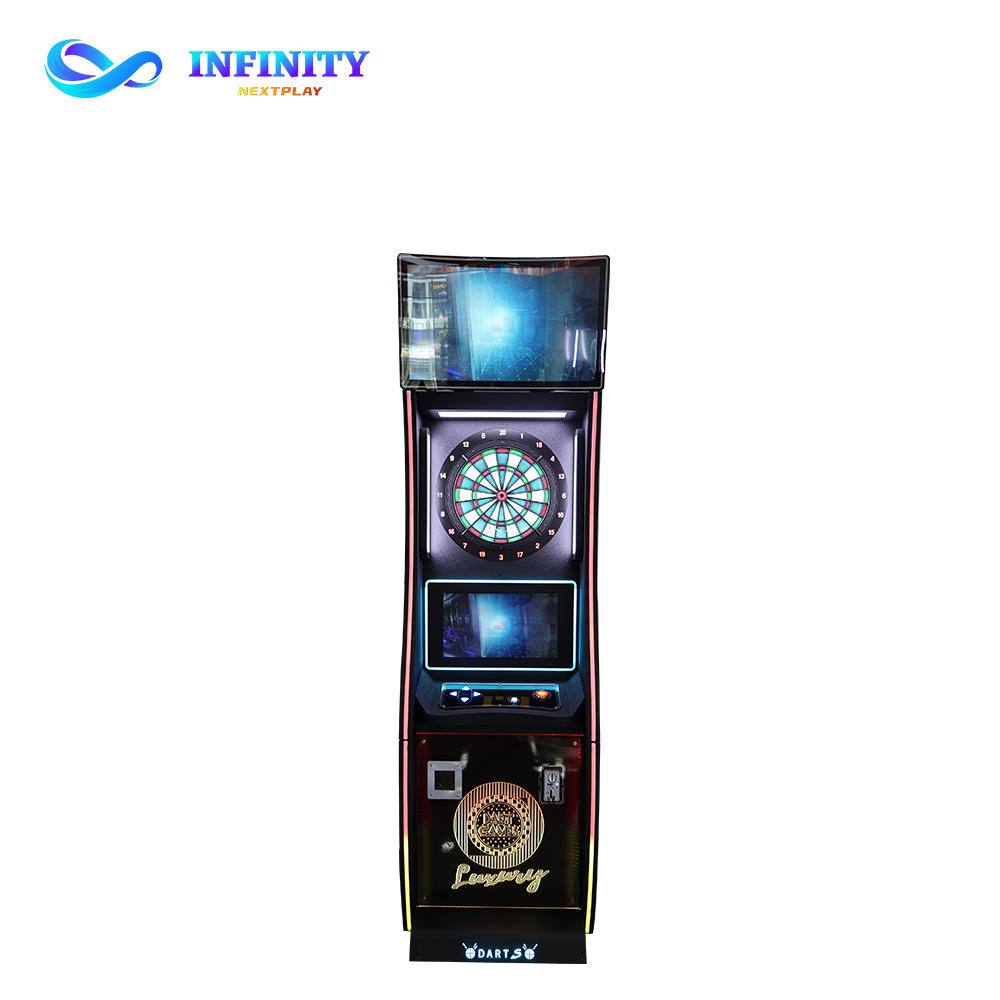
Configure four when the league calendar is the plan: the published $14-18K four-unit configuration includes cards, wall protection and league activation, and the same book earns the $1,850 monthly yield with a 7.6-month payback (the published X7 model). The leap from one to four is not four times the machine - it is the difference between a game and a calendar, as the published darts-night guide scripts it.
Lease or revenue-share when demand is unproven: the monthly cut costs more over three years, but it keeps the balance sheet clean while the room proves the traffic - the honest middle path for a first attraction. Whichever the book, the machine tucks beside any anchor in the room: the LED floor, the counter, or a two-lane corner in a multi-attraction plan drawn through the free 3D layout design.
The payback arithmetic, from the published anchors: coin-op nets $300-500 a month against $1.5-4K hardware - 14-20 months (published). The online league model nets toward $1,850 a month against $14-18K configured - 7.6 months (published). Same wall, two books, and the difference is the calendar the league tier builds: entries, drink minimums and recurring teams fill the weeknights the walk-in crowd never does.
The first quarter's budget discipline: price the per-game at the published $0.50-1 band, protect the wall before opening week, keep two house-dart sets in rotation, and bank the first quarter's yield before deciding to scale - the machine's numbers are the cleanest in the room, and they justify the next purchase order on arithmetic alone. The full zone the machine plugs into is a layout question; the free 3D layout design prices it.
How much does a commercial dart machine cost? The machine: $500-1,500 basic, $1.5-4K coin-op, $4-8K online (published bands). The all-in: add 15-25% for the lines around it - protection, darts, spares, delivery - or quote the published $14-18K four-unit online configuration when the league calendar is the plan. The payback is published arithmetic: 14-20 months on coin-op at $300-500 net, 7.6 months on the league model at $1,850. Buy when the traffic is proven, configure four when the league is the plan, and let the published bar-perspective cost guide and the X7 model referee the bids.
The published hardware bands: $500-1,500 for a basic electronic board, $1,500-4,000 for a commercial coin-operated machine, and $4,000-8,000 for an online multiplayer unit. The all-in first-year cost adds delivery, wall protection, house darts and (on the online tier) network setup - roughly 15-25% on top of the machine.
No - it is about three quarters of it. The lines around the machine: delivery and installation, the wall protection mat that saves your drywall, house darts and flights, a service spare, and on the online tier the network activation. The published four-unit configuration at $14-18K already includes cards, protection and league activation.
Almost none compared with any other attraction: power draw is trivial, there is no dedicated staffing, and the upkeep line is darts, flights and the occasional board part. On a revenue share or lease model the operator's cut replaces the upfront price - the published profit math nets $300-500 a month on coin-op after those lines.
Buy when the yield is proven - the published 14-20 month coin-op payback makes ownership the better book. Lease or revenue-share when testing demand: the monthly cut costs more over three years but keeps the balance sheet clean while the room proves the traffic.
The published frames: 14-20 months for a coin-operated board at $300-500 monthly net, and 7.6 months for the league-driven online model at its $1,850 monthly yield. Both bands assume the machine is actually played - placement and programming do the rest.
Skipping the lines around the machine: no wall protection turns every bounce-out into drywall work, no house darts turns players away, and no spare board part turns a month of yield into a service wait. The machine is the cheap part of doing it right.
Send your venue's traffic profile: we will return the tier recommendation and the all-in stack through the free 3D layout design - anchored with the Arcade Dart Machine X3 and the Online Dart Machine X7.