A sportainment venue is a commercial floor planned as scored zones. Two or more equipment categories share the space, every zone sells a timed session at a published price, and a scoring and league layer connects the zones into repeat play. Food and drink sit on the route between zones, because the sessions are short by design.
The building test comes before the word. A floor qualifies when a guest can play two paid activities in one visit without leaving it, and when the walk from one zone to the next passes a third activity. The vocabulary and the category definitions sit in what sportainment means; this page answers the question one step further on, which is what the venue itself has to contain.
The commercial reason is layout, not vocabulary. A floor that buys one headline machine and fills the rest with unmonetized space earns the price of that machine. A zone plan spreads the same capital across several revenue lines, and the revenue math per category is covered in what a sportainment center earns.
A sportainment venue passes three tests: two or more scored equipment categories, timed sessions with a published price, and a route that walks a guest past a second paid activity on the way to the first one. Anything less is an attraction, not a venue.
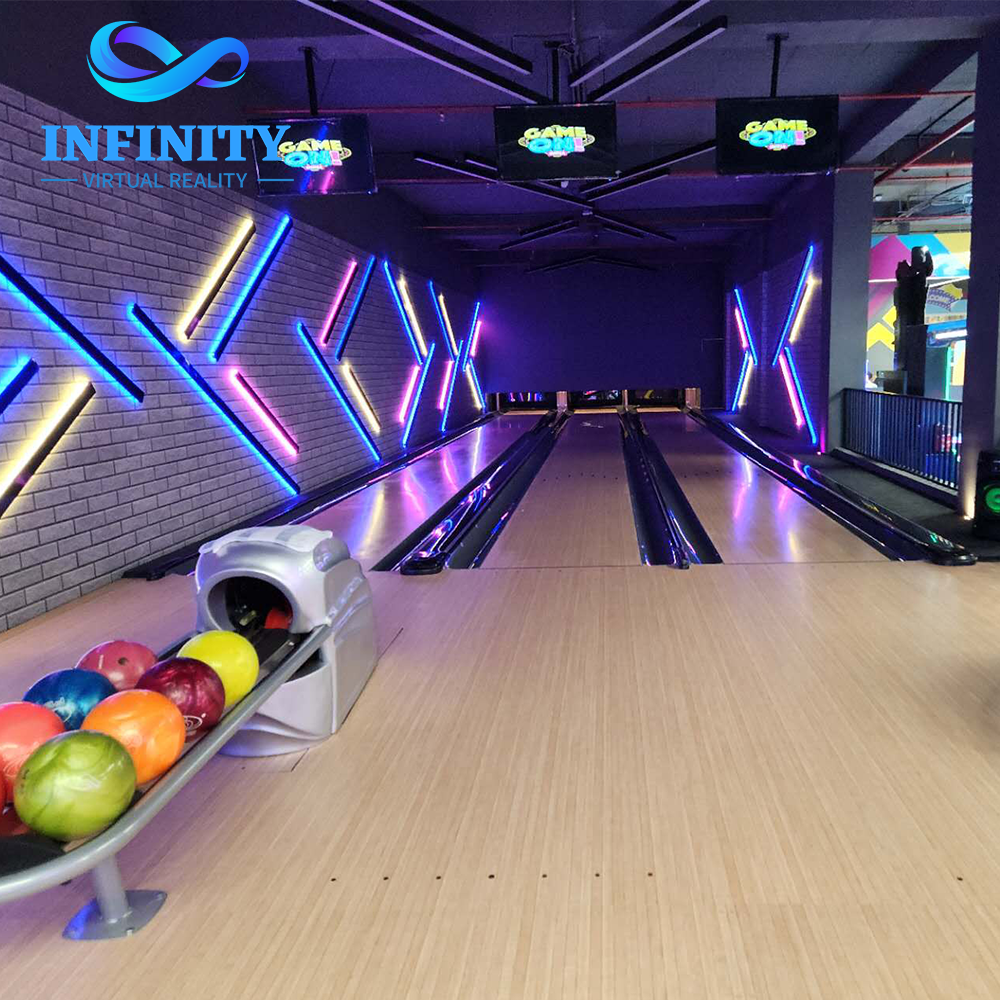
Lane and target sports cover bowling in its ten-pin, duckpin and string formats, plus electronic darts, digital archery and shooting. Simulator bays cover golf, racing, batting and flight, each a self-contained room with its own tracking hardware. Active-play grids cover interactive LED floors, jumping tiles and team challenge rooms. Immersive covers free-roaming VR arenas, motion chairs and cinema rides.
The layers are not interchangeable. Each one answers a different group size, session length and price point, and the mix is what keeps a floor busy on a Tuesday as well as a Saturday. A floor carrying all four layers sells to a couple on a date, a family of five, a corporate group of forty and a league team of six, without reconfiguring anything.
Two layers is the working minimum and three or four is the typical build. A custom interactive sportainment set is a common opening move because one engineered zone carries several scored games at once. The routing logic that connects the layers is the same one behind combining LED tile floors, darts and VR into one attraction loop.
1) Lane and target sports: ten-pin, duckpin and string bowling, electronic darts, digital archery, shooting. 2) Simulator bays: golf, racing, batting, flight. 3) Active-play grids: LED floors, jumping tiles, team challenge rooms. 4) Immersive: free-roaming VR arenas, motion chairs, cinema rides.
The lane layer sets the rhythm of the visit. A lane sells the hour, anchors the booking and gives the group a home base, and the target sports fill the minutes between frames. A floor with lanes and darts holds a group for two hours; a floor with lanes alone holds them for one game and releases them to the street between turns.
Compact lanes are what make the layer fit a small plan. A duckpin bowling system runs 9.7 to 13 m and installs in roughly half the footprint of a ten-pin lane, string systems trade the pinsetter machine for a tether and a lower ceiling, and a full 26 m ten-pin bank anchors a 2,000 m2 floor.
Target sports carry the weekday revenue the lanes start. Electronic darts hang on the bar wall at almost zero floor cost, digital archery and shooting bays take 3 to 5 m2 each, and the league night they produce is worth about $1,520 in a single evening. The lane formats and their math are compared in what duckpin bowling is.
Duckpin lanes run 9.7 to 13 m and install in about half the footprint of a ten-pin lane. A 26 m ten-pin bank anchors a 2,000 m2 floor. Darts and digital archery fill the minutes between frames, and one league night produces about $1,520.
A simulator bay is a sealed room with its own tracking, projection and scoring, sold by the half hour or the hour. Golf runs in about 15 m2 with 4K laser projection and high-speed camera tracking, racing seats into a cockpit with motion, and batting needs its netting counted as floor before the economics work.
Bays are the yield leaders on a worked floor. In one measured comparison an archery bay produced about $960 per m2 a month at a 68% margin, a shooting lane about $460 at 62%, and a baseball lane about $160 once the netting footprint is counted. The full comparison is in which sports simulator yields more revenue.
Placement follows session length. A bay holds two to six players for 30 to 60 minutes, so bays sit off the main circulation route where a waiting group does not block the walk-in traffic, with a sightline from the bar so the table turnover starts on time.
Golf runs in a 15 m2 bay with 4K laser projection and high-speed camera tracking. Measured monthly yield per square meter: archery about $960 at a 68% margin, shooting about $460 at 62%, baseball about $160 after netting.
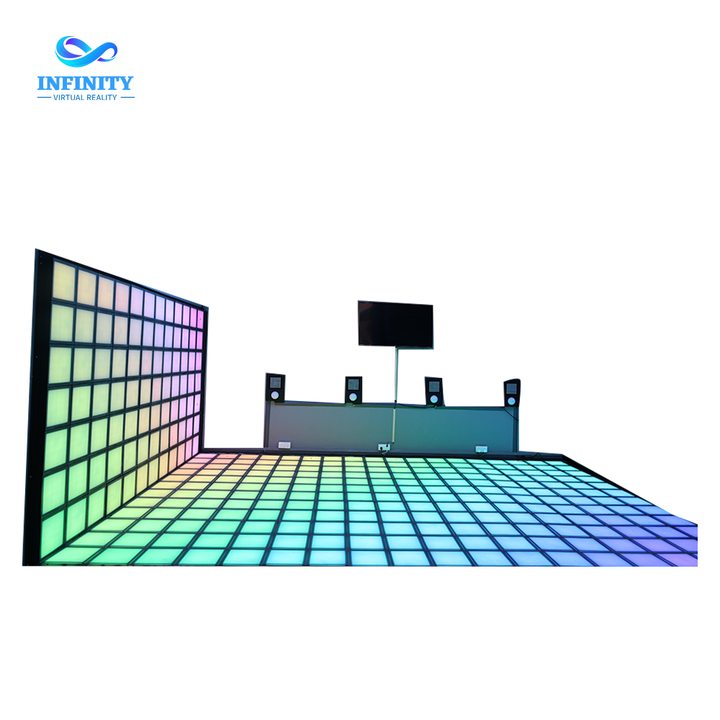
The grid layer is the turnover engine. Interactive LED floors and walls sell short scored sessions to big groups: a 30 m2 tile room takes eight players at $10 each for a 15-minute game, which is about $320 per hour, against roughly $25 to $40 per hour from four arcade cabinets in the same space. The shift behind that number is analysed in why active gaming replaced the traditional arcade.
A LED floor with light-up jumping tiles doubles as the party room product. Party and event rental business books the grid by the session in off-peak hours, which is revenue the lane and bay zones cannot reach on a weekday afternoon.
Grid zones also do the routing. They sit on the circulation path because their sessions are short and visible, and a guest who finishes a grid game is standing next to the route that leads to the bar and to the second paid activity. Damaged tiles hot-swap in about three minutes during service, so the zone never closes.
A 30 m2 LED tile room takes eight players at $10 each for a 15-minute game, about $320 per hour. Grid zones hold the best cost-to-turnover ratio on the floor, double as the party room product, and hot-swap a damaged tile in about three minutes during service.
The immersive layer sells the premium session. A free-roaming VR arena hosts two to eight players in one walkable session of 15 to 30 minutes, at the highest per-session price on the floor, and it converts the group that has already played everything else on the plan.
Motion chairs, egg seats and cinema rides add single-rider throughput next to the arena. Their footprint is small, their session is short, and they absorb the queue that forms when the arena is full, which protects the per-session price instead of discounting it.
Immersive is last in the purchase order on purpose. VR earns when the rest of the floor feeds it groups that arrived for lanes, bays or grids, and an arena opened into an empty floor sells its premium sessions at walk-in prices. Sequencing the layers is covered in why sportainment keeps growing as a demand question and in the purchase order below as a capital question.
Free-roaming VR arenas host two to eight players per walkable session of 15 to 30 minutes at the highest per-session price on the floor. Motion and egg-chair units add single-rider throughput in a small footprint and absorb arena queues.
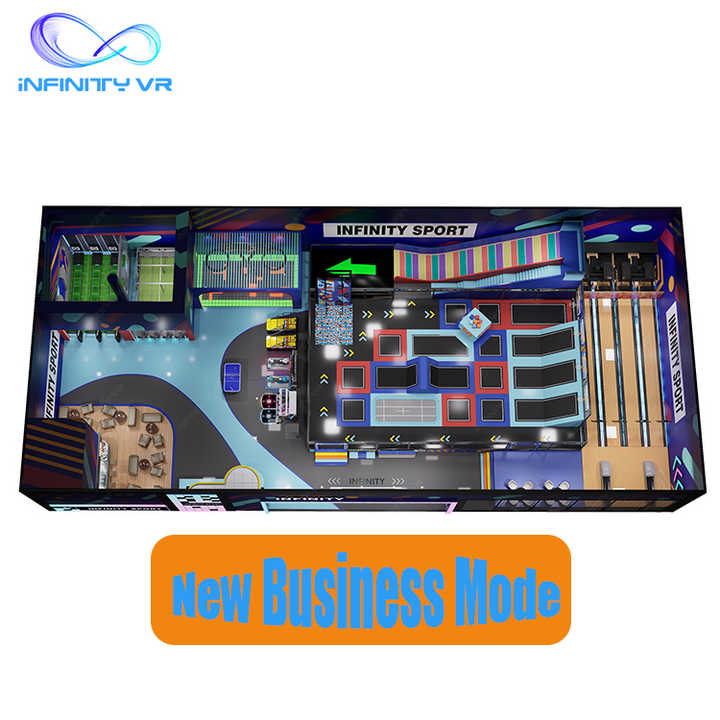
Zone the floor in three bands. Short-session, high-count attractions sit at the entrance, where they convert walk-ins in minutes. Lanes and bays hold the middle, where groups settle in. Long-session, high-spend attractions sit at the back, so a 60-minute bay booking never competes with the entrance traffic for the same square meter.
The bar belongs on the route between two bands. Sessions end at staggered times by design, and a bar positioned where the route narrows collects the drink order at the moment the session ends. Corporate bookings on a games floor carry a 72% F&B margin contribution, and mall anchor builds report a 45% F&B margin lift.
The walk-past rule closes the plan: every paid zone is visible from the main route, and no zone exists only to fill space. The dead corner is the most expensive square meter in the venue, because it pays rent every month and sells nothing ever.
Three bands: short-session, high-count attractions at the entrance; lanes and bays in the middle; long-session, high-spend attractions at the back. Put the bar on the route between two bands, keep every paid zone visible from the main route, and leave no dead corners.
At 240 m2 a social lounge carries compact lanes, a service bar and one simulator bay, which is a two-category venue by the zone test. At 300 m2 a hotel and resort build adds a dual-bay shooting and archery lounge and an LED surface, installed without floor penetration so the space stays reversible for the landlord.
At 800 m2 a sports bar model carries four lanes at $45 per hour plus three shooting bays at $35 per hour and a dart zone. At 1,000 m2 a modelled eight-zone plan shows about $143 per m2 with 250 visitors a day and an $18 average attraction spend. At 2,000 m2 the park format adds the 26 m ten-pin bank and batting, on an average yield of $135 per m2.
Mini golf is the quiet fifth layer at the larger sizes. A modular mini golf course solution scales from about 300 m2 to a full park, adds the family session the lanes do not catch, and runs with one attendant. How the bands compare as business models is the subject of what an indoor entertainment venue is.
240 m2: compact lanes, service bar, one simulator bay. 300 m2: two-lane anchor, dual-bay shooting and archery lounge, LED surface. 800 m2: four lanes at $45 per hour, three bays at $35 per hour, dart zone. 1,000 m2: eight zones at about $143 per m2. 2,000 m2: 26 m ten-pin bank, batting, AR golf at about $135 per m2.
The lane bank is the largest single purchase in most plans, and it only earns when the rest of the floor feeds it groups. Over-buying the headline attraction is the largest planning risk at every size: a 26 m bank that pulls guests away from the rest of the floor competes with itself, and the revenue per square meter falls even as the anchor stays busy.
Software, spare parts and training are the three lines that get cut first when a project runs over budget, and they are the lines that keep the floor open in month twelve. Venues that carry them report 98% equipment availability through peak season with pre-opening checks under 12 minutes per lane.
The purchase order that follows from the layers: grids and target sports first, because they turn over fastest and carry the weekday; lanes second, because the anchor needs the floor around it to be alive; immersive last, because it converts groups the other layers already built.
The lane bank is the largest single purchase and earns only when the floor feeds it groups. Carry software, spares and training inside the first purchase; they protect 98% availability and sub-12-minute opening checks. Purchase order: grids and target sports, then lanes, then immersive.
Merging rooms is how a plan fits two more categories without buying square meters. Shooting and archery share one dual-bay lounge with one attendant. Darts hang on the bar wall. The LED grid runs inside the party room, so the party booking and the walk-in grid revenue use the same tiles at different hours.
Cut any zone that fails the route test. A duplicate simulator aimed at the same group size splits its own demand, a trampoline zone carries an insurance and maintenance profile many mixed-use landlords reject on upper floors, and a corner built to look full on the floor plan is a rent line with no counter.
After the cuts, run the zone test again. Two live categories that a guest can play in one visit is the floor of the format. If a plan cannot reach two after the merges, the project is a collection of attractions and should be bought and priced as one.
Merge shooting and archery into one dual-bay lounge, hang darts on the bar wall, and run the LED grid inside the party room. Cut duplicate categories, trampoline zones on upper floors and any corner that exists to fill space. Re-run the zone test: two live categories is the floor of the format.
Budget by zone, not by venue total. A published compact build covering six bowling lanes, AR simulators, a 9D VR flight cinema, sound and installation lands between $185,000 and $240,000, which is a reference point and not a quote for a different mix.
Size the mix from three answers: the average group size you serve, how long that group stays, and what they spend on food and drink while they are in the building. A family floor and a corporate floor answer those questions differently and should not share a shopping list.
Close the plan the way it will be judged. Keep the weekly revenue-per-square-meter report by zone from day one, because the format lives on rebalancing space toward whatever earns rather than on buying another attraction. The category landing page at the sportainment solution page collects the equipment referenced here.
Reference compact build: $185,000 to $240,000 for six bowling lanes, AR simulators, a 9D VR flight cinema, sound and installation. Budget by zone, size the mix from group size, dwell time and F&B spend, and review revenue per square meter by zone weekly.
A commercial floor planned as scored zones: two or more equipment categories, timed sessions with published prices, and a scoring and league layer connecting the zones. The building test is whether a guest can play two paid activities in one visit without leaving the floor.
A family entertainment centre leads with rides, soft play and arcade cabinets, and prices by token or card. A sportainment venue leads with scored sports and simulator bays, prices by session or hour, and depends on leagues for weekday revenue. Four cabinets earn about $25 to $40 per hour where a 30 m2 LED tile room earns about $320.
Two categories is the working minimum and three or four is the typical build. The mix matters more than the count: each layer answers a different group size and session length, and every zone has to earn its square meters on the route.
240 m2 fits a social lounge with compact lanes, a bar and one bay. 300 m2 adds a dual-bay target lounge and an LED surface. 800 m2 carries four lanes and three bays. 1,000 m2 supports an eight-zone plan at about $143 per m2, and 2,000 m2 supports the full park format with a 26 m ten-pin bank.
A published compact build with six bowling lanes, AR simulators, a 9D VR flight cinema, sound and installation lands between $185,000 and $240,000. Budget by zone rather than by total, and carry software, spare parts and training inside the first purchase.
Send us the floor area, the ceiling height and the group size you serve. We return a zone plan across the sportainment categories with CAPEX, hourly yield and a payback model for your market.