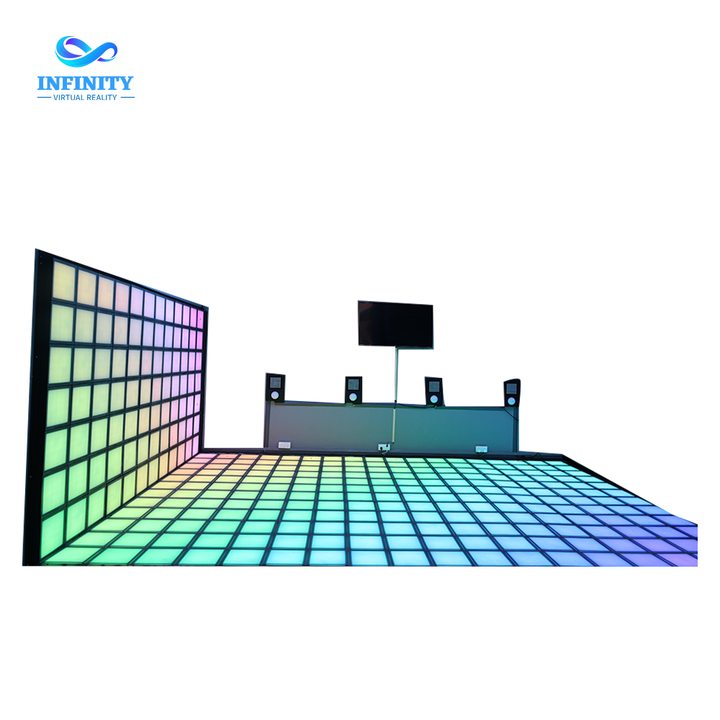
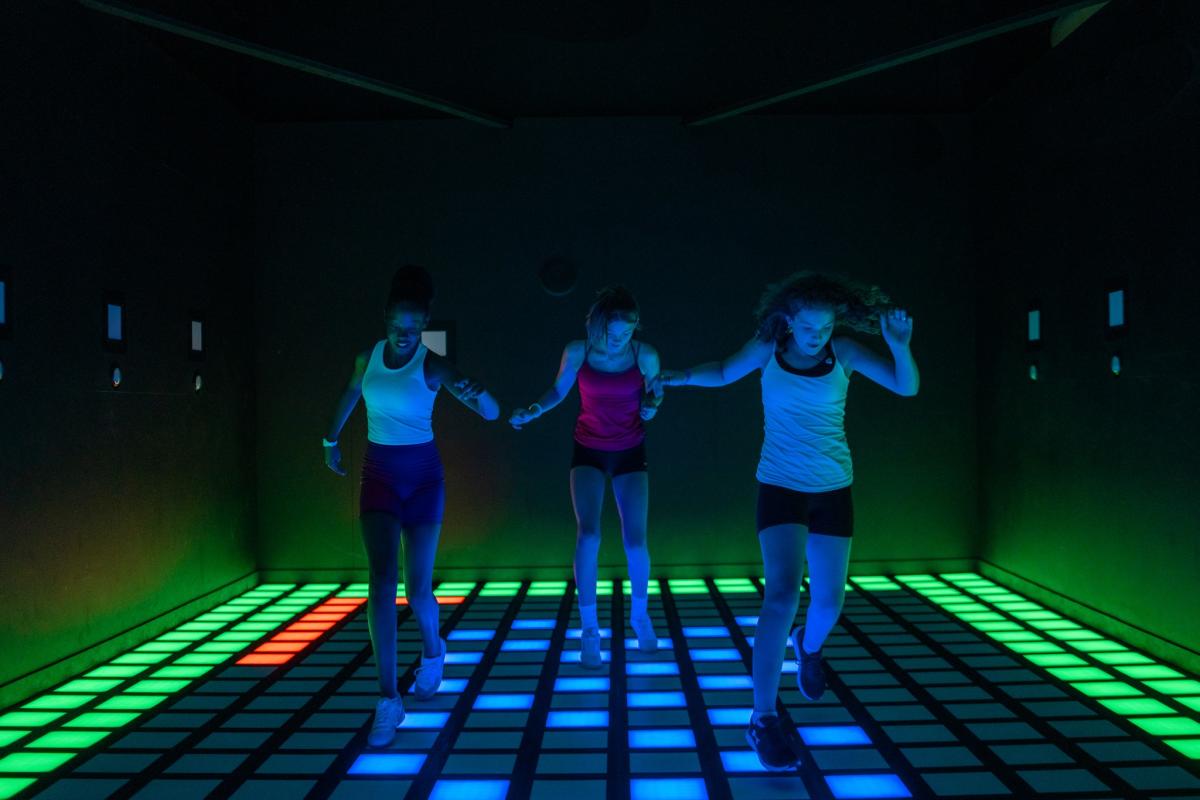
A commercial LED dance floor is a modular tile grid that senses a foot or a body, answers with light and sound, and keeps a score. Buyers use the phrase LED dance floor for it because the first thing it does is turn a room into a party; operators learn quickly that the same grid is also a game machine, a booking magnet and a photo backdrop. That dual identity is why a commercial LED dance floor buying guide has to start with the specification, not the price: what separates a floor that runs unattended every weekend for years from a rental-grade panel that survives one season is tile construction, sensing, the game library and the software behind it.
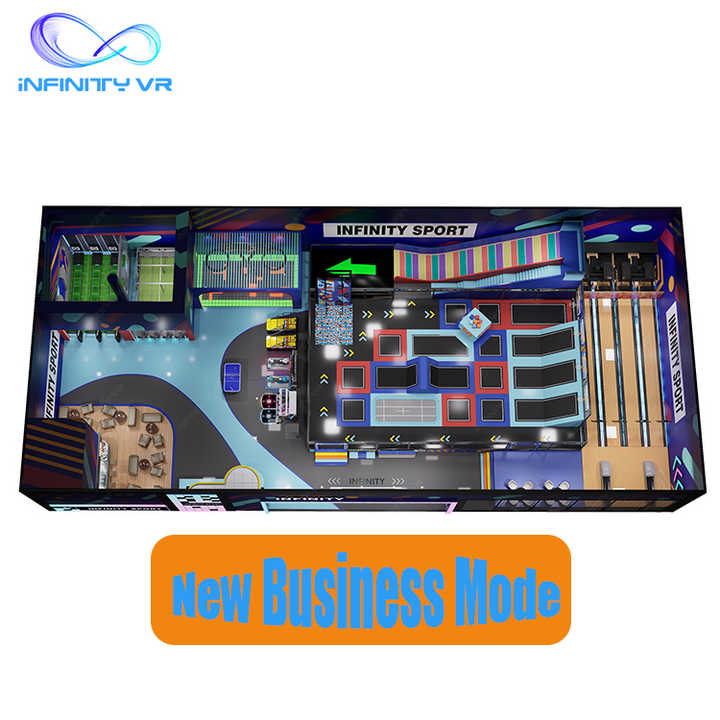
The buyer is specifying two things at once. First, a party surface for social bookings, school groups, birthdays and event rentals - the use case the birthday party packaging model monetizes as a weekend add-on. Second, an active-play attraction that competes with arcade machines for the same square meters, which is why the cluster treats it as a game grid and not furniture: the Floor Is Lava LED grid guide explains the game format, and the full-venue profitability case reads the floor as a revenue zone. A purchase that serves only one of those jobs is almost always the wrong specification.
This guide walks the decision in the order a real buyer makes it: the four buying dimensions, a configuration comparison table by tier, the footprint tiers that decide how many players the floor can carry, the game library and software that keep it fresh, the durability and installation checklist, and finally the cost bands and the questions to put in the request for quotation. Every number below traces to a published cluster article or a first-party planning model, deep-linked inline.
Four specifications separate a serious commercial floor from a decorative one. Ask for all four in writing before comparing any price.
1. Tile size and construction. Commercial floors are built from modular tiles (a 50 by 50 cm tile is the common module) so a venue can tile exactly the shape it needs and replace a single damaged tile instead of a panel run. Tile size drives two costs: smaller tiles give finer game patterns and a more even surface, while larger tiles install faster and cheaper per square meter. What matters more than the module is the top layer - a serious floor uses 10 mm toughened glass rated IK10, the impact class documented in the zero-downtime reliability guide, with a load rating near 1,500 kg per square meter so a group jumping in sync does not crack a tile.
2. Sensing resolution and response time. This is the dimension buyers most often skip and most often regret. A commercial floor should sense pressure and motion fast enough that a game reads as instant - the cluster reference is sub-10 ms response with roughly 256 sensing points per square meter, the density the LED floor zone design guide uses when it plans a game area. Low sensing density makes team games feel laggy and unfair; high density is what lets a versus race, a reaction sprint and a team relay all run on one grid. If a supplier quotes a price without quoting sensing points and response, the specification is incomplete.
3. The game library. A commercial floor ships as a platform with a mode library, not a fixed light show. The published reference floors run a base library of 30 to 40+ modes - reaction sprints, versus races, team-cell relays, cooperative challenges - and the mode mix is what turns one floor into three or four different attractions across the day. Multiplayer and team formats matter most for commercial returns: the capacity guide sizes scorable players per mode, and it is the team modes that fill party bookings and corporate groups.
4. Durability and support. A commercial floor takes thousands of jumps a week. Ask for the impact rating, the load rating, the tile warranty, the spare-tile policy and the software update cadence. The reliability argument is structural - the safety and insurance comparison contrasts a solid-state tile grid with trampoline maintenance, and the replayability case shows why venues keep getting repeat visits out of the same hardware once the software stays fresh.
Configuration, not size alone, sets the price. The table below reads three commercial tiers off the published first-party planning bands and the footprint tiers, so a buyer can see what each tier is actually for before asking for a quote.
| Configuration | Sensing + tile | Game library | Typical footprint | Best for | Published cost band |
|---|---|---|---|---|---|
| Party-room entry | Modular tile, pressure activation, lighter grid density | Fixed party and light-show modes | 8-12 m2 corner or party room | Boutique venues, event-rental add-on | Display-type hardware $800-$2,500 per m2 |
| Team play | Sub-10 ms response, ~256 sensing points per m2, IK10 glass | 30+ mode library, versus and team relays | 20-30 m2 standard zone | Indoor entertainment venues, F&B floors | Interactive turnkey $1,500-$3,500 per m2 |
| Anchor grid | Same sensing, full grid, spare-tile service | 40+ modes, multiplayer leagues, cloud updates | 50 m2 and up | Anchor attraction for a venue floor | 30 m2 full blueprint $42,000-$78,000; 8-12 month payback at high traffic |
The entry tier is honest about its job: it is a party surface and a rental asset, and at roughly $800-$2,500 per square meter of display-type hardware it is the right buy for a venue that mainly wants a photographed room. The team tier is the one most indoor entertainment venues should specify, because sub-10 ms sensing and the 30+ mode library are what make the floor a competitive game that turns over. The anchor tier behaves like a small arena - the full Infinity Grid reference product at the Infinity Grid LED dance floor is positioned at exactly this level, with the grid, the mode logic and the multiplayer structure set as one engineered system.
Two cautions on reading the bands. First, the per-square-meter figure covers different scopes at each tier: the entry band is hardware for display, while the turnkey band includes the sensing, control and software that make the floor interactive, so the two are not directly comparable. Second, payback is a traffic assumption, not a product promise - the published full-blueprint case reaches an 8-12 month payback only under high-footfall conditions, while the general interactive band runs 12-30 months. The interactive LED dance floor cost guide and the LED game floor cost breakdown carry the line items behind both.
The floorplan decides the tier more than the budget does. The published capacity model reads in three footprints, and the configuration should follow the footprint, not the other way around.
8-12 m2: the party corner. A small grid for one to four players, sized for a party room, a bar corner or an event-rental floor. Buy the entry tier here: light-show and party modes, an owner operated surface, and the weekend add-on model the birthday packaging guide describes. Sensing density matters less than tile finish and how the corner photographs.
20-30 m2: the team zone. The standard commercial configuration. The capacity guide fits about six to eight active players in team modes on a 20-30 m2 grid, which is the size that supports versus races, relays and league play - and the size most indoor entertainment venues should build. This is the tier where sub-10 ms sensing and the full 30+ mode library earn their cost, because the floor is now a competitive attraction and not a light show. The immersive interactive LED floor game is the reference product at this scale.
50 m2 and up: the anchor grid. At this footprint the floor carries 8-10+ players and behaves as a venue anchor, which is where the full-blueprint configuration and the cloud-update game library pay off. The staging logic is the same one the zone design guide applies to the whole floor: sense, place, power, play, reuse. Buy the anchor tier only when the room and the footfall support it; below 50 m2 the team tier delivers the same modes at a lower capex.
A commercial LED dance floor is bought once and lived with for years, so the software decides the second, third and tenth visit. Three software questions belong in every specification.
How big is the base library, and how is it organized? Look for a library in the 30 to 40+ mode range, sorted into reaction games, versus and team formats, and free-play. The mode mix should let the same grid run a family free-play session in the afternoon, a birthday party game set in the evening and a team league at night without adding hardware. The capacity guide is useful here because it sizes the scorable player count per mode, which is what determines which bookings each mode can serve.
How does content stay fresh? Software updates are the cheapest repeat-visit lever a venue owns. The cluster documents the mechanism directly: replayability stays about three times higher when players keep coming back to beat scores, and solid-state floors run with effectively zero mechanical downtime so the only variable left is content. A floor whose library never changes gets old in one season; a floor on a regular update cadence behaves like a new attraction every quarter. Specify the update route and who owns it.
Does it support leagues and leaderboards? Versus and leaderboard modes convert casual play into repeat play and give a venue a reason to run events. This is the same logic that makes the floor a booking magnet for parties: a scored, comparable game is a social product, and the party-room case at the dead-corner activation model shows how a scored grid turns quiet hours into booked sessions.
The specification is only half the buy; the other half is whether the room can take the floor and whether the warranty holds up. A commercial LED floor is a construction project as much as an equipment purchase, and the two published checklists below cover what to fix before signing.
The installation checklist. The interactive floor tile grid install guide walks the subfloor, power and sync path, and the ceiling and floor prep checklist covers subfloor flatness and the electrical drop. In short: a flat, sound subfloor within tolerance, the power capacity the grid needs, cable routing that keeps the play surface clean, and a sync and control point that staff can reach. Skipping the prep is the most common cause of a floor that underperforms its spec.
The durability checklist. Confirm the impact class (IK10 on 10 mm toughened glass), the load rating (near 1,500 kg per square meter), the tile warranty and, critically, the spare-tile policy - a commercial floor must be repairable tile by tile. The safety comparison explains why the solid-state grid carries a lower maintenance and insurance profile than moving-part rides, and the reliability guide is the reference for the zero-downtime claim. Ask for the spare-tile lead time in writing; it is the one number that turns a two-day repair into a two-week outage.
Who installs and who services it. A turnkey commercial floor should come with installation by the supplier or a certified partner, a commissioning test of the sensing grid, and a named service contact. The whole-venue purchasing routine at the sportainment equipment buying guide is explicit that suppliers price an engineered zone differently from a list of loose items, and an LED floor is the clearest example: the grid, the controller and the software only perform as a system.
Cost is the last question, because until the tier and the footprint are fixed the number is meaningless. The published bands give the range; the request for quotation should pin the scope inside it.
The cost bands. Display-type hardware runs roughly $800-$2,500 per square meter; interactive turnkey systems that include sensing, control and software run roughly $1,500-$3,500 per square meter; and a full 30 m2 blueprint lands in the $42,000-$78,000 range. A 20 m2 interactive zone therefore plans in the $30,000-$65,000 band. The LED dance floor cost guide and the game floor cost breakdown carry the detail, and the profitability case shows the revenue side: a 20 m2 zone can turn an evening session of roughly $450-$700 at published utilization, at $6-$12 per player.
The revenue comparison worth doing. Before choosing an LED grid over the alternatives, note that the cluster compares it directly with a projection floor on revenue per square meter (LED vs projection revenue comparison). The pattern is consistent: an interactive tile grid costs more up front and earns more per meter over time, because it senses bodies, runs competitive modes and needs less tending than a projected surface. If the venue plans to sell competitive play and parties, the tile grid is the higher-return specification.
The RFQ list. Ask for: tile module size and top-layer material; IK10 and load ratings; sensing points per square meter and response time; the full mode library and update policy; multiplayer and leaderboard capability; footprint, power and subfloor requirements; spare-tile price and lead time; installation scope and commissioning; and the software license terms. A custom interactive sportainment configuration is the route when the floor sits inside a larger zone and the grid, the room layout and the mode logic should be engineered together rather than bought as parts.
The specification questions buyers ask most often when they compare commercial LED dance floor suppliers, answered with the published cluster references.
A 50 by 50 cm modular tile is the common commercial module, chosen so a venue can tile its exact shape and replace one tile rather than a whole panel run. What matters more than the module is the top layer: 10 mm toughened glass rated IK10, with a load rating near 1,500 kg per square meter.
The published capacity model reads in footprints: a small 8-12 m2 grid carries up to about four players, the standard 20-30 m2 zone runs about six to eight active players in team modes, and a 50 m2 and up anchor grid carries 8-10+. The scorable count depends on the mode, which is why the team formats are the ones that fill bookings.
Published first-party bands: display-type hardware runs about $800-$2,500 per square meter; an interactive turnkey system with sensing and software runs about $1,500-$3,500 per square meter; a full 30 m2 blueprint lands about $42,000-$78,000, so a 20 m2 interactive zone plans in the $30,000-$65,000 range.
A projection floor throws an image onto a surface and senses less precisely; a commercial LED dance floor is a tile grid that senses each step and keeps score. The cluster comparison shows the tile grid costs more up front and earns more per square meter over time, because it supports competitive modes and parties with less tending.
Look for a base library in the 30 to 40+ mode range, sorted into reaction games, versus and team formats, plus free-play. The mode mix is what lets one grid serve a family session, a birthday party and a team league, so it is a primary commercial specification rather than an extra.
Confirm IK10 glass and the load rating, sensing points per square meter and response time, the full mode library and update policy, multiplayer and leaderboard support, subfloor and power requirements, spare-tile price and lead time, installation and commissioning scope, and the software license terms.
Five lines to carry into a purchase of a commercial LED dance floor.
Start the way a disciplined buyer does: fix the footprint and the tier, write the sensing, mode and durability requirements into the RFQ, and put the grid on the actual floor plan with the free 3D layout design. The sportainment equipment buying guide holds the full purchasing routine, and the capacity guide holds the player counts every configuration in this guide quotes.
Tell us the room, the footprint and the guest mix: we will return the tile, sensing and mode specification and draw the grid on your floor plan with the free 3D layout design - start from the Infinity Grid LED dance floor or the custom interactive sportainment route.