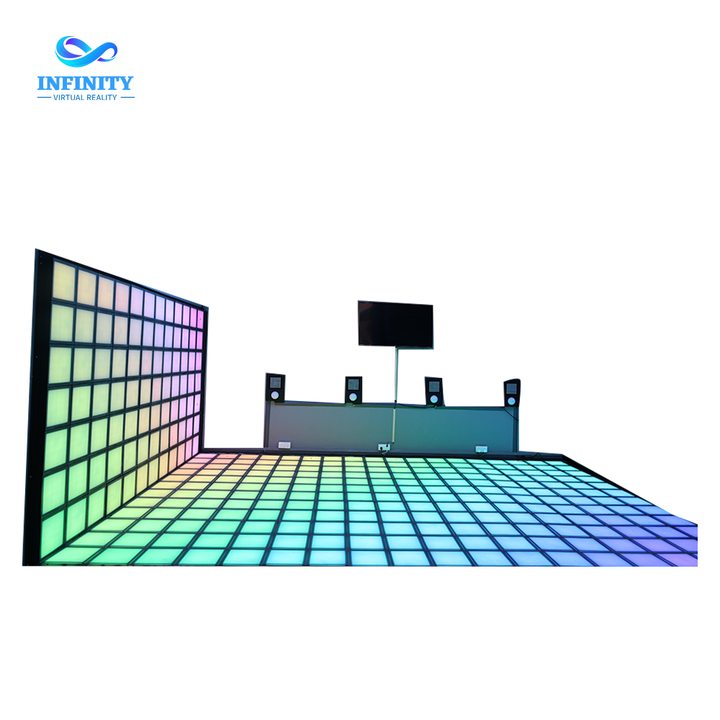
Most gaming venues are built on walk-in traffic, which means the calendar is a lottery: the crowd comes when the weather, the fixture and the mood line up, and the floor sits dark the rest of the week. A venue with a group booking calendar runs a different business: groups book ahead, so the schedule becomes predictable; groups spend more per head, because the package covers room time, a host and a set number of rounds, and stay for food and drinks around the session; and groups fill weekday hours, the slots walk-in traffic never covers. For an active gaming venue, repeat group bookings are the lever that turns a Friday-night business into a weekly one. This case study follows a 520m2 venue that installed an interactive LED tile floor and moved its repeat rate from 18 percent to 41 percent in seven months, its group bookings from 6 to 22 per month, and its weekday utilization up 3.2 times. The product at the center of the story is the Infinity Grid LED Dance Floor, an interactive light-up tile surface where groups of four to ten compete in real-time scoring challenges.
The economics explain why the owners cared about those numbers. A walk-in player spends $8 to $12 per visit. A group guest spends $28 to $45, because the package includes the room, the host and game credits, and the group stays longer, ordering food and drink around the session. Predictable slots matter as much: a booked group arrives at a fixed hour and frees the room on schedule, so the venue sells the same floor twice a day instead of once. That accounting is what turns an LED challenge room into a profit center rather than a spectacle. The room becomes the product the venue sells; darts, shooting and the bar become the social setting around it. Venues that run this model report that one active challenge room generates more booked revenue per square meter than any other game on the floor. The sections below cover the repeat mechanisms, the booking packages, the case numbers, the technical checklist and the payback math.
The repeat reason is the missing piece in most game floors: a guest who tries a challenge once has no reason to come back, but a guest on a persistent leaderboard has a reason every week. The Infinity Grid LED Dance Floor keeps every score in a public list that resets monthly, so a group that loses to a rival team carries a grudge until the next season. Three mechanisms drive the loop. The first is the persistent leaderboard: names stay on the wall screen between sessions, and the top ten become the talk of the room. The second is beat-your-own-score: each group personal best is stored, so a group always has a reason to improve its own number even when it cannot reach the top. The third is the monthly challenge season: the venue announces a new challenge on the first Monday, publishes standings every Friday and runs a final with prizes on the last Saturday. Operators report season players visit two to three times more often than walk-ins, each visit carrying food and beverage spend.
The booking model turns the challenge room into the calendar engine. Three segments book the space, each with a different price logic. Corporate team building books weekday afternoons at the full package rate, because companies pay for a contained, supervised activity with a leaderboard they can bring back to the office. Birthday parties book weekend afternoons in two-hour slots, and the venue prices the room plus a party host plus a fixed menu, lifting spend per head without adding staff. School groups book weekday mornings at a lower per-head rate in exchange for volume, usually 15 to 30 students per visit. The shared structure is a room hour plus a host plus game credits, and the table below shows the packages the case venue operates. Every package ends with a printed scorecard, which is the souvenir that turns a booking into a repeat booking.
| Package | Price | Contents | Role on the Calendar |
|---|---|---|---|
| Corporate Team Hour | $480 | 90 min room, host, credits, score print | Weekday anchor |
| Birthday Party Slot | $360 | 2 hours, host, drinks, credits | Weekend filler |
| School Group Morning | $8 per head | 60 min, one host, leaderboard | Volume fill |
| League Night Entry | $25 per team | Weekly slot, standings, final | Repeat engine |
| All-Access Pass | $49 per member | Monthly games, challenge entry | Membership base |
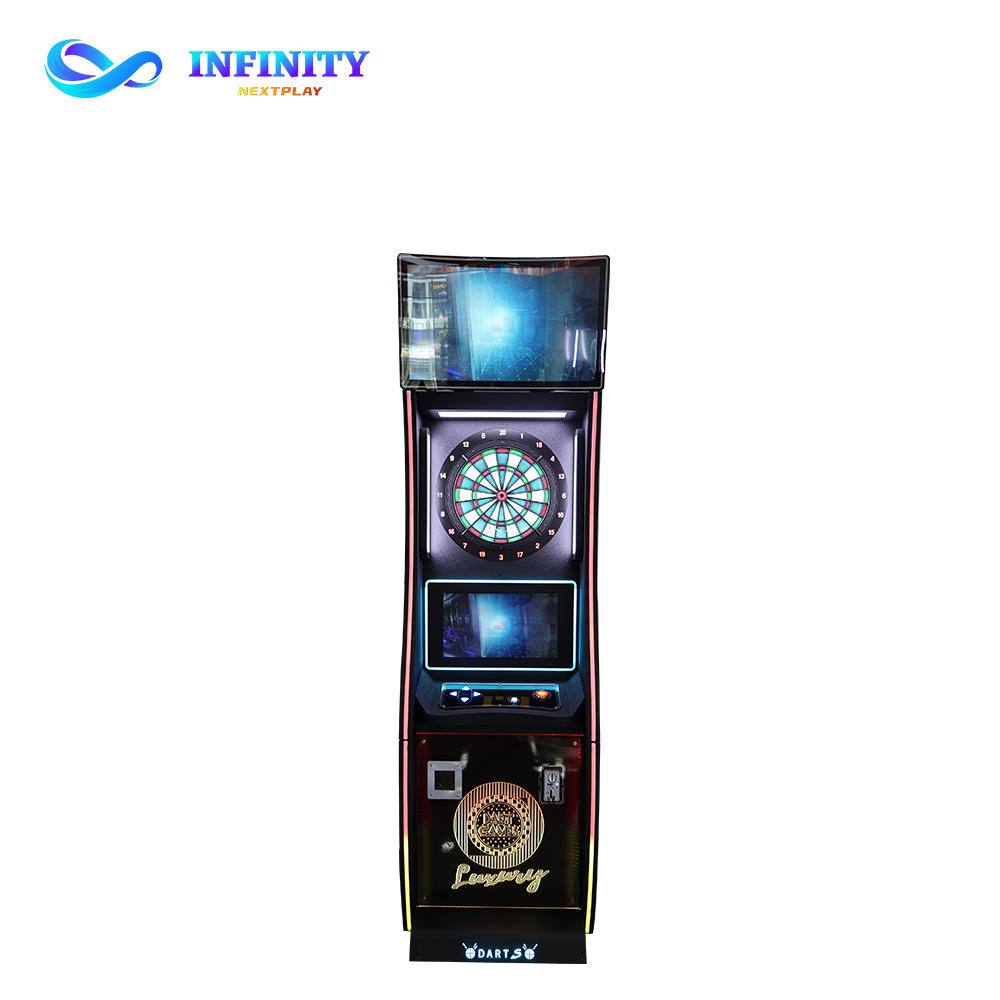
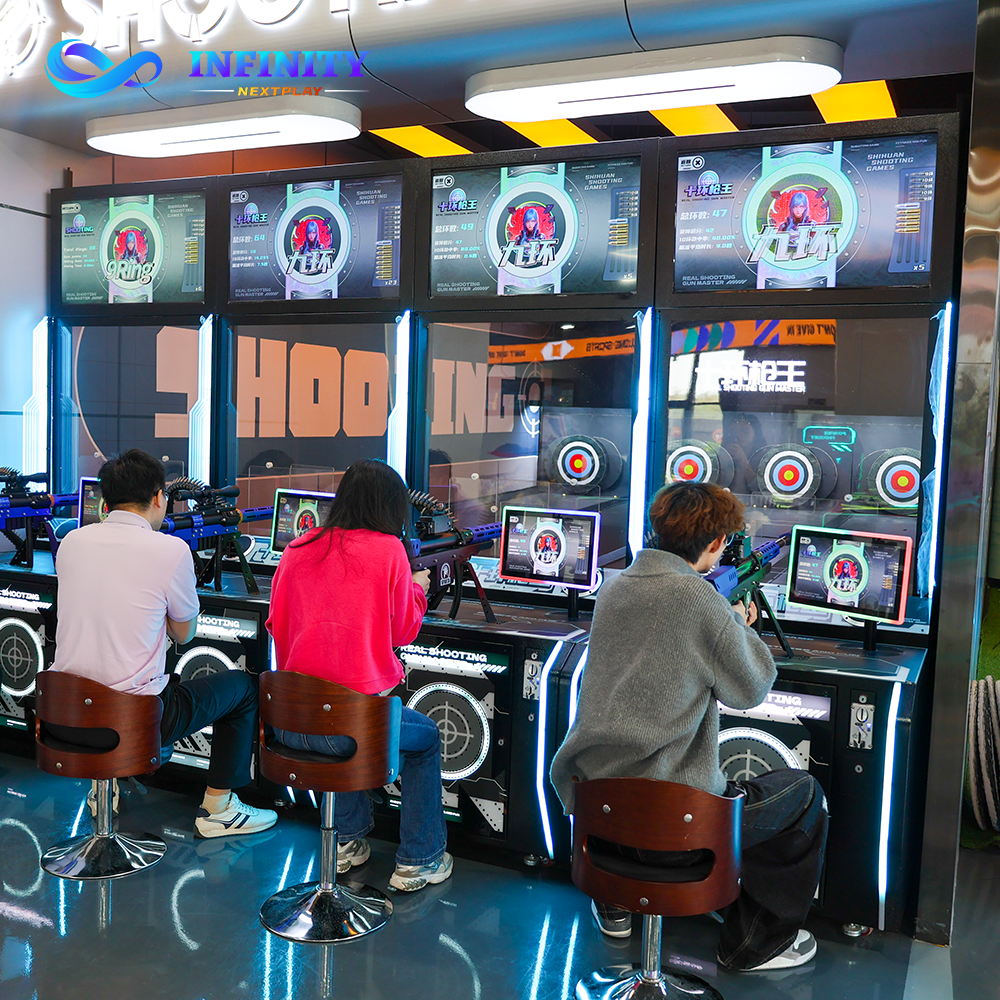
The repeat mechanism is the second half of the model, and it works through three channels. The membership punch card gives a free game credit after five sessions, printed on the receipt and easy for staff to sell. League nights give regulars a fixed weekly appointment: a dart league on Tuesday and a challenge league on Wednesday fill the two slowest nights of the week. Social sharing does the quiet work: every challenge session ends with a scorecard photo against the LED wall, and the venue reports that the largest single source of new group bookings is a member posting a team score. The Dart Machine X7 and the Shooting Simulator Q4 carry the post-challenge hour: groups finish their room, walk to darts and shooting for one or two social rounds, and keep the floor occupied while the next group takes the room. That handover lets one LED room run five or six bookings a day.
The case venue is a 520m2 active gaming center with 120 seats, a bar, four dart machines and two shooting lanes. Before the project, the venue ran on walk-ins: a repeat rate of 18 percent, 6 group bookings per month, and weekday hours at roughly 30 percent utilization. The owners installed a 36 m2 LED challenge room with a glass front, built the booking packages, launched the monthly challenge season and trained one host to run the room. Seven months later the numbers tell the whole story. The repeat rate reached 41 percent, group bookings grew to 22 per month, and weekday utilization rose 3.2 times. Bookings now cover roughly 55 percent of the room weekday hours. The owners credit three operational changes: the leaderboard stays on screen between bookings, the host confirms the next booking at the end of every session, and league night teams pay for their next season at the final.
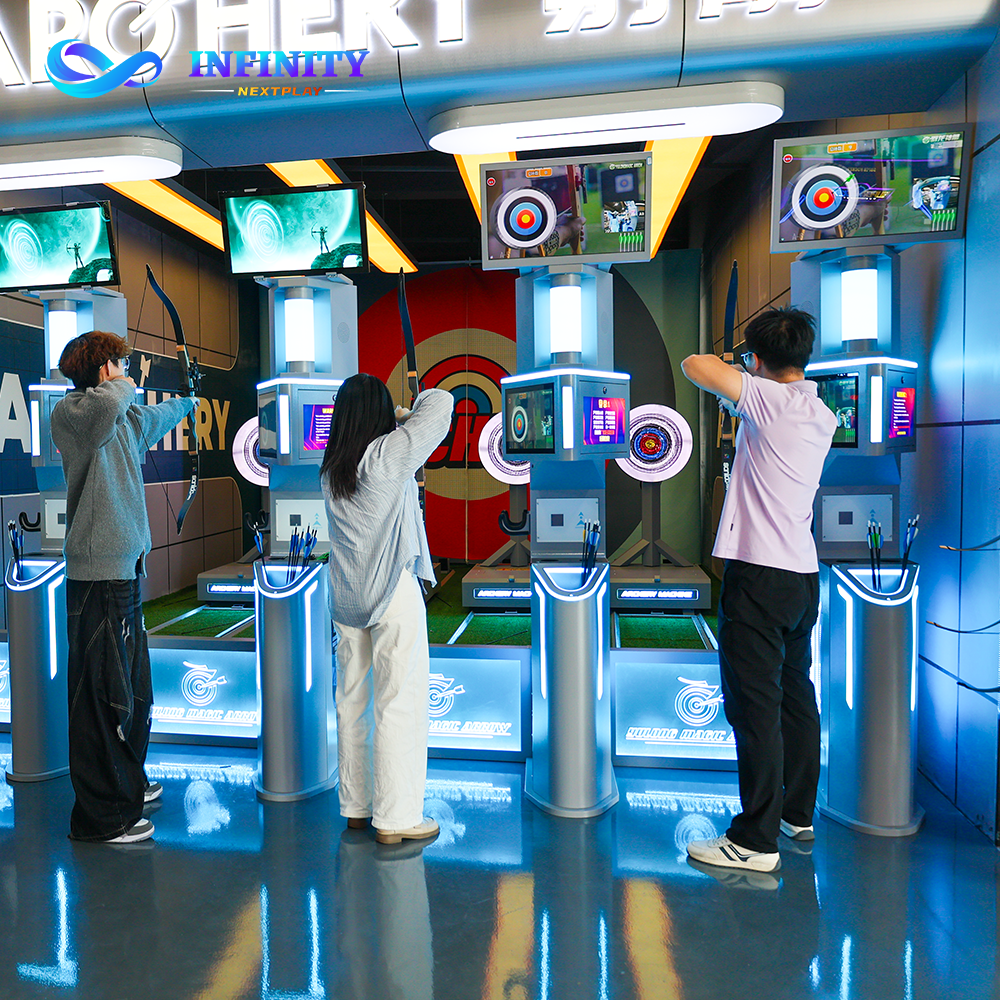
The supporting games earn their place in the same story. When the challenge room is booked, the waiting group goes to the Dart Machine X7 banks at the bar and the Shooting Simulator Q4 lanes, which turns the handover from dead time into paid time. After a session, most groups stay for one or two social rounds, measured at $10 to $15 per head on top of the booking price. The Archery Simulator A6 adds a third rotation for the group that wants variety, and the VR Thunder Motorcycle 9D catches the singles and pairs who do not join a group. The mix matters because the floor must hold a crowd before, during and after each room slot: the room is the anchor, and the rest of the floor converts the time around it.
The technical checklist for an LED challenge room is short but unforgiving. Subfloor flatness comes first: the tiles snap into a frame that tolerates no more than 3 mm of variation over 3 meters, so the slab must be leveled before installation. Sound isolation is second: the room needs 20 to 25 dB of partition isolation, because game audio and crowd noise carry, and the case venue sealed its glass front frame to contain the sound. Network is third: every tile controller, the scoring screen and the host tablet need a Cat6 drop to a managed switch, because the leaderboard and the booking system are cloud services, and a Wi-Fi drop at peak time means a frozen leaderboard in front of a paying group. Power is fourth: the 36 m2 floor draws up to 4 kW fully lit, and it needs a dedicated 220V circuit on its own subpanel, never shared with the kitchen or the HVAC.
The financial model is where the case turns into a plan. The LED challenge room costs about $18,000 for the 36 m2 tile floor, plus $14,000 to $18,000 for subfloor leveling, the glass front, the acoustic work, the circuits and the Cat6 runs. Operating costs stay low because the tiles are field-replaceable and the room runs on one host at peak. On the revenue side, the venue now books 22 groups per month at an average of $390 per booking, about $8,600 in direct booking income, plus $10 to $15 per head of post-challenge spend and the walk-in halo the lit room pulls from the street. The math is simple: the room direct income alone covers the equipment cost in 6 to 9 months, and counting the halo, the full project pays back inside 12. NextPlay draws the 3D CAD, quotes the package and builds the payback model on the venue own numbers.
A workable LED challenge room needs 20 to 30 m2, enough for 40 to 80 tiles and four to ten players. Smaller spaces read as decoration; larger rooms need more hosts. The floor must be flat, under 3 mm over 3 m, with power and Cat6 at the install point. Venues from 300 m2 up can run one room with a profit.
The leaderboard gives a guest a reason on a specific day: the month ends, the season closes and the top ten reset. Groups come back to defend their place, individuals return to beat their personal best, and the Infinity Grid LED Dance Floor publishes standings weekly, creating a countdown the staff can sell. The case venue traced most of its repeat lift to leaderboard-linked bookings.
Three models cover the market: a per-head package for school and club groups, an hourly room rate for birthday parties, and an all-access monthly pass for regulars, plus league entry fees. The Dart Machine X7 league nights use the same pass logic. The case venue runs all four and reports per-head and room-rate models produce the most rebookings.
One host per room at peak runs the sessions and confirms the next booking. Weekend afternoons add a second host for party groups, and one floor captain supervises the whole gaming floor. The rest of the floor, darts, shooting and archery, runs unsupervised between rounds, so the room adds about two roles to the payroll.
The tiles are modular: a damaged or dim tile snaps out and a spare snaps in, and the case venue keeps four spares on the shelf. Monthly checks cover frame seams, controller connections and a cleaning pass on the surface. The tiles need no calibration; the scoring software updates over the network.
At the case venue numbers, 22 bookings per month at an average of $390, the tile floor pays back in 6 to 9 months and the full room in 12. Weekday bookings drive the fast end of the range; weekend-only operation stretches it. A payback model built on the venue size, traffic and city is part of the NextPlay proposal.
The playbook is proven and portable: give the group a reason to come back with a persistent leaderboard and monthly seasons, sell the room through three booking segments, wrap the booking in punch cards, league nights and scorecard sharing, support the room with darts and shooting for the hours around it, and build the whole thing on a flat subfloor, sealed acoustics, Cat6 and a dedicated circuit. The case venue numbers, a repeat rate from 18 to 41 percent and group bookings from 6 to 22 per month, are the results NextPlay quotes in every proposal. The next step is a plan, not a purchase: ask for the 3D CAD of the challenge room drawn for your exact floor, the full package price with installation, and the payback model built on your venue numbers.
Ask NextPlay for a 3D CAD layout of your LED challenge room, a full equipment package price with installation, and a payback model built on your venue size and the traffic numbers of your city.