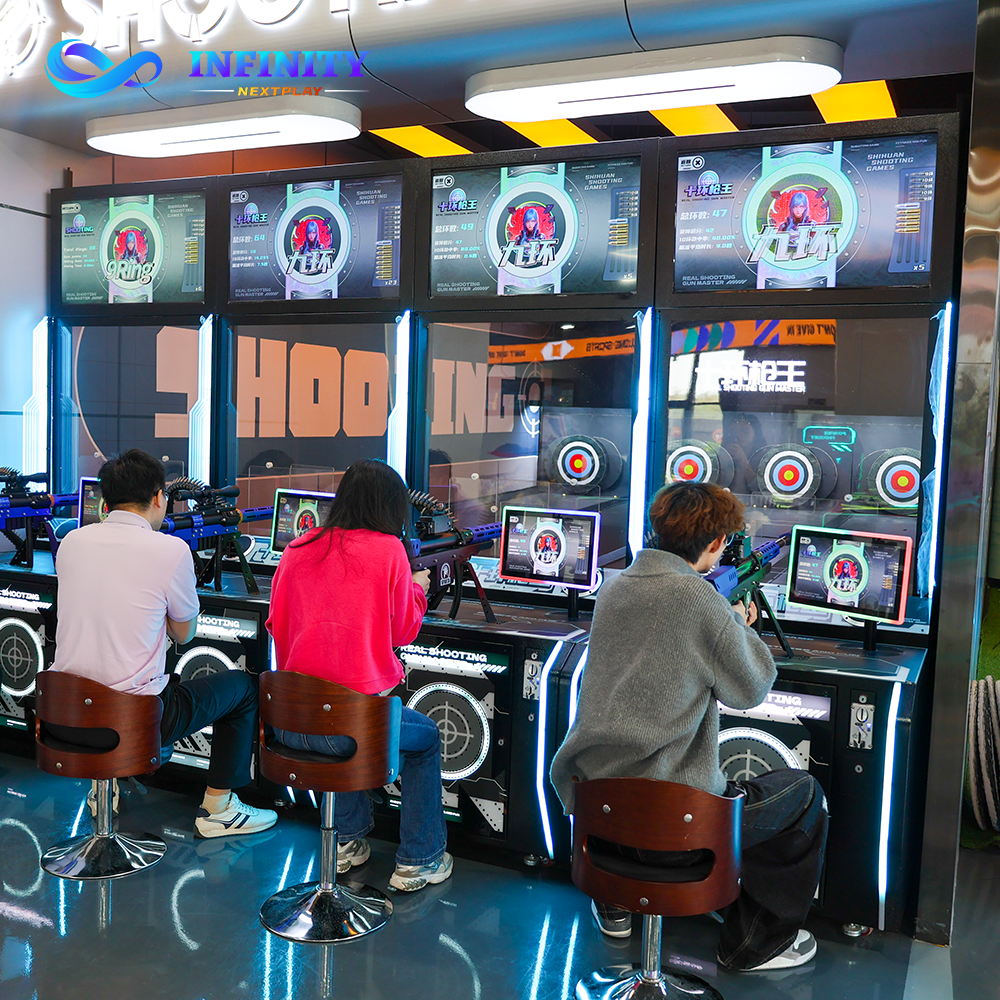
A sports bar sells two things: the screen and the round. The screen brings the crowd in for kickoff, but between plays the room goes quiet, guests check their phones, and the bar counts a slow trickle of orders instead of a rhythm of them. That is the gap interactive shooting fills. The Shooting Simulator Q4 turns a match night into a sequence of short, watchable challenges: 90-second rounds, live scoring, and a leaderboard that keeps the next player queued before the last one finishes. Bars that add a shooting corridor near the seating report evening spend per head up 40 percent against their passive-only baseline, because a guest with a score to beat orders the next drink between rounds almost automatically. This is not a claim about the game itself; it is a claim about timing. Passive screens hold attention in long blocks, and a block of attention does not buy a round. A round of play takes about 90 seconds, and the bar owns the two minutes after it while the player talks, re-queues and reaches for the counter. Every extra minute of dwell is measurable: the venue that holds a crowd for one more hour sells one more drink per head on average, and a corridor of four bays manufactures several hundred of those minutes every night.
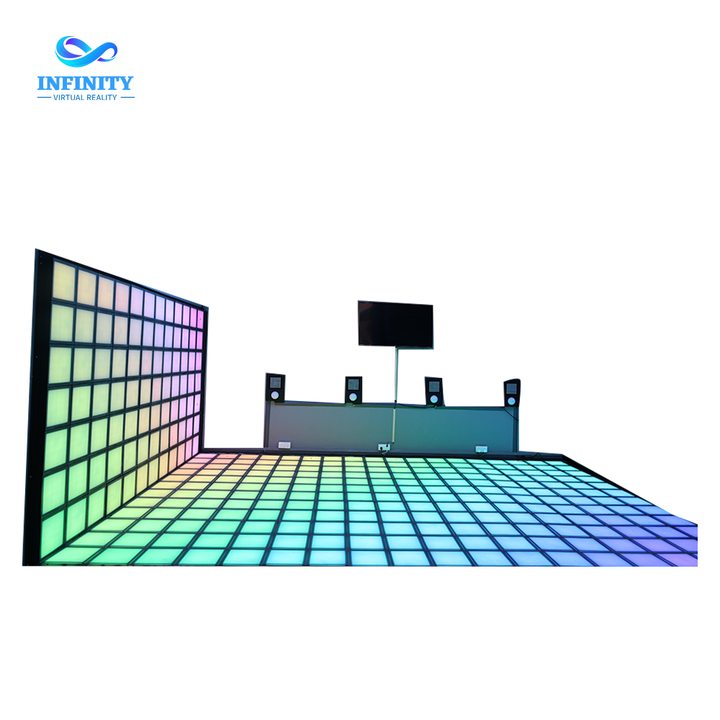
The bar crowd behaves differently from an arcade crowd or a family entertainment crowd. Guests arrive in groups, they drink in rounds, and they reward anything that lets one member of the group beat another in front of witnesses. An optical shooting simulator is built for exactly that social moment: the sensor wall scores every hit instantly, the leaderboard posts names for the whole room to see, and a losing friend buys the next round out of habit rather than obligation. Digital projection also keeps the machine small. A 2 to 4 bay corridor runs against one wall with about four and a half meters of depth, which fits bars that have no room for a full arcade. The result is a game that behaves like bar furniture: it stands where seating would stand, it creates the same social pressure a pool table creates, and it sells drinks faster. The Infinity Grid LED Dance Floor covers the group side and the VR Thunder Motorcycle 9D covers the impulse play, but the shooting corridor is the engine of the front bar. Optical simulators also cost less to run than mechanical shooting: no pellets, no moving targets, no consumables beyond a lens wipe, which keeps the corridor profitable even on slow Tuesdays.
| Game Option | Round Length | Social Proof | Drink Lift per Head | Best Bar Spot |
|---|---|---|---|---|
| Shooting Simulator Q4 | 90-second rounds | Live leaderboard | +40% evening spend | 2 to 4 bay corridor |
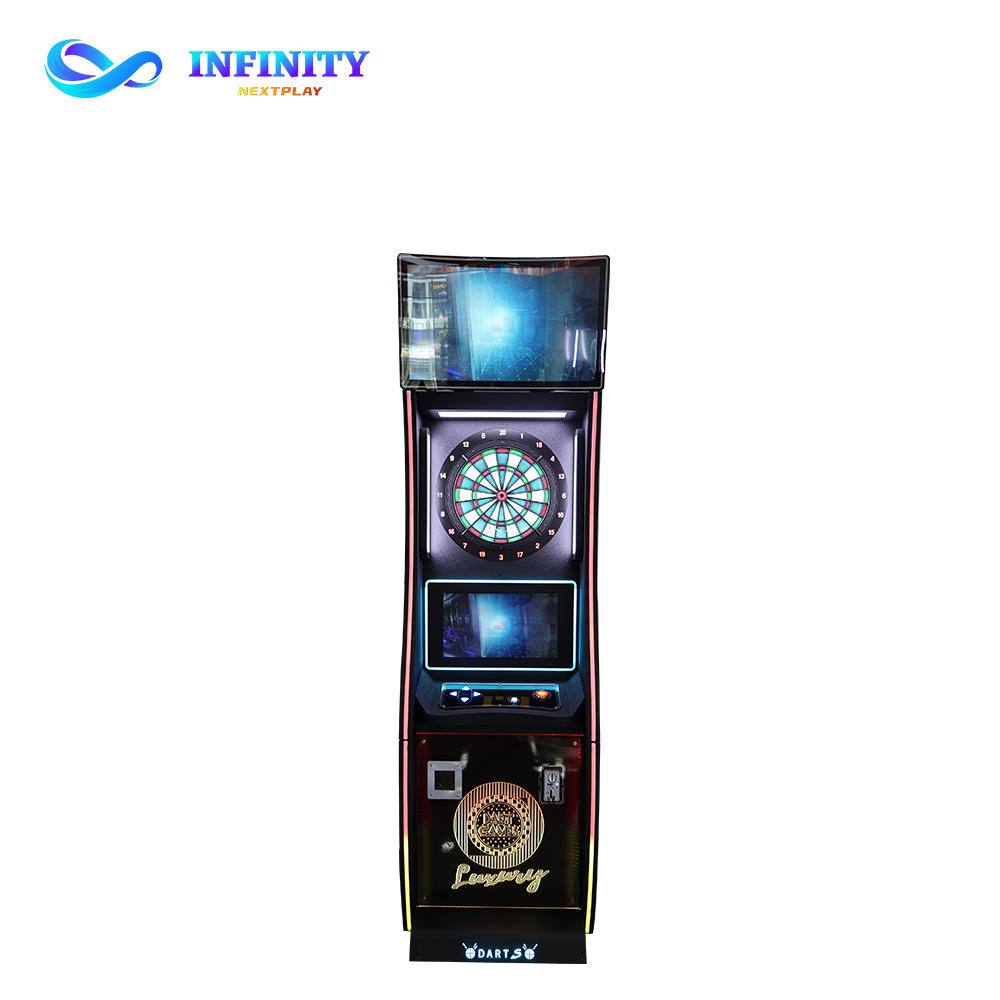
| Dart Machine X7 | 5 to 10 minute legs | League tables | +18% evening spend | Bar rail banks |
| Infinity Grid LED Floor | 2 to 3 minute songs | Beat challenges | +15% evening spend | Group challenge room |
| Passive TVs Only | Full match blocks | None | Baseline | Wall coverage |
The comparison reads clearly for a bar owner. Darts is the proven workhorse: the Dart Machine X7 builds league nights, fills weekdays and delivers a lift of about 18 percent per head, which is real money. The LED floor pulls groups of four to eight and drives about 15 percent, mostly from group bookings and birthday tables. But shooting leads on drink lift because its cadence matches bar timing: a 90-second round fits between the pour and the payment of the previous order, and the live leaderboard manufactures the social proof that darts only gets from a full league table. In practice the three games stack rather than compete. Run the Shooting Simulator Q4 corridor for pace, keep darts for depth and hold the LED floor for group nights, and evening spend climbs along the whole front bar, not just one corner of it. For a room with 60 seats or fewer, the corridor plus one dart bank outperforms every other two-game combination on drink sales per square meter.
Placement decides whether the corridor sells drinks or just looks good. Next to bar seating it does both: the bartender keeps eyes on the screens, the staff pours between rounds without leaving the counter zone, and a losing shooter is always two steps from the rail. Keep one host on the corridor during rush to cycle players onto the leaderboard, and the queue never blocks the aisle or slows a server. Two details keep the corridor welcoming: a small shelf at each bay for drinks, and a clear floor rule that glass stays behind the line, so the staff never has to referee a spilled pint.
The shooting corridor pays off only when drink marketing is wired into it. Three plays work in most markets. Round-based happy hours: on league nights, offer a two-for-one on the beer of the round between 7 and 9 PM, timed to the 90-second rounds so the offer names itself. Shoot-to-win coupons: at closing time the top three names on the daily Shooting Simulator Q4 leaderboard win a drink voucher for the next visit, which puts the leaderboard at the center of the nightly ritual and gives regulars a reason to return on their own night. Team leaderboards on game nights: let groups name their team, post the team table on the match screens, and give the winning team a pitcher to split. Each play converts a game outcome into a drink transaction inside minutes, and each one is trackable in the POS, so the +40 percent per head number stays honest and improvable. Pair the plays with the Dart Machine X7 league already on the rail and the corridor becomes the second engine of the room. The playbook works on weekdays too: a Tuesday league night with the round happy hour turns the quietest night of the week into the second-best bar of the month.
The technical list is short because the corridor is just wall, power and network. Every bay needs a dedicated 220V circuit rated 2.5 to 3.5 kW, never shared with the kitchen or the draft coolers, and a Cat6 drop back to a 1G switch with the game traffic on its own VLAN so online leaderboards never compete with the WiFi. Lighting matters more than operators expect: the corridor gets its own dimmable circuit so match nights can pull the bay light down without touching the bar, and the projection wall needs a matte, low-gloss finish so the image holds at any ambient level. That is the whole build-out; a two bay corridor installs in three to five working days inside a live bar, with the loudest work scheduled for closed hours. Most venues already carry the network for the POS, so the corridor usually adds one switch and a few drops instead of a new infrastructure project.
The financial model rests on drink margin, not game fees. One Shooting Simulator Q4 bay costs about $9,800 delivered, and a two bay corridor with wiring, painting and network lands near $28,000 total. The drink ticket averages $9.8 with a gross margin around 75 percent, so every extra round on the corridor is about $7.35 of contribution. At +40 percent evening spend per head, a corridor beside 40 seats adds roughly 30 extra drinks a night on weekends, about $1,650 of monthly contribution per bay in a mid-market bar. Combined with the game fees themselves, operators reach payback on the full corridor in 4 to 7 months. NextPlay builds the payback model per venue, but the corridor math stays that simple. Even at half the modeled lift the corridor still repays inside 14 months, which is why the risk profile suits a bar more than a full arcade investment.
One Shooting Simulator Q4 bay at about $9,800, installed against the wall nearest the bar, with the shoot-to-win drink coupon running from week one. A single bay needs one circuit, one Cat6 drop and about 12 square meters of floor, and its payback runs 6 to 8 months. Add bays only when the leaderboard queue forms on regular nights, which is the market telling you to expand.
Two bays for bars under 40 seats, four for bigger rooms; one bay per 25 seats is the working formula. A 2-4 bay corridor keeps the queue visible without swallowing the wall space that darts and the TV wall need. Start with two, run the happy hour and coupon plays, and let the same Shooting Simulator Q4 leaderboard data decide when a third and fourth bay pay for themselves.
No, it helps it. Short 90-second rounds keep guests at the rail and the corridor instead of squatting a table between matches, and venues report table turns up 15 to 20 percent after the corridor opens. The corridor also gives groups a reason to stay past the final whistle, which stretches the evening without blocking a table for a second seating.
None at the door. The simulator auto-cycles rounds, the leaderboard posts itself and the coupons print from the POS, so one bar host can tap the screens between pours. Add a part-time host only on league nights when the corridor runs full; staffing stays under 2 percent of the game revenue it creates.
The simulator is a game, not gambling, but drink coupons and prize vouchers touch local liquor rules, so check the amusement and alcohol permits of your city before running shoot-to-win nights. Most markets treat the bay like a dart machine; a call to the licensing office settles it before you buy the paint.
About 30 minutes a week: wipe the lens, check the sensors and run one calibration round. Projector lamps last around 20,000 hours, and the Cat6 and power runs need a yearly inspection. Budget roughly $200 a month total for the corridor, which is close to zero against the drink contribution it generates.
The reason shooting simulators lift beverage spend is timing, not novelty. Passive screens hold a crowd in a block and sell one round; interactive shooting chops the night into 90-second challenges, each one followed by a talk, a laugh and an order. A 2 to 4 bay corridor with live leaderboards turns the wall next to bar seating into the highest-turnover surface in the room, and at +40 percent evening spend per head the payback lands in months, not seasons. The setup list is short: the wall facing the bar, 4.5 meters of depth per bay, one circuit and one Cat6 drop each, dimmable lights and a matte wall. The corridor earns its place because it sells drinks, not tickets, and that is the line that keeps it on the floor plan.
The next step is a plan, not a purchase. Ask NextPlay for a 3D CAD of the shooting corridor drawn on your exact floor plan, a price for the Q4 bays with wiring, wall prep and network, and a payback model built on your traffic, your drink ticket and your rent. Send the floor plan and the design comes back with every bay, every circuit and every dollar mapped.
Ask NextPlay for a 3D CAD of the shooting corridor drawn on your exact floor plan, a price for the Q4 bays with wiring, wall prep and network, and a payback model built on your traffic, your drink ticket and your rent.