A 500m2 indoor entertainment venue cannot be planned like a 2,000m2 venue. A larger floor does not simply give operators permission to add more attractions. It changes the balance between anchor attractions, compact games, customer circulation, F&B, waiting areas and revenue-generating space.
The right attraction mix depends on how much space you have, who you want to attract and how you want customers to move through the venue. In this guide we compare three common venue sizes, 500m2, 1,000m2 and 2,000m2, and show how the attraction mix can evolve as your space grows.
| Venue Size | Recommended Model | Typical Focus |
|---|---|---|
| 500m2 | Compact & High-Density | VR, Golf Simulator, Darts, Interactive Games |
| 1,000m2 | Balanced Multi-Attraction | Bowling + VR + Golf + Interactive |
| 2,000m2 | Full Multi-Attraction Venue | Bowling + VR Arena + Golf + Sports + Interactive |
Note: these typical focus areas are planning models, not absolute standards. Final mix depends on equipment specifications, building conditions and local regulations.
Before you decide on a size, see our guide on how many attractions an indoor entertainment venue should have and the deeper 1,000m2 model in how to allocate 1,000m2 across bowling, VR, golf and interactive games.
The biggest limit of a 500m2 venue is simple: limited space. So you should not try to put everything in, overload the floor with large equipment, or leave large low-utilization zones. You need high revenue density, compact attractions and a flexible layout.
A 500m2 venue may not be the ideal environment for a large bowling-focused concept if lanes, seating, circulation and service areas consume most of the floor. This is not a rule that 500m2 cannot have bowling. It means bowling may consume a large share of the available floor area, so the remaining space needs to be carefully planned.
| Area | Example Allocation |
|---|---|
| VR / VR Simulator | 120m2 |
| Golf Simulator | 80m2 |
| Interactive Games | 80m2 |
| Darts / Archery | 50m2 |
| F&B / Lounge | 60m2 |
| Reception / Queue / Circulation | 110m2 |
| Total | 500m2 |
Illustrative layout model only. Actual space requirements depend on equipment specifications, building conditions and local regulations.
Compact, flexible attractions suit a 500m2 floor because they monetize square meters without locking the plan into one large machine.
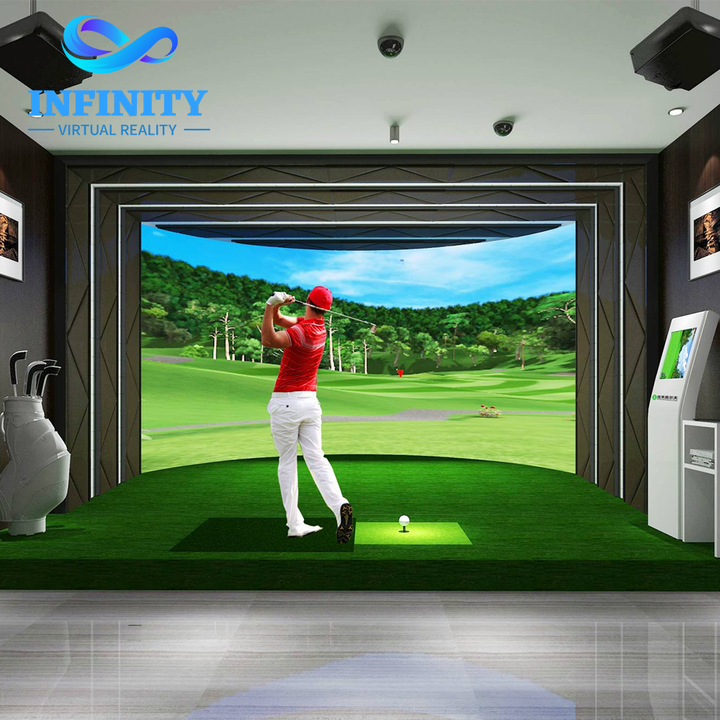
For compact options see the VR Arena planning guide, the golf simulator overview and electronic dart machines. The interactive LED floor is especially useful for dead corners.
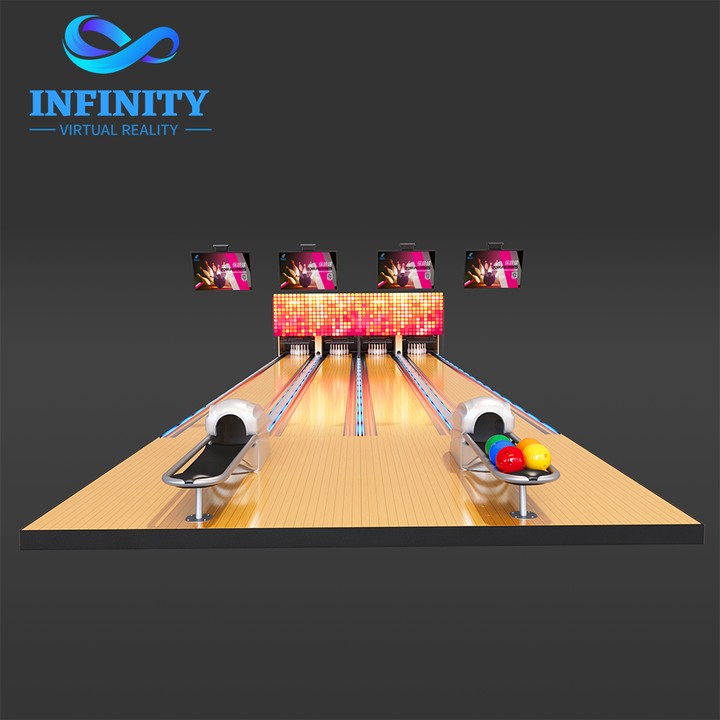
At 1,000m2 the strategy shifts. You have enough space to combine different attraction roles: bowling as an anchor, a VR Arena as an immersive attraction, a golf simulator as a sports-oriented attraction, darts as a compact social attraction, interactive games as flexible space, and F&B to extend dwell time.
Why 1,000m2 changes the planning: you have enough space to combine different attraction roles. The key word is roles, not just more attractions. The mix can form layers: anchor attractions such as bowling and VR Arena; supporting attractions such as golf, darts and archery; compact and flexible attractions such as interactive LED and grid games; and supporting revenue such as F&B, parties and events.
For a detailed 1,000m2 allocation see our guide: how should you allocate 1,000m2 across bowling, VR, golf and interactive games. For the exact square-meter footprint of each attraction, see how much space bowling, VR, golf and darts require. This is where the content system starts to form a network rather than isolated articles.
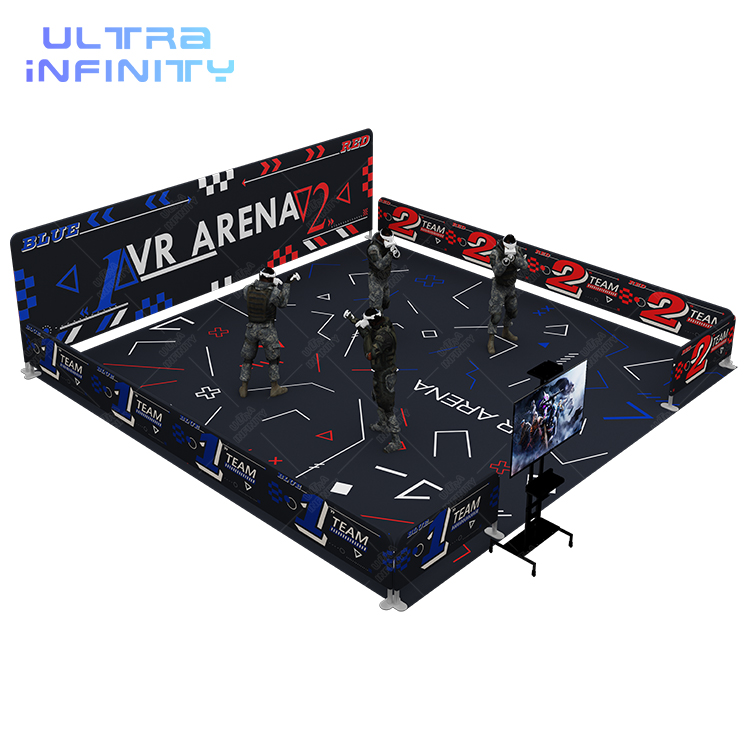
Bowling becomes a realistic anchor only when the floor can hold lanes plus seating plus circulation. VR Arena becomes viable when an open, unobstructed volume is available. Golf fits as compact bays. Interactive games fill the gaps. The difference from 500m2 is not the number of machines, it is the ability to place attractions by role.
A 1,000m2 venue can support one or two anchor attractions while keeping compact games and F&B in the remaining space. That balance is hard to reach at 500m2 and unnecessary to restrict at 2,000m2.
Related reading: golf simulator for indoor venue, electronic dart machine for venue, archery simulator for venue.
Above 2,000m2 the thinking should not be "how many machines do I have?" but "how do I create a complete customer experience ecosystem?" A 2,000m2 venue can hold bowling as an anchor, a VR Arena as an immersive attraction, golf as sports, darts as social, archery as competitive, interactive games as family or casual, mini golf for longer dwell time, F&B as revenue extension, and a party or event area for group revenue.
The biggest change at 2,000m2 is functional zoning. You stop thinking in individual machines and start thinking in zones: entrance, interactive zone, family zone, bowling zone, VR Arena, sports zone (golf, darts, archery), F&B or social zone, and event or party zone. At this scale the content moves from equipment to venue design.
For longer-dwell options inside a large venue see the mini golf for indoor venue guide.
A practical 2,000m2 flow reads as a path, not a list of devices: entrance leads to an interactive zone that creates instant activity, then a family zone, then the bowling zone as a visual anchor, then the VR Arena, then a sports zone that branches into golf, darts and archery, then an F&B or social zone, then an event or party zone.
Zoning keeps guests moving and lets each area support the others. A bowling anchor feeds the F&B zone; an event zone feeds off-peak utilization; interactive edges keep waiting time productive. This is venue design, not equipment counting.
The table below summarizes how the planning factors shift across the three sizes.
| Factor | 500m2 | 1,000m2 | 2,000m2 |
|---|---|---|---|
| Attraction Count | Limited | Moderate | High |
| Main Strategy | Density | Balance | Diversification |
| Anchor Attractions | 0-1 | 1-2 | 2-4 |
| Compact Attractions | High | Medium | Medium |
| F&B | Small | Moderate | Dedicated |
| Event Space | Limited | Optional | Recommended |
| Layout Complexity | Low-Medium | Medium | High |
| Customer Segments | Focused | Mixed | Broad |
| Revenue Strategy | High utilization | Balanced mix | Multiple revenue streams |
Illustrative planning ranges, not fixed industry standards.
Each size asks a different business question, which is why the mix must change rather than simply grow.
| Venue Size | Key Business Question |
|---|---|
| 500m2 | How do I monetize every square meter? |
| 1,000m2 | How do I balance multiple attractions? |
| 2,000m2 | How do I create a complete customer journey? |
A larger venue can generate more total revenue, but revenue density may change as additional space is allocated to seating, circulation, F&B, storage, events and larger-footprint attractions. So total revenue up does not guarantee revenue per square meter up.
We deliberately avoid fixed dollar-per-square-meter numbers because they vary by market, pricing and utilization. The principle is what matters: total revenue can rise while revenue density shifts. For the metric itself see how to maximize revenue per square meter and run a revenue calculator on your own plan.
A 500m2 venue is easy to fill. A 2,000m2 venue, without enough traffic, can leave large zones at low utilization for long periods. So large venues must manage customer traffic, attraction utilization, event bookings, cross-selling, off-peak promotions, F&B and group packages.
Utilization, not equipment price, decides whether the extra square meters pay back. This is why a bigger floor needs a stronger operating plan, not just more machines.
Venue size also changes who you serve, which explains why the mix should change.
Broader segments at 2,000m2 justify broader attraction roles, from quick-play compact games to long-dwell experiences and event space.
Use the lists below to start judging your own size.
A common mistake is finding a 2,000m2 shell and then forcing equipment into it. The better order is: define your market, define your target customer, choose the attraction mix, determine capacity, then calculate required space, then select the venue.
Target market leads to customer profile, which leads to attraction mix, which leads to capacity, which leads to required space, which leads to venue selection. This logic fits NextPlay consulting: we start from the business, not the square meters.
NextPlay designs full venue solutions across 500m2, 1,000m2 and 2,000m2 formats, combining bowling, VR, golf, darts, archery, interactive games and mini golf into one working plan. We help you move from a blank floor to a layout matched to your market and budget.
Start with our complete indoor entertainment solution. Share your floor space, target customers and preferred attractions, and we can prepare an attraction mix, space allocation and 3D venue layout for your project.
It can, but bowling may consume a large share of the available floor area for lanes, seating, circulation and service. If you add bowling at 500m2, plan the remaining space very carefully rather than treating bowling as a default anchor.
At 1,000m2 you balance multiple attraction roles, usually one or two anchors plus compact games and F&B. At 2,000m2 you move from an attraction mix to a venue ecosystem with functional zones, event space and broader customer segments.
Not automatically. A larger venue can raise total revenue while revenue density shifts because more space goes to seating, circulation, F&B, storage, events and larger-footprint attractions. Utilization decides whether the extra area pays back.
Match size to capital, market and audience: 500m2 for high-density compact play in a strong local market, 1,000m2 for a balanced mixed-attraction venue, 2,000m2 plus for a full multi-attraction ecosystem with event capacity.
Do not pick the space first. Define your market, then customer profile, then attraction mix, then capacity, then required space, then venue. The business model should drive the square meters, not the other way around.
Share your available floor space, target customers and preferred attractions. NextPlay can help you develop an attraction mix, space allocation and 3D venue layout based on your project.