A 500m2 indoor entertainment venue sits in the sweet spot of the opening decision. It is large enough to carry one strong anchor attraction plus the quick-play density around it, and small enough that the fixed-cost base - rent, staffing, power - stays survivable during the first-year ramp. Industry market segmentation puts a large share of family and indoor entertainment centers in the 5,001-10,000 square foot band, which comes to roughly 465 to 930 square meters (market segmentation, planning reference). A 500m2 venue is a mainstream, proven format rather than an experiment.
The question operators ask before any other is not what equipment to buy but what the floor can produce. This guide answers it with a buildable model: the monthly revenue a 500m2 indoor entertainment venue can generate depends on the attraction mix it carries, the capacity that mix creates, and the operating pattern - peak hours, package attach, and repeat visits - that turns capacity into paid plays. The same 500m2 can produce meaningfully different revenue depending on how those variables are set.
At 500m2 the mix rule is one anchor plus supporting density. An anchor is an experience worth a trip on its own - compact bowling, a VR arena, an interactive competition hub. The floor left over carries quick-play and interactive stations that fill gaps between anchor sessions and lift per-visit spend. A 60/40 anchor-to-quick-play floor split is a practical planning starting point for a compact venue (planning reference).
| Attraction | Space Need (Planning) | Revenue Character | Role in Mix |
|---|---|---|---|
| Duckpin bowling (2-4 lanes) | 35-60 m2 per lane with seating | Session-based, high ticket $12-$18 | Primary anchor |
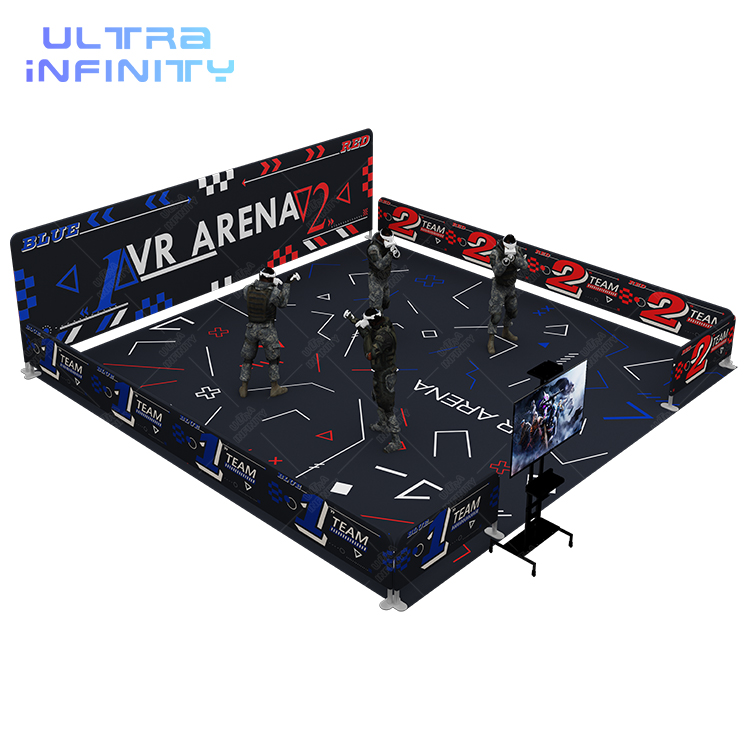
| Free roaming VR arena | ~45-80 m2 per arena pod | Premium multi-player, high ticket | Anchor or premium tier |
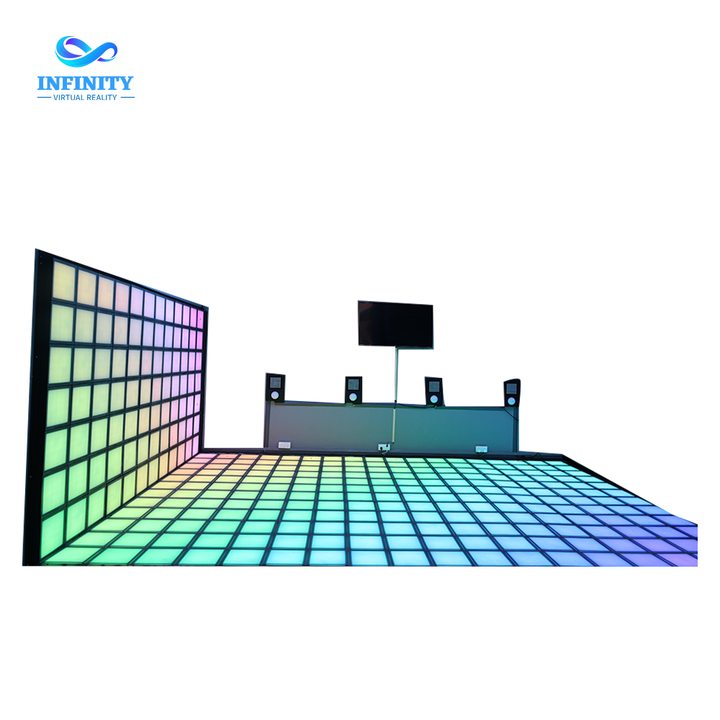
| Interactive LED dance floor | 20-40 m2 | Quick-play, high turnover | Quick-play density + party |
| Darts / archery bays | 80 cm per dart lane; ~6 m per archery bay | Coin / card per game | Density + social |
| F&B counter | 10-15% of floor | Uplift on dwell | Secondary |
The mix choice sets the revenue model. A mix led by duckpin bowling behaves like a bookings model, with revenue concentrated in lane fees and the food and beverage that spill out of longer stays. A mix led by a free-roaming VR arena behaves like a premium model with fewer, higher-ticket plays. A mix weighted to interactive LED and quick-play behaves like a throughput model that needs high foot traffic. Each model earns different money at 500m2.
Monthly revenue is capacity times utilization times price. Capacity planning for a 500m2 venue starts with the anchors - each anchor has sessions per hour and an average group size - then adds the quick-play turnover around it. A compact venue commonly plans peak-hour capacity in the 50-100 guest band (planning reference for the size class).
| Element | Planning Input | Weekday | Weekend |
|---|---|---|---|
| Duckpin lanes (45-60 min session, avg 4 guests) | 2 lanes as 2-4 units | 40-60% utilization | 85-95% utilization |
| VR arena pod (25-30 min, avg 4) | 1-2 pods | 30-50% | 80-90% |
| LED / quick-play (5-10 min, high turnover) | Ongoing rotation | Continuous low flow | Continuous high flow |
| Open hours | 10-14 hrs/day | 10-14 hrs | 10-14 hrs |
The utilization swing between weekday and weekend is the single biggest driver of monthly revenue. Venue analysis finds roughly a 1.3% per-capita spend increase for each 1% of additional dwell time (planning reference), which is why dwell-extension features - seating near the anchors, food and beverage in the circulation loop - are revenue levers, not comfort details.
Capacity math should always be run against the anchor, not the door. Our attraction count guide walks through the counting method in full.
The honest way to answer how much a 500m2 indoor entertainment venue generates per month is to build three working revenue models and let them differ by mix. These are planning-scenario illustrations built from the referenced capacity, price and utilization inputs, not guarantees or observed performance.
| Scenario | Mix Lead | Key Prices | Planned Monthly Revenue | Mix Character |
|---|---|---|---|---|
| Bowling-led | 2-4 duckpin lanes + LED + darts | Lane $12-$18/game; F&B uplift | $18K-$28K | Bookings + F&B + repeat |
| Premium VR-led | VR arena + LED + bowling 2 lanes | $22-$30 premium tier | $22K-$35K | Group + premium + events |
| Throughput-led | LED + darts + archery + 2 lanes | $4-$8 quick-play, high footfall | $16K-$25K | Volume + high turnover |
Each scenario clears a different monthly base. The bowling-led model earns from repeat local traffic and parties, so the weekday dip is the thing to manage. The premium VR-led model earns from group occasions and events, so it depends on bookings more than walk-in footfall. The throughput-led model earns from volume, with the highest traffic requirement and the lowest ticket but the fastest churn through the floor.
Revenue per square meter makes the three comparable. A revenue-driven 500m2 mix at roughly $48 monthly revenue per square meter implies about $24,000 per month - squarely inside the plausible $18K-$35K range (planning reference). Our maximization guide pushes the number toward its ceiling.
A 500m2 venue earns across several streams, and the mix of streams matters as much as the total. Industry data puts admissions at roughly 40% of FEC revenue, other attractions at about 19%, and food and beverage at about 16%, with parties, retail and other filling the remainder (revenue-mix analysis, planning reference). At compact scale the same shape holds, with parties and events growing as operators push group bookings.
| Revenue Stream | Typical Share (Planning) | How It Scales at 500m2 |
|---|---|---|
| Admission / attraction tickets | ~40% | Anchor session fees + entry |
| Other attractions / quick-play | ~19% | LED, darts, archery add-ons |
| Food and beverage | ~16% | Counter + dwell-driven uplift |
| Parties and group events | grows with marketing | Weekday fill + weekend premium |
| Retail / membership / packages | remainder | Package attach + repeat base |
Two levers move the model more than foot traffic. Packaging raises per-visit spend without adding a square meter: bundles, family deals and tiers move a guest across streams, and the five-model menu in our attraction package blueprint gives the patterns. A membership or value-pass layer converts the highest-value repeat guests into predictable monthly revenue.
The fixed-cost discipline is what protects revenue at 500m2. Rent, staffing and power form a base that weekend anchor revenue can clear even in a soft month; the risk is the base growing before the model earns. Keeping the mix lean, staffing cross-trained and packages sticky is how a compact venue converts a plausible $18K-$35K monthly range into real margin.
The mix is only as good as the hardware earning on the floor. Three equipment families carry the working models above, each with a distinct job in the compact mix, and the product cards below show the units referenced throughout this guide.
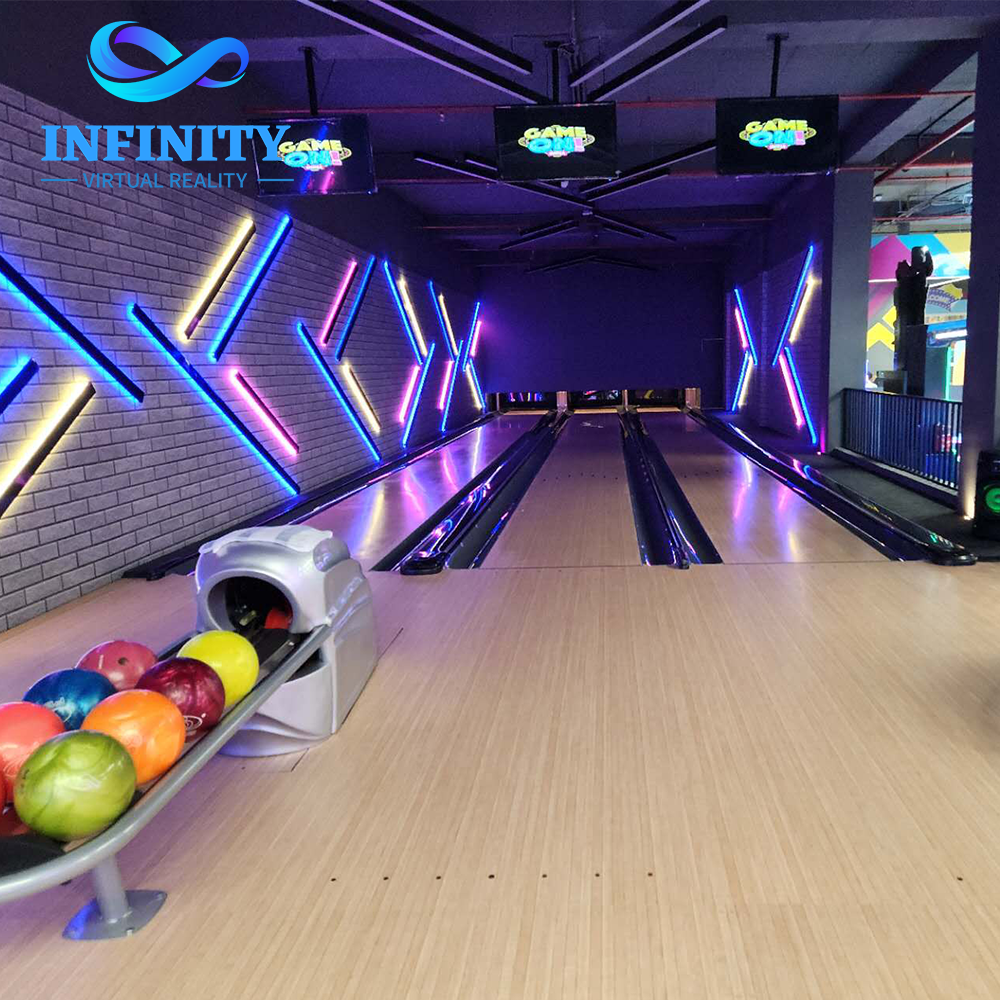
Duckpin bowling is the compact anchor choice: a two-to-four-lane installation fits the footprint a 10-pin alley needs for a single lane, and its session-based pricing creates ticket plus food and beverage revenue and a repeat-visit culture. A free-roaming VR arena is the premium and group anchor, with higher price points and strong party and event appeal. An interactive LED dance floor is the quick-play layer, earning from high turnover with a small footprint and giving a compact venue the party-room energy that lifts dwell.
The units behind the three working scenarios are available direct from NextPlay: the duckpin bowling system carries the compact bookings anchor, the free roaming VR arena 2.0 carries the premium and group tier, and the Infinity Grid LED dance floor carries the quick-play density between anchor sessions.
For the full route from floor plan to opening on a compact venue, see our empty-space planning guide.
Turn the model into a number for your own 500m2 floor with a five-field calculation. Fix the open hours and the anchor sessions per hour. Fix the average guest count per session. Fix the price per session from the local market. Fix the weekday and weekend utilization. Capacity times utilization times price, plus quick-play and food and beverage uplift, gives a monthly planning figure you can defend to a lender or partner.
The most valuable next step is a free 3D layout test of your actual floor. A balanced layout converts the same equipment list into more sellable sessions per day. Our free 3D layout design is available at our 3D layout page, and the full planning offer - attraction mix, equipment, installation and revenue model - is on our sportainment solutions page.
A planning model for a 500m2 indoor entertainment venue yields roughly $18,000-$35,000 per month depending on the attraction mix, capacity utilization and hours. This is a planning range built from industry capacity, price and spend benchmarks, not a guarantee of a specific site.
The common rule is one strong anchor plus quick-play density, with a 60/40 anchor-to-quick-play floor split. Session-based anchors such as compact bowling, premium anchors such as a VR arena, and throughput anchors such as interactive LED each shape a different revenue model.
Run a five-field model: hours, anchor sessions per hour, guests per session, price, and weekday/weekend utilization. If the monthly figure clears your rent, staffing and power base with margin, the revenue model is defensible.
Yes. Planning practice allocates roughly 10-15% of floor to food and beverage. Counter service in the circulation loop lifts dwell and per-visit spend without a full kitchen.
Below roughly 500m2 a single-attraction model is usually the honest choice. At 500m2 the venue carries one anchor plus supporting density, the smallest mix that supports a balanced revenue model.
Tell us your floor plan and audience. We run the capacity math, design the attraction mix and give you a free 3D layout of your 500m2 floor - so the monthly revenue model has a floor plan behind it.