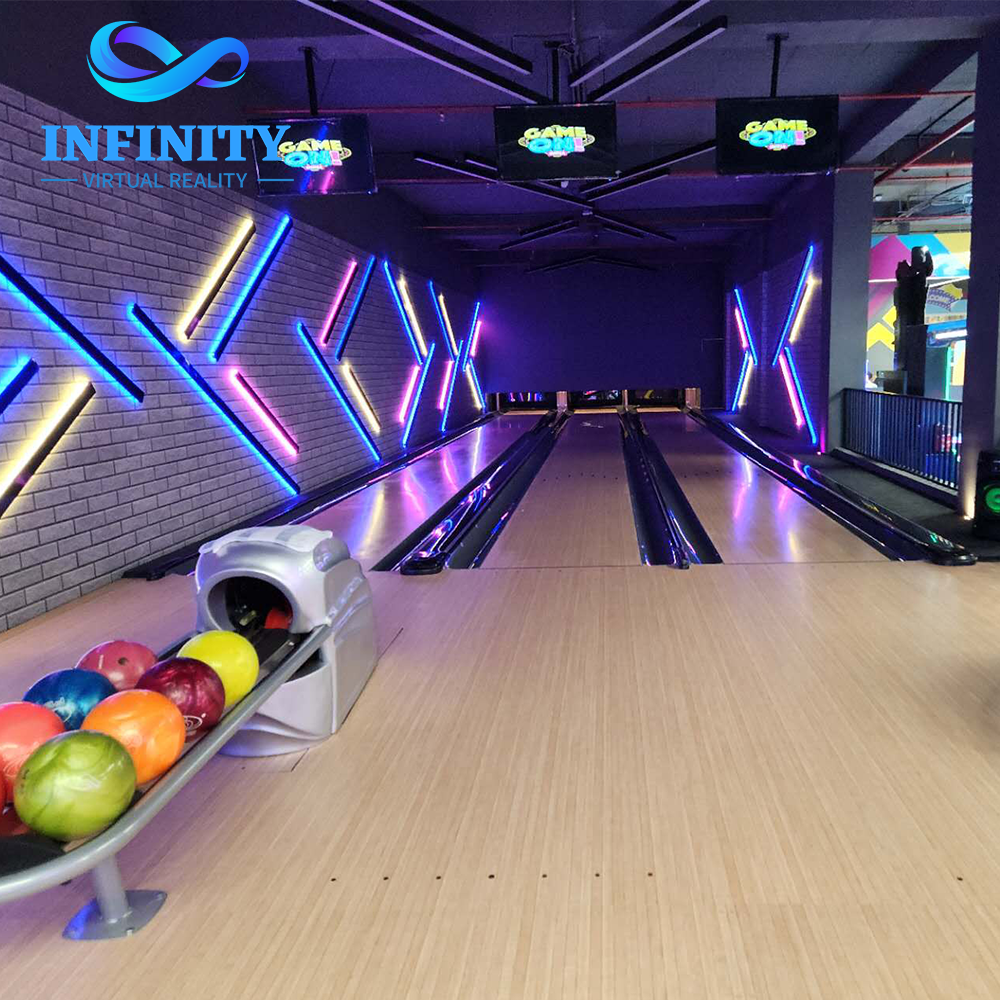
A sports hall is priced for its Saturday and haunted by its Tuesday. The lanes, the bays and the grids cost the same at 10 AM on a weekday as they do at prime time - the only difference is that nobody is standing on them. The published off-peak playbook for filling a VR arena on weekdays maps the mechanics - school blocks, leagues and structured groups - and every one of them transfers to a sports hall with different hardware. This playbook builds the weekday calendar hour by hour, using the hall's own zone mix from the full-venue zone stack as the programming inventory.
The published off-peak analysis names the dead inventory precisely: school hours (9 AM to noon), the post-lunch gap, and the early evening before prime. The published school model books 25-40 students at $12-15 per head for a structured two-hour block - $300-600 per block, $600-1,800 a week at two to three blocks. The morning program is not a discount on the hall; it is a sale of hours no other customer wants, at a group size the Infinity Grid LED Floor and duckpin lanes serve perfectly - short cycles, instant rotation, no briefing overhead.
| Weekday Slot | Published Program | Published Economics |
|---|---|---|
| 9 AM - 12 PM | School blocks (25-40 students) | $12-15/head; $300-600 per block |
| 12 PM - 4 PM | Seniors & corporate daytime | Multi-activity stack: 57% prefer multi (n=600) |
| 7 PM - 9:30 PM | League nights (16-20 players) | $25-30 single fee; $400-600 per night |
| Two league nights/wk | Recurring weekly revenue | $800-1,200/wk; $3,200-4,800/month |
The afternoon gap fills differently from the morning because its customers come in pairs and small groups, not classes. The published multi-activity research is the design brief: 57% of competitive-socialing visitors prefer venues with multiple activities against 17% for single-activity - so the afternoon product is a stack, not a lane. A senior club books one hour that moves from the Duckpin Bowling System (short lanes, no heavy ball, social pace) to the grid (a ten-minute team challenge) to the dart bank (automatic scoring, no staff). One booking, three zones, zero additional labor - the weekday version of the published zone-stack logic.
Picture the published figures assembled into one Tuesday. The 10 AM school block books 30 students at the published $12-15 band - $360-450 locked before lunch, run on the baseline roster per the published labor model. The 1 PM senior club takes the stack: duckpin, grid, darts, one booking covering three zones. The 7 PM league opens its third season night at the published $25-30 single fee - sixteen players, $400-600 before F&B, the standings board doing the retention work the published repeat analysis documents. By close, a weekday that used to run at walk-in trickle has banked the published two-program structure: one school block plus one league night, roughly $850-1,050 before the afternoon stack is even counted.
The scenario is illustrative, but every number in it is a published reference: the school-block band, the league-night fee and economics, the multi-activity preference share and the baseline-roster constraint. The weekend continuation - 70%+ occupancy, 1.5-2x weekday spend, 30% walk-in conversion - is documented in the published Sunday tournament model and in the staffing playbook.
Every figure here is a published planning reference: the 25-40 student, $12-15 per head, $300-600 school-block economics and the 16-20 player, $25-30, $400-600 league-night model come from the published off-peak playbook; the 57% vs 17% multi-activity preference comes from the published KAM Insight research (n=600); the 70%+ Sunday occupancy, 1.5-2x weekday spend and 30% walk-in conversion come from the published tournament model; and the baseline-roster constraint comes from the published labor model. All are planning references, not guarantees - restate each against your own market, school calendar and league demand before adopting them.
The questions operators ask about off-peak programming, answered with the published references.
The same three the published off-peak analysis names for attraction venues: school hours (9 AM to noon), the post-lunch afternoon gap, and the early evening before prime time. Each fills with a different program - school blocks, senior and corporate daytime play, and league nights.
The published school-group model books 25-40 students at $12-15 per head for a structured two-hour block - $300-600 from one block, and two or three blocks a week put $600-1,800 of otherwise-dead revenue on the board.
The published league-night model: 16-20 players at a single $25-30 fee, $400-600 per night before F&B. Two league nights a week turn $800-1,200 of recurring weekly revenue that the venue can staff for and budget against.
Both segments want quiet hours and structured play - the published multi-activity research (57% prefer venues with multiple activities against 17% for single-activity) means the same visit can stack a duckpin session, a grid challenge and a dart round into one booking.
No - the published labor model runs the baseline roster on weekdays; the school block and the league night both run inside it, and the tournament overlay is the only staffing add-on the published model calls out.
The published Sunday tournament model shows weekends self-fund at 70%+ occupancy with 1.5-2x weekday spend per head - weekday programs feed the weekend by converting school families and league rosters into returning weekend players.
Send us your zone list and weekday hours: we will return the off-peak program calendar, the per-slot pricing and the multi-activity stack plan through the free 3D layout design - anchored with the Duckpin Bowling System, the Infinity Grid LED Floor or the Electronic Dart Machine X7.