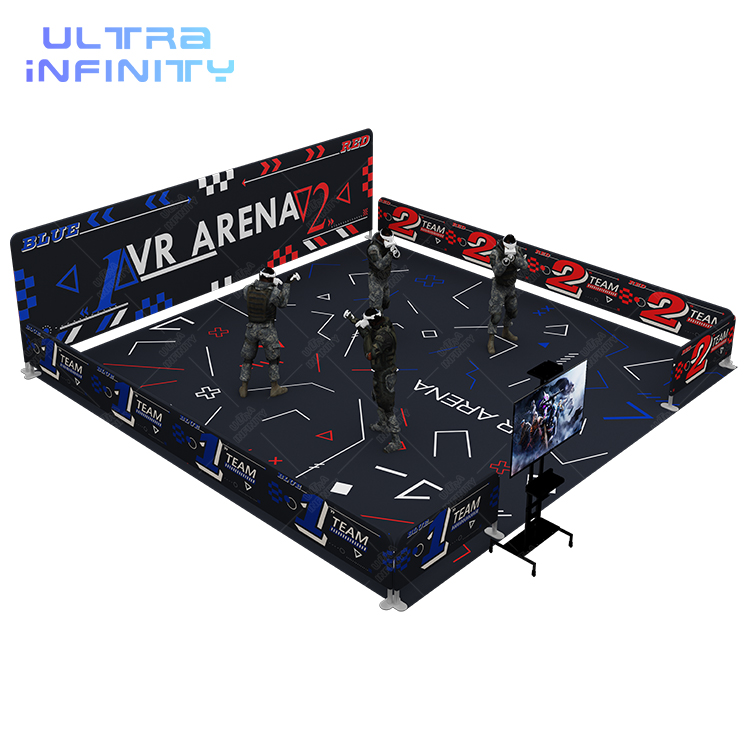
A birthday party is the highest-density group booking a multiplayer VR arena will ever see: eight to twelve kids who all arrive at once, all want the same experience, and all have a parent standing behind them with a wallet and a calendar. The published multiplayer VR guide names four players as the smallest birthday booking and four to eight as the rung the whole category is built around - which means the party market is not an add-on to a multiplayer arena, it is the reason the four-player format exists. The job of this playbook is to turn that group into a priced product instead of a queue problem.
The published VR arcade pricing survey records the cleanest birthday structure in the market: a US booth operator sells parties per group - $100 for four players, $130 for six, $180 for eight and $220 for ten on the thirty-minute package, with a sixty-minute package running $130 to $320. Per-group pricing does three things at once: the parent makes one decision instead of negotiating twelve tickets, the venue locks total revenue before arrival, and the per-head price quietly improves as the group grows - the sibling who almost stayed home becomes pure margin.
| Group Size | Published 30-Min Package | What the Venue Locks In |
|---|---|---|
| 4 players | $100 | One full arena session, whole group together |
| 6 players | $130 | Two rotations through the four-player cycle |
| 8 players | $180 | Two full rotations + spectator time for parents |
| 10 players | $220 | Three rotations; upgrade path to 60-min package |
The published machine cycle is the scheduling backbone: four persons per round, three to five minutes per round, about six rounds per hour. A two-hour party block therefore delivers every child through six to eight turns - the same two-hour prime block the published arcade party playbook prices at $15-22 per kid across three tiers, with the block structure lifting Saturday yield by a published +40%. The arena is the anchor inside that block, not the whole block: cake and presents fill the rotation gaps, and the spectator screen keeps the waiting half of the group watching instead of wandering.
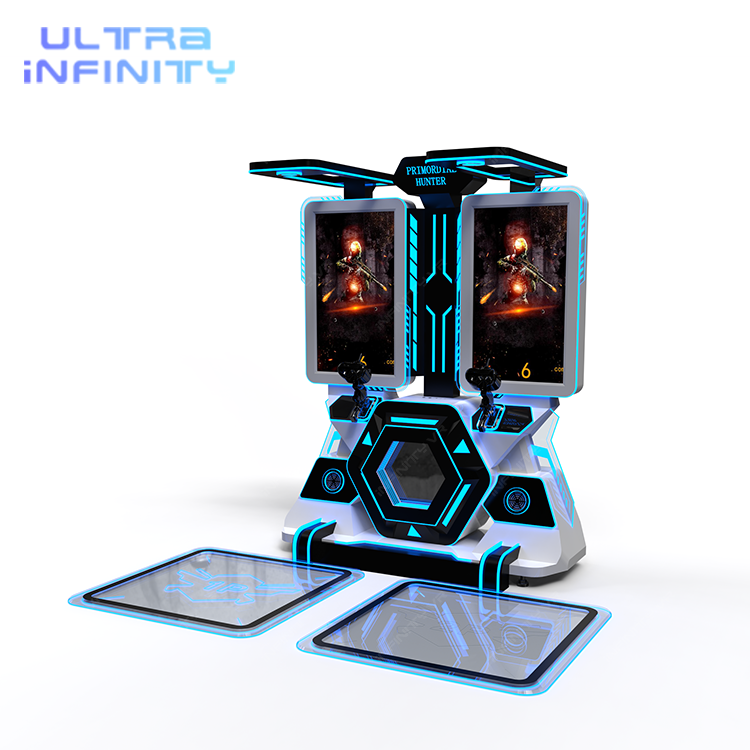
Two product choices make the rotation painless. The Free Roaming VR Arena 2.0 takes the high-energy four-player combat slot - the run the whole party talks about. The 4-Player VR UFO Cinema takes the seated slot - the same four kids ride together, no harness fitting, no briefing, which is where the shy guests and the younger siblings actually play. The VR Battle Shooting Simulator gives the two-at-a-time tiebreaker slot for the rematch argument that ends every round.
Picture the published figures assembled into one booking. A ten-player party takes the 1 PM Saturday slot: $220 locked per the published group sheet, three rotations through the arena inside the two-hour block at the published six-rounds-per-hour cycle, cake at the four-player table while the other six watch the replay wall - the published 72% queue-viewing rate says most of them will. The host runs the rotation from a single tablet; per the published party-block economics the block structure itself carries the +40% Saturday lift. As the parents collect jackets, the host hands over the replay photos and a 30-day rebook offer - the published wristband follow-up study puts the return window at 30 days and the rebook multiple at three times.
The scenario is illustrative, but every number in it is a published reference: the group price ladder, the machine cycle, the queue-viewing share, the Saturday block lift and the rebook window.
Every figure here is a published planning reference: the $100-220 group package ladder and the $130-320 sixty-minute band come from the published VR arcade pricing survey; the four-player standard group and the 4-person, 3-5 minute, six-rounds-per-hour machine cycle come from the published multiplayer guide; the $15-22 per-kid tiers, two-hour prime block and +40% Saturday yield come from the published arcade party playbook; the 72% queue-viewing share and 25-35% drink lift come from the published spectator-screen analysis; the $25-35 fair price, 30-day window and 3x rebook multiple come from the published wristband study. All are planning references, not guarantees - restate each against your own floor plan and staffing before adopting them.
The questions parents and party coordinators ask, answered with the published references.
The published multiplayer guide names four players as the standard walk-in group and the smallest birthday booking - one session that seats the whole group together. Six to eight players is the full-party rung, which needs a larger tracked volume and a host who can brief everyone at once.
The published VR pricing survey records a US booth operator selling birthday parties per group - from $100 for four players to $220 for ten on a thirty-minute package, with a sixty-minute package running $130-320. Price per group, not per head, so one parent makes one decision.
The published machine cycle runs four persons per round at three to five minutes per round, about six rounds per hour - a two-hour party block fits every child through six to eight turns plus cake time.
Yes, and the layout should plan for it. The published spectator-screen analysis reports 72% of queue guests watch the wall display - waiting parents and siblings are an audience, and the published drink lift beside spectator screens runs 25-35%.
The published arcade party playbook prices per-kid wristbands at $15-22 across three tiers in a two-hour prime block. Multiplayer VR is the anchor attraction inside that structure - the published per-kid ladder and the group VR package are complementary, not competing.
The published wristband study puts the fair price at $25-35 and the rebook follow-up window at 30 days - parents who receive the replay photos and the leaderboard printout within a month book the next party at roughly three times the rate of those who get nothing.
Send us your party room dimensions and weekend calendar: we will return the arena placement, the rotation schedule and the per-group package ladder through the free 3D layout design - anchored with the Free Roaming VR Arena 2.0, the 4-Player VR UFO Cinema or the VR Battle Shooting Simulator.