A VR arcade machine is three loops in one cabinet: the headset loop that tracks and renders the world, the motion loop that answers the body inside its envelope, and the software loop that sessions, scores and reports. This guide opens all three - with the published format table, throughput figures and the buyer checklists that separate a machine from a prop.
A VR arcade machine is what a consumer headset becomes when it is rebuilt for venue duty: a headset or cabin screen, a motion system under the seat or around the player, licensed content that runs the same session every time, and an operator layer that takes payment, seats the next guest and reports utilization. It is a revenue unit first and a computer second - the five-format table in this guide sorts the commercial family, and every type runs the same three-loop machine described in this article: the headset loop that shows the world, the motion loop that makes the body believe it, and the software loop that turns a ride into a bookable, repeatable product.
The buyer-side definition matters because the three loops fail differently. A cheap headset loop shows itself in smearing and drift; a cheap motion loop shows itself in downtime; a cheap software loop shows itself in queues that stall and dashboards that report nothing. The duty cycle settles in one question - which hardware survives a 16-hour arcade day - and that question is the honest dividing line between a consumer gadget and an arcade machine.
The headset loop starts with tracking. Modern standalone headsets are inside-out systems: cameras mounted on the headset itself read the room's features and compute the player's position and orientation on the device, with no ceiling markers and no per-session calibration - which is why a free-roam arena can track players across an entire floor without wiring a single sensor into the ceiling. Controllers, gunstocks and backpacks join the same tracking space, so the machine knows where the player, the prop and the virtual world stand relative to each other at all times.
Rendering is the loop's second job: the headset draws a slightly different image to each lens, updated fast enough that the world stays stable when the head turns. In a cabin machine the headset is often replaced by a screen plus tracked glasses or a fixed viewpoint, trading personal immersion for throughput - a design choice, not a shortcut. The buyer check is the same for both: put the demo headset on after twenty minutes of continuous show running, not at the freshly-rebooted booth morning, because tracking drift and thermal throttling are loop failures that only show under load.
Specifications to verify, stated plainly: headset duty rating for all-day commercial use, the refresh and resolution pair on the actual demo unit, the tracking volume per player in a free-roam system, and hygiene kit compatibility - lens inserts and face-pad replacements are consumables, and a supplier who cannot quote them per thousand plays is quoting an incomplete machine.
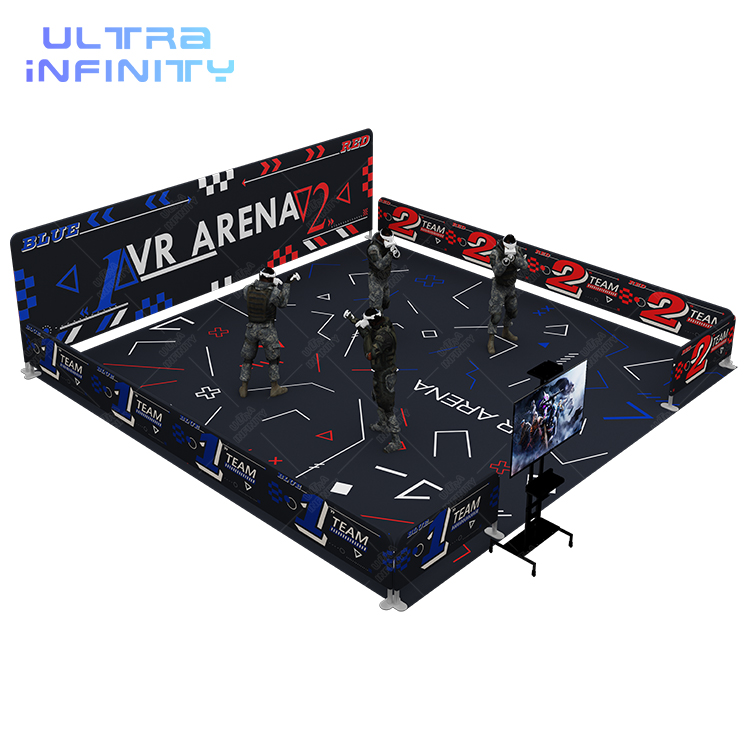
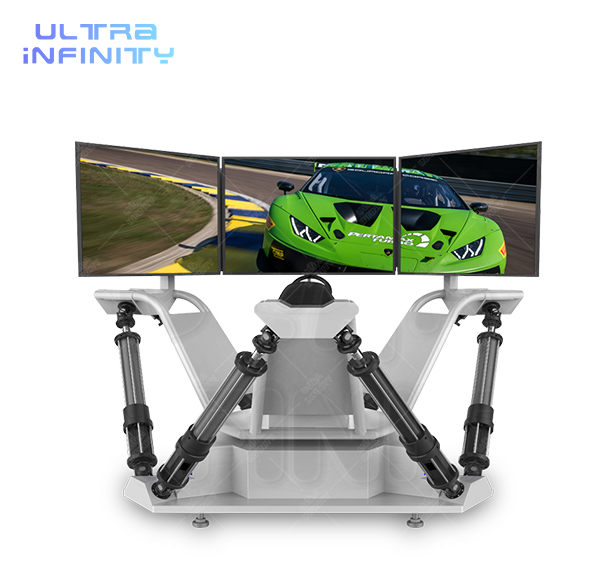
The motion loop is what separates a VR arcade machine from a headset on a stool. Under the seat or around the player, a motion platform answers the software's state - lean into the corner, pitch with the climb, shudder on impact - inside its mechanical envelope. The published seat families span that envelope: compact 3DOF chairs that pitch and roll, the 6-axis cockpit class that adds heave and sway, and the free-roam format that removes the platform entirely and lets the player's own legs generate the motion inside 100-200 published square meters.
Envelope design is a comfort decision as much as a spec. A platform that slams its stops feels violent; a platform that lags the visuals feels broken; the published motion-racing specifications describe the 3-degree-plus envelope family that keeps the cockpit believable across a full day of sessions. Motion also drives service: actuators and couplings are wear parts, so the buyer walks the same checklist here as the software loop - what moves, how often it is serviced, and what the spare-parts kit contains.
For the mixed-floor buyer the motion loop is also the layout lever: a row of moving seats needs the published 4-6 square meters per seat plus service access behind each one, while a chair bank without big actuators tucks into dead corners. The free 3D layout design tests both arrangements against the real floor before the purchase order - the cheapest moment to discover an envelope clash is on a floor plan.
The software loop turns hardware into a product. It sessionizes the experience - the published free-roam session-stages pattern runs briefing, calibration, rounds, scoreboard - so every guest receives the same structured arc whether it is the first play of the morning or the four-hundredth. It takes the money: cashless counters and timed sessions keep the queue math honest. And it publishes the results: scoreboards that show every session's outcome are where the published 60-70% rematch pattern lives, because a guest who can see the number to beat books the next slot.
Behind the counter, the operator dashboard is the loop's commercial half: utilization per machine per hour, session counts, fault flags. The published operations models make utilization the metric that outranks ticket price - a machine that books fewer sessions at a higher price loses to a machine that never sits dark. The buyer demos the dashboard, not just the ride: ask what the system exports, what it flags, and how a fault on machine three of six appears on the operator's screen.
Content licensing closes the loop: the games are the machine's inventory, so the buyer asks how titles are delivered, updated and locked to the hardware. A supplier who ships the content with the machine and a update path in writing is selling a machine; a supplier who shrugs at the question is selling a cabinet that goes stale.
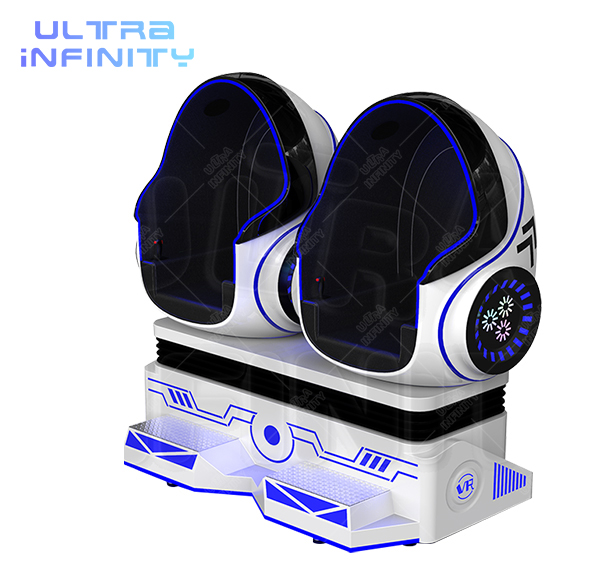
Who it is for, by format. The anchor arena is for the venue that wants a headliner: 100-200 square meters, 24-40 players per hour, the birthday and corporate calendar seller. The density row is for the square-meter pragmatist: 4-6 square meters per seat, 60-90 rides per hour, the published karting-family economics - the published kids-karting model prices one row end to end. The social grid room is for the party floor: the published model books up to $80 per 15-minute session. The compact chair bank is for the filler-and-margin play: $6-12K per chair returning the published $130-320 per chair per day. The 9D cinema row is for the first-time investor: multi-seat, single-content, the gentlest operating model in the family.
| Format | The loop it runs | Published anchor numbers | The buyer it fits |
|---|---|---|---|
| Free-roam arena (anchor) | Headset + backpack PCs, no platform; legs are the motion | 24-40 players/hr on 100-200m2; dwell 35-50 min | Venues selling parties and buyouts |
| Per-seat row (density) | Motion platform + screen or headset, short heats | 60-90 rides/hr; 4-6 m2/seat; 8-12 min dwell | Square-meter pragmatists |
| Grid / LED room (social) | Tracked floor tiles, no headset; software runs the match | Up to $80 per 15-min session (published) | Party-heavy boutique floors |
| Compact chair bank (filler) | 3DOF platform + headset, single-rider sessions | $6-12K per chair; $130-320/chair/day | FECs filling corners with margin |
| 9D cinema row (starter) | Shared platform, passive motion, single content | Multi-seat per unit; gentlest ops model | First-time venue investors |
The mix, not the single machine, is what most buyers actually purchase - the published attraction-mix work shows anchors and density rows stacking inside the $88-135 per-square-meter monthly ceiling. Use the table to name your primary format, then let the mix math - not the showroom demo - pick the second machine.
Where it can be used is a floors-and-current question before it is a marketing one. The anchor arena wants a clear 100-200 square meter rectangle with spectator sightlines - the published spectator-screen pattern lifts arena-side drink sales by 30%, so the bar view is part of the install. The density row wants its 4-6 square meters per seat plus behind-seat service access and a queue lane that does not cross the exit path. The chair bank and cinema row are the corner units: small footprints, but check floor flatness and the power circuit per seat before the delivery date.
Power and flow decide the real count. A mixed floor runs headsets, platforms, projection and counters off separate circuits - the published installation patterns put power planning ahead of equipment selection for a reason. Flow-wise, the published playbook on reducing queues treats the machine's throughput as an F&B revenue issue: a row that books 60-90 rides per hour feeds the counter all evening, while a badly placed arena starves it. The free 3D layout design returns the tested arrangement - machines, queues and counter lines drawn on your actual plan.
The two charts below assemble the published numbers into the shape of a working day. The pie splits an example 12-minute session into its stages - the session-stages arc that the software loop enforces; the bar books example weekly throughput by format, arranged for readability, using the published per-format rates as the anchors. Both are planning references labeled EXAMPLE, not forecasts: your floor's utilization is the variable the published models say to manage.
Read the two charts together and the machine's economics appear: the software loop sets how many minutes a session consumes, and utilization sets how many of those sessions a week actually sells. The published compact-chair model - $130-320 per chair per day against a $6-12K unit - is the cleanest demonstration that the loop, not the ticket, is the product.
The specifications section of this article is a checklist, because that is how the published buying guides treat it: headset duty rating and hygiene consumables; motion envelope and actuator service interval; tracking volume and per-player backpack weight in free-roam builds; cashless integration and dashboard exports on the software side; and the four contract numbers - lead time, install days, training days, warranty line items - that the published certification and pre-shipment checklists convert into supplier scorecards.
Maintenance reality is the loop's shadow cost. Headset face pads and lens inserts are consumables; harness stitching and actuator couplings are wear parts; calibration is a schedule, not an event. The published operating patterns treat the spare-parts kit as part of the machine: a supplier who ships the first-breakdown kit with the cabinet is pricing honestly, and the published warranty guide names the four clauses that protect the investment. The machine that survives its first 16-hour day is the one whose loops were specified - and serviced - as a system.
A commercial virtual-reality station built for venue duty: a headset or screen, a motion system, licensed content and an operator dashboard, packaged to run all day on a paid-session model. The format table in this guide sorts the family into five types - the free-roam anchor arena, the per-seat density row, the social grid room, the compact chair bank and the 9D cinema starter - and each runs the same headset, motion and software loop described here.
Consumer-grade headsets track inside-out: cameras on the headset read the room and compute position and orientation on the headset itself, so the venue needs no ceiling sensors and no per-game calibration. Controllers and gunstocks carry the same cameras or LED markers, which is how a free-roam arena tracks players and props across the whole floor at once.
It converts the game state into body-feel: lean, pitch, vibration and g-force cues inside the platform's envelope - the published seat families range from compact 3DOF chairs to the 6-axis cockpit class. The platform answers the software, so the loop feels physical instead of visual only.
The published specs: a free-roam arena needs 100-200 square meters and books 24-40 players per hour; a racing row needs 4-6 square meters per seat and books 60-90 rides per hour; a compact chair bank sits in the smallest footprint and returns the published $130-320 per chair per day. The free 3D layout design tests the mix before the lease is signed.
Duty cycle and margin. The framing question is which hardware survives a 16-hour arcade day: commercial builds add harnesses, service access, spare-parts kits and operator dashboards that a living-room rig never carries. A guest plays once; the machine plays all day - the build has to be priced for that.
The published anchors: compact VR chairs earn $130-320 per chair per day at a $6-12K unit cost with a roughly 4.5-month payback; a per-seat racing row converts 60-90 rides per hour inside the 8-12 minute heat; an anchor arena's 60-70% rematch rate and the published +30% spectator-screen drink lift pay the second dividend. Utilization, not ticket price, decides which number a floor actually books.
Send us your floor area and audience mix: we will return the format stack, the power and flow plan and the loop-by-loop supplier questions through the free 3D layout design - anchored with the Free Roaming VR Arena 2.0, the Motion Racing Simulator Cockpit 6D and the VR Egg Chair.