Search "best VR headset for sim racing" and you get spec sheets arguing about pixels. The honest answer needs less spec-dumping and more physics: the headset that is best is the one that keeps the VR loop inside the timing your inner ear forgives, shows you the track clearly enough to brake late, and fits the rig you are actually building. This guide explains, in plain language, what the headset does in a racing simulator, which four numbers matter, how home rigs and commercial venues should choose differently, and where the money sensibly goes.
The published VR explainer describes every headset as a four-stage loop: sense, render, display, correct. Cameras track where your head is, the computer draws the track from exactly that viewpoint, two lenses show it to your eyes, and the whole cycle repeats dozens of times a second. In a racing simulator this loop does something specific: it convinces your inner ear that a stationary seat is moving. When the loop runs cleanly - 90-120 Hz, latency held in check - your body accepts the illusion and the kerb strikes feel physical. When it stutters, motion sickness arrives within minutes and the immersion is gone. That is why refresh rate and latency, not resolution alone, are the first two numbers to check.
The second job is clarity at distance. Racing is the most detail-hungry VR scenario: you read brake markers three corners ahead, judge closing speed on distant cars, and spot the apex kerb. The published guidance for attraction-grade hardware is native stereo panels - two dedicated displays or one split panel at native resolution - because stereo rendering already roughly doubles the geometry work per frame, and any upscaling steals the distant detail racers depend on.
Spec sheets list dozens of numbers; four of them decide whether a headset is good for sim racing. They come straight from the published loop analysis:
Everything else on the box - weight, IPD adjustment, audio - is comfort, not capability. Comfort matters for a 40-minute session, but the four numbers above decide whether the headset is usable for racing at all.
The published cost breakdown splits the sim racing world into four budget tiers: a $300-600 entry wheel, a $1,500-5,000 beginner rig, a $5,000-15,000 serious rig, and a $15,000-40,000+ commercial install. The best headset answer flips depending on which tier you are in, because the buyer is a different person: a home buyer compares $300-15,000 and picks by feel; a venue operator compares $15,000-40,000 and picks by revenue per square meter and uptime.
| Tier | Published Budget | What the Headset Role Is |
|---|---|---|
| Entry wheel | $300-600 | Screen-first; a headset is a later, optional upgrade |
| Beginner rig | $1,500-5,000 | Entry VR headset included in the tier; comfort over spec |
| Serious rig | $5,000-15,000 | High-end headset with the four numbers above; roughly a quarter to a third of the budget |
| Commercial install | $15,000-40,000+ | Headset is a small slice; cockpit, motion and uptime support carry the spend |
For a home rig, the practical rule from the published budget analysis: spend inside your tier, prioritize the four numbers, and remember that wheel and pedal upgrades usually improve lap times more than a headset upgrade does. For a commercial venue, the calculus inverts: the published buying guide for commercial VR headsets warns that consumer hardware fails on the 98%+ uptime expectation, and the downtime math is brutal - a machine earning $80 a night loses more in a week of downtime than the repair costs. Venue headsets are chosen for hygiene cycles, durability and service contracts, which is why arcade racers often pair commercial headsets with cockpit seating.
A headset sells the visual; the platform sells the physics. The published DOF comparison explains it plainly: a 3-DOF platform can tilt, roll and lift, which covers hills, jumps and cornering; a 6-DOF platform adds forward slide, sideways slide and rotation, letting it imitate drifts and kerb strikes. More DOF means a richer ride and also a bigger, heavier machine. The headset you pick has to be judged as a pair with the platform: a crystal-clear headset on a static seat is half the experience; a 6-DOF cockpit needs a headset whose tracking never loses lock while the platform throws the rider around.
The chart makes the tier jump obvious: each rung roughly triples. A headset that is sensible at the beginner tier (comfort-first, mid refresh) is the wrong pick at the commercial tier, and vice versa - a commercial-grade headset on a $1,500 rig is budget spent on the wrong bottleneck.
The headset plugs into an ecosystem, and the published cluster documents the rest of it. The complete equipment checklist walks through what ships with a full racing simulator setup. The footprint guide prices the floor: a karting-style VR simulator measures 2300 x 1530 x 1930 mm - about 3.6 square meters - and weighs around 300 kg, before you add the queue space around it. And the compatibility list covers which racing titles actually run in VR. When people ask for "the best headset", the floor plan and the game library are part of the honest answer: the best headset is the one that fits the machine, the room and the content you will actually run.
The line makes the trade visible: higher refresh buys smoother motion but shrinks the render budget every frame, which is exactly why the published guidance pairs high refresh with native stereo panels - you need the resolution headroom to afford the speed.
Every figure here is a published planning reference: the four budget tiers and the $2,000-8,000 motion platform add-on come from the published sim racing cost analysis; the 90-120 Hz comfort band, the ~11 ms frame budget, the 21-42 ms measured latency, the 110-degree-class FOV and the stereo-render doubling all come from the published VR loop explainer; the 3-DOF versus 6-DOF motion split comes from the published DOF comparison; the 3.6 m2 footprint and 300 kg unit weight come from the published dimensions guide; and the $80-a-night downtime math and 98%+ uptime expectation come from the published cost and downtime analyses. All are planning references, not guarantees - match each one against your own room, rig and market before buying.
Four numbers decide the experience, and they all come from the published VR loop: a 90-120 Hz refresh rate (the loop has to finish a whole frame in about 11 ms at 90 Hz), measured end-to-end latency in the 21-42 ms band, a 110-degree-class field of view, and native stereo resolution so the headset does not upscale a single image twice. A headset that misses the refresh budget makes riders sick within minutes.
For racing specifically, seated 3DoF-style tracking is technically enough because you only rotate your head - but every modern headset is 6DoF inside-out tracked anyway, and leaning into corners is what sells the sensation. The published VR explainer treats 6DoF as the standard for anything attraction-grade.
No - the published cost analysis puts the commercial install at $15,000-40,000+, and the headset is a small slice of that. What the venue is really buying is the cockpit, the motion platform (a $2,000-8,000 add-on), payment integration and uptime support. A consumer headset bolted onto a commercial cockpit fails on the 98%+ uptime expectation that protects an $18K weekend.
Sim racing is the most text-heavy VR use case - you read kerbs, brake markers and distant cars. The published guidance is native dual-panel resolution rather than upscaled single-panel, because stereo rendering already doubles the geometry work per frame and upscale blur hits distant trackside detail first.
Screens trade immersion for throughput. A 3-screen 3DOF machine needs no headset fitting, no hygiene cycle and no per-rider adjustment, so a queue moves faster. A headset rig wins on immersion per rider; the published 2DOF-vs-3DOF comparison frames this as matching the motion to the venue, not picking a universal winner.
The published budget ladder prices a beginner rig at $1,500-5,000 including an entry VR headset, and a serious rig at $5,000-15,000 with a high-end headset. As a planning split, the headset is roughly a quarter to a third of a serious rig - and upgrading the wheel and pedals usually improves lap times more than upgrading the headset.
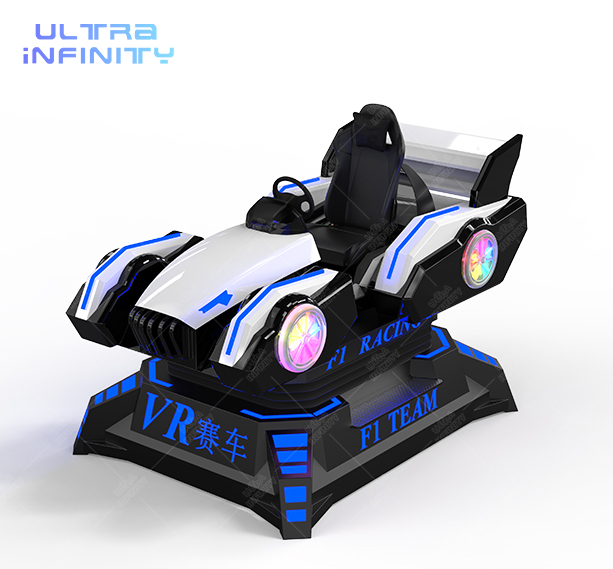
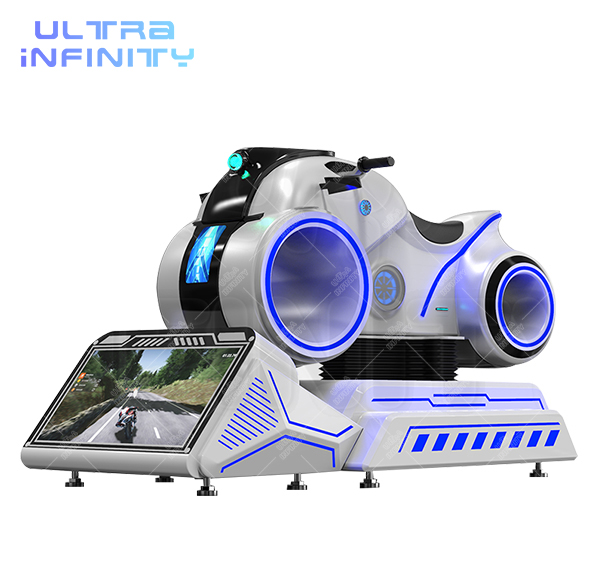
Send us your room and budget: we will return the rig tier, the motion match and the floor plan through the free 3D layout design - anchored with the VR Racing Simulator, the Thunderclap 6DOF Cockpit or the VR Motorcycle Simulator.