An active gaming park makes its money in a narrow window. The weekend peak, roughly Saturday and Sunday from midday to evening, typically delivers 55 to 65 percent of weekly revenue. That means the equipment has one job: run flawlessly in that window. A machine that fails on a Tuesday afternoon is an inconvenience; a machine that fails on a Saturday is a revenue event.
The math is brutal and simple. If a park earns $4,000 on a peak Saturday and one attraction drops out for two hours, the park loses both the direct play revenue and the secondary spend that the group would have generated around the attraction. The real cost of the failure is two to three times the lost ticket, because food, drink and other games all ride on the crowd flow.
| Scenario | Maintenance Cost | Revenue Impact | True Cost |
|---|---|---|---|
| Tuesday failure | $50 repair | Near zero | $50 |
| Saturday 2-hour failure | $80 rush repair | Lost $300-400 play + $200-300 F&B | $600-800 |
| Saturday full-day failure | $120 repair | Lost $900-1,200 play + F&B | $1,500+ |
| Peak-season weekend failure | $150 repair | Lost multiple days of momentum | Hard to quantify |
The rest of this guide is a list of the five mistakes that create these Saturday failures. Every one of them is a specification decision made at purchase time, which means every one of them is preventable at purchase time. None of them requires exotic engineering; they are all about reading the spec sheet the way a weekend operator does, not the way a salesman does.
The first and most expensive mistake is confusing a consumer product with a commercial one. Consumer gaming hardware is built for a few hours of use a day by one owner; a commercial floor runs it for eight to twelve hours, across dozens of users per hour, with spills, bumps and whatever weather the venue drags in. The same-looking unit in commercial trim has heavier cabling, sturdier I/O ports and components rated for continuous duty.
The failure pattern is predictable. Consumer-grade units fail first in the parts that take mechanical abuse: card readers, coin mechanisms, buttons, screens and connectors. These are exactly the parts that a Saturday crowd attacks. The vendor quotes a lower price, the park saves a few hundred dollars, and the first peak weekend produces the first repair call.
| Component | Consumer Grade | Commercial Grade | Weekend Difference |
|---|---|---|---|
| Card reader | 500-2,000 swipes/month | 50,000+ swipes/month rated | Reader jams vs clean flow |
| LCD screen | 8 hrs/day casual | 24/7 duty rated | Burn-in vs steady image |
| Buttons and switches | Light use | Million-cycle rated | Sticky buttons vs crisp input |
| Power supply | Basic | Regulated, cooled | Overheat shutdown vs stable |
The specification rule is simple: ask the vendor for the duty rating of every wear part, in writing. A commercial unit lists its expected monthly cycles; a consumer unit does not. If the answer is vague, the part will be the first thing that fails on a Saturday, and the park will pay the difference in lost revenue many times over.
The second mistake is trusting headline capacity numbers without asking how they are measured. A dance floor grid, a dart machine or a shooting simulator all come with a quoted "plays per hour" figure, but those figures assume ideal conditions: no queue confusion, no payment delays, no longer-than-average sessions, no staff breaks. The real throughput on a crowded floor is usually 60 to 70 percent of the headline number.
The problem is not the variance itself; it is that the floor plan is built on the optimistic number. If a zone is planned around 20 plays per hour and the real figure is 13, the queue grows through the afternoon, players walk away, and the park over-staffs or under-collects. The Saturday crowd exposes every gap between the paper model and the floor reality.
| Attraction | Headline Throughput | Realistic Peak Throughput | Gap |
|---|---|---|---|
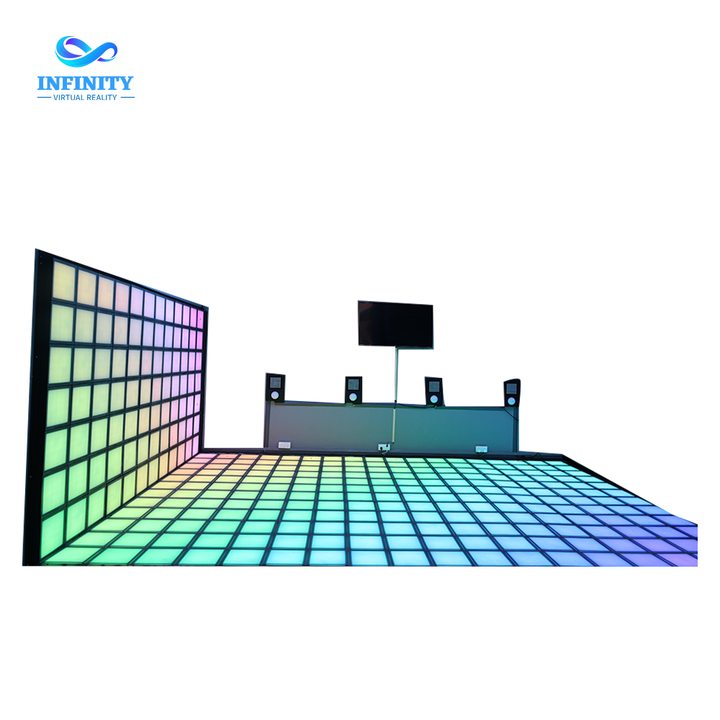
| LED dance floor grid (6-8 tiles) | 24 plays/hr | 15-17 plays/hr | 30% |
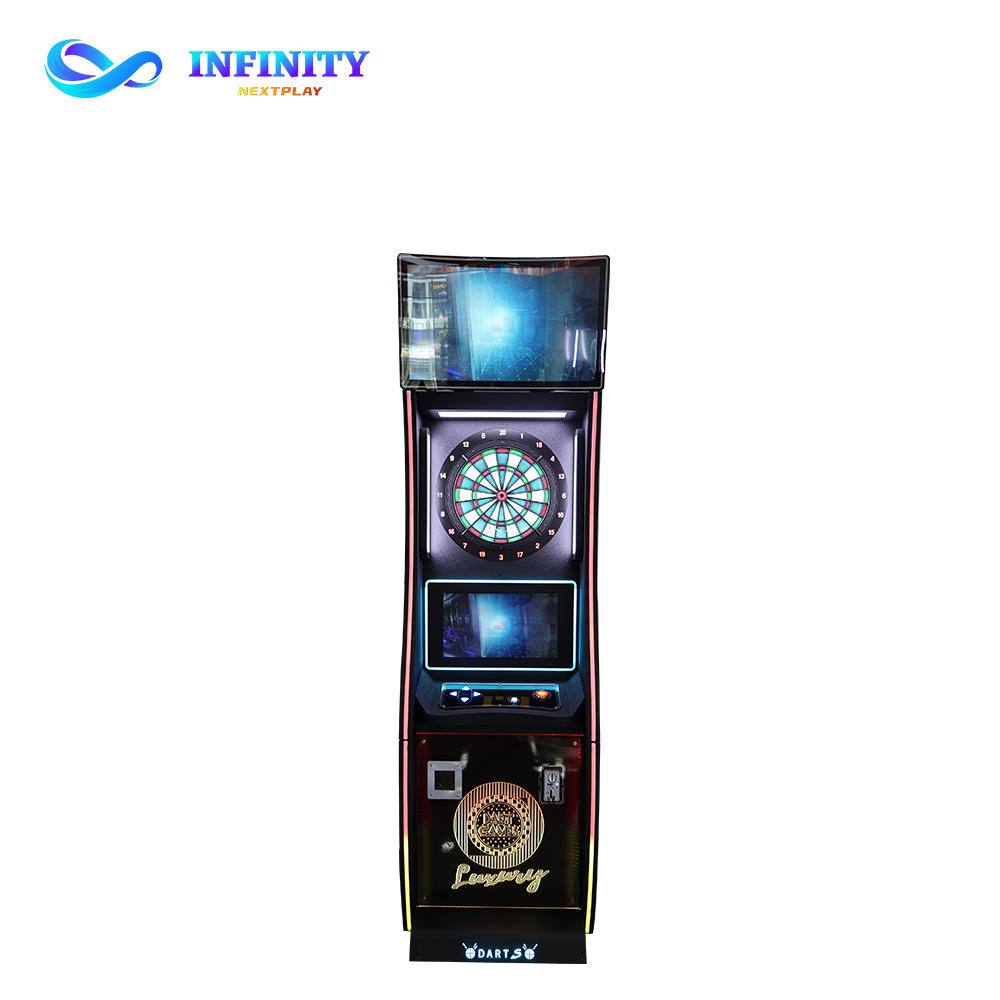
| Electronic dart machine | 12 plays/hr | 8-9 plays/hr | 30% |
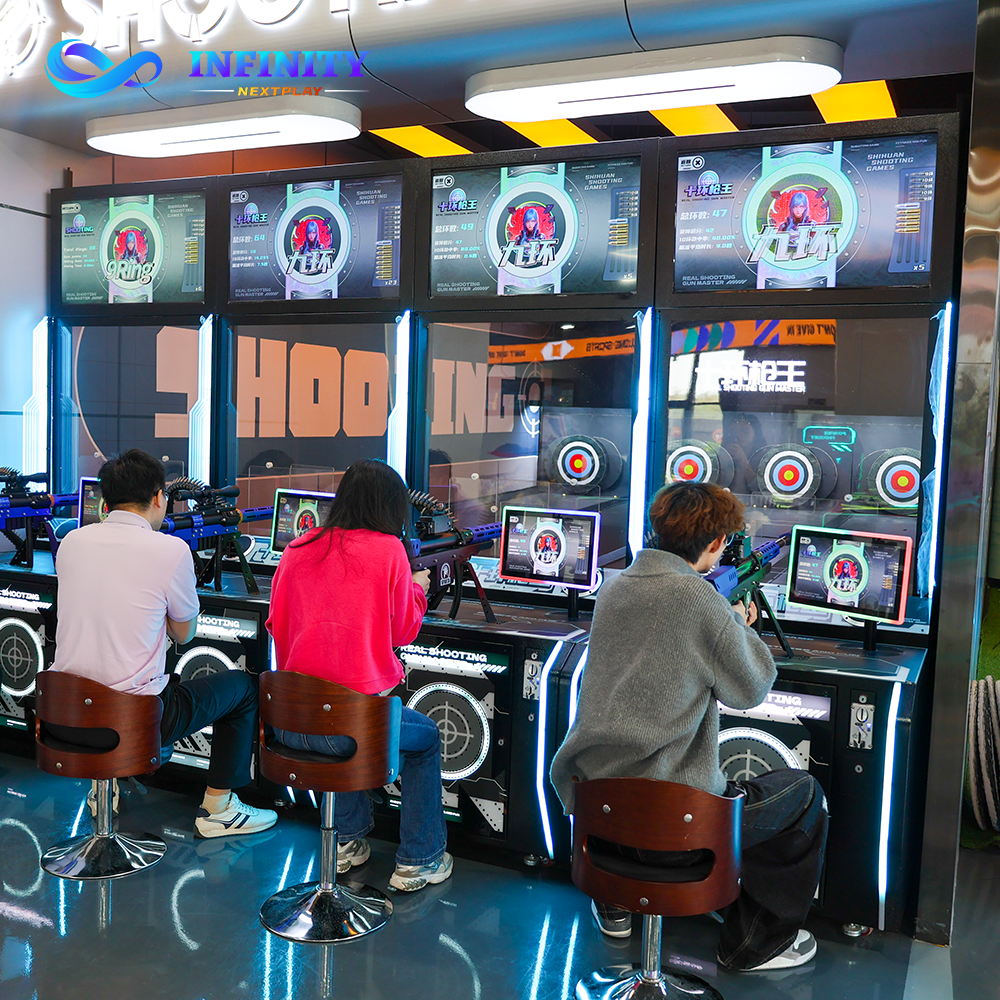
| Optical shooting simulator | 15 plays/hr | 10-11 plays/hr | 30% |
| Multiplayer VR arena (4 slots) | 8 sessions/hr | 6 sessions/hr | 25% |
The corrective habit is to size the zone for the realistic number and add a margin for the worst case. A park that plans for the realistic throughput keeps queues under control, keeps staff ratios honest and keeps the Saturday experience pleasant. The zone that is undersized on paper is the zone with the angry queue on Sunday afternoon.
The third mistake is environmental: buying the equipment and ignoring the room. Active gaming hardware is power-hungry and heat-producing. A dance floor grid draws steady current for its LEDs and controllers; a row of simulators stacks gaming PCs and screens into one small room. Without enough supply circuits, proper breakers and real airflow, the equipment starts throttling or shutting down exactly at peak load.
The classic failure sequence is always the same. The park opens, the afternoon crowd peaks, the room warms up, a power circuit trips or a fan-protected machine shuts itself down, and the staff spend twenty minutes finding and resetting the unit. The vendor delivered a machine that works at 24 degrees; the room runs at 31 degrees by 4 pm. The machine did not fail; the environment did.
| Environmental Item | Under-Spec Result | Correct Spec |
|---|---|---|
| Power circuits | Tripped breakers at peak | Dedicated circuit per heavy unit |
| Cooling | Thermal shutdowns by 4 pm | Rated airflow, exhaust path per zone |
| Floor protection | Static and dust failures | Anti-static matting, covered cabling |
| Cable management | Trips and loose connectors | Trunking, strain relief, labeled runs |
The specification rule for the room is as strict as the rule for the machine: budget 20 percent more cooling than the equipment list says, and give every heavy unit its own circuit. The Saturday crowd is the load test of the venue, and the venue either passes it or the equipment pays for the venue's shortcuts.
The fourth mistake is buying hardware with no answer to the question: what happens when it breaks on a Saturday? A park with no local spares and no service agreement waits days for a replacement part, while the attraction sits dark through the most profitable hours of the week. The cheapest insurance in the industry is a written spare-parts list and a same-week service path.
The practical standard used by reliable operators is a 48-hour repair target for the highest-earning attractions. That standard is only reachable if the park holds the critical spares on site: the parts that fail most often on crowded floors. A decision made at purchase time, choosing a vendor that stocks spare parts and has a support window that covers weekends, decides whether the park hits that 48-hour target or misses it by a week.
| Spare Part | Failure Likelihood | On-Site Cost | Cost of Not Having It |
|---|---|---|---|
| Card reader module | High | $60-120 | Lost attraction for days |
| Control board | Medium | $150-300 | Whole unit offline |
| LCD panel | Medium | $250-500 | Game unreadable |
| Power supply unit | Medium | $80-200 | Unit dead until swap |
The rule is to write the spare-parts list before signing the purchase order, not after the first failure. A vendor that cannot name the failure-prone parts of its own machine, hold them in stock and get them to the site within days is a vendor that is already betting against the park's weekends. The park should hold the same bet.
The fifth mistake is hardware-only thinking: buying great machines and leaving the software and staff loops to chance. Active gaming equipment runs on software that needs updates, licenses that need renewal and calibration that drifts. A leaderboard that stops updating, a game library that feels old or a machine that needs a restart every hour is an uptime problem with no spare part involved.
The staff loop matters just as much. Weekend attendants must know the reset sequence, the common error codes and the escalation path for each attraction. A park where only the manager knows how to reset the dart machine creates a 30-minute outage out of a 2-minute fix. The difference between a 2-minute and a 30-minute fix is training, and training is a purchase-time decision too.
| Operational Item | Missing Loop | With the Loop |
|---|---|---|
| Software updates | Old games, drift, quiet failures | Scheduled update window, tested build |
| License renewal | Expired features on Saturday | Renewal calendar with 30-day alarm |
| Calibration | Scoring errors, player complaints | Weekly calibration checklist |
| Staff reset knowledge | 30-minute outages | 2-minute fixes, documented reset cards |
The operational specification belongs in the purchase conversation. At order time the park should receive the update schedule, the calibration checklist and the reset cards, and the vendor should confirm the park's staff can run them. The park that skips this loop owns a floor of great machines that still lose the weekend.
Two to three times the lost tickets. A two-hour Saturday outage on a busy attraction costs the direct play revenue plus the food, drink and adjacent-game spend that the crowd would have generated. A $50-150 repair can hide a $600-1,500 revenue event.
Commercial hardware has duty-rated wear parts: card readers rated for tens of thousands of swipes, 24/7-rated displays, heavier connectors and regulated power. The same-looking unit in consumer trim fails first in exactly the parts a weekend crowd attacks.
Take the vendor headline figure and plan for 60-70 percent of it. The realistic figure keeps queues and staffing honest; the paper figure creates the angry queue on Sunday afternoon.
The parts that fail most on crowded floors: card reader modules, control boards, LCD panels and power supplies for the highest-earning attractions. The goal is a 48-hour repair target for the machines that make the weekend revenue.
Yes. Leaderboard drift, stale game libraries, expired licenses and machines that need hourly restarts are software-side uptime killers. Updates, renewal calendars and calibration checklists belong in the purchase agreement.
Specify the venue as hard as the machines: 20 percent extra cooling, a dedicated circuit per heavy unit, a written spare-parts list and trained staff with reset cards. The Saturday crowd tests the whole system, not just the machine.
The five mistakes share one root: buying equipment on sticker price and headline numbers instead of buying uptime. A park that specifies commercial duty ratings, realistic throughput, a cooled and powered room, an on-site spare-parts list and a staff software loop prices the Saturday revenue into every purchase. That park does not hope the weekend works; it has already decided it will.
The Infinity Grid LED Dance Floor anchors the zone with solid-state reliability, the Dart Machine X7 handles high-cycle play with automatic scoring, and the Shooting Simulator Q4 adds a no-wear-parts draw that keeps the crowd rotating. Contact NextPlay for the reliability spec sheet and the spare-parts list, and put the weekend back on your side.
Ask NextPlay for the equipment reliability sheet behind this guide: the commercial grades, the spare-parts list and the peak-day load plan that keep an active gaming park running through the Saturday rush.