Every attraction on an active gaming floor has a session length, from the 2-minute round of a shooter to the 15-minute ride of a VR cinema. Most operators set those durations once, at installation, and never touch them again. That is the mistake: session length is the cheapest revenue lever on the floor, and it behaves like a knob, not a switch.
The revenue formula is simple: revenue per hour equals the number of sessions completed times the price per session. A ride that runs a 12-minute session with 3-minute turnover completes 4 sessions an hour; the same ride at 8 minutes with 2-minute turnover completes 6 sessions an hour. That is a 50 percent gain in ride revenue from the same machine, before the queuing and experience effects are counted.
| Session Length | Sessions per Hour | Hourly Revenue (at $6) | Queue Feel |
|---|---|---|---|
| 15 min | 3 | $18 | Slow, empty spaces |
| 12 min | 4 | $24 | Balanced |
| 8 min | 6 | $36 | Lively, short waits |
| 5 min | 7 | $42 | Rushed feel, fast churn |
The table shows the tension: shorter sessions push revenue up but raise the risk of a shallow experience. The right length depends on the attraction type, the price point and the floor's traffic. The rest of this guide turns that tension into a method: how to pick, price and schedule the session length per attraction.
Not every attraction has the same natural session. Active gaming equipment falls into three families with different duration logics: short-loop games that are built for rapid rotation, mid-length rides that need a full experience arc, and long-session zones that hold groups for extended play. Mixing the three gives the floor a rhythm.
Short-loop games, such as optical shooters, LED dance tiles and electronic darts, have a natural round time of 2 to 5 minutes. They create churn by design: the round ends, the score appears, the next group steps up. Mid-length rides, such as 9D motion chairs and simulators, need 6 to 12 minutes to justify the motion experience. Long-session zones, such as a free-roam VR arena, run 15 to 25 minutes and pair with group pricing.
| Attraction Type | Natural Session | Pricing Style | Floor Role |
|---|---|---|---|
| Optical shooter | 2-3 min | Per round | Churn generator |
| LED dance tiles | 3-5 min | Per round, challenge mode | Energy anchor |
| Electronic dart machine | 5-10 min | Per game / per player | Social backstop |
| 9D motion chair | 6-8 min | Per ride | Mid-length anchor |
| VR motorcycle | 6-10 min | Per ride | Spectacle draw |
| VR cinema (2 seats) | 10-15 min | Per ride | Story slot |
| Free-roam VR arena | 15-25 min | Per group | Group revenue hub |
The mix is what makes the floor interesting: the crowd moves between fast churn zones and long emotional rides, and each queue draws the other's overflow. The session length of each family should respect its natural logic; a 9D ride squeezed to 4 minutes feels gimmicky, and a shooter stretched to 10 minutes feels dead.
The session length that maximizes revenue is not the shortest one; it is the one that keeps the queue alive without letting it collapse. The queue math has three numbers: fill rate, the rate at which new players join the queue; wait time, the minutes between joining and playing; and the walk-away point, the wait after which players leave.
A queue behaves like a reservoir. If the fill rate exceeds the session completion rate, the queue grows until the wait clears the walk-away point and players defect. If the completion rate exceeds the fill rate, the queue empties and the machine idles. The goal is to match the session rate to the fill rate, with a small, visible queue that acts as social proof: people join a queue that moves.
| Fill Rate (players/min) | Session Rate (starts/min) | Queue State | Result |
|---|---|---|---|
| 2 | 1 | Growing +2/min | Wait climbs past 15 min, walk-aways |
| 2 | 2 | Steady, small queue | Healthy churn, social proof |
| 2 | 3 | Emptying | Idle gaps, machine waiting |
The operator's practical tool is the price lever: raise the price to reduce the fill rate, lower it to increase the fill rate, and adjust session length to match. On a typical weekend the operator tunes the pair together: a slightly shorter session with a slightly higher price often lands exactly on the healthy-queue point and lifts revenue per hour at the same time.
Session length and price are read together by the customer. A 4-minute ride at $5 feels overpriced; the same ride at 8 minutes at $8 feels like a deal. The perceived value is about the minutes of experience per dollar, not the dollar alone. That is why the pricing conversation never starts with the price; it starts with the duration.
The standard ratio used across the industry sits near 1 to 1.5 minutes per dollar for motion rides: an 8-minute ride justifies an $8 to $12 ticket, while a 3-minute round justifies a $3 to $4 ticket. The ratio compresses for churn games, where the round count and the replay pull matter more than the minutes, and expands for group zones, where the group price absorbs several players' worth of experience.
| Attraction | Session | Price | Minutes per Dollar |
|---|---|---|---|
| Shooting round | 3 min | $4 | 0.75 |
| LED dance challenge | 4 min | $5 | 0.8 |
| 9D motion ride | 8 min | $10 | 0.8 |
| VR cinema U2 | 12 min | $15 | 0.8 |
| VR arena (group) | 20 min | $60 per group | 1.7 per head at 4 players |
The table shows the consistent rule: keep the minutes per dollar in a narrow band per attraction family, and let the pricing communicate value through duration. A floor that prices by this rule gets fewer price complaints and more repeat trips, because the customer's internal math closes in the operator's favor.
The queue math only works if the machine itself never waits. Motion rides lose time in loading, briefing, strapping in and unloading; a 9D ride with a 12-minute session and 4 minutes of dead time actually cycles in 16 minutes. The stagger schedule is the discipline that compresses the dead time: prepare the next group while the current one plays, and start the next session the moment the platform clears.
The 30-second gap rule is simple: between the end of one session and the start of the next, the target is under 30 seconds of idle time. That requires staff to brief the incoming group before the doors open, to have the harness and safety check memorized as a fixed sequence, and to unload with purpose. Venues that implement the 30-second rule report two to three extra sessions per hour on the same ride.
| Flow Step | Without Stagger | With Stagger | Gain |
|---|---|---|---|
| Brief the group | During dead time | Before session ends | -90 sec per cycle |
| Load and secure | At session end | Fixed 45-sec sequence | -45 sec per cycle |
| Start next session | After cleanup | Immediately on clear | -60 sec per cycle |
| Sessions per hour (8-min ride) | 4 | 5-6 | +25-50% |
The stagger schedule also feeds the queue: with shorter dead time, the visible queue moves faster, the walk-away point moves further out, and the park can hold a longer queue without losing players. The session length, the price and the stagger are one system, and the operator that tunes all three doubles the same machine's contribution.
A floor is not a single machine; it is a rhythm. The session mix plan assigns the three families across the floor so the crowd flows: churn games by the entry, mid-length rides in the middle, group zones at the back. Each zone's session length feeds the others' queues, and the floor runs at its natural tempo.
The plan starts with the traffic forecast: how many people arrive per hour at the peak. From that number, the operator works backwards to the required sessions per hour per zone, then to the session length per machine, then to the staff needed to hold the stagger. The session-length decision is therefore not a design choice in isolation; it is the last step of the capacity plan.
| Zone | Attraction | Session | Price | Staff |
|---|---|---|---|---|
| Entry | Shooting simulator | 3 min | $4 | 1 attendant |
| Entry | LED dance tiles | 4 min challenge | $5 | Shared |
| Middle | 9D motion chair | 8 min | $10 | 1 attendant |
| Middle | VR motorcycle | 8 min | $10 | 1 attendant |
| Back | VR arena (2.0) | 20 min group | $60/group | 1-2 attendants |
The result is a floor where every machine earns its keep twice an hour or more, every queue looks alive, and every guest leaves with the feeling that the time was well spent. The session lengths in the table are starting points; the operator tunes them with the fill-rate and walk-away numbers from their own crowd.
The sweet spot is 8 to 12 minutes including loading. Below 6 minutes the experience feels short and the price feels high; above 12 minutes the queue dies. The 8-minute ride with a tight 30-second stagger delivers 5 to 6 sessions per hour.
Directly: revenue per hour equals sessions completed times price. The same ride at 8 minutes vs 12 minutes completes about 50 percent more sessions, which lifts ride revenue by roughly the same factor before queue effects.
Short-loop games (2-5 min) generate churn; mid-length rides (6-12 min) carry the experience; long group zones (15-25 min) hold the biggest revenue groups. A floor with all three families keeps guests moving between zones.
The wait time after which players leave the queue. Most guests accept 5 to 10 minutes and start defecting at 15. Keeping the wait under the walk-away point while keeping a small visible queue is the goal of the session-length tuning.
Keep minutes per dollar in a narrow band per attraction family: roughly 0.7 to 0.9 minutes per dollar for rides, and per-round pricing for churn games. Value is the minutes per dollar, not the price alone.
Between the end of one session and the start of the next, target under 30 seconds of idle time by briefing the next group early and using a fixed load sequence. Venues report 2 to 3 extra sessions per hour per ride with the rule in place.
Session length is the hidden knob on every machine, and the operator that tunes it owns a faster floor without buying a single new unit. The method is short: pick the natural duration per attraction family, pair it with a price that reads as value, keep the queue in the healthy band, and run the stagger that eliminates dead time.
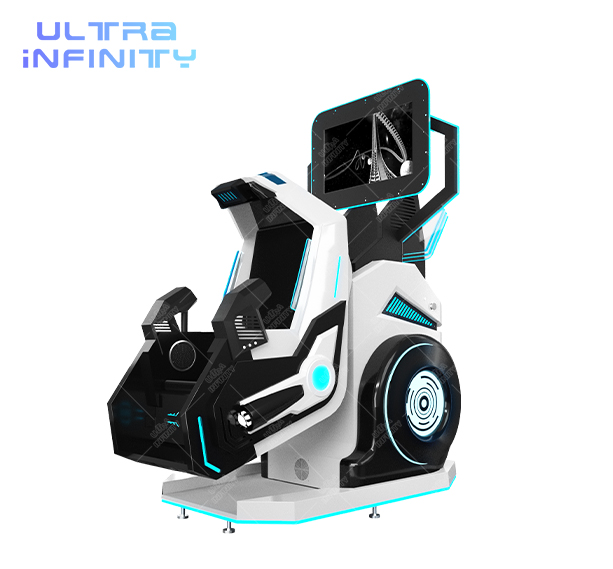
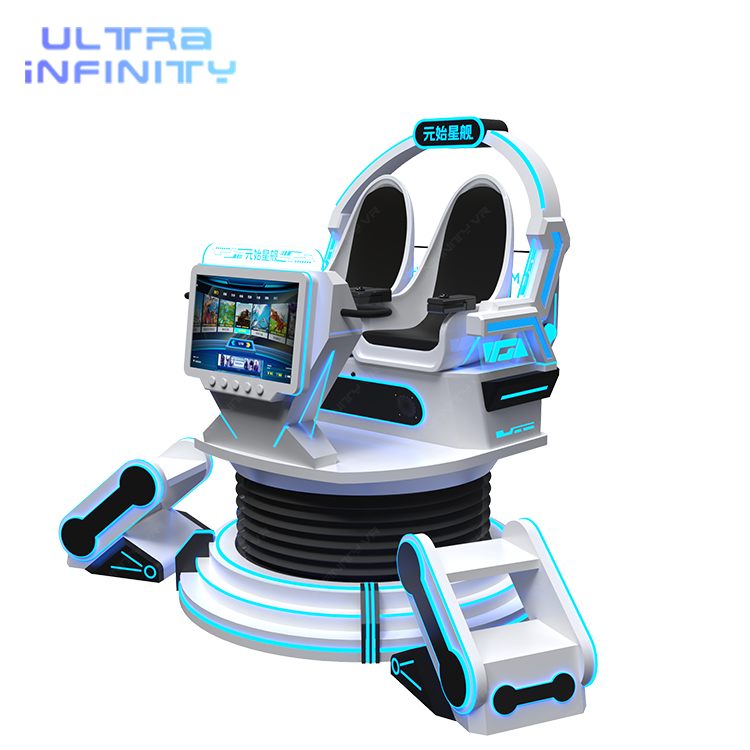
The VR 360 Motion Chair anchors the mid-length rotation, the VR Starship U2 carries the longer story session, and the VR Thunder Motorcycle 9D draws the spectators that feed every other queue. Contact NextPlay for the session-length planner and get the same floor turning faster.
Ask NextPlay for the session-length planner behind this guide: the per-attraction duration tables, the queue-stagger schedule and the pricing sheet that turn the same machines into a faster-turning floor.