The old way to market a venue is a poster campaign: design, print, place, wait, repeat, and the results are as hard to measure as they are slow to arrive. The content day is the opposite: one creator, one afternoon, one structured visit, and the output is not a poster that ages in a week but a bank of videos and photos the venue reuses for months. The unit of the new campaign is the content asset, not the ad buy.
The economics are why the model spreads so fast. A poster campaign costs a fixed amount for a fixed, short life. A content day costs roughly the same as a modest campaign, but the assets it produces keep earning: the quiet Tuesday the creator filled becomes the template for the next quiet Tuesday, and every save or share is a free impression the venue did not buy. A well-run creator day typically returns ten to twenty times its cost.
| Campaign Type | Cost Shape | Asset Life |
|---|---|---|
| Poster campaign | Fixed, repeated cost | Weeks |
| Paid social ads | Cost per impression | Days, while budget runs |
| Influencer content day | One-day cost | Months of reuse |
| Venue UGC program | Recurring small cost | Continuous |
The model only works if the day is designed, not improvised: the right creator, the right brief and the right offer are what turn a free visit into a converting campaign. The rest of this guide builds each piece, so the next content day is a machine instead of a gamble.
The instinct is to pick the influencer with the biggest number, and it is usually wrong. A creator with two hundred thousand followers in another city brings reach that never walks through the door; a creator with eight thousand in the venue's own neighborhood brings a feed full of local faces and local habits, the audience that can actually visit on a Tuesday. Fit comes before reach, and local is the first test.
The right creator for an arcade is someone whose content already lives in the venue's world: a local family-and-fun creator, a nearby gaming streamer, a food-and-fun reviewer whose audience matches the party crowd, a couple who cover date night. The test is not follower count, it is whether those followers could realistically drive ten minutes to the venue after watching.
| Creator Type | Why They Fit | The Audience They Bring |
|---|---|---|
| Local family creator | Matches party and kid segments | Parents planning weekends |
| Gaming streamer | Matches arcade regulars | Players and enthusiasts |
| Fun and food reviewer | Matches casual walk-ins | Experience seekers |
| Date-night creator | Matches evening and couples | Couples looking for outings |
The pick should also be checked like a hire: review the last ten posts for engagement quality, not just likes, check that the audience is local and real, and confirm the creator has never posted a negative review of a competitor in a way that signals a pattern. One right creator is worth three wrong ones, and the wrong one spends the whole day producing content that the venue cannot use.
A creator walks in with a camera and a plan, and the plan is only as good as the brief. The brief tells the creator what to film, what to say and what to avoid, so the day produces usable assets instead of a fun video that never names the venue. It is short, specific and written before the visit, not explained at the door.
Named hooks, a converting offer, must-have shots and a review step.
A general invitation to have fun and post something; the venue pays for content it cannot use.
The brief also settles the value exchange before the visit: the fee, the free play, the free meal and the rights to the content. The rights matter more than the fee, because the content bank is the real asset; the contract should give the venue the right to repost, edit and reuse the assets for the season.
The content day is a production day, not a free-play session, and the difference is the schedule. A creator who wanders for four hours produces a few good clips; a creator who follows a timed route produces a dozen usable assets, because the schedule says where to be, what to shoot and when to talk. The venue provides the route, the machine access and the staff support; the creator provides the craft.
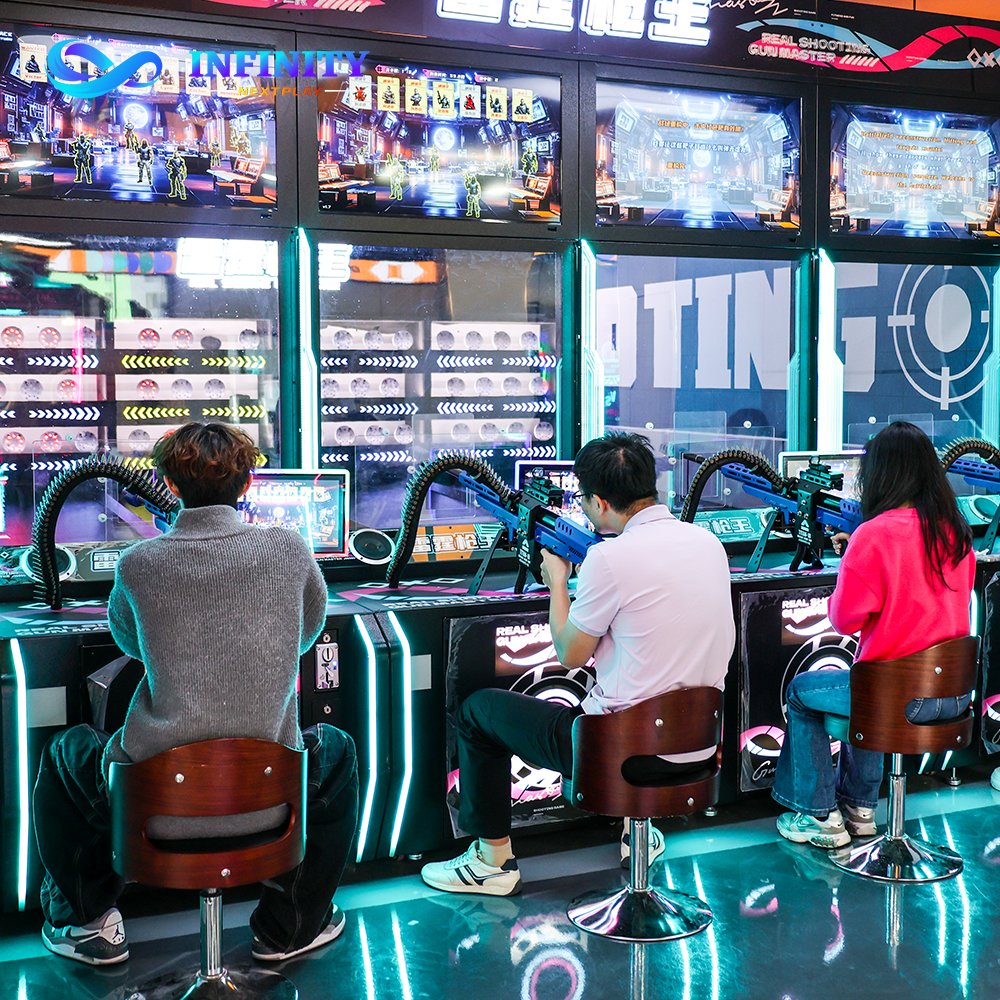
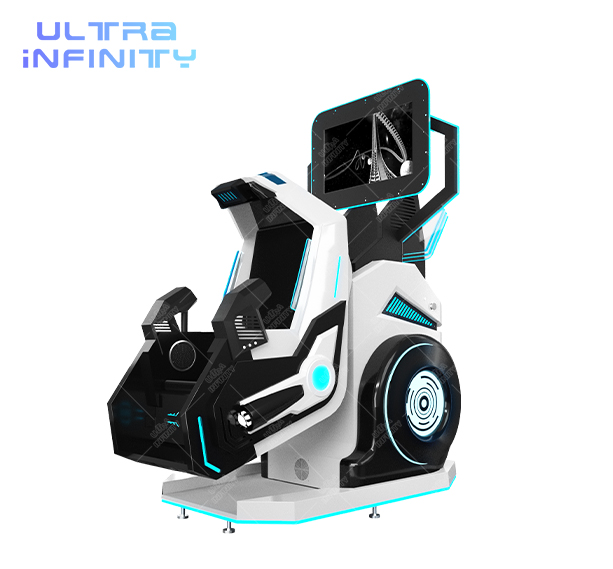
The route should showcase the floor's best moments: the Arcade Archery A6 accuracy duel that films beautifully with the dual display, the Shooting Machine C4 moving-target action that gives the camera motion, and the VR 360 Motion Chair that produces the reaction shot, the guest's face on a roller-coaster ride, the most-shared arcade format there is. Each zone gets a time block and a planned shot list.
| Time Block | Zone | Planned Asset |
|---|---|---|
| 10:00-10:30 | Arrival and intro | Meet-the-venue intro shot |
| 10:30-11:30 | Archery and shooting | Duel and action clips |
| 11:30-12:30 | VR and motion | Reaction shots |
| 12:30-13:00 | Counter and offer | Promo spot with code |
The day also needs a venue host: one staff member who knows the machines, the stories and the offer, who can answer on camera and keep the route moving. The host turns a rental into a collaboration, and the content should feel like one: a local venue showing a local creator a great afternoon, not an ad shoot.
Entertaining content fills feeds; a converting offer fills the floor, and the two need each other. The offer gives the viewer a reason to act today: a code, a discount, a limited window, a bundle, something that turns a like into a booking. The content day without an offer is a brand video; with an offer it is a campaign.
The offer should be designed for the quiet day it fills: a Tuesday special pairing the influencer's content with a real incentive, a two-hour all-you-can-play pass at a Tuesday price, a family bundle that makes the weekday trip cheap, or a code that adds bonus credit to a wallet load. The offer must be easy to remember, one line, and easy to redeem, one code or link, because a viewer who has to hunt for the deal moves on.
| Offer Type | Quiet-Day Fit | Redemption Path |
|---|---|---|
| Time-limited code | Any quiet day | Code at checkout |
| Two-hour pass | Weekday afternoon | Booked via link |
| Family bundle | Tuesday family night | Bundle at counter |
| Wallet bonus | Cashless floor | Auto-applied on load |
The offer should also be trackable: a unique code or link per creator shows how many visits and how much revenue the day produced, the number that decides round two.
The content day is often scheduled for the busiest night, and that is usually wrong. A Saturday visit produces content that fills a Saturday already full; a Tuesday visit produces content that fills the Tuesday that was empty, which is where the real growth sits. The quiet day is the highest-margin opportunity in the calendar, because the cost is the same but the lift is pure new revenue.
The math is straightforward: fixed costs run every day, so revenue from a filled Tuesday is almost pure contribution, while a filled Saturday only displaces revenue that would have happened anyway. The content day should target the quiet slot on purpose, and the offer should be named for it, the Tuesday Special, the Weekday Family Night, so the content trains the audience to see the venue as a weekday option, not just a weekend one.
The quiet-day strategy also changes the venue's relationship with its creators: the influencer becomes a growth partner for the calendar's weakest hours, not a decoration for the busiest ones, which is a role the venue can measure, repeat and eventually schedule months in advance.
The creator day does not end when the creator leaves; it ends when the content has been posted, amplified and banked. The venue's job in the days after is to double the reach the creator produced: repost the posts from the venue's own channels, cut the long video into clips for every platform, and run the best assets as ads to the local audience the creator's content already proved is interested.
The amplification plan should be written before the day: a posting calendar that spaces the assets so the feed never goes quiet, a clip list that turns the footage into a month of posts, and a paid-boost budget for the best organic post behind a small local ad. The content bank is the compounding asset, and every repost, clip and boost collects the return on the one-day cost.
The follow-up is when the venue turns one creator into a program: the first day proves the model, the second refines the brief, and by the third there is a monthly rhythm, a content bank and creators who know the floor. The quiet Tuesday stops being a problem and becomes the most reliable campaign slot.
The content day is an investment, and investments get measured. The measurement starts with the direct numbers, the code redemptions, the link clicks and the attributed revenue, and extends to the compounding numbers, the views, saves and shares earned, the followers gained and the lift on the quiet day in the weeks after. The venue that measures both sides knows what round two should look like.
| Metric | What It Tells You | The Round-Two Signal |
|---|---|---|
| Code redemptions | Direct conversions | Below target: fix the offer |
| Revenue attributed | Return on the day | Above 10x cost: repeat the model |
| Views and saves | Content quality | Low saves: fix the hooks |
| Quiet-day lift | Habit formation | Sustained lift: expand the program |
The review should happen one week and one month after the day: the week tells whether the offer converted, the month tells whether the habit formed. The numbers shape the next brief, the next offer and the next creator, turning the campaign into a loop that fills quiet days instead of a single afternoon.
The range is wide, but the economics are what matter: pay for the content rights, the deliverables and the local fit, and price the day against the ten-to-twenty-times return a well-run content day produces, not against follower count.
Test local fit before reach: a creator whose followers could realistically drive to the venue, whose content already covers family fun, gaming or local experiences, and whose last ten posts show real engagement with the right audience.
The content hooks, the offer with its code and dates, the must-have shots like the venue name spoken on camera, the no-gos and the deliverables, plus the rights agreement that lets the venue repost and reuse the assets.
Usually no. A quiet day is the higher-margin slot, because the fixed costs run anyway and the lift is pure new revenue, so schedule the creator day on the quietest recurring slot and name the offer for it.
Measure the first day with codes and attributed revenue, review it a week and a month later, refine the brief and the offer, and repeat monthly with a new creator until the quiet slot becomes a reliable campaign rhythm.
The attributed revenue from the offer codes, because it proves the day converted. Then watch the quiet-day lift in the following weeks, which shows whether the content built a habit or just a spike.
A local influencer is a content factory rented for a day and owned for months: the right creator, brief and offer turn one visit into a content bank, a converting campaign and a quiet-day habit that repeats every week. The model inverts the old marketing math, one day of production for a season of distribution, and the venue that runs the loop fills the calendar instead of the feed.
The floor delivers the content moments: the Arcade Archery A6 duel that films itself, the Shooting Machine C4 action that stops the scroll, and the VR 360 Motion Chair reaction that gets shared. Contact NextPlay for the creator-day kit and turn the next quiet Tuesday into a campaign.
Ask NextPlay for the creator-day kit: the brief template, the quiet-day schedule and the offer structure that turns one visit into a Tuesday that stays full.